Miao Traditional Clothing: A Guide To Silver And Batik
The Living Tapestry of Miao Sartorial Heritage
The Miao people, an ethnic minority group predominantly residing in the mountainous regions of southwestern China (particularly Guizhou, Hunan, and Yunnan provinces), possess one of the most visually striking and culturally profound sartorial traditions in Asia. Often grouped linguistically and culturally with the broader Hmong diaspora, the Miao use their clothing not merely as adornment, but as a wearable historical archive. According to the Encyclopedia Britannica, the Hmong and Miao share deep ancestral roots, and their textile traditions serve as a vital medium for recording myths, migrations, and clan identities in the absence of a traditional written script.
For collectors, cultural enthusiasts, and travelers, understanding the nuances of Miao traditional clothing—specifically their mastery of indigo batik and monumental silverwork—is essential. This guide provides a comprehensive, actionable look into the craftsmanship, costs, and acquisition of authentic Miao garments.
Decoding Miao Indigo Batik and Embroidery
Miao batik, known locally as ladan, is a resist-dyeing technique that has been perfected over centuries. Artisans use a specialized brass-tipped stylus called a ladao to draw intricate geometric and mythological patterns onto cotton or hemp fabric using melted beeswax. The fabric is then submerged repeatedly in vats of fermented indigo dye. Once the desired depth of blue-black is achieved, the fabric is boiled to melt away the wax, revealing crisp, white patterns against a deep blue background.
The Metropolitan Museum of Art frequently highlights the complexity of Asian minority textiles, noting that the resist-dyeing methods of southwestern China represent some of the most sophisticated folk art in the world. The motifs often depict the "Butterfly Mother" (a central figure in Miao creation mythology), water buffalo, and dragons.
Actionable Buying Guide for Miao Batik
- Identifying Authentic Indigo: Real indigo has a distinct, earthy, slightly fermented scent. Synthetic dyes smell sharply of chemicals. Furthermore, authentic indigo will rub off slightly on your fingers when dry (a phenomenon known as "crocking"), which is a sign of natural, living dye.
- Measurements and Shrinkage: Handwoven cotton and hemp used in Miao batik are prone to shrinking. Expect a 5% to 10% shrinkage rate after the first wash. If buying a tailored jacket, request that the artisan pre-wash the fabric or size up by one full measurement.
- Cost Expectations: A mass-produced, synthetic batik scarf in tourist markets costs around 30-50 RMB ($4-$7). An authentic, hand-drawn, natural indigo batik jacket from a master artisan in Shiqiao Village (the recognized capital of Miao batik) will range from 800 to 2,500 RMB ($110-$350), depending on the complexity of the wax resist and the number of dye baths.
The Weight of Tradition: Miao Silver Ornaments
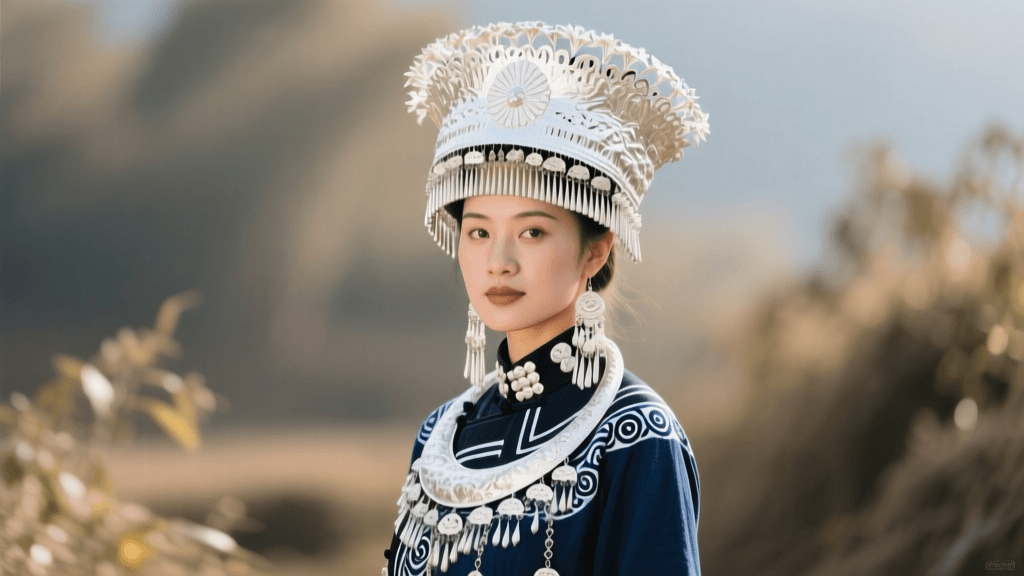
No Miao festival ensemble is complete without elaborate silver jewelry. The Miao believe that silver possesses the spiritual power to ward off evil spirits, illuminate the path to the afterlife, and display a family's wealth and social standing. During major festivals, a Miao woman may wear a silver headdress, neck rings, chest plates, and bracelets that can collectively weigh between 5 to 10 kilograms (11 to 22 pounds).
As noted in a Smithsonian Magazine feature on Hmong and Miao textile and decorative arts, these heavy silver ornaments are often paired with "story cloths" and embroidered jackets to create a comprehensive visual narrative of the wearer's lineage. The silverwork is characterized by high relief repoussé, intricate filigree, and dangling tassels that create a melodic chiming sound when the wearer dances.
Practical Advice for Purchasing Miao Silver
- Pricing Structure: Authentic Miao silver is priced based on the daily market rate of silver plus a craftsmanship fee. Expect to pay between 15 to 30 RMB ($2-$4) per gram for finished, handcrafted pieces. A standard 500-gram silver neck ring will cost roughly 7,500 to 15,000 RMB ($1,050-$2,100).
- Purity and Hallmarks: Traditional Miao silversmiths typically work with 999 pure silver or 925 sterling silver. Look for the stamped hallmarks, but be aware that antique pieces may lack modern stamps. Always buy from established workshops in Kaili or Xijiang Miao Village and request a certificate of authenticity and a weight receipt.
- Travel Logistics: Because of the extreme weight and volume of full headdresses and chest plates, shipping is highly recommended. Most reputable silversmiths in Guizhou offer insured international shipping via DHL or FedEx for a flat fee of roughly 300-500 RMB ($40-$70).
Comparison Chart: Authentic vs. Commercial Miao Garments
When navigating markets in Guizhou, it is crucial to distinguish between heritage pieces made for the community and commercial replicas made for tourists. Use this comparison chart to guide your purchases:
| Feature | Authentic Handmade (Heritage) | Mass-Produced (Tourist Market) |
|---|---|---|
| Material Base | Hand-spun cotton, hemp, or silk | Machine-woven polyester or cheap cotton |
| Dye Source | Fermented natural indigo (Strobilanthes cusia) | Synthetic chemical indigo or printed patterns |
| Embroidery | Hand-stitched (satin, seed, or knot stitch); takes months | Machine-embroidered; uniform, flat stitching |
| Silver Content | 999 or 925 solid silver; heavy, detailed filigree | Tibetan silver (alloy), aluminum, or plated brass |
| Average Cost (Jacket) | 800 - 3,000+ RMB ($110 - $420+) | 80 - 150 RMB ($11 - $21) |
A Traveler's Guide to Experiencing Miao Textiles
To truly appreciate the context of these garments, witnessing them in their natural, festive environment is unparalleled. Timing your visit to coincide with traditional lunar calendar festivals is the best way to see the most elaborate, authentic clothing in use.
Where and When to Go
- The Sisters' Meal Festival (Zimei Fan Jie): Occurring in the third lunar month (usually April or early May), this festival in the Taijiang and Kaili regions is essentially a Miao Valentine's Day. Young women wear their most spectacular silver headdresses and finely pleated indigo skirts to meet suitors. This is the premier time for photography and cultural immersion.
- The Lusheng Festival: Held in the autumn (usually September or October), this festival features the lusheng (a traditional bamboo mouth organ). The rhythmic dancing requires heavily pleated skirts and sturdy, embroidered leggings, offering a different perspective on the functional aspects of Miao clothing.
- Key Villages to Visit: While Xijiang Thousand Households Miao Village is the most famous, it is highly commercialized. For authentic textile procurement, visit Shiqiao Village in Danzhai County for world-class batik, and Shidong Village in Taijiang County for master-level embroidery and silverwork.
Caring for Your Miao Garments
Owning a piece of Miao heritage requires specific maintenance to preserve the integrity of the natural dyes and delicate embroidery.
- Washing Indigo: Never use hot water or harsh detergents, as this will strip the natural indigo. Hand wash in cold water with a pH-neutral, eco-friendly soap. Add a half-cup of white vinegar to the final rinse to help set the dye and restore the fabric's pH balance.
- Storing Embroidery: Miao embroidery often uses silk threads that are susceptible to light damage and moisture. Store garments flat in acid-free tissue paper inside a cedar chest or a dark, climate-controlled closet. Never hang heavy, fully embroidered jackets on standard hangers, as the weight will distort the handwoven base fabric over time.
- Polishing Silver: To clean tarnished Miao silver without damaging the antique patina in the crevices, use the electrolytic cleaning method. Line a glass bowl with aluminum foil, add boiling water, a tablespoon of baking soda, and a tablespoon of salt. Submerge the silver for 3 to 5 minutes, then rinse and pat dry with a microfiber cloth. Avoid commercial silver dips, which can strip the metal and damage attached gemstones or enamel.
"To wear the clothes of our ancestors is to carry their spirits on our shoulders. The silver protects us, and the indigo connects us to the earth and the rivers of our homeland." — Traditional Miao proverb, often shared by village elders during the Sisters' Meal Festival.
By understanding the profound craftsmanship, material realities, and cultural significance behind Miao traditional clothing, collectors and travelers can make ethical, informed purchases that support the continuation of these extraordinary Asian traditions. Whether you are acquiring a delicate batik scarf or investing in a monumental silver neck ring, you are preserving a vital thread of human history.