Murasaki Shikibu's Legacy: Modernizing Heian Kimono Layers
Murasaki Shikibu and the Golden Age of Heian Fashion
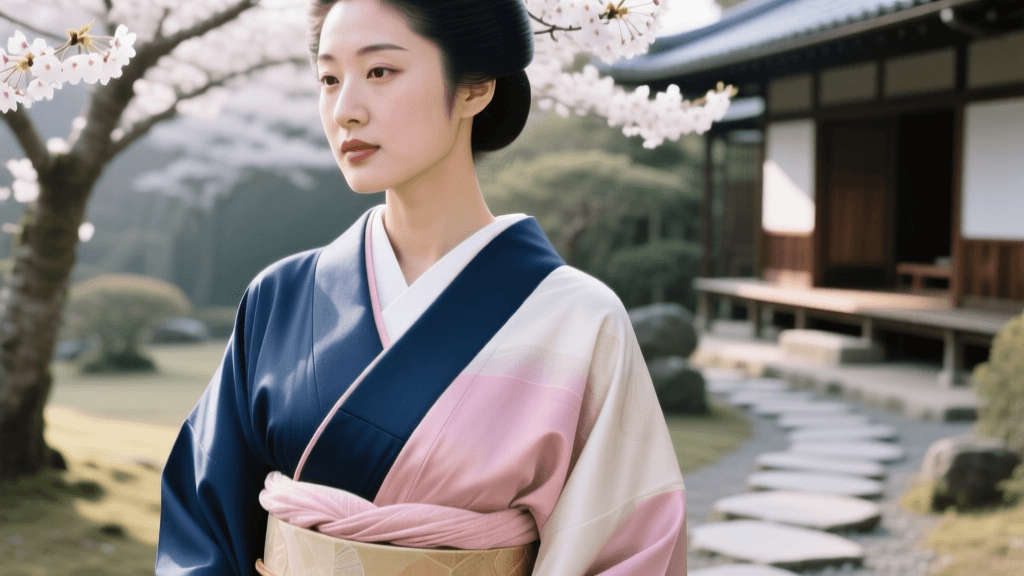
When exploring the rich tapestry of Asian traditions, few historical figures have left as indelible a mark on the sartorial landscape as Murasaki Shikibu (c. 973 – c. 1014). Best known as the author of The Tale of Genji, Murasaki was a lady-in-waiting at the Imperial Court during the Heian period (794–1185). While her literary genius is universally celebrated, her meticulous documentation of courtly fashion has served as a foundational text for Japanese textile arts and color theory. Through her writings, we understand the profound importance of Kasane no Irome—the art of layered color combinations—which dictated the aesthetic and social codes of the era.
During the Heian period, aristocratic women wore the Junihitoe, a breathtakingly complex twelve-layer robe ensemble that could weigh up to 20 kilograms. The true elegance of the Junihitoe did not lie in the entirety of the garments, but in the subtle, deliberate glimpses of color at the sleeves (sodeguchi) and the hems (suso). Murasaki’s writings frequently pause to describe how the layered silks mimicked the natural world, reflecting a deep cultural reverence for seasonality. Today, while the heavy Junihitoe is reserved for imperial ceremonies, Murasaki’s legacy of layering lives on in modern kimono dressing through the art of Kasane-eri (layered collars).
The Art of Kasane-eri: Modernizing Heian Layering
Modern kimono enthusiasts do not need to don twelve layers of heavy silk to channel the elegance of the Heian court. The essence of Murasaki’s color theory is preserved at the neckline, the focal point of any kimono ensemble. By mastering the Kasane-eri technique, you can recreate the illusion of multiple layered robes using just two or three strategic accessories.
The modern layering system relies on the han-eri (a detachable collar sewn onto the undergarment, or nagajuban) and the date-eri (a decorative false collar). To achieve a historically inspired, aesthetically pleasing layered look, precise measurements and tension control are required during the dressing process (kitsuke).
Actionable Measurements and Styling Techniques
- Standard Dimensions: A traditional silk han-eri measures approximately 16 cm in width and 110 cm in length. When folded in half lengthwise and attached to the nagajuban, it presents a visible width of about 8 cm.
- The Kasane Offset: To mimic the Heian layering effect, the under-collar (date-eri) must not be perfectly flush with the top collar. At the nape of the neck (eri-ashi), the under-collar should be offset to show exactly 1.5 cm to 2.0 cm of color. As the collar wraps around to the front chest (daishin), the offset should taper smoothly to 0.5 cm.
- Tension Control: Use an eri-sugata (collar shaper) made of plastic or stiff cotton to prevent the layered collars from collapsing or wrinkling throughout the day. This is crucial for maintaining the crisp, multi-layered illusion.
Seasonal Color Combinations (Kasane no Irome) Guide
Murasaki Shikibu’s era operated on strict seasonal calendars. Wearing a color combination out of season was considered a severe social faux pas, indicating a lack of refinement and awareness of nature. Below is a practical guide to translating historical Heian color combinations into modern kimono styling, complete with sourcing costs.
| Season | Combination Name | Top Layer Color | Under Layer Color | Modern Fabric Equivalent | Estimated Cost (USD) |
|---|---|---|---|---|---|
| Spring | Sakura (Cherry Blossom) | Pale Pink / White | Deep Crimson | Chirimen Silk Han-eri | $45 - $80 |
| Summer | Fuji (Wisteria) | Light Lavender | Forest Green | Ro (Leno-weave) Silk | $60 - $120 |
| Autumn | Momiji (Maple) | Vibrant Crimson | Mustard Yellow | Shibori Dyed Silk | $85 - $150 |
| Winter | Shiragiku (White Chrysanthemum) | Stark White | Pale Celadon | Embroidered Rinzu Silk | $90 - $200 |
Practical Sourcing and Timing Rules
To build a wardrobe that honors Murasaki’s legacy, one must understand both where to acquire these textiles and when to wear them. The Japanese concept of kisetsukan (seasonal feeling) dictates that you should anticipate a season rather than merely react to it.
Timing Your Layers
According to traditional etiquette, spring combinations like Sakura should be introduced in late February, peak in early April, and be put away the moment the cherry blossoms fall. Wearing fallen petals or late-spring motifs in May is considered zangiri (lingering/untimely). Conversely, autumn motifs like Momiji can be worn starting in late September, but the vibrant crimson and yellow layers should transition to muted, frost-covered winter motifs by early December.
Where to Source Authentic Pieces
For modern practitioners, sourcing high-quality layering pieces requires knowing where to look. According to the Victoria and Albert Museum, the preservation of historical textile techniques is heavily reliant on specialized artisan workshops and knowledgeable vintage curators.
- Vintage Silk Han-eri: Online platforms like Ichiroya or specialized vintage kimono dealers offer pre-1950s silk collars featuring hand-painted Yuzen or intricate Shibori. Expect to pay between $20 and $50 for excellent condition vintage pieces.
- Artisan Custom Dyeing: For exact Heian color replication, commissioning a modern dyer in Kyoto’s Nishijin district will cost between $150 and $300, but guarantees colorfastness and historical accuracy.
- Modern Synthetics: For beginners practicing their Kasane-eri offset measurements, polyester date-eri collars are available for $10 to $15. While they lack the breathability of silk, they hold stiff creases well for practice.
Care and Maintenance of Layered Silks
The delicate silks used in Heian-inspired layering require meticulous care. The nape of the collar is highly susceptible to foundation and skin oils. Never machine wash a silk han-eri. Instead, remove the han-eri from the nagajuban after every wear. Spot clean the nape area using a specialized silk detergent and a soft microfiber cloth. For deep cleaning, utilize a professional arai-hari service, where the silk is carefully unspooled, washed in water, and stretched on wooden frames to dry—a technique that has remained unchanged since the days of Murasaki Shikibu.
Preserving the Legacy in Contemporary Fashion
Murasaki Shikibu did not merely write a story; she codified the visual language of Japanese aesthetics. The subtle interplay of colors at the collarbone, the strict adherence to the turning of the seasons, and the profound respect for textile craftsmanship are all direct descendants of the Heian court’s sartorial rules. By mastering the precise measurements of the Kasane-eri and respecting the historical timing of Kasane no Irome, modern kimono wearers do more than just dress well—they participate in a living, breathing tradition that has survived for over a millennium.
For those looking to deepen their understanding of historical Japanese garments and their cultural contexts, institutions like the Metropolitan Museum of Art's Asian Art Department and resources provided by the Japan National Tourism Organization offer invaluable archives on the evolution of these magnificent textiles. Embracing Murasaki’s fashion legacy is an invitation to slow down, observe the natural world, and wrap oneself in the poetry of color.