Shibori, Yuzen, and Kasuri: A Collector's Guide to Japanese Dyes
The Allure of Traditional Japanese Textile Arts
For collectors, vintage enthusiasts, and practitioners of traditional Asian fashion, Japanese textiles represent some of the most technically complex and visually stunning fabric arts in the world. While the silhouette of the kimono is globally recognized, the true soul of the garment lies in its surface design. Among the myriad of decorative techniques, three stand out for their historical significance, technical mastery, and enduring market value: Shibori, Yuzen, and Kasuri.
According to The Metropolitan Museum of Art, the evolution of Japanese dyeing and weaving techniques was heavily influenced by both indigenous innovation and the selective adaptation of continental Asian methods, resulting in highly localized and fiercely guarded regional styles. For the modern collector, understanding the nuances between these three distinct techniques is essential for authenticating pieces, assessing value, and ensuring proper preservation.
Understanding the Big Three: Shibori, Yuzen, and Kasuri
Shibori: The Art of Shaped Resist Dyeing
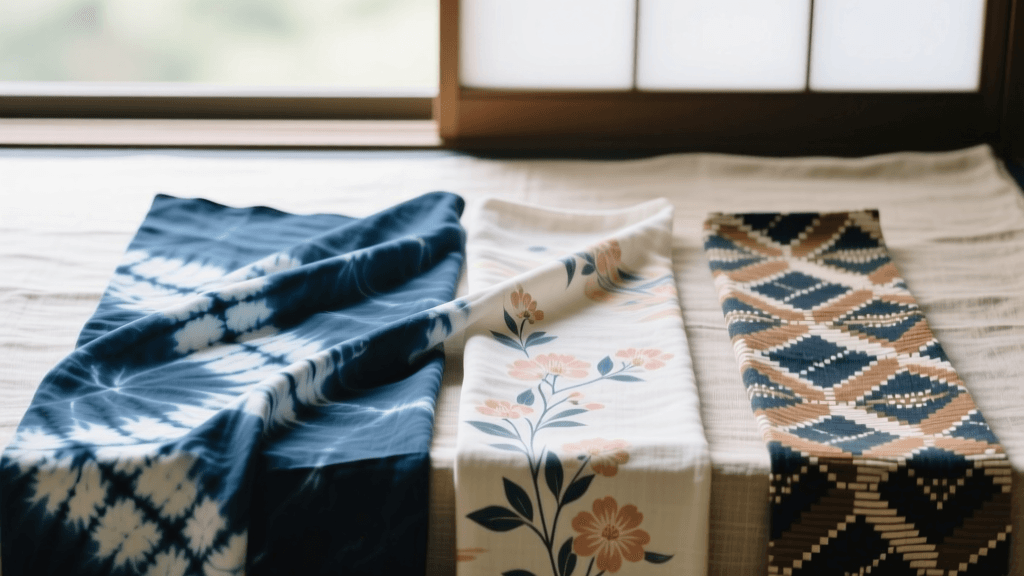
Shibori is a manual resist dyeing technique that involves folding, twisting, binding, or clamping fabric before submerging it in a dye bath (traditionally indigo). The bound areas resist the dye, creating intricate, organic patterns. Unlike printed textiles, authentic shibori possesses a distinct three-dimensional texture.
- Kanoko Shibori (Fawn Spot): Tiny, individual tufts of fabric are bound with thread. A single vintage Kanoko obi can require hundreds of thousands of individual hand-tied knots, making it one of the most expensive and labor-intensive textile arts globally.
- Arashi Shibori (Pole-Wrapping): Fabric is wrapped diagonally around a cylindrical pole and tightly bound, creating striking, rain-like diagonal stripes.
- Itajime Shibori (Clamp Resist): Fabric is folded and clamped between carved wooden blocks, yielding geometric, repeating patterns.
Collector's Tip: To authenticate shibori, run your fingers over the fabric. Genuine shibori will have a puckered, textured feel. Furthermore, examine the reverse side of the fabric; the dye should penetrate deeply, whereas faux-shibori (printed mimics) will have a flat surface and a pale or white reverse side.
Yuzen: The Mastery of Paste-Resist Dyeing
Originating in the late 17th century and credited to Miyazaki Yuzensai, Yuzen dyeing utilizes a thick, water-soluble rice paste to outline and block out designs on silk. This technique allowed for unprecedented pictorial freedom, enabling artisans to paint sprawling, multi-colored landscapes and floral motifs directly onto the fabric without the colors bleeding into one another.
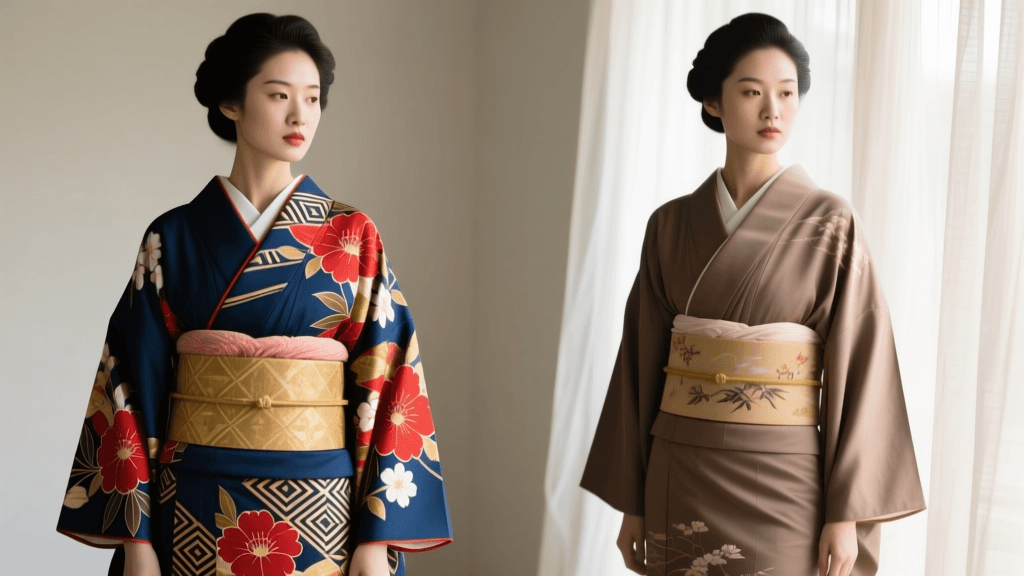
- Kyo-Yuzen (Kyoto): Characterized by vibrant, opulent colors, extensive use of gold and silver leaf (surihaku), and elaborate embroidery. It reflects the aristocratic aesthetics of the imperial capital.
- Kaga-Yuzen (Kanazawa): Known for a more subdued, realistic palette restricted to five traditional colors (Kaga Gosai: indigo, crimson, ochre, dark green, and royal purple). Kaga-Yuzen frequently features botanical motifs with intentional 'insect-eaten' leaf details and avoids heavy gold leaf.
The Traditional Crafts of Japan organization officially recognizes both Kyo-Yuzen and Kaga-Yuzen as designated national crafts, noting the rigorous multi-step process that can involve up to 26 distinct stages of drafting, paste application, dyeing, steaming, and washing.
Kasuri: The Geometry of Ikat Weaving
While Shibori and Yuzen are applied to finished woven cloth, Kasuri (the Japanese iteration of Ikat) is a yarn-dyeing technique. Bundles of cotton or silk threads are tightly bound and dyed before they are placed on the loom. When woven together, the pre-dyed threads align to form patterns, resulting in a characteristic blurred or 'splashed' edge effect.
- Kurume Kasuri: The most famous variant, originating in Fukuoka Prefecture. Traditionally woven from cotton and dyed with natural indigo, Kurume Kasuri was historically worn by commoners and farmers due to its durability and washability.
- Oshima Tsumugi (Silk Kasuri): A highly prized, lightweight silk kasuri from Amami Oshima, utilizing mud-dyeing techniques that create incredibly precise, dark brown and black geometric micro-patterns.
Comparison Chart: Shibori vs. Yuzen vs. Kasuri
| Feature | Shibori | Yuzen | Kasuri |
|---|---|---|---|
| Process Category | Shaped Resist Dyeing | Paste-Resist Dyeing | Yarn Resist (Ikat) Weaving |
| Primary Base Material | Silk, Hemp, Cotton | Silk (exclusively for formal wear) | Cotton, Silk, Hemp |
| Visual Hallmarks | Organic shapes, 3D puckering, blurred edges | Pictorial scenes, crisp outlines, gold leaf accents | Geometric patterns, blurred 'splashed' thread edges |
| Vintage Market Price (USD) | $150 - $2,500+ (Kanoko obi) | $200 - $3,000+ (Formal Kimono) | $40 - $150 per yard (Fabric bolt) |
| Best Use / Formality | Obi, Juban, Casual to Semi-Formal Kimono | Highly Formal Kimono (Furisode, Homongi) | Everyday wear, workwear, modern casual garments |
Practical Advice for Sourcing and Authenticating
When building a collection of vintage Japanese textiles, understanding standard measurements and sourcing channels is critical. Traditional Japanese fabric is sold and woven in bolts called tanmono. A standard kimono bolt is approximately 36 to 38 centimeters (14 to 15 inches) wide and 12 meters (13 yards) long. When purchasing vintage yardage or uncut bolts online, always verify the width; modern Western quilting cotton is 44 inches wide, and misidentifying a cut tanmono is a common beginner mistake.
Where to Source Authentic Pieces
- Kyoto Flea Markets: The Toji Temple flea market (held on the 21st of each month) and Tenmangu Shrine market (25th) are prime hunting grounds for vintage Kasuri and everyday Shibori pieces at negotiable prices.
- Specialized Online Dealers: For high-end Yuzen and authenticated antique Kanoko Shibori, rely on established dealers affiliated with the Victoria and Albert Museum's recommended Asian textile networks or verified Japanese auction houses like Yahoo! Auctions Japan (using reputable proxy services).
- Estate Sales and Thrifts: In Western countries, Kasuri cotton is frequently mislabeled as 'blue and white quilting cotton.' Educating your eye to spot the blurred ikat edges can yield incredible bargains.
Always inspect the mon (family crests) on Yuzen kimono. Hand-painted or intricately embroidered crests indicate high-formality garments, whereas printed crests suggest mass-produced, post-WWII tourist or rental garments, which hold significantly less collector value.
Care and Preservation of Vintage Dyes
Preserving the integrity of natural indigo (Kasuri) and delicate silk dyes (Yuzen/Shibori) requires strict environmental controls. The Japanese practice of Mushi-boshi (literally 'insect airing') is a traditional method of garment care that remains highly relevant for modern collectors.
The Mushi-boshi Protocol
Historically, Japanese collectors would air out their silk kimono and obi for a few days in late autumn (typically late October to November). This period is chosen because the air is cool, dry, and free of the high humidity that promotes mold, yet before the harsh cold of winter sets in.
- Timing: Choose 2 to 3 consecutive days of low humidity and overcast skies. Direct UV sunlight will rapidly fade natural indigo and synthetic Meiji-era dyes.
- Method: Drape the garments over a clean, padded clothing rack in a well-ventilated, shaded room. Allow the fabric to 'breathe' for 4 to 6 hours before refolding along new crease lines to prevent permanent fiber weakening.
Long-Term Storage Solutions
Never store vintage Yuzen or Shibori silk in plastic bins or standard cedar chests. Plastic traps moisture and off-gasses chemicals that degrade silk proteins, while the natural oils and acids in raw cedar can stain delicate paste-resist dyes.
- Wrapping: Wrap each garment in unbleached, washed cotton muslin or unbuffered, acid-free tissue paper (pH 7.0). Buffered tissue (which contains calcium carbonate) should be avoided for silk, as it can cause protein degradation over time.
- Folding vs. Rolling: While traditional kimono are folded flat in tatou (paper wrappers), heavy Kanoko Shibori obi should be loosely rolled around acid-free cardboard tubes to prevent crushing the three-dimensional tied knots. Stuff the knots loosely with acid-free tissue to maintain their structural integrity.
Conclusion
Collecting Shibori, Yuzen, and Kasuri textiles is more than an acquisition of beautiful garments; it is an act of preserving centuries of chemical, mathematical, and artistic innovation. By learning to read the tactile clues of shaped resist, the pictorial narratives of paste resist, and the geometric precision of ikat weaving, collectors can build meaningful, authentic archives. Whether you are sourcing a durable Kurume Kasuri jacket for daily wear or preserving a museum-quality Kyo-Yuzen furisode, respecting the traditional care methods ensures these masterpieces will endure for generations to come.