Modern Neo-Chinese Fashion: Styling the Contemporary Qipao
The Rise of Xin Zhong Shi (New Chinese Style)
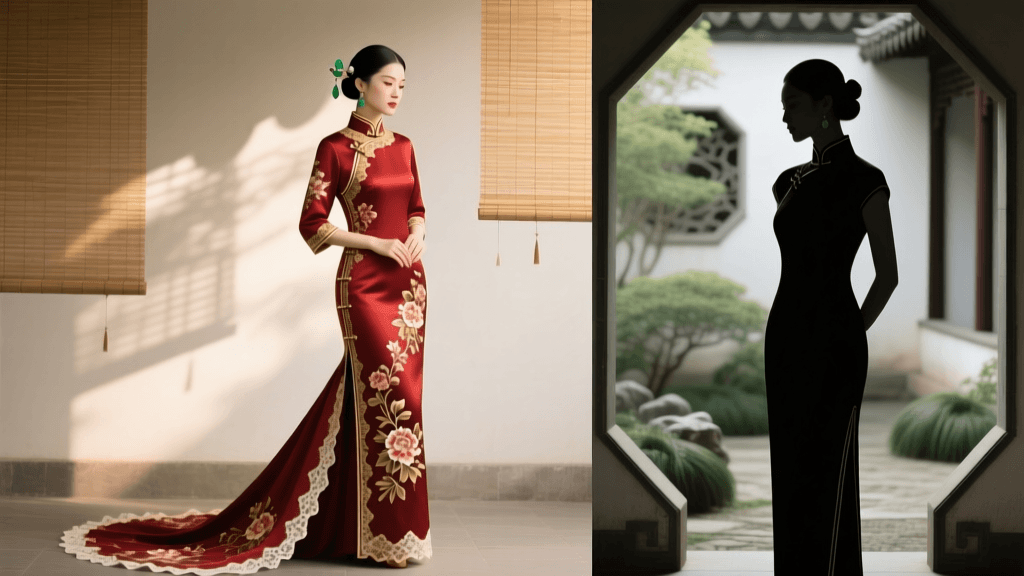
The evolution of traditional Chinese clothing has entered a dynamic new era, moving beyond ceremonial wear and into the realm of everyday global fashion. Known as Xin Zhong Shi (New Chinese Style), this movement blends the rich sartorial heritage of China with contemporary, Western silhouettes. At the heart of this fusion trend is the modern qipao (or cheongsam). Once reserved for formal events or traditional celebrations, the contemporary qipao has been deconstructed and reimagined by a new generation of designers and consumers who view it as a versatile canvas for self-expression.
As noted by BBC Culture, the qipao has always been a garment of reinvention, originally emerging in the 1920s as a symbol of modernity and female emancipation in Shanghai. Today, the Neo-Chinese fusion movement continues that legacy, stripping away the rigid formality of the mid-century cheongsam and replacing it with relaxed fits, innovative textiles, and modular styling. This guide provides actionable advice on how to tailor, source, and style the modern fusion qipao for a contemporary wardrobe.
Deconstructing the Modern Qipao: Key Design Elements
To successfully integrate Neo-Chinese fashion into a modern wardrobe, one must understand how traditional elements are being adapted for comfort and contemporary aesthetics. The modern fusion qipao relies on subtle nods to heritage rather than strict historical replication.
Collar and Frog Button Variations
The traditional Mandarin collar (standing collar) is often the most restrictive element of a classic qipao, typically measuring 5 to 7 centimeters in height. Modern adaptations drastically reduce this to a comfortable 2 to 3.5 centimeters, or replace it entirely with a mandarin-inspired V-neck or asymmetrical slash collar. Similarly, the traditional Pankou (knotted frog buttons) are being reimagined. Instead of running the entire length of the dress, modern designs often feature just one to three decorative Pankou at the collar or shoulder, utilizing hidden zippers or magnetic closures for the rest of the garment to maintain a sleek, minimalist profile.
Silhouette and Hemline Adaptations
While the 1960s Hong Kong qipao was famous for its skin-tight, restrictive pencil skirt silhouette, the Xin Zhong Shi trend favors fluidity. Designers like Samuel Guì Yang, whose collections frequently explore Sino-Western tailoring as highlighted in Vogue Runway, often merge the qipao collar with structured blazers, A-line midi skirts, and wide-leg trousers. Hemlines are also highly variable; asymmetrical handkerchief hems, cropped waist-length tops, and floor-grazing slip dresses are all common in the fusion space.
Actionable Guide: Tailoring Your Custom Fusion Qipao
For those seeking a garment that perfectly bridges Eastern heritage and Western tailoring, made-to-measure (MTM) or bespoke fusion wear is the ideal route. Here is what you need to know before commissioning a piece.
- Timing: Allow 4 to 6 weeks for a made-to-measure garment, and up to 12 weeks for fully bespoke hand-finished couture.
- Cost Expectations: Off-the-rack fusion brands typically range from $80 to $250 USD. Made-to-measure services start around $350 and can reach $800 depending on fabric. Fully bespoke, hand-embroidered pieces start at $1,500+.
- Crucial Measurements: Beyond standard bust, waist, and hips, ensure your tailor measures your collar circumference (crucial for the standing collar), shoulder slope, and armhole depth. Modern fusion qipaos often require a slightly deeper armhole than traditional ones to allow for layering over turtlenecks or under blazers.
- The 'Ease' Factor: Request 2 to 3 centimeters of 'wearing ease' in the waist and hips if you plan to wear the garment for long office hours or travel, avoiding the restrictive fit of vintage cinematic qipaos.
Fabric Selection for Everyday Fusion Wear
The choice of textile dictates whether your Neo-Chinese garment reads as evening wear or everyday streetwear. While traditional heavy silk brocades are beautiful, they lack the breathability and drape required for modern, fast-paced lifestyles. Below is a comparison chart of the best fabrics for contemporary fusion fashion.
| Fabric Type | Drape & Weight | Breathability | Cost (Per Yard) | Best Fusion Application |
|---|---|---|---|---|
| Silk Charmeuse | Heavy, fluid, high-sheen | Moderate | $40 - $80 | Evening slip dresses, draped cowl-back qipaos |
| Linen-Cotton Blend | Crisp, structured, matte | High | $15 - $30 | Summer office wear, A-line shift dresses, cropped tops |
| Crepe de Chine | Lightweight, matte, fluid | High | $25 - $50 | Everyday blouses, wide-leg qipao-inspired trousers |
| Woven Jacquard | Stiff, textured, durable | Low | $35 - $70 | Winter outerwear, structured blazers with Mandarin collars |
| Washed Cupro | Medium weight, velvet-like | High | $20 - $40 | Streetwear, oversized fusion shirts, layering pieces |
Styling the Neo-Chinese Wardrobe: Practical Outfit Formulas
The true essence of Xin Zhong Shi lies in how these garments are styled with non-traditional pieces. The goal is juxtaposition—pairing the elegance of Chinese heritage with the utilitarian or relaxed nature of modern Western fashion. Here are three actionable styling formulas to integrate fusion wear into your weekly rotation.
Formula 1: The Corporate Fusion (Office Ready)
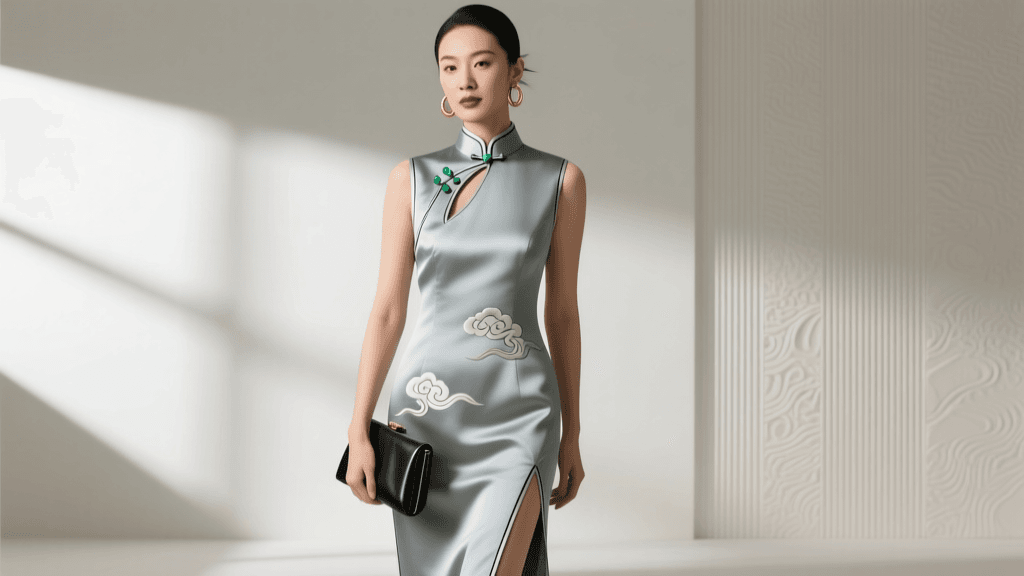
The Pieces: A sleeveless, knee-length linen-cotton qipao in a muted tone (sage, slate, or ivory) paired with an oversized, structured menswear blazer.
The Details: Keep the blazer unbuttoned to showcase the Pankou closures. Pair with pointed-toe leather loafers and a structured top-handle bag. This look mirrors the cultural cross-pollination explored in exhibitions like The Metropolitan Museum of Art's 'China: Through the Looking Glass', where Eastern silhouettes meet Western tailoring.
Formula 2: Streetwear Edge (Weekend Casual)
The Pieces: A cropped, short-sleeve qipao top made from washed cupro or denim, featuring a subtle floral jacquard pattern.
The Details: Tuck the cropped top into high-waisted, wide-leg cargo pants or distressed denim. Finish the look with chunky sneakers and a nylon crossbody bag. The juxtaposition of the delicate Mandarin collar against utilitarian cargo pockets creates a striking, fashion-forward silhouette.
Formula 3: Evening Minimalism (Dinner & Events)
The Pieces: A floor-length, bias-cut silk charmeuse qipao with a thigh-high slit and a minimalist halter neck (forgoing the traditional standing collar).
The Details: Layer a sheer, black turtleneck underneath for a modern, modest-yet-edgy aesthetic. Accessorize with geometric metallic earrings and strappy mules. Avoid traditional jade or pearl jewelry, opting instead for brutalist or contemporary sculptural metals to maintain the fusion ethos.
Care and Maintenance of Modern Fusion Garments
Modern textiles require specific care to maintain their structural integrity, especially when blending traditional tailoring with modern fabrics.
- Storage: Never hang heavy silk or brocade qipaos on wire hangers, as the weight of the fabric will distort the shoulder seams. Use padded, velvet hangers. For knit or cupro fusion pieces, fold them with acid-free tissue paper to prevent permanent creasing along the frog button knots.
- Cleaning: While vintage silks demand professional dry cleaning, modern linen-cotton blends and cupro can often be hand-washed in cold water with a pH-neutral detergent. Always lay flat to dry to prevent the bias cut from warping.
- Ironing: Use a low-heat steam setting. Never press directly over the Pankou (frog buttons) or embroidered motifs, as this can flatten the knots and ruin the three-dimensional texture. Iron around the closures from the inside out.
By understanding the architectural shifts in modern Neo-Chinese design, investing in the right textiles, and embracing bold styling juxtapositions, you can seamlessly weave the legacy of the qipao into a contemporary, global wardrobe. The Xin Zhong Shi movement is not merely a trend; it is a living dialogue between history and the future of fashion.