Chinese Wedding Attire Guide: Xiuhefu vs. Qipao Choices
The Renaissance of Chinese Ceremonial Wedding Attire
The landscape of Chinese wedding fashion has undergone a magnificent renaissance over the last decade. While the Western white wedding gown remains a staple for the main banquet, modern couples are increasingly embracing their heritage through traditional ceremonial garments. From the intricate embroidery of the Xiuhefu to the sleek elegance of the Qipao (Cheongsam), and the dignified Changshan for grooms, Chinese wedding attire is a vibrant tapestry of history, craftsmanship, and cultural symbolism. According to China Highlights, the integration of traditional tea ceremonies into modern weddings has driven a massive resurgence in demand for authentic, high-quality ceremonial garments.
This comprehensive guide provides actionable advice for brides and grooms navigating the selection, tailoring, and styling of traditional Chinese wedding attire, ensuring your garments are as historically respectful as they are breathtakingly beautiful.
Understanding the Xiuhefu: The Modern Ceremonial Standard
The Xiuhefu is currently the most popular choice for the traditional Chinese tea ceremony and morning gate-crashing games. It is a modern adaptation of the Ming Dynasty Hanfu, specifically the Aoqun (jacket and skirt) silhouette. Unlike the Qing Dynasty Qungua, which is a single-piece jacket and skirt with Manchu influences, the Xiuhefu is distinctly Han Chinese in its origins, featuring an A-line pleated skirt and a structured, stand-up collared jacket.
Anatomy of the Xiuhefu
- The Ao (Jacket): Features a stand-up collar (Yuling) and front or side frog button closures (Pankou). The sleeves are typically wide and flowing, often ending in decorative white or contrasting silk cuffs.
- The Qun (Skirt): An A-line, pleated skirt that wraps around the waist, heavily inspired by the traditional Mamianqun (horse-face skirt). It is designed to be voluminous, allowing the bride to sit comfortably during the tea ceremony while the embroidery fans out beautifully.
- The Embroidery: Authentic Xiuhefu garments utilize Suzhou embroidery (Su Xiu), characterized by its incredibly fine, multi-colored silk threads and dense, raised stitching.
Cost and Quality Tiers
When budgeting for a Xiuhefu, prices vary wildly based on embroidery density and technique:
- Off-the-Rack / Machine Embroidered ($150 - $400): Ideal for tight budgets. The embroidery is flat, and the fabric is usually a synthetic blend. Good for a single-use morning ceremony.
- Made-to-Measure / Mixed Embroidery ($800 - $2,500): Features a blend of machine and hand-stitching. The fabric is genuine silk satin or heavy brocade, offering a beautiful drape and moderate weight.
- Bespoke Hand-Embroidered ($3,000 - $10,000+): 100% hand-embroidered using gold and silver metallic threads (Panjin). The embroidery density can reach 90-100% coverage. These are heirloom pieces that take master artisans up to six months to complete.
The Qipao (Cheongsam): Elegance for the Evening
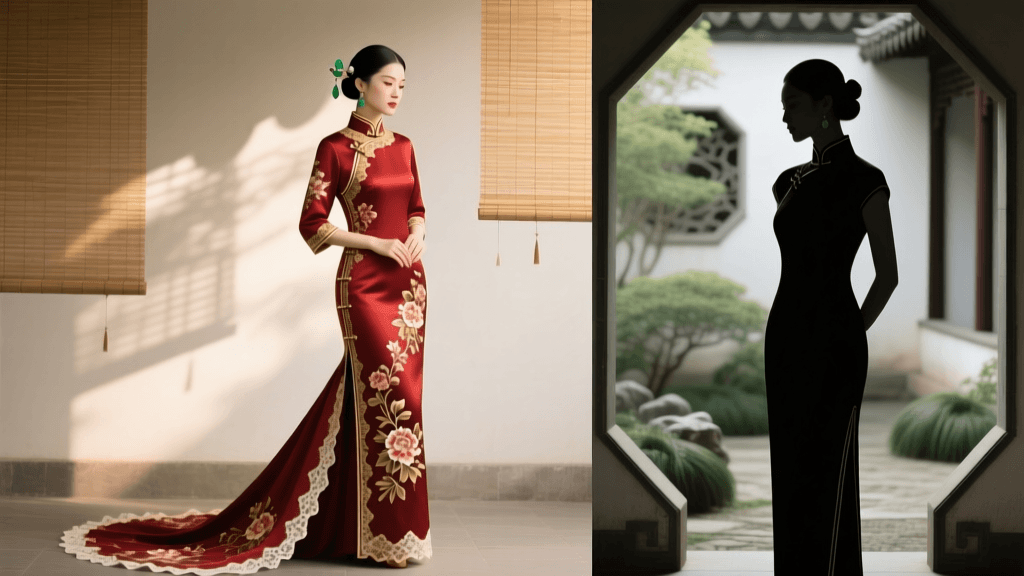
While the Xiuhefu dominates the morning rituals, the Qipao (or Cheongsam) is the undisputed queen of the evening banquet or the formal reception. Originating in 1920s Shanghai, the Qipao is a form-fitting, one-piece dress that celebrates the silhouette. As noted by The Metropolitan Museum of Art, the evolution of the Qipao represents a fascinating intersection of traditional Chinese tailoring and modern Western fashion influences.
Fabric Choices and Fit
For a wedding, the Qipao should be constructed from heavy, luxurious fabrics that hold their shape and resist wrinkling during long hours of sitting and greeting guests.
- Silk Brocade: The most traditional choice. Heavy, woven with metallic threads, and highly structured.
- Heavy Silk Satin: Offers a brilliant sheen and fluid drape, perfect for brides who want a softer, more romantic look.
- Velvet: An excellent choice for winter weddings, providing warmth and a regal, vintage aesthetic.
Pro-Tip for Fit: A traditional Qipao should be tailored to fit like a second skin, but you must leave exactly 1 to 1.5 inches of ease around the bust and hips to allow for comfortable breathing and sitting. Always request a hidden zipper on the side seam in addition to the decorative Pankou knots at the collar and shoulder.
Groom's Attire: Changshan and Tangzhuang
The groom's attire must harmonize with the bride's choices. For a Xiuhefu tea ceremony, the groom traditionally wears a Changshan (a long, ankle-length silk shirt) paired with a Magua (a short, hip-length riding jacket). Modern grooms often opt for the Tangzhuang, a contemporary adaptation of the Magua featuring a Mandarin collar and intricate frog closures. When pairing with a bride in a red Xiuhefu, the groom should wear a deep crimson, maroon, or navy blue Tangzhuang adorned with subtle dragon or geometric brocade patterns to avoid clashing with the bride's dense embroidery.
Comparison Chart: Xiuhefu vs. Qipao vs. Qungua
| Garment Type | Primary Usage | Weight & Comfort | Estimated Cost (Bespoke) | Lead Time |
|---|---|---|---|---|
| Xiuhefu | Morning Tea Ceremony, Gate Games | Heavy (3-5 kg), comfortable seated | $1,500 - $5,000+ | 3 - 6 Months |
| Qungua | Traditional Tea Ceremony (Qing style) | Very Heavy (5-8 kg), stiff structure | $2,000 - $8,000+ | 4 - 8 Months |
| Qipao | Evening Banquet, Toasting Guests | Lightweight (1-2 kg), form-fitting | $500 - $2,000 | 1 - 2 Months |
Decoding the Embroidery Motifs
According to the Victoria and Albert Museum's textile archives, Chinese ceremonial garments are canvases of symbolic communication. When commissioning your garment, you can select specific motifs to bless your marriage:
- Dragon and Phoenix (Longfeng): The ultimate symbol of marital balance, representing the groom (dragon) and bride (phoenix) in perfect harmony.
- Peony: Known as the 'King of Flowers,' it symbolizes wealth, honor, and prosperity.
- Bat: The Chinese word for bat (Fu) sounds identical to the word for good fortune. Five bats represent the 'Five Blessings' (longevity, wealth, health, virtue, and a peaceful death).
- Lotus: Represents purity, harmony, and the birth of children.
Actionable Advice: Sourcing, Measurements, and Timelines
Where to Source Your Garments
For the highest quality and most authentic craftsmanship, look to the garment's ancestral homes. Suzhou is the undisputed capital of silk and Su embroidery; many high-end bridal boutiques in Shanghai and Beijing source their master artisans from Suzhou. If you are outside of China, specialized boutiques in cities with large diaspora communities (such as Vancouver, San Francisco, Sydney, and London) offer made-to-measure services, though you will pay a 30-50% premium for local fittings and import logistics.
Crucial Measurements to Provide
When ordering a made-to-measure Xiuhefu or Qipao, standard sizing will not suffice. You must provide the following precise measurements (taken in your wedding undergarments):
- Bust, Waist, and Hips: Measured at the fullest points.
- Shoulder Width: Bone to bone across the back.
- Sleeve Length: From the shoulder bone to the wrist bone (crucial for the Xiuhefu jacket).
- Hollow to Hem: From the base of the neck to the desired hemline (wear your exact wedding shoes for this measurement).
- Armhole Circumference: Essential for the Qipao to prevent pulling across the chest.
The Fitting Timeline
'A master-embroidered wedding garment is not bought; it is commissioned. Patience is the first virtue of the traditional bride.' — Master Artisan Proverb
- 6 Months Prior: Finalize your design, select your fabric swatches, and place your deposit (usually 50%).
- 3 Months Prior: First fitting (the 'shell' fitting). The garment will be unfinished, allowing the tailor to adjust the shoulder slope, bust darts, and waist suppression.
- 1 Month Prior: Final fitting. All embroidery should be complete. Practice sitting, kneeling for the tea ceremony, and walking in your wedding shoes.
- 1 Week Prior: Pick up the garment. Store it in a breathable garment bag in a cool, dry place. Never store silk in plastic, as it can trap moisture and cause yellowing.
Conclusion
Choosing traditional Chinese wedding attire is a profound way to honor your ancestry while celebrating your future. Whether you opt for the majestic, heavily embroidered folds of the Xiuhefu, the sleek sophistication of a silk Qipao, or the dignified Changshan, the key to success lies in understanding the garments' structural nuances, respecting the tailoring timeline, and investing in quality craftsmanship. By carefully planning your measurements, motifs, and fittings, you ensure that your ceremonial attire will not only look spectacular in your wedding photographs but will also serve as a cherished heirloom for generations to come.