Peking Opera Costumes: A Guide to Mang Robes and Kao Armor
Introduction to Jingju Fuzhuang: The Architecture of Stagecraft
Peking Opera, or Jingju, is a cornerstone of Asian traditional performance art, recognized globally for its stylized movements, vivid facial makeup, and breathtaking wardrobe. The costumes, collectively known as xingtou, are not merely historical clothing replicas; they are wearable scenery designed to communicate a character's social status, personality, and martial prowess from the back row of a grand theater. According to UNESCO's Intangible Cultural Heritage registry, the preservation of these theatrical arts relies heavily on the meticulous transmission of traditional costume-making techniques from master artisans to new generations.
For performers, collectors, and festival organizers, understanding the technical specifications of the wardrobe is essential for authentic stagecraft. While the Peking Opera wardrobe contains hundreds of specific items, they are broadly categorized into formal court wear, martial armor, and commoner clothing. This guide focuses on the two most iconic and technically complex garments: the Mang (python robe) and the Kao (martial armor), providing actionable advice on measurements, materials, and maintenance for modern productions.
Color Symbolism and Character Identification
Before selecting a garment, one must understand the strict color coding of Jingju costumes. Unlike historical Chinese fashion, which was governed by sumptuary laws based on dynasty-specific regulations, Peking Opera colors are based on character archetypes:
- Yellow: Reserved exclusively for the Emperor and the immediate imperial family. A yellow Mang signifies absolute authority.
- Red: Denotes loyalty, bravery, and high nobility. The legendary general Guan Yu is always depicted in a green or red robe, depending on the specific scene's context.
- Black: Represents integrity, roughness, and impartiality. Often worn by fierce, upright judges or generals like Bao Zheng or Zhang Fei.
- White: In Peking Opera, white clothing often signifies treachery, cunning, or a sinister nature, frequently worn by antagonists like Cao Cao. It is also used for mourning or elderly characters.
The Mang (Python Robe): Elegance and Authority
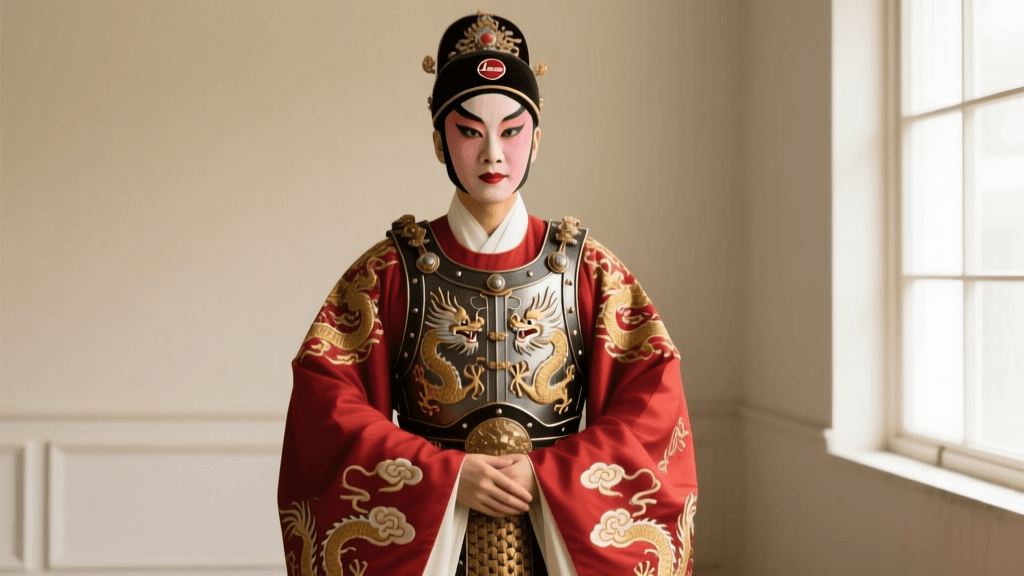
The Mang is the formal court robe worn by emperors, high-ranking officials, and nobility in ceremonial scenes. It is characterized by its round collar, wide sleeves, and the iconic python (mang) embroidery. The python motif features four claws, deliberately distinguishing it from the five-clawed imperial dragon (long) to show respect for the actual emperor, even when the actor is playing a monarch on stage.
Sizing and Stage Measurements
A stage Mang is designed for exaggerated, sweeping movement rather than historical accuracy. When commissioning or purchasing a Mang for performance, adhere to these measurements:
- Hem Circumference: Must be a minimum of 320 cm to 350 cm. This extreme width accommodates the stylized 'cloud walk' and allows the actor to kick the front hem outward gracefully without exposing the trousers beneath.
- Sleeve Length: The base silk sleeve should extend 15 cm past the fingertips to serve as an anchor for the water sleeves.
- Water Sleeves (Shuixiu): These detachable white silk extensions are crucial for emotional expression. For professional adult performers, water sleeves should measure exactly 65 cm to 80 cm in length. Shorter sleeves (40 cm) are used for children's roles or fast-paced acrobatic scenes to prevent tripping.
Materials, Embroidery, and Costs
The cost of a Mang robe varies wildly based on the embroidery technique. Entry-level festival costumes utilize polyester blends and machine embroidery, costing between $250 and $500. These are suitable for outdoor parades or amateur school productions but lack the stage presence required for professional theater lighting.
Professional theatrical troupes commission bespoke silk robes featuring panjin (gold-wrapped thread) and Suzhou silk embroidery (Su Xiu). The gold thread is couched onto the heavy silk satin using the 'Peking knot' and flat stitch techniques. A professional-grade, hand-embroidered Mang robe costs between $3,500 and $8,000, reflecting up to 600 hours of meticulous needlework by specialized artisans.
The Kao (Armor): Martial Arts and Stage Combat
The Kao is the armor worn by generals and martial roles (wusheng and wudan). It is a masterpiece of structural engineering, designed to look like heavy, rigid plate armor while remaining lightweight and flexible enough for high-flying acrobatics and intense stage combat.
Construction, Weight, and the Kaoqi Flags
A full Kao consists of over 30 individual pieces, including the front and back panels, shoulder pads, and thigh guards. Despite its imposing, metallic appearance, a professional silk-and-leather Kao weighs only 4 to 6 kg. The base is reinforced with canvas and lined with soft silk to absorb sweat and prevent chafing during vigorous movement.
The most striking feature of the Kao is the four triangular flags (kaoqi) attached to a leather harness on the back. These flags represent the commander's authority and the chaos of the battlefield. For standard adult performers, each flag measures exactly 85 cm in height and 45 cm in width at the base. The flags are heavily embroidered and backed with stiffened silk and bamboo splints to ensure they remain upright. When a performer executes rapid spins or leaps, the flags create a spectacular blurring effect. As noted by theater historians at Britannica, the Kao transforms the human body into a dynamic, larger-than-life architectural structure that commands the stage.
Comparison Chart: Mang vs. Kao
| Feature | Mang (Python Robe) | Kao (Armor) |
|---|---|---|
| Role Type | Civil officials, emperors, nobility | Generals, martial warriors |
| Primary Material | Heavy silk satin, velvet | Silk, canvas, leather backing |
| Weight | 2.5 - 4 kg | 4 - 6 kg (plus harness) |
| Key Accessories | Jade belt (yudai), water sleeves | Four back flags (kaoqi), tassel |
| Avg. Commission Time | 3 - 5 months | 4 - 6 months |
| Professional Cost | $3,500 - $8,000 | $4,000 - $10,000 |
Practical Guide: Commissioning, Timing, and Maintenance
Whether you are outfitting a community Lion Dance and Opera troupe for the Lunar New Year or commissioning pieces for a university theater department, proper planning is vital.
Timing and Sourcing
Bespoke hand-embroidered pieces from ateliers in Beijing or Suzhou take 4 to 6 months to complete. You must order at least half a year before a major festival or premiere. When taking measurements, always provide the atelier with the actor's chest, waist, and inseam, but more importantly, provide their shoulder-to-floor measurement while wearing the thick platform boots (hou底) used in Jingju. A robe that is 5 cm too long will result in the actor tripping during martial sequences.
Storage and Care
Traditional opera costumes are highly sensitive to humidity, moths, and improper folding. Follow these strict maintenance protocols:
- Hanging the Mang: Never fold the water sleeves or hang the robe on a wire hanger. Use a wide, padded wooden hanger (at least 15 cm shoulder width) to prevent stressing the gold thread. Fold the water sleeves in a specific accordion pleat and tie them loosely with a silk ribbon before hanging.
- Storing the Kaoqi (Flags): Never leave the flags attached to the harness during storage, as the weight will warp the leather over time. Remove the flags and store them completely flat in acid-free tissue paper inside a cedar chest to deter silverfish and moths.
- Cleaning: Dry clean only, using specialists familiar with metallic threads and antique textiles. Water sleeves, which absorb heavy stage makeup and sweat, should be detached after every performance and hand-washed with a mild, pH-neutral silk detergent.
Conclusion
The garments of Peking Opera are a testament to the ingenuity of Asian textile artisans. They bridge the gap between historical fashion and the extreme physical demands of theatrical performance. Institutions like the Victoria and Albert Museum continue to highlight the global appreciation for these garments, preserving them not just as artifacts, but as vital components of a living, breathing performance tradition. By understanding the precise measurements, material costs, and care requirements of the Mang and Kao, modern practitioners can ensure that this vibrant visual language continues to captivate audiences for generations to come.