Silk vs Synthetic Kimono Fabrics: A Craftsmanship Guide
The Foundation of Kimono Craftsmanship: The Tanmono
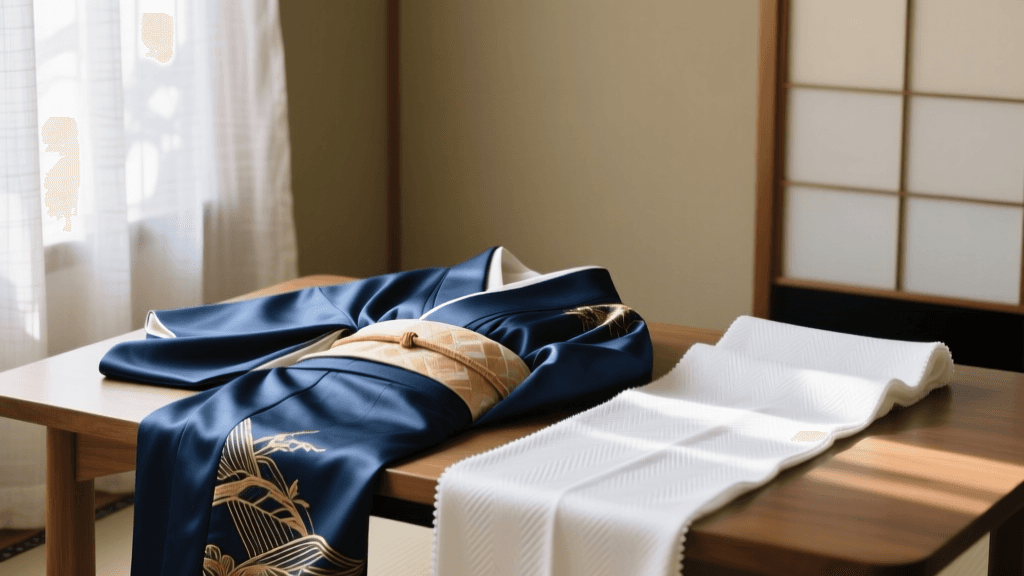
The kimono is far more than a simple garment; it is a masterclass in textile engineering, cultural expression, and zero-waste design. To truly understand kimono craftsmanship, one must first understand the tanmono—the standard bolt of fabric from which all traditional Japanese garments are cut. Unlike Western tailoring, which cuts fabric into curved, asymmetrical pieces and discards the scraps, a kimono is constructed from straight, rectangular panels. A standard tanmono measures approximately 36 to 38 centimeters (about 14 to 15 inches) in width and 12 to 13 meters in length. This precise measurement dictates the entire structure of the kimono, ensuring that the entire bolt is used with virtually zero waste. According to the Metropolitan Museum of Art, this linear construction method has remained largely unchanged for centuries, allowing garments to be easily disassembled, cleaned, and re-sewn.
Traditional Silk: The Pinnacle of Japanese Textile Art
Silk (kinu) is the undisputed monarch of kimono fabrics. The cultivation of silkworms and the subsequent weaving of silk threads have been elevated to high art forms in Japan, with specific regions dedicating centuries to perfecting unique weaves. When investing in a silk kimono, collectors and wearers typically encounter three primary fabric types:
Chirimen (Silk Crepe)
Chirimen is characterized by its distinct, pebbled texture. This effect is achieved by tightly twisting the weft threads before weaving, which causes the fabric to shrink and pucker slightly once it is washed or treated. This textured surface is highly prized because it diffuses light beautifully and provides an excellent canvas for Yuzen resist-dyeing. The dyes sink into the microscopic valleys of the crepe, resulting in rich, deep, and vibrant colors. Chirimen is the standard fabric for high-end formal women's kimono, such as the furisode and houmongi.
Rinzu (Silk Damask)
Unlike Chirimen, which relies on surface texture, Rinzu is a figured silk satin damask. The patterns are woven directly into the fabric using a complex interplay of warp and weft threads, creating a lustrous, tonal design that catches the light. Because the weaving process is incredibly labor-intensive, Rinzu is often reserved for the most formal occasions, including bridal wear and the finest obi (sashes). The renowned Nishijin-ori brocades of Kyoto frequently utilize Rinzu techniques to incorporate gold and silver threads into the weave.
Tsumugi (Silk Pongee)
Tsumugi represents the rustic, understated elegance of Japanese textiles. Historically woven from the leftover, uneven silk threads that could not be used for fine satins, Tsumugi features a slubbed, nubby texture that resembles cotton or linen. The threads are typically dyed before weaving (sakizome), resulting in intricate geometric patterns like kasuri (ikat). The Japanese Ministry of Economy, Trade and Industry (METI) officially recognizes several regional Tsumugi weaves, such as Oshima Tsumugi and Yuki Tsumugi, as Traditional Craft Products due to their meticulous, hand-woven craftsmanship.
The Modern Evolution: Synthetic and Semi-Synthetic Fabrics
While silk holds the historical and cultural high ground, the post-WWII era introduced a practical necessity for more affordable and easily maintained kimono. This led to the rise of synthetic and semi-synthetic fabrics, which now dominate the casual and everyday kimono market.
Polyester (Washable Kimono)
Modern polyester kimono have come a long way from the stiff, shiny fabrics of the 1970s. Today's high-quality polyester textiles are engineered to mimic the drape, matte finish, and breathability of silk crepe. Marketed heavily as 'washable silk,' these garments are a game-changer for beginners, tea ceremony practitioners, and those who wish to wear kimono in rainy or humid weather without the anxiety of ruining a $2,000 silk garment. They can be safely washed in a home washing machine using a mesh laundry bag and mild detergent.
Rayon and Viscose
Rayon, a semi-synthetic fiber derived from wood pulp, offers a beautiful, fluid drape and a soft, cool touch against the skin. It is frequently used for summer yukata and casual komon kimono. However, rayon is highly susceptible to water spotting and shrinkage, meaning it requires professional dry cleaning, much like traditional silk.
Comprehensive Kimono Fabric Comparison Chart
When selecting a kimono, understanding the practical implications of the fabric is just as important as appreciating its aesthetic. The following table breaks down the key characteristics of the most common kimono textiles:
| Fabric Type | Material | Formality Level | Average Cost (New) | Care & Maintenance |
|---|---|---|---|---|
| Chirimen | 100% Silk | High (Formal/Semi-Formal) | $800 - $3,000+ | Professional dry clean only; requires airing. |
| Rinzu | 100% Silk | Very High (Formal/Bridal) | $1,500 - $5,000+ | Strictly professional care; avoid moisture. |
| Tsumugi | 100% Silk (Pongee) | Low to Medium (Casual/Chic) | $600 - $4,000 (Artisan) | Professional dry clean; highly durable. |
| Polyester | Synthetic | Low (Casual/Everyday) | $80 - $200 | Machine washable (cold, gentle cycle). |
| Rayon | Semi-Synthetic | Low (Casual/Summer) | $100 - $250 | Dry clean only; prone to water spots. |
Actionable Buying Guide: Sizing and Measurements
Because kimono are cut from standard tanmono bolts, they do not come in traditional Western sizes (S, M, L). Instead, they are tailored to the individual's height and girth. When buying a vintage or ready-made kimono, you must take three critical measurements:
- Length (Mitake): Measure from the base of your neck (the prominent vertebra) down to your ankle bone. A well-fitted kimono should be exactly your height, or up to 5 cm shorter, as the excess fabric is folded up at the waist to create the ohashori (the visible fold under the obi).
- Sleeve Length (Yuki): With your arm extended slightly outward, measure from the center back of your neck, across your shoulder, and down to your wrist bone. Standard yuki for modern women is around 64-66 cm, while vintage kimono often feature shorter sleeves (60-62 cm).
- Hip Width (Kushikiri): The kimono must wrap comfortably around your hips. Measure the widest part of your hips and ensure the kimono's front panels can overlap securely without pulling.
Essential Care and Maintenance: The Art of Mushiboshi
Owning a silk kimono is an exercise in stewardship. Silk is a natural protein fiber that is highly susceptible to mold, insect damage, and permanent creasing if stored improperly. The traditional Japanese practice of mushiboshi (literally 'insect airing') is a mandatory maintenance routine for any serious collector.
According to conservation guidelines highlighted by the Victoria and Albert Museum, textiles require specific environmental controls to prevent degradation. To perform mushiboshi correctly, follow these actionable steps:
- Timing is Everything: Choose a dry, breezy day in late autumn or early spring. Never air out your kimono during the humid Japanese rainy season (tsuyu) or the peak of summer, as silk will absorb ambient moisture, leading to mold.
- Duration and Placement: Hang the kimono on a specialized kimono hanger (emono) in a well-ventilated, shaded room or on a covered porch. Limit the airing time to 2 to 3 hours. Never expose silk to direct sunlight, as UV rays will rapidly fade the delicate dyes and weaken the protein fibers.
- Inspection and Folding: While the garment is hanging, gently inspect the seams, the underarm areas (waki), and the hem for any signs of spotting or insect activity. Once aired, fold the kimono precisely along its original seam lines to prevent new, hard-to-remove creases from forming.
- Storage: Wrap the folded kimono in acid-free tatou-shi (traditional Japanese paper) or unbleached cotton. Avoid plastic bags, which trap moisture. Store the wrapped garment in a wooden drawer (preferably paulownia wood, which naturally regulates humidity) alongside natural insect repellents like camphor or cedar blocks.
If your silk kimono sustains a stain, do not attempt spot-cleaning with water. Take it to a professional kimono cleaner for a process called maruarai (whole garment washing), which typically costs between $80 and $150. This specialized service involves disassembling the kimono, washing the fabric in solvents, re-stretching the silk on a bamboo frame (yuzen-dai), and re-sewing it, ensuring the garment retains its pristine, zero-waste rectangular geometry.
Conclusion
The choice between traditional silk and modern synthetic kimono fabrics ultimately depends on the wearer's lifestyle, budget, and intended use. Silk offers an unparalleled depth of color, historical resonance, and a connection to centuries of Japanese artisanal mastery recognized by institutions like METI. Conversely, high-quality polyester provides an accessible, low-maintenance entry point into the world of Japanese dress. By understanding the foundational craftsmanship of the tanmono, the unique properties of weaves like Chirimen and Tsumugi, and the rigorous demands of garment care, enthusiasts can make informed decisions that honor and preserve the magnificent legacy of the kimono.