Regional Japanese Garments: A Prefecture Kimono Guide
Introduction to Japan's Regional Textile Heritage
When discussing traditional Japanese clothing, the term kimono often evokes a singular, standardized image. However, Japan's rich topography and historical feudal divisions have birthed a staggering array of regional garments, textiles, and dyeing techniques. From the snow-swept weaving villages of the north to the subtropical climates of the Ryukyu Islands, traditional Japanese garments are deeply tied to their local environments. Understanding these regional variations is essential for collectors, textile enthusiasts, and anyone looking to invest in authentic Japanese heritage wear. According to the Ministry of Economy, Trade and Industry (METI), a textile must meet strict historical and geographical criteria to be designated as a Traditional Craft, ensuring that regional techniques remain protected and authentic.
Ishikawa Prefecture: The Elegance of Kaga Yuzen
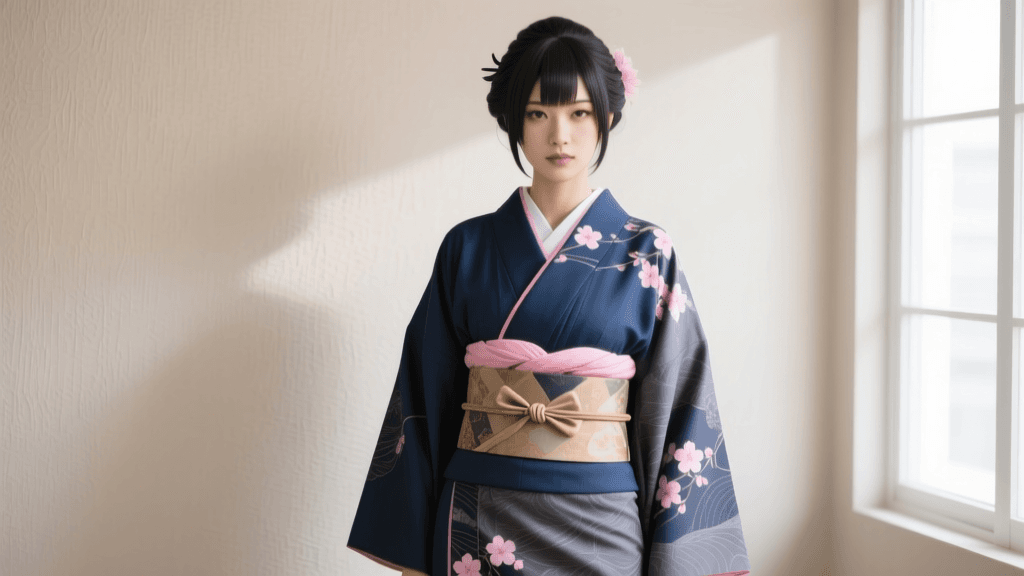
In the coastal city of Kanazawa, Ishikawa Prefecture, the Kaga Yuzen dyeing technique represents the pinnacle of samurai-class elegance. Unlike the flamboyant, gold-leaf-heavy Kyo Yuzen of Kyoto, Kaga Yuzen is characterized by its subtle, realistic depictions of nature and strict adherence to the Kaga Gosai (five traditional colors): indigo, crimson, yellow ochre, grass green, and ancient purple.
Technique and Identification
Artisans use a resist-dyeing method involving rice paste applied through brass stencils or freehand. A hallmark of authentic Kaga Yuzen is the bokashi (gradation) technique, where colors fade from the outside edge of a motif toward the center, mimicking the natural shading of leaves and petals. Furthermore, Kaga Yuzen strictly avoids embroidery and gold foil, relying entirely on the brushwork of the dyer to create depth. The Victoria and Albert Museum notes that this pictorial approach to textile design elevated the kimono from a mere garment to a wearable canvas, reflecting the refined aesthetic of the Kaga domain's ruling class.
Purchasing and Costs
- Bespoke Timing: Commissioning a hand-painted Kaga Yuzen kimono takes between 6 to 12 months, as a single artisan often oversees the entire process from design to washing in the local river waters.
- Cost Range: An authentic, hand-painted Kaga Yuzen silk kimono typically starts at 800,000 JPY (approx. $5,500 USD) and can exceed 3,000,000 JPY for master-crafted pieces.
- Styling: Best worn for formal daytime events, tea ceremonies, and weddings. Pair with a subtle, woven fukuro obi to avoid overpowering the intricate dye work.
Kagoshima Prefecture: The Resilience of Amami Oshima Tsumugi
Traveling south to the Amami Islands of Kagoshima Prefecture, we encounter Oshima Tsumugi, a mud-dyed silk textile renowned for its incredible durability, lightweight feel, and complex kasuri (tie-dye weave) patterns. Originally worn by commoners due to sumptuary laws forbidding the lower classes from wearing bright colors, Oshima Tsumugi evolved into one of Japan's most prized and expensive textiles.
The Mud-Dyeing Process
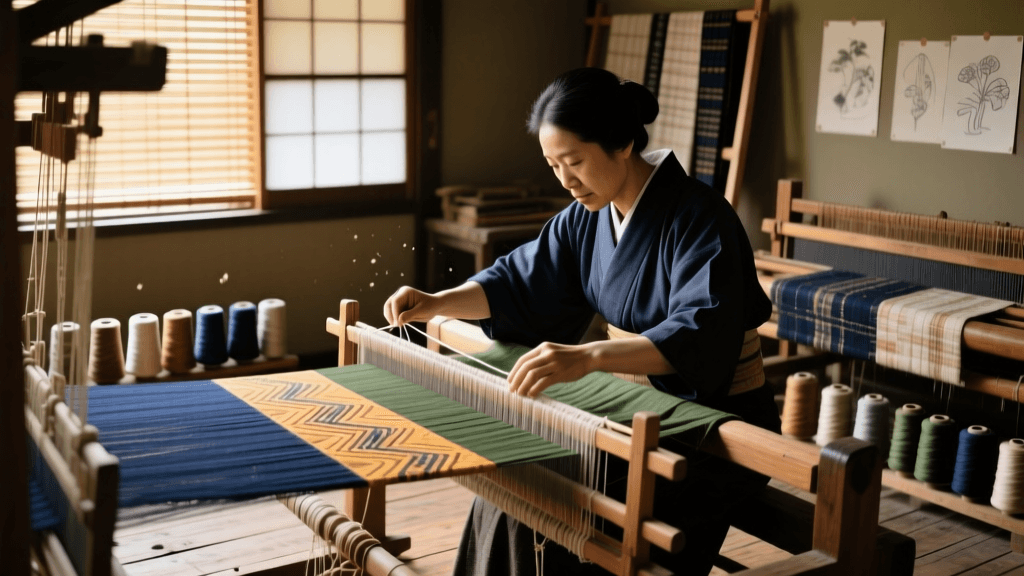
The magic of Oshima Tsumugi lies in its chemical reaction. Threads are first dyed using the tannin-rich bark of the Tecchis (Yeddo hawthorn) tree. They are then submerged in iron-rich mud found exclusively in the Amami rice paddies. The tannin and iron react to create a deep, lustrous black or dark brown hue. This process is repeated dozens of times. Before dyeing, threads are tightly bound with cotton according to a precise graph paper pattern to create the kasuri motifs. When woven, the slight misalignment of these dyed threads gives the fabric a distinctive, soft-edged geometric blur.
Purchasing and Costs
- Authenticity Check: True Amami Oshima Tsumugi will feature a certification label from the Amami Oshima Tsumugi Cooperative. The fabric should feel remarkably smooth and produce a distinct, crisp rustling sound (known as kinu-nari) when rubbed.
- Cost Range: Due to the labor-intensive mud-dyeing and hand-weaving process, a bolt of authentic Oshima Tsumugi ranges from 400,000 JPY to over 1,500,000 JPY ($2,700 to $10,000+ USD).
- Care: Unlike many silks, mud-dyed Oshima Tsumugi becomes softer and more comfortable with wear. It is highly resistant to wrinkles and moisture, making it an excellent choice for everyday luxury wear in humid climates.
Okinawa Prefecture: The Tropical Ryusou and Bingata
The traditional dress of Okinawa, known as Ryusou, diverges significantly from mainland Japanese kimono. Developed during the Ryukyu Kingdom era, Ryusou was designed for a subtropical climate and reflects heavy cultural exchange with Ming Dynasty China and Southeast Asia. The Agency for Cultural Affairs Japan Heritage recognizes Okinawa's textile traditions as a vital bridge connecting Japanese craftsmanship with broader Asian maritime trade routes.
Garment Structure and Textiles
Ryusou features a wider, looser fit with larger sleeves that allow for air circulation. Unlike the mainland kimono, which requires a rigid, tightly tied obi, traditional Ryusou is often secured with a simple, soft sash or left open as an outer robe (uchikake style). The most famous Okinawan textile is Bingata, a vibrant resist-dyed fabric featuring bold motifs of tropical flora, fauna, and ocean waves. For summer and commoner wear, Bashofu (woven banana plant fiber) and Miyako Jofu (ramie linen) are preferred for their breathability and crisp texture.
Purchasing and Costs
- Climate Suitability: Bashofu and Miyako Jofu are ideal for high-heat, high-humidity environments. They can be worn as casual summer kimono (yukata alternatives) on the mainland.
- Cost Range: Authentic, hand-woven Bashofu is exceptionally rare due to the scarcity of skilled weavers, with prices starting around 1,000,000 JPY. Stencil-dyed Bingata cotton yukata are more accessible, ranging from 50,000 to 150,000 JPY.
- Styling: When wearing Ryusou or Bingata outside of Okinawa, treat it as a statement piece. Keep accessories minimal and opt for lightweight, unlined hitoe constructions.
Comparison Chart: Regional Garments & Textiles
| Prefecture | Textile / Garment | Primary Material | Key Technique | Avg. Bespoke Cost (JPY) | Best Season |
|---|---|---|---|---|---|
| Ishikawa | Kaga Yuzen Kimono | Silk (Chirimen/Habutae) | Hand-painted resist dye | 800,000 - 3,000,000 | Spring / Autumn |
| Kagoshima | Amami Oshima Tsumugi | Silk (Pongee) | Mud-dye & Kasuri weave | 400,000 - 1,500,000 | Year-round |
| Okinawa | Bingata / Ryusou | Silk / Cotton | Stencil resist dye | 150,000 - 800,000 | Summer / Festivals |
| Okinawa | Bashofu | Banana Fiber | Hand-spun & woven | 1,000,000+ | High Summer |
Practical Guide to Purchasing and Caring for Regional Kimono
Investing in regional Japanese garments requires an understanding of traditional measurements and proper maintenance. Unlike Western clothing, kimono are not sized by standard small, medium, or large metrics. They are typically cut from a single bolt of fabric called a tanmono, which measures approximately 38 centimeters in width and 12 meters in length.
Essential Measurements for Bespoke Orders
If you are commissioning a regional garment or having a vintage piece tailored (mitsu-gake), you must provide the following measurements:
- Yuki (Arm Span): Measured from the center of the back of the neck, over the shoulder, to the wrist bone. This determines the sleeve length.
- Take (Garment Length): Generally calculated as the wearer's total height minus 10 centimeters, allowing for the ohashori (the waist fold).
- Kuri-koshi (Back Seam Drop): The distance from the base of the neck to the shoulder blade, crucial for ensuring the collar sits correctly without choking the wearer.
- Hip and Waist Circumference: Used to determine if the standard 38cm tanmono width is sufficient, or if a wider, custom-loomed bolt is required.
Regional Care Instructions
Maintenance varies drastically by region and technique. Kaga Yuzen silks must be dry-cleaned by specialists who understand water-soluble rice paste residues; improper washing can cause the bokashi gradients to bleed. Conversely, Amami Oshima Tsumugi benefits from occasional airing out in the shade and can withstand gentle, specialized hand-washing, which actually enhances the fabric's drape over time. Okinawan Bashofu should never be wrung out; it must be pressed flat while damp to maintain the structural integrity of the rigid banana fibers.
By understanding the profound regional differences in Japan's textile heritage, collectors and wearers can appreciate the kimono not just as a uniform national dress, but as a diverse tapestry of local climates, histories, and artisanal triumphs.