Discover Nishijin-Ori: Kyoto's Legendary Kimono Weaving Art
The Living Heritage of Nishijin-Ori
When discussing the pinnacle of Japanese traditional garments, the conversation inevitably turns to the breathtaking textiles that form the foundation of the kimono. Among these, Nishijin-ori (Nishijin weaving) stands as the undisputed monarch of Japanese brocade. Originating in the Nishijin district of Kyoto, this centuries-old craft is renowned for its intricate patterns, vibrant colors, and the luxurious incorporation of metallic threads. Unlike Yuzen dyeing, where patterns are painted or resist-dyed onto finished white silk, Nishijin-ori patterns are woven directly into the fabric using pre-dyed yarns, resulting in a deeply textured, reversible, and astonishingly durable textile.
For textile enthusiasts, collectors, and cultural travelers, understanding Nishijin-ori is essential. It is not merely a fabric; it is a complex architectural feat of threads that dictates the formality, seasonality, and aesthetic weight of a kimono ensemble. In this comprehensive guide, we will explore the history of this legendary craft, break down the meticulous artisan process, and provide actionable advice on how to experience, purchase, and care for authentic Nishijin textiles in Kyoto today.
From Thread to Masterpiece: The Weaving Process
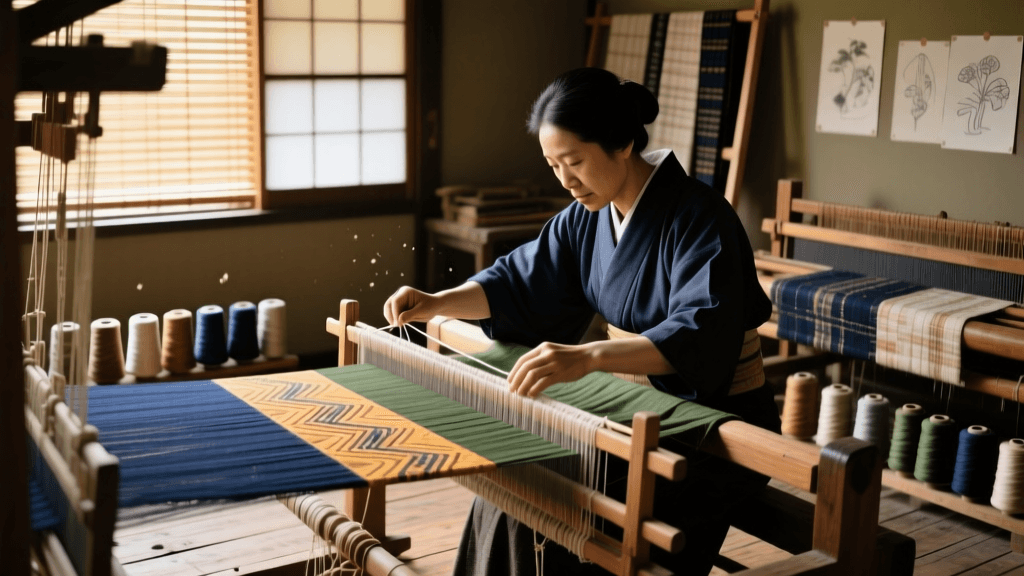
The creation of Nishijin-ori is famously divided into more than twenty distinct, highly specialized steps. Historically, these steps were distributed among different artisan households in the Nishijin district, creating a localized supply chain that has survived for centuries. While modern technology has introduced computerized Jacquard looms, the highest-end ceremonial pieces, such as the Maru obi (the most formal, fully patterned sash), are still woven on traditional handlooms.
The Anatomy of the Weave
The magic of Nishijin weaving lies in its ability to integrate diverse materials. Artisans frequently use kinran (gold thread) and ginran (silver thread), which are created by applying lacquer and precious metal leaf to specialized Japanese paper (washi), then cutting it into microscopically thin strips and wrapping it around silk cores. The interplay of these metallic wefts against the matte silk warp creates a three-dimensional effect that shifts dynamically with the light.
"Nishijin-ori is not just about making cloth; it is about engineering light and shadow through the precise tension of silk and metal." — Master Weaver of the Nishijin Textile Center.
Key Steps in Production
- Design and Punch Cards: The process begins with a master design. For traditional Jacquard looms, this design is translated into a series of punch cards (or modern digital equivalents) that dictate the lifting of warp threads.
- Warping and Weft Preparation: Silk threads are dyed to exact color specifications. The warp (longitudinal threads) is stretched with immense precision, while the weft (transverse threads) is wound onto bobbins.
- Weaving: Using a bataban (a heavy wooden shuttle), the weaver passes the weft through the shed. A single inch of complex brocade can take hours to complete on a manual loom.
- Finishing: The woven fabric is inspected, steamed, and stretched to ensure uniform tension and a flawless drape.
Experiencing the Craft: Kyoto Artisan Workshops
For visitors to Kyoto, witnessing the rhythmic clatter of the looms is a must. The Nishijin Textile Center is the premier destination for understanding this craft. It offers daily kimono fashion shows, historical exhibitions, and interactive workshops. However, for a more intimate, artisan-focused experience, smaller studios and specialized museums offer deeper dives into the craft.
According to the Japan Guide, the Nishijin Textile Center is highly accessible, located just a short walk from Imadegawa Station on the Karasuma Subway Line. For those looking to get their hands on the looms, booking in advance is critical, especially during the peak spring and autumn tourist seasons.
Workshop Comparison Guide
Below is a structured comparison of the top weaving experiences available to visitors in Kyoto, detailing costs, duration, and the focus of each workshop.
| Workshop / Venue | Duration | Approx. Cost (JPY) | Focus & Output | Booking Lead Time |
|---|---|---|---|---|
| Nishijin Textile Center | 45 - 60 mins | ¥2,500 - ¥4,000 | Coaster or small purse weaving on manual table looms. | 1-2 weeks |
| Orinasu-kan (Nishijin) | 90 mins | ¥5,500 | Advanced weaving techniques; creating a silk scarf or table runner. | 3-4 weeks |
| Private Artisan Studio Tours | 2 - 3 hours | ¥15,000+ | Observation of master weavers, Jacquard punch-card creation, and tea ceremony. | 1-2 months |
Note: Costs are subject to change and usually exclude shipping for finished products if they require post-weaving tailoring.
A Collector’s Guide to Purchasing Nishijin-ori
Purchasing an authentic Nishijin-ori obi or kimono is a significant investment. The market is flooded with synthetic imitations and mass-produced machine-woven textiles that mimic the Nishijin style. To ensure you are buying a genuine artisan product, you must know what to look for.
Identifying Authenticity
The most reliable indicator of authenticity is the official certification seal. The Japanese government, through the Ministry of Economy, Trade and Industry (METI), designates specific regional crafts as "Traditional Craft Products." Genuine Nishijin-ori will feature a gold foil sticker or a woven label certifying its origin and adherence to strict traditional methods, including the use of natural silk and specific dyeing techniques.
Price Expectations and Measurements
When shopping in Kyoto's specialized boutiques or the wholesale shops near the Textile Center, understanding standard measurements and price tiers is crucial for making an informed purchase.
- Fukuro Obi (Standard Formal Sash): Measures approximately 31 cm (12 inches) in width and 4.5 meters in length. Woven with patterns on one side only. Price Range: ¥50,000 to ¥300,000 ($350 - $2,100 USD).
- Maru Obi (Ceremonial Sash): Measures up to 68 cm in width (folded to 34 cm) and over 4.5 meters in length. Fully patterned on both sides, heavily woven with gold and silver threads. Extremely heavy and difficult to tie without professional help. Price Range: ¥300,000 to ¥1,500,000+ ($2,100 - $10,000+ USD).
- Nagoya Obi (Semi-Formal/Casual Sash): Pre-folded and stitched for ease of tying, measuring about 3.6 meters. Often features woven geometric or seasonal motifs. Price Range: ¥30,000 to ¥100,000 ($210 - $700 USD).
Caring for Your Woven Masterpieces
Nishijin-ori is remarkably durable, but its complex structure and metallic threads require specialized care. Improper storage or cleaning can irreversibly damage the metallic leaf or distort the tension of the weave.
Storage and Maintenance Rules
- Never Wash at Home: Water can cause the silk to shrink independently of the metallic threads, leading to severe puckering. Furthermore, the metal leaf can oxidize or flake off when exposed to moisture. Always rely on professional kimono cleaners who specialize in woven textiles.
- Airing Out: After wearing, hang the obi or kimono in a well-ventilated, shaded area for 24 hours to allow moisture from the body to evaporate before folding.
- Acid-Free Storage: Store Nishijin textiles wrapped in tatoushi (traditional Japanese paper) or acid-free tissue paper. Never store silk in plastic bags, as trapped humidity will encourage mold growth and tarnish the silver threads.
- Rotation: If you have a collection, rotate the pieces you display or wear. Prolonged exposure to direct sunlight will fade the vibrant silk dyes and degrade the protein structure of the silk fibers.
Preserving the Future of the Loom
Like many traditional Japanese crafts, Nishijin-ori faces the challenge of an aging artisan population and a decline in everyday kimono wear. However, a new generation of designers is revitalizing the industry by applying Nishijin weaving techniques to modern accessories, interior design fabrics, and contemporary fashion. By supporting artisan workshops, purchasing certified textiles, and understanding the immense labor behind every thread, collectors and enthusiasts play a vital role in ensuring that the looms of Kyoto continue to clatter for centuries to come.