Shichi-Go-San to Seijin-shiki: Japanese Coming-of-Age Kimono Guide
The Lifecycle of Japanese Traditional Garments
In Japan, the journey from childhood to adulthood is punctuated by deeply significant cultural milestones, many of which are intrinsically tied to the wearing of traditional garments. Unlike everyday fashion, these milestone garments serve as visual markers of growth, familial pride, and societal transition. For parents and young adults navigating these traditions, understanding the specific requirements, costs, and timelines associated with children's kimono and coming-of-age attire is essential. This guide explores the sartorial journey from Shichi-Go-San to Seijin-shiki, providing actionable advice for participating in these time-honored celebrations.
Shichi-Go-San: Dressing Children for the Seven-Five-Three Festival
Held annually on November 15th, Shichi-Go-San (Seven-Five-Three) is a traditional rite of passage for three- and seven-year-old girls and five-year-old boys. According to Japan Guide's comprehensive overview of Shichi-Go-San, the festival originated in the Heian period among court nobles and later spread to the samurai class, celebrating the survival and healthy growth of children in an era when infant mortality was high. Today, families visit Shinto shrines to pray for their children's continued health, dressed in exquisite, age-specific traditional attire.
Garment Specifics by Age and Gender
The type of kimono worn during Shichi-Go-San changes drastically depending on the child's age and gender, reflecting their developmental stage.
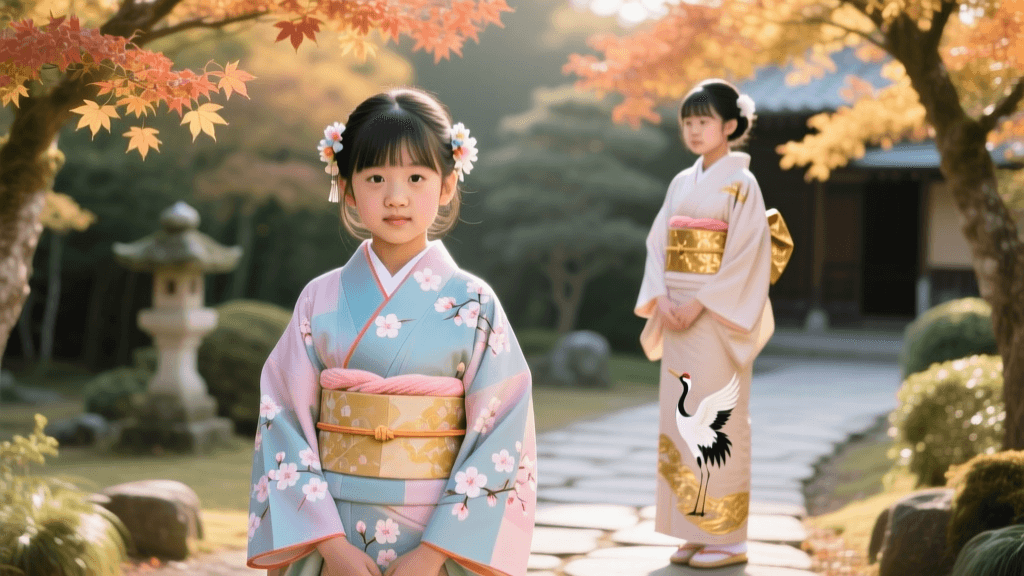
- Three-Year-Old Girls (San-mairi): At this age, tying a restrictive, heavy obi sash is impractical and uncomfortable. Instead, girls wear a standard children's kimono paired with a hifu—a padded, sleeveless vest that ties loosely at the front. This allows for ease of movement while maintaining a formal, festive silhouette.
- Five-Year-Old Boys (Go-mairi): Boys transition into formal menswear, wearing a haori (a short, hip-length jacket) over a kimono, paired with hakama (pleated, wide-leg trousers). The ensemble is secured with a kaku-obi (stiff sash) and often features family crests (kamon) on the haori.
- Seven-Year-Old Girls (Nana-mairi): This marks a major transition. Seven-year-old girls wear an odashi (adult-style) kimono with a full fukuro obi tied in a decorative knot. Because the child's body is still small, the kimono requires a deep ohashori (waist tuck) to adjust the length. Accessories like a shigoki (a decorative silk sash tied below the obi) and a hakoseko (a small, ornamental pouch worn at the chest) are added to complete the look.
Practical Tips for Parents: Sizing and Comfort
Children's kimonos are typically sized by length rather than standard Western clothing sizes. A three-year-old's kimono usually has a back length (se-cho) of around 80-90cm, while a seven-year-old's ranges from 115-130cm. When renting or purchasing, always provide the child's exact height and chest measurements to the kitsuke (kimono dressing) professional. To ensure comfort during long shrine visits, dress children in thin, breathable cotton undergarments (hadajuban) to prevent the kimono silk from irritating the skin, and schedule the dressing session as close to the departure time as possible to minimize restlessness.
Seijin-shiki: The Coming-of-Age Furisode Tradition
Held on the second Monday of January, Seijin-shiki (Coming-of-Age Day) celebrates young adults who have reached the age of majority. While Japan officially lowered the legal age of adulthood from 20 to 18 in April 2022, the cultural and sartorial traditions of Seijin-shiki remain overwhelmingly tied to the age of 20. As noted in the Victoria and Albert Museum's historical analysis of the Kimono, the garment remains a powerful symbol of social status, marital availability, and cultural continuity. For young women, this milestone is synonymous with the furisode.
The Shift in Legal Age vs. Sartorial Tradition
Despite the legal shift to 18, most municipalities and kimono rental shops continue to cater to 20-year-olds for Seijin-shiki. This is largely because 18-year-olds are typically in the midst of rigorous university entrance examinations or starting their first jobs, making a January celebration impractical. Therefore, the furisode industry continues to operate on the traditional 20-year-old timeline.
Anatomy of the Furisode Ensemble
The furisode is the most formal kimono for unmarried women, instantly recognizable by its dramatically long, swinging sleeves, which historically served as a way to express romantic interest or ward off evil spirits. A complete furisode ensemble is complex and requires numerous components:
- Nagajuban: The formal under-kimono, which must have a collar that perfectly aligns with the outer kimono.
- Furisode Kimono: Featuring vibrant, all-over patterns often depicting auspicious motifs like cranes, pine trees, or peonies.
- Fukuro Obi: A heavily brocaded, formal sash tied in elaborate styles such as the fukura-suzume (puffed sparrow) or tateya (standing arrow).
- Obi-age and Obi-jime: A silk cloth used to hide the obi padding, and a decorative braided cord used to secure the obi knot.
- Zori and Tabi: Formal vinyl or brocade sandals worn with white split-toe socks.
Cost and Planning Guide: Rentals vs. Purchases
Planning for these milestones requires significant financial and temporal investment. The kimono industry operates on strict seasonal booking windows. Below is a comparative breakdown of costs and timelines for both Shichi-Go-San and Seijin-shiki.
| Milestone | Garment Type | Average Rental Cost (JPY) | Average Purchase Cost (JPY) | Booking Lead Time |
|---|---|---|---|---|
| Shichi-Go-San (Age 3/5/7) | Children's Kimono / Hifu / Hakama | ¥10,000 - ¥30,000 | ¥50,000 - ¥150,000 | 3 - 6 Months |
| Seijin-shiki (Age 20) | Furisode (Full Ensemble) | ¥150,000 - ¥350,000 | ¥300,000 - ¥1,000,000+ | 12 - 18 Months |
Pro Tip for Seijin-shiki: If you plan to purchase a furisode, many high-end department stores and specialized kimono boutiques offer "Seijin-shiki packages" that include the garment, all necessary accessories, professional dressing on the day of the event, and professional hair and makeup services. Always verify exactly what is included in the package, as hidden fees for hair ornaments (kanzashi) or obi padding can add up quickly.
Essential Accessories and Weather Contingencies
Both Shichi-Go-San and Seijin-shiki occur during cooler months (November and January, respectively). Traditional garments are not inherently designed for modern winter weather, making practical contingencies vital.
Staying Warm in Traditional Attire
For children participating in Shichi-Go-San, layering is key. Modern hadajuban (undergarments) often come in heat-retaining fabrics like Heattech. For seven-year-old girls, a shigoki sash can be tied over a thin, warm cardigan hidden beneath the kimono. For young women wearing furisode in January, it is standard practice to wear specialized thermal undergarments designed specifically with deep necklines to remain invisible beneath the kimono collar. Hand warmers (kairo) can be discreetly placed in the pockets of the hakama or inside the sleeves of the furisode while waiting outdoors.
Footwear and Rain Gear
Traditional zori sandals offer zero arch support and are highly susceptible to water damage. If rain is forecasted, rental shops provide silicone covers for zori, or you can purchase disposable plastic zori covers at convenience stores. Furthermore, because walking in a tight kimono hem restricts stride length, advise both children and young adults to take small, deliberate steps and to use a traditional oilpaper umbrella (wagasa) rather than a Western umbrella, which can easily snag on the delicate silk sleeves and hair ornaments.
Preserving the Legacy of Japanese Milestone Garments
Whether it is a toddler taking their first steps in a shrine courtyard wearing a bright red hifu, or a twenty-year-old woman stepping into adulthood draped in a magnificent furisode, these garments are far more than mere clothing. They are living artifacts that connect modern Japanese families to centuries of cultural heritage. By understanding the intricate rules of kitsuke, the financial realities of the kimono industry, and the practical necessities of wearing silk in modern environments, participants can fully embrace the beauty and profound significance of Japan's coming-of-age traditions. For further reading on modern Japanese cultural festivals and their historical contexts, resources like Japan Guide's breakdown of Coming of Age Day provide excellent supplementary context for families planning their milestone celebrations.