Traditional Tai Chi Uniforms: The Ultimate Buyer Guide
The Philosophy and Function of Tai Chi Attire
Taijiquan, commonly known as Tai Chi, is far more than a sequence of gentle movements; it is a profound martial art and a moving meditation. Recognized globally for its health benefits and cultural significance, Tai Chi was even inscribed on the UNESCO Representative List of the Intangible Cultural Heritage of Humanity. While the internal mechanics of Qi (energy) flow and body alignment are paramount, the external layer—the traditional Tai Chi uniform, or Taijiquan Fu—plays a critical role in both the physical execution and the mental preparation of the practitioner.
Unlike rigid martial arts uniforms such as the heavy canvas Karate Gi or the thick cotton Judo Gi, Tai Chi practice wear is designed to facilitate Song (active relaxation and sinking). The clothing must never restrict the deep stances, the expansion of the ribcage during abdominal breathing, or the fluid rotation of the waist. Whether you are a beginner stepping into the park for morning practice or an advanced competitor preparing for an International Wushu Federation sanctioned event, selecting the right garment is essential.
Historical Context: From Daily Wear to Practice Gear
The modern Tai Chi uniform draws heavy inspiration from traditional Chinese daily wear, specifically the Changshan (long shirt) and Tangzhuang (Tang suit) popularized during the late Qing Dynasty and the Republican era. Historically, martial artists simply practiced in their everyday clothing. However, as Tai Chi transitioned from a closely guarded family combat system to a public health exercise in the mid-20th century, a specialized uniform emerged.
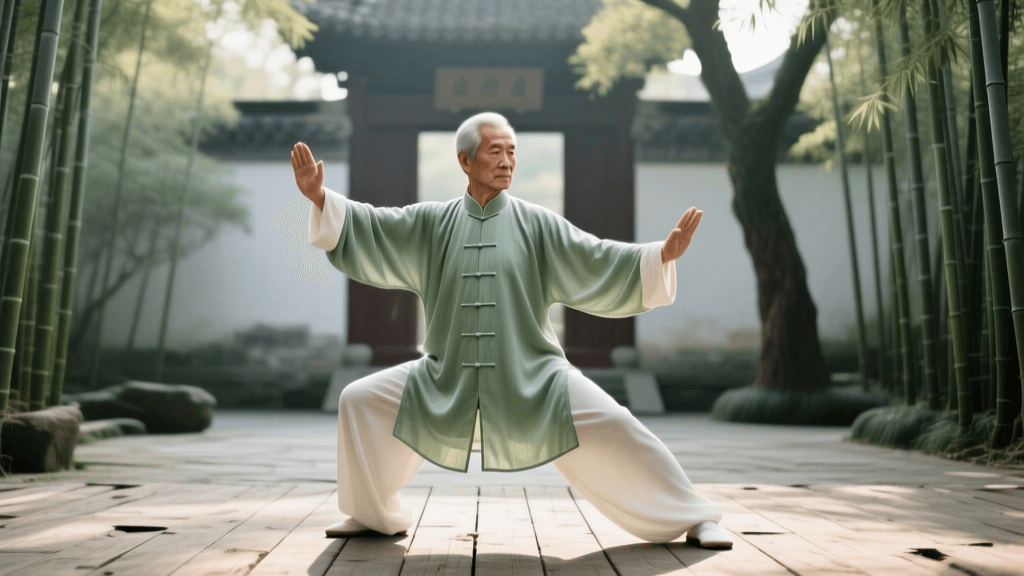
The classic design features a Mandarin collar (stand-up collar), traditional frog buttons (Pankou), and a relaxed, drop-crotch trouser. This design honors the aesthetic of traditional Hanfu and Qing-era garments while adapting the tailoring to accommodate the deep Mabu (horse stance) and Gongbu (bow stance) required in forms like the Yang Style 24 or the Chen Style Laojia.
Fabric Guide: Choosing the Right Material
The fabric of your Tai Chi suit dictates how it moves with your body. According to Harvard Medical School, the fluid, continuous movements of Tai Chi require complete physical comfort to maximize the mind-body connection. Here is a breakdown of the most common materials used in Tai Chi apparel.
| Fabric Type | Breathability | Drape & Flow | Best Suited For | Estimated Cost (USD) |
|---|---|---|---|---|
| 16mm Mulberry Silk | High | Excellent | Competitions, Demonstrations | $80 - $150 |
| 100% Washed Linen | Very High | Moderate | Summer Outdoor Practice | $50 - $90 |
| Cotton-Linen Blend | High | Good | Daily Practice, All Seasons | $40 - $75 |
| Ice Silk (Viscose Blend) | Moderate | Excellent | Hot Weather, Indoor Gyms | $30 - $60 |
| Heavyweight Cotton | Low | Stiff | Winter Practice, Martial Application | $45 - $85 |
Silk: The Competition Standard
For competitions, 16mm to 19mm Mulberry silk is the gold standard. It catches the light beautifully, accentuating the flow of the movements for judges and audiences. However, pure silk requires delicate care and can be slippery during push-hands (Tuishou) practice.
Cotton and Linen: The Daily Drivers
For daily practice, a cotton-linen blend (typically 70% cotton, 30% linen) offers the best balance. It provides the structural durability of cotton with the breathability and moisture-wicking properties of linen. These fabrics soften over time, molding to the practitioner's body.
Sizing and Fit: The Mechanics of the Cut
A common mistake among Western buyers is purchasing standard athletic wear sizing for Tai Chi. Traditional Tai Chi uniforms are cut with specific anatomical allowances that differ vastly from Western tailoring.
The Drop-Crotch Trouser (Dangku)
Tai Chi pants feature a gusseted or drop-crotch design. This is not merely an aesthetic choice; it is a biomechanical necessity. When sinking into a deep single whip stance (Danbian), standard trousers will bind at the inseam and restrict blood flow. A proper Tai Chi pant should have a crotch drop of at least 3 to 5 inches lower than standard trousers, allowing the pelvis to tuck (Fanfu) without fabric tension.
Sleeve Length and Cuffs
The sleeves of a Tai Chi top should extend to the base of the thumb when the arms are hanging naturally, but they should not cover the hands. During forms, the hands must remain visible to ensure proper wrist alignment and energy expression (Fajin). Look for sleeves with a slight taper or an elasticized inner cuff to prevent the fabric from sliding over the wrists during inverted movements.
Measurement Guide for Ordering
- Chest: Measure around the fullest part. Add 4-6 inches for the traditional relaxed fit.
- Inseam: Measure from the crotch to the ankle bone. Tai Chi pants should end exactly at the ankle bone to prevent tripping during stepping exercises.
- Shoulder Width: Measure from the edge of one shoulder to the other. The seam should drop slightly past the natural shoulder line to allow for arm elevation without the shirt riding up.
Styles by Discipline: Chen vs. Yang
While a standard uniform works for general practice, advanced practitioners often tailor their wardrobe to their specific style of Tai Chi.
Yang Style Uniforms
Yang style is characterized by large, expansive, and continuous flowing movements. Practitioners prefer wide-leg trousers and long, flowing tops made of silk or soft cotton blends. The visual emphasis is on grace, continuity, and the aesthetic of water flowing.
Chen Style Uniforms
Chen style incorporates explosive bursts of energy (Fajin), deep stomping, and silk-reeling spirals. Chen practitioners often opt for slightly more fitted tops with stretch-blend fabrics (like cotton-spandex) to prevent loose fabric from obscuring the rapid, intricate joint rotations. The pants are often tied or tucked into socks to ensure the footwork and ankle articulation are completely visible and unencumbered.
Footwear: Grounding the Practice
No Tai Chi uniform is complete without the correct footwear. Modern running shoes with thick, cushioned heels are detrimental to Tai Chi practice, as they elevate the heel, disrupt the alignment of the spine, and numb the sensory feedback from the ground.
The traditional choice is the Feiyue Classic or the Warrior brand martial arts shoe. These shoes feature a completely flat, thin rubber sole with a vulcanized construction. Priced typically between $15 and $30, they allow the practitioner to feel the ground, grip the surface during pivots, and maintain proper weight distribution across the Yongquan (bubbling well) acupressure point on the sole of the foot. For indoor practice on polished wood floors, traditional cloth-soled Kung Fu shoes offer excellent pivot capability, though they lack outdoor durability.
Color Theory in Tai Chi Wear
Color in Tai Chi is not arbitrary; it is deeply rooted in Daoist philosophy and the Five Elements (Wu Xing).
- White: Represents Metal, purity, and the beginning of the journey. It is the most common color for beginners and morning practice.
- Black: Represents Water, depth, and the accumulation of internal power. Often worn by advanced practitioners and instructors.
- Blue/Green: Represents Wood, growth, and vitality. Excellent for spring practice and healing-focused sessions.
- Red: Represents Fire and is generally avoided for daily meditative practice as it is considered too stimulating for the nervous system, though it is popular in festive demonstrations.
Care and Maintenance
To preserve the integrity of your Tai Chi garments, proper care is essential. Silk uniforms must be hand-washed in cold water with a pH-neutral detergent and air-dried in the shade; direct sunlight will degrade the silk proteins and cause yellowing. Cotton and linen blends can be machine washed on a gentle cycle but should be removed immediately to prevent deep wrinkling. Always store your uniforms folded rather than on wire hangers, which can distort the shoulder seams and alter the drape of the garment.
Conclusion
Investing in a high-quality, properly fitted traditional Tai Chi uniform is an investment in your practice. By respecting the historical tailoring, choosing the appropriate fabric for your environment, and pairing your suit with flat-soled martial arts shoes, you remove physical distractions. This allows your mind to focus entirely on the internal landscape of breath, structure, and Qi, honoring the centuries-old tradition of Taijiquan.