Mythological Hanfu: Styling Chinese Legends and Deities
The Intersection of Myth and Wardrobe
The modern Hanfu movement is not solely confined to strict historical reenactment; it is also a vibrant canvas for mythological expression. Across Asian traditions, clothing is deeply intertwined with the divine, the ethereal, and the supernatural. When enthusiasts and designers draw inspiration from Chinese mythology, they tap into a visual language that has been cultivated for millennia. According to Encyclopedia Britannica, Chinese mythology is rich with deities, immortals (Xian), and spirits whose garments reflect their cosmic domains, moral alignments, and supernatural abilities.
Translating these legendary figures into wearable, modern Hanfu requires a nuanced understanding of fabric behavior, silhouette, and symbolic color theory. The goal is to capture Xianqi (fairy energy) or Yaoqi (demonic/spirit energy) through precise styling choices. This guide provides actionable, detailed advice on sourcing, sewing, and styling Hanfu inspired by some of the most iconic figures in Chinese folklore.
Signature Mythological Archetypes and Their Garments
The Moon Goddess: Chang'e
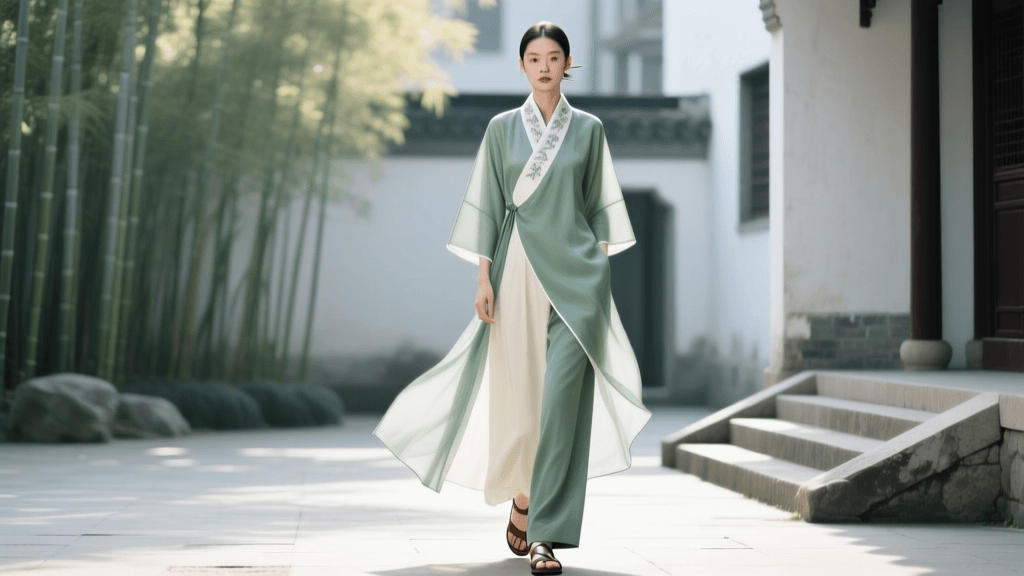
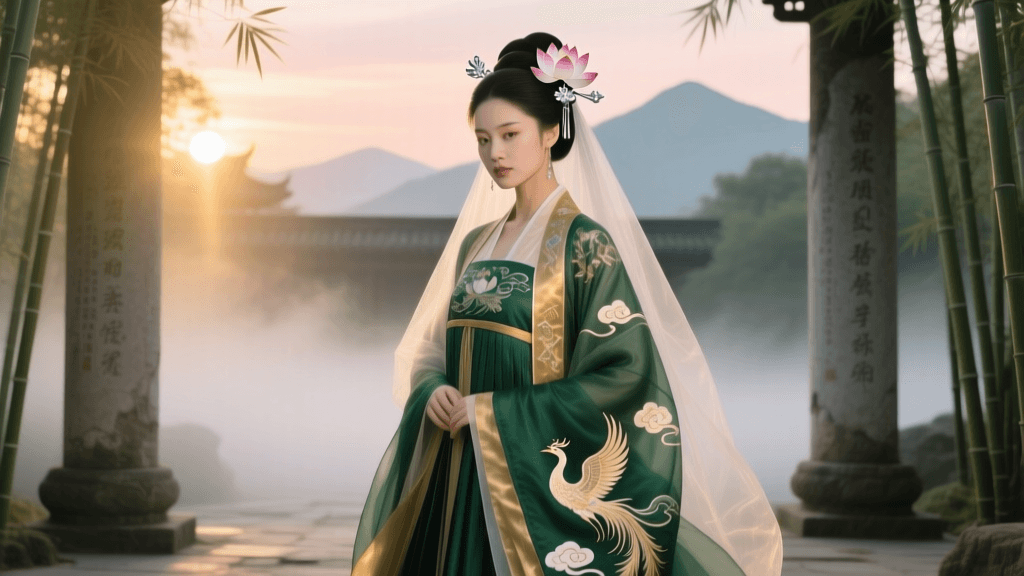
Chang'e, the immortal goddess of the moon, is the quintessential symbol of ethereal grace and celestial isolation. Her mythological wardrobe is defined by weightlessness and flowing movement. To recreate her look, the Da Xiu Shan (large-sleeved robe) paired with a Qixiong Ruqun (chest-high pleated skirt) is essential. The Metropolitan Museum of Art notes that Chinese silk has historically been prized for its ability to mimic the ethereal qualities of the heavens, making it the perfect medium for lunar deities.
- Fabric & Measurements: Use 12mm to 16mm 100% mulberry silk chiffon for the outer robe to ensure it catches the wind. You will need approximately 6 yards of fabric for a Da Xiu Shan with a traditional 150cm wingspan (sleeve tip to sleeve tip). The sleeves should drop at least 80cm from the shoulder seam.
- Color Palette: Icy blues, pearlescent whites, and pale silver. Avoid harsh, saturated colors.
- Styling Detail: Incorporate a Pibo (silk stole) measuring at least 250cm in length, draped loosely over the elbows to create a floating halo effect when walking.
The Fox Spirit: Huli Jing
Unlike the serene immortals, the Huli Jing (fox spirit) embodies allure, wildness, and shape-shifting mystique. As highlighted by Smithsonian Magazine, the fox spirit holds an enduring legacy in East Asian folklore, often depicted as a beautiful but dangerous figure who uses charm and illusion. To channel the Huli Jing, the Ming Dynasty Aoqun (jacket and skirt) is the most historically grounded yet visually striking choice.
- Fabric & Measurements: Opt for heavy silk brocade or jacquard for the Ao (jacket) to provide structure, contrasted with a flowing Mamianqun (horse-face skirt). The jacket should feature a stand collar (Liling) and metal sub-buttons (Zikou). Allocate 4 yards for a standard 12-pleat Mamianqun.
- Color Palette: Crimson, deep gold, and obsidian black. Fox spirits are often associated with fire, autumn, and the earthly realm.
- Styling Detail: Add faux-fur trimming (approx. 5cm wide) to the cuffs and hem of the jacket. This subtle nod to animalistic traits elevates the costume from standard historical wear to mythological storytelling.
The Dragon King and Water Deities
Water deities, including the Dragon Kings of the Four Seas, command authority over rivers, rain, and oceans. Their garments must reflect fluidity, scale, and imperial power. The Yuanling Pao (round-collar robe) is the ideal base, historically worn by officials and emperors, but adapted here with aquatic motifs.
- Fabric & Measurements: Stiff silk organza or raw silk is necessary to hold the structured round collar and the voluminous skirt. You will need 7 to 8 yards to accommodate the side slits and overlapping front panels. Look for fabrics with an ombre dye effect, transitioning from deep abyssal blue at the hem to seafoam green at the shoulders.
- Color Palette: Teal, aquamarine, jade green, and metallic gold.
- Styling Detail: Embroidery is paramount. Commission or purchase a robe with Hai Shui Jiang Ya (standing water and cliff) patterns at the hem, incorporating subtle dragon scale motifs woven directly into the jacquard.
Comparison Chart: Myth vs. Modern Hanfu Equivalents
| Mythological Figure | Core Element | Modern Hanfu Equivalent | Recommended Fabric & Weight | Estimated Cost (USD) |
|---|---|---|---|---|
| Chang'e (Moon) | Ethereal flight, isolation | Da Xiu Shan + Qixiong Ruqun | 12mm Silk Chiffon | $120 - $180 |
| Huli Jing (Fox) | Allure, wildness, illusion | Ming Dynasty Liling Aoqun | Silk Brocade + Faux Fur Trim | $150 - $250 |
| Dragon King | Scales, water, authority | Yuanling Pao (Round Collar) | Stiff Silk Organza / Raw Silk | $200 - $350 |
| He Xiangu (Lotus) | Floral purity, nature | Beizi (Long Coat) + Song Ku | Lotus-embroidered Tencel/Linen | $80 - $140 |
Actionable Guide: Sourcing and Styling Your Mythological Hanfu
Fabric Selection and Sourcing Keywords
When shopping on platforms like Taobao, AliExpress, or specialized Hanfu boutiques, using the correct Chinese terminology is crucial for finding mythological-inspired pieces. Search for the term "Xianqi" (仙气), which translates to "fairy energy" or "ethereal vibe." This keyword filters out rigid, court-style historical garments in favor of flowing, fantasy-leaning designs. For darker, spirit-inspired looks, use "Yaoqi" (妖气) or search for "Ming Dynasty Witch" aesthetics.
Always check the momme (mm) weight when buying silk online. A 19mm silk satin will drape heavily and luxuriously, perfect for a fox spirit's structured jacket, while an 8mm or 12mm chiffon will float dramatically, essential for lunar or celestial deities.
Essential Accessories and Hair Ornaments
A mythological Hanfu ensemble is incomplete without the correct headwear and accessories. Immortals and spirits are rarely depicted with bare hair.
- Hairpins (Buyao & Zan): For Chang'e, use long, dangling Buyao (step-shake hairpins) featuring pearl or moon rabbit motifs. The dangling elements should be at least 10cm long to create movement. Cost: $15 - $40 per piece.
- Crowns and Coronets: Water deities and Dragon Kings require structured headwear. A Diao Chan Guan (cicada-crown) or a metallic filigree lotus crown anchors the heavy round-collar robes. Ensure the crown has a secure base; use a U-shaped hair stick to anchor it through a high topknot.
- Handheld Props: Carry a round silk fan (Tuan Shan) painted with celestial maps for immortals, or a paper umbrella for fox spirits wandering the mortal realm.
Caring for Ethereal Garments
Mythological Hanfu relies heavily on delicate fabrics and metallic embroidery threads that require specialized care. Never machine-wash silk chiffon or organza. Instead, fill a basin with cool water and a pH-neutral silk detergent. Submerge the garment for no more than three minutes, gently agitate, and rinse. Do not wring the fabric; roll it in a clean, dry microfiber towel to absorb excess moisture, then lay it flat to dry away from direct sunlight, which will yellow white and pale blue silks.
For heavily embroidered Mamianqun skirts, store them hanging on wide, velvet-lined hangers to preserve the sharp knife pleats. If the pleats lose their edge, use a garment steamer held at least 10cm away from the fabric, gently pressing the pleats flat with your hand while the steam relaxes the fibers.
Conclusion
Styling Hanfu through the lens of Chinese mythology allows wearers to step outside the boundaries of strict historical replication and into the realm of cultural storytelling. By understanding the symbolic weight of fabrics, the precise measurements required for ethereal silhouettes, and the rich folklore behind deities like Chang'e and the Huli Jing, you can curate a wardrobe that is both visually breathtaking and deeply rooted in Asian traditions. Whether you are attending a Hanfu convention, participating in a cultural photoshoot, or simply exploring your heritage, these legendary garments offer a timeless connection to the myths that have shaped a civilization.