Ryukyuan Ryusou & Ainu Attus: Japan's Indigenous Dress
Beyond the Silk Kimono: Japan's Indigenous Sartorial Heritage
When the world thinks of traditional Japanese clothing, the silk kimono immediately comes to mind. However, the Japanese archipelago is home to rich, distinct indigenous and ethnic minority cultures whose sartorial traditions predate and exist entirely outside the mainstream Yamato Japanese fashion system. The Ainu people of the northern island of Hokkaido and the Ryukyuan people of the southern Okinawan islands have developed highly specialized, climate-responsive garments that reflect their unique spiritual beliefs, trade histories, and natural environments.
For collectors, cultural enthusiasts, and ethical fashion consumers, understanding the nuances of Ainu Attus and Ryukyuan Ryusou is essential. This guide provides a deep dive into the craftsmanship, sourcing, and practical care of Japan's most fascinating indigenous textiles, helping you distinguish between authentic heritage pieces and mass-produced tourist souvenirs.
The Ainu Attus: Weaving the Forest of Hokkaido
The Ainu, the indigenous hunter-gatherer people of Hokkaido, Sakhalin, and the Kuril Islands, are renowned for their profound spiritual connection to the natural world, a philosophy known as kamuy (the belief that spirits reside in all things). This worldview is intricately woven into their traditional clothing, most notably the Attus, a durable, breathable fabric made from the inner bark of the Japanese elm (Ulmus davidiana var. japonica, known to the Ainu as ohyo).
The Craftsmanship of Elm Bark Cloth
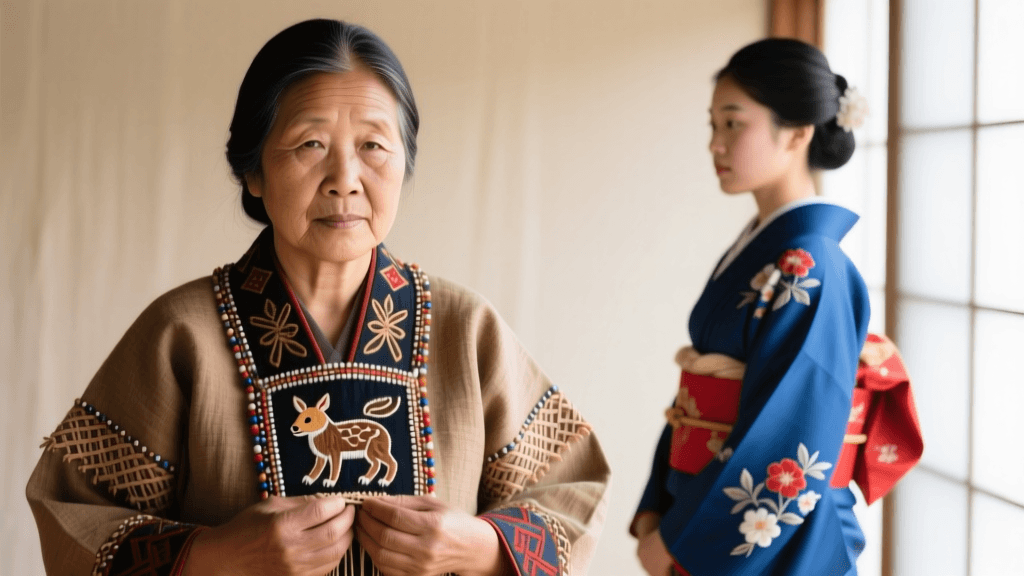
The creation of Attus is a labor-intensive process that begins in early summer, typically June, when the elm tree's sap is flowing and the bark can be cleanly peeled. Artisans harvest the bark, dry it, and then meticulously split the inner layers into fine, continuous threads. These threads are woven on a traditional backstrap loom called an emushiatni. The resulting fabric is naturally water-resistant, highly durable, and possesses a distinct coarse, uneven texture with natural brown, grey, and amber hues.
Ainu garments are often adorned with intricate appliqué and embroidery featuring motifs like the Moreu (a spiral representing the curling vines of flora) and the Aiush (a thorn-like pattern). These are not merely decorative; they are spiritual talismans placed at the openings of garments (collars, cuffs, and hems) to ward off evil spirits from entering the wearer's body.
Practical Sourcing and Identification
When shopping for Ainu textiles in Hokkaido, buyers must exercise caution. Many souvenir shops sell cotton garments stamped with 'Ainu-style' geometric patterns. Authentic Attus can be identified by its fibrous, woody scent, its semi-translucent quality when held to the light, and its organic, irregular weave.
- Authentic Small Goods: Handwoven matanpushi (headbands) or small Attus pouches typically cost between ¥10,000 and ¥25,000.
- Full Garments: A complete Attus-amip (elm bark robe) or a cotton Tunukar with authentic hand-appliqué can range from ¥150,000 to over ¥300,000, often requiring direct commission from artisans.
- Where to Source: The Upopoy National Ainu Museum and Park in Shiraoi, Hokkaido, is the premier destination for ethically sourced, artisan-made Ainu crafts. Purchasing here directly supports indigenous cooperatives.
Ryukyuan Ryusou: Tropical Elegance and Bingata Dyeing
At the opposite end of the archipelago, the Ryukyu Kingdom (modern-day Okinawa) developed the Ryusou, a garment born from a subtropical climate and a history of maritime trade with China, Japan, and Southeast Asia. Unlike the heavy, multi-layered silk kimono of mainland Japan, the Ryusou is characterized by its lightweight fabrics, wider sleeves, and looser, more breathable silhouette.
Mastering the Subtropical Fibers: Bashofu and Jofu
The foundation of everyday Ryukyuan dress is plant-based fiber. Bashofu, woven from the fibers of the Japanese fiber banana (Musa basjoo), is a masterpiece of patience. It takes roughly 200 banana plants to produce enough fiber for a single garment. The fibers are scraped, boiled, and hand-knotted. High-quality Bashofu is measured by its knot density; premium fabrics feature over 100 knots per inch, resulting in a cloth that is gossamer-thin, crisp, and perfectly suited for high humidity.
Similarly, Miyako Jofu, a highly refined ramie cloth from Miyakojima, is famous for its intricate kasuri (ikat) patterns. Both textiles are recognized as Important Intangible Cultural Properties of Japan.
The Vibrancy of Bingata
For formal wear and aristocratic garments, the Ryukyuans developed Bingata, a stunning stencil-resist dyeing technique. Using a rice-paste resist and vibrant pigments (historically imported from China, including cinnabar red and orpiment yellow), artisans create bold, nature-inspired motifs featuring tropical flowers, koi fish, and ocean waves. A custom-tailored Bingata kimono is a significant investment, often costing upwards of ¥1,000,000, while a hand-dyed obi (sash) ranges from ¥300,000 to ¥800,000.
Commissioning a Ryusou: Measurements and Fit
If you are commissioning a Ryusou or adapting a vintage piece, note that the measurements differ slightly from mainland kimono. The sodehaba (sleeve width) is significantly wider, often exceeding 45cm, to allow for air circulation. The collar is worn looser and lower than the strict, high-collared Yamato kimono. When visiting specialized studios in Naha, such as the historic Eijuh Bingata studio, expect a consultation period of 3 to 6 months for custom dyeing and tailoring.
Comparative Guide: Ainu vs. Ryukyuan Textiles
Understanding the practical differences between these indigenous textiles is crucial for collectors and wearers. The following table outlines the core characteristics, care requirements, and market realities of both traditions.
| Feature | Ainu Attus (Elm Bark) | Ryukyuan Bashofu (Banana Fiber) | Ryukyuan Bingata (Resist Dye) |
|---|---|---|---|
| Primary Fiber | Japanese Elm inner bark | Japanese fiber banana | Silk or Ramie base |
| Climate Suitability | Cold, damp, forest environments | Hot, highly humid subtropics | Indoor formal / Subtropical |
| Texture & Drape | Coarse, structured, durable | Crisp, lightweight, semi-sheer | Smooth, vibrant, medium weight |
| Price Range | ¥15,000 (pouch) - ¥300,000+ (robe) | ¥500,000 - ¥1,500,000+ (kimono) | ¥300,000 (obi) - ¥1,000,000+ |
| Care Instructions | Spot clean or gentle cold wash; never wring. Dry flat in shade. | Hand wash in cool water; stretch and pin to dry to maintain weave tension. | Dry clean only; UV light will rapidly fade historical pigments. |
Ethical Sourcing, Timing, and Cultural Etiquette
Engaging with indigenous fashion requires a commitment to ethical sourcing and cultural respect. Both Ainu and Ryukyuan cultures have faced centuries of assimilation policies, making the survival of their textile traditions an act of profound cultural resilience.
Timing Your Visit and Purchases
To witness these textiles in their living, cultural context, timing your visit around traditional festivals is highly recommended. In Hokkaido, the summer months (July and August) host various Ainu cultural festivals, such as the Marimo Matsuri in Lake Akan, where elders and youth wear traditional Tunukar and Attus garments. According to UNESCO's Intangible Cultural Heritage records, these gatherings are vital for the transmission of both dance and textile craftsmanship.
In Okinawa, the Eisa festival season (August to September) showcases the dynamic movement of Ryukyuan textiles. While Eisa costumes are often modernized, visiting the Okinawa Convention & Visitors Bureau recommended craft villages during the winter dry season (December to February) is ideal for observing the laborious scraping and spinning of Bashofu fibers, which relies on dry weather for proper curing.
Etiquette and Avoiding Appropriation
When wearing or displaying indigenous garments, context is everything. The Ainu consider their garments to be living entities that protect the wearer. It is considered highly disrespectful to wear Ainu sacred garments or reproduce their protective Moreu motifs on inappropriate items like footwear or floor mats. Similarly, Ryukyuan Bingata motifs were historically strictly regulated by social class; while modern wearers are free to enjoy them, understanding the historical weight of the dragon or peony motifs adds a layer of respect to the garment.
'To wear the Attus or the Bashofu is not merely to put on cloth; it is to wrap oneself in the patience of the forest and the resilience of an island people. These garments are archives of survival.'
By prioritizing direct purchases from indigenous cooperatives, certified traditional craftspersons, and official museum gift shops, collectors and enthusiasts can ensure their investments support the living artisans who are keeping Japan's true indigenous sartorial heritage alive for the next generation.