Neo-Hanfu Fusion: Styling Traditional Chinese Garments Daily
The Evolution from Historical Reenactment to Commuter Wear
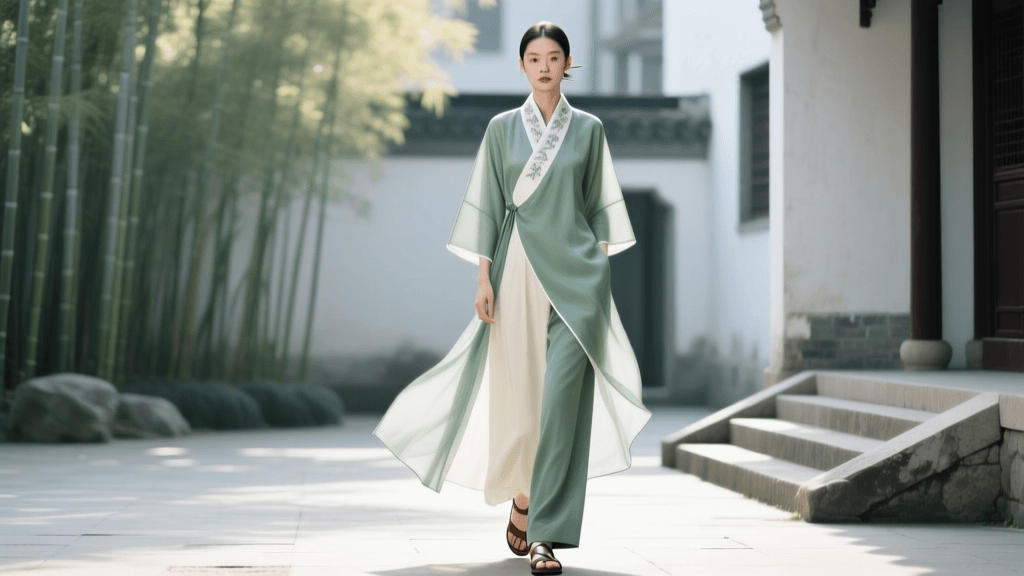
Over the past decade, the Hanfu movement has transformed from a niche historical reenactment hobby into a mainstream fashion phenomenon across China and the global diaspora. While early adopters focused on strict historical accuracy and elaborate, floor-sweeping ceremonial robes, the modern iteration—often termed "Neo-Hanfu" or "Commuter Hanfu" (Ri Chang Hanfu)—prioritizes versatility, comfort, and seamless integration into contemporary wardrobes. According to industry analysis by Vogue Business, the Hanfu market has exploded into a multi-billion-dollar industry, driven largely by Gen Z consumers who view traditional garments not as museum relics, but as dynamic, everyday fashion statements. This fusion approach blends the structural elegance of ancient Chinese tailoring with the practical demands of modern urban life, creating a unique sartorial bridge between antiquity and the avant-garde.
Core Neo-Hanfu Pieces for the Modern Wardrobe
To successfully incorporate traditional Chinese clothing into a modern rotation, one must understand which historical garments translate best to contemporary silhouettes. Neo-Hanfu designers frequently adapt specific historical pieces, modifying sleeve widths and hem lengths while retaining core structural elements like flat-cutting and cross-collars.
The Mamian Qun (Horse-Face Skirt)
Originating in the Ming Dynasty, the Mamian Qun is arguably the most popular garment in the Neo-Hanfu fusion scene. Characterized by its flat front and back panels flanked by deep, structured pleats, it functions similarly to a modern midi or maxi skirt. For daily wear, contemporary adaptations often reduce the volume of the pleats and utilize polyester jacquards or cotton-linen blends. A standard commuter Mamian skirt measures between 75cm and 85cm in length, hitting at the mid-calf, making it ideal for office environments or casual outings.
The Beizi (Song Dynasty Jacket)
The Beizi is a straight-cut, open-front jacket with side slits (kaicha) that extend up to the hip or waist. In modern fusion fashion, the Beizi acts as an elegant alternative to a western duster coat, kimono cardigan, or light trench. Sleeve lengths are often shortened from the traditional floor-draping "Pipa" sleeves to practical wrist or forearm lengths, allowing for typing and driving without fabric interference.
The Banbi (Half-Sleeve Vest)
Historically worn as an outer layer or an under-layer during the Tang and Song dynasties, the Banbi is a short-sleeved, cross-collared vest. In modern streetwear fusion, it is frequently layered over graphic t-shirts, turtlenecks, or even modern button-down shirts, serving a similar styling purpose to a western waistcoat or cropped bolero.
The Golden Rules of Hanfu Fusion Styling
Mixing traditional Chinese garments with western staples requires an understanding of proportion and cultural etiquette. Here are the foundational rules for mastering Neo-Hanfu fusion:
- Left Over Right (Jiaoling Youren): The most critical rule of Hanfu is that the left lapel must always cross over the right lapel. Reversing this (right over left) is historically reserved for the deceased and is considered highly inauspicious. Even in heavily modernized, deconstructed fusion pieces, this structural rule is rigorously maintained by designers and wearers alike.
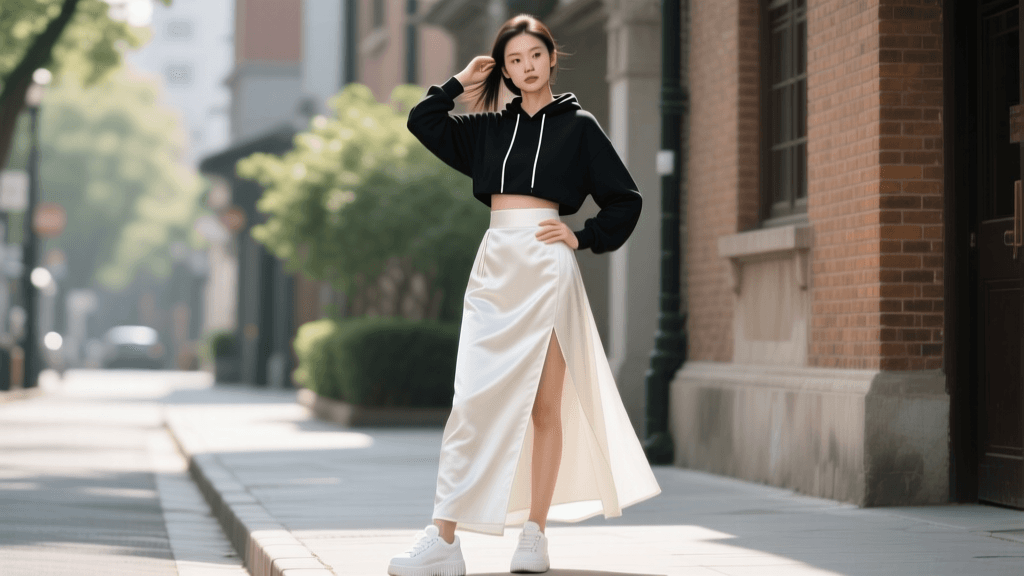
- Proportion Balancing: Because traditional Hanfu relies on flat-cutting without darts, the garments naturally drape and add volume. When wearing a voluminous Mamian skirt, pair it with a fitted, modern top—such as a ribbed turtleneck, a corset, or a tailored button-down—to define the waist and prevent the silhouette from looking overwhelming.
- Footwear Pairings: While embroidered cloth shoes (Gongxie) are traditional, Neo-Hanfu fusion heavily embraces modern footwear. Chunky combat boots (like Dr. Martens), leather loafers, and classic white sneakers are the standard for daily wear, grounding the ethereal nature of the garments with utilitarian edge.
- Color and Pattern Clashing: Traditional Hanfu often features intricate woven brocades or heavy embroidery. To avoid looking like a cosplay ensemble, balance a heavily patterned skirt with solid, neutral, or monochromatic western tops. Conversely, a solid-colored, minimalist Hanfu top pairs beautifully with modern patterned trousers or denim.
Neo-Hanfu Garment Comparison Chart
Understanding the practical applications, costs, and seasonal appropriateness of different garments is essential for building a functional fusion wardrobe. The table below outlines key Neo-Hanfu pieces and their modern styling metrics.
| Garment Name | Historical Era | Modern Fusion Pairing | Estimated Cost (USD) | Best Season |
|---|---|---|---|---|
| Mamian Qun | Ming Dynasty | Fitted Turtleneck, Leather Jacket, Loafers | $40 - $120 | Autumn / Winter |
| Beizi | Song Dynasty | Camisole, Wide-leg Jeans, Ankle Boots | $35 - $90 | Spring / Summer |
| Duan Ao | Ming Dynasty | Midi Skirt, Modern Wool Blazer | $50 - $150 | Winter |
| Banbi | Tang / Song | Graphic Tee, Cargo Pants, Sneakers | $25 - $60 | Summer |
| Song Ku | Song Dynasty | Cropped Sweater, Modern Trench Coat | $30 - $75 | Spring / Autumn |
Sizing, Fabrics, and the Taobao Pre-Sale System
Purchasing authentic and high-quality Neo-Hanfu requires navigating a unique retail ecosystem, primarily centered on Chinese e-commerce platforms like Taobao. Unlike western fashion, which relies on standardized S/M/L sizing based on body contours, Hanfu utilizes a flat-lay measurement system. Because the garments lack darts and stretch, sizing is generally determined by height, weight, and specific flat-lay measurements such as "Tongxiu" (total sleeve width from cuff to cuff) and "Yichang" (garment length). Consumers must know their exact bust, waist, and hip measurements in centimeters to select the correct size.
Fabric choice dictates the success of a fusion outfit. While silk and heavy brocade are reserved for photography and festivals, daily commuter Hanfu relies on modern textiles. Cotton-linen blends offer breathability for summer Beizi, while polyester jacquards are heavily favored for Mamian skirts because they are machine-washable and permanently heat-set to retain their sharp pleats without requiring laborious ironing.
When shopping, buyers will encounter two primary retail models. Xianhuo refers to ready-to-ship stock, which is ideal for immediate needs but often limited in sizing and colorways. Dongtuan (group buy or pre-sale) is the industry standard for original designs (Yuanachuang). Brands release digital renders, collect deposits, and manufacture the garments in batches. Pre-sale timelines typically range from 30 to 60 days. As highlighted by Sixth Tone, this community-driven pre-sale model allows independent designers to gauge demand and minimize textile waste, though it requires significant patience from the consumer.
Cultural Nuance and the Future of Fusion
Wearing Neo-Hanfu in daily life is an exercise in cultural reclamation and modern identity. It is vital to distinguish between "Hanfu" (historically accurate traditional clothing) and "Han Yuansu" (Hanfu elements). Han Yuansu refers to modern garments that borrow traditional motifs, collars, or fabrics but utilize western tailoring, zippers, and buttons. For purists, true Neo-Hanfu must maintain traditional flat-cutting and tie-fastenings, even if the hemline is shortened to the knee. However, the broader fashion community embraces both, recognizing that BBC Culture and other global observers have noted: the survival of any traditional garment relies on its ability to adapt to the rhythms of contemporary life.
Ultimately, Neo-Hanfu fusion fashion is not about discarding history, but rather translating it. By pairing a Ming Dynasty Mamian skirt with a crisp white poplin shirt and a tailored blazer, the modern wearer honors the sophisticated textile heritage of China while asserting their individual, contemporary style. Whether navigating a corporate office, attending a gallery opening, or simply walking through the city, Neo-Hanfu proves that traditional Asian garments are not confined to the past—they are vibrant, evolving components of the global fashion dialogue.