Modern Mamianqun: Styling the Hanfu Horse-Face Skirt
The Renaissance of the Mamianqun in Modern Fashion
The Mamianqun, historically known as the 'horse-face skirt,' is one of the most iconic and enduring garments in traditional Chinese clothing. Originating in the Song Dynasty and reaching its zenith during the Ming Dynasty, this structured, pleated skirt was once a staple of Han Chinese women's wardrobes. Today, it has experienced a massive resurgence, not as a historical costume, but as a cornerstone of 'Xin Zhongshi' (New Chinese Style) fusion fashion. Modern adaptations have transformed the Mamianqun into a versatile piece that seamlessly bridges the gap between ancient heritage and contemporary streetwear, office attire, and high fashion.
Unlike the flowing, ethereal robes of the Wei-Jin or Tang dynasties, the Mamianqun is grounded, structured, and inherently practical. Its unique geometry allows for incredible ease of movement while maintaining a striking visual silhouette. According to cultural reporting by BBC News on the broader Hanfu revival, younger generations are increasingly integrating these traditional garments into their daily lives, rejecting the notion that historical clothing belongs solely in museums or on festival days.
The Catalyst: Cultural Pride and Global Spotlights
The modern explosion of the Mamianqun in everyday fusion fashion was significantly accelerated by a high-profile global controversy in 2022. When French luxury house Dior released a mid-length pleated skirt that bore a striking, almost identical structural resemblance to the traditional Ming Dynasty Mamianqun, it sparked a massive wave of cultural reclamation among Chinese youth and the global diaspora. As detailed by the South China Morning Post, this incident catalyzed a fierce pride in indigenous fashion, prompting independent Chinese designers and mainstream brands to mass-produce high-quality, modernized Mamianqun skirts tailored for contemporary lifestyles.
Anatomy of the Horse-Face Skirt
To style the Mamianqun effectively, one must understand its unique architecture. The skirt is constructed from two overlapping panels of fabric. It features flat, unpleated sections at the front and back (the 'horse faces'), while the sides are deeply pleated. This design served a historical purpose: the flat panels provided a canvas for intricate embroidery and allowed for ease of movement, particularly when riding horses or walking up stairs, while the side pleats offered volume and modesty.
Modern Adaptations: Historically, the Mamianqun was secured with long fabric ties that wrapped around the waist. Modern fusion versions often replace these ties with hidden side zippers, hook-and-eye closures, or elasticized back panels, making them significantly easier to put on and more compatible with modern, fitted tops.
Fusion Styling: Integrating Mamianqun into the Modern Wardrobe
The true beauty of the modern Mamianqun lies in its chameleon-like ability to adapt to various aesthetics. Here is a practical guide to styling this traditional piece for three distinct modern environments.
1. The Corporate Hanfu (Office-Appropriate Fusion)
The structured, A-line silhouette of the Mamianqun makes it an excellent alternative to the standard pencil skirt or tailored trousers in a corporate setting. To achieve a professional, sophisticated look, balance the volume of the skirt with streamlined, modern tailoring.
- Top: A fitted, ribbed merino wool turtleneck or a crisp, tailored button-down shirt tucked neatly into the flat front panel.
- Outerwear: A structured, oversized blazer in a neutral tone (charcoal, camel, or navy). The sharp shoulders of the blazer contrast beautifully with the intricate woven patterns often found on the skirt.
- Footwear: Leather loafers, pointed-toe ankle boots, or classic Mary Janes with a modest block heel.
- Color Palette: Opt for Mamianqun in muted, sophisticated tones like deep emerald, navy blue, or matte black with subtle tonal jacquard weaving, avoiding overly flashy metallic threads.
2. Streetwear & Casual Edge
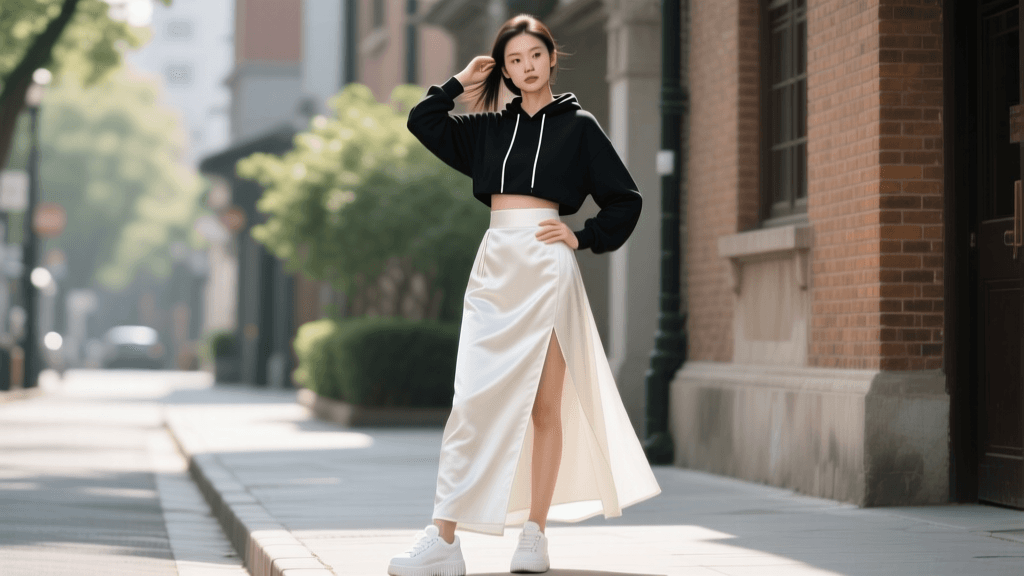
Streetwear fusion is where the Mamianqun truly shines, breaking all traditional rules to create a bold, fashion-forward statement. The juxtaposition of ancient weaving techniques with modern casualwear is a hallmark of the 'Xin Zhongshi' movement.
- Top: An oversized graphic tee, a cropped hoodie, or a distressed knit sweater. Allow the hem of the top to fall naturally over the waistband for a relaxed, layered look.
- Outerwear: A vintage denim jacket, a cropped leather biker jacket, or a nylon bomber jacket.
- Footwear: Chunky sneakers (such as New Balance 990s or Nike Air Max) or combat boots like Dr. Martens. The heavy footwear grounds the flowing pleats and adds an urban edge.
- Accessories: A crossbody bag, silver chain jewelry, and a baseball cap.
3. Elegant Evening & Event Wear
For dinners, gallery openings, or evening events, the Mamianqun can rival any Western evening gown in elegance and presence.
- Top: A silk camisole, a sheer organza blouse, or a velvet bodysuit.
- Footwear: Strappy stiletto heels or embellished mules.
- Accessories: Jade or pearl drop earrings, a sleek updo, and a structured clutch bag.
Practical Buying Guide: Sizing and Measurements
Buying a Mamianqun requires different measurements than standard Western skirts. Because traditional skirts sit at the natural waist (above the belly button) rather than the hips, accurate measurement is crucial.
- Waist Measurement: Measure the narrowest part of your torso. Modern skirts usually come in standard sizes (S, M, L) but often feature a 3-5 cm adjustable hook system or a stretchy back panel to accommodate fluctuations.
- Skirt Length: This is the most critical factor for modern styling.
- 90-95 cm (Midi): Hits mid-calf. Best for streetwear, petite frames, and pairing with chunky sneakers.
- 100-105 cm (Maxi): Hits just above the ankle. The most versatile length for office wear and elegant styling.
- 110+ cm (Floor-length): Traditional ceremonial length. Best reserved for formal Hanfu photoshoots or very tall individuals.
Fabric Guide: Choosing the Right Material
The fabric of a Mamianqun dictates its drape, structure, and suitability for different seasons. Below is a comparison chart to help you select the right material for your fusion wardrobe.
| Fabric Type | Drape & Structure | Price Range (USD) | Best For | Care Level |
|---|---|---|---|---|
| Woven Brocade / Jacquard | Stiff, holds pleats sharply, heavy | $60 - $150 | Office, Formal, Winter | High (Dry clean only) |
| Polyester Blend | Medium drape, wrinkle-resistant | $30 - $60 | Daily wear, Streetwear, Travel | Low (Machine wash cold) |
| Chiffon / Organza | Flowy, lightweight, sheer layers | $50 - $120 | Summer, Evening, Resort | Medium (Hand wash) |
| Wool Blend | Heavy, warm, matte texture | $100 - $250 | Winter Corporate, Academia | High (Dry clean only) |
For beginners looking to experiment with fusion fashion, a mid-weight polyester-jacquard blend is highly recommended. It offers the visual richness of traditional weaving but is forgiving, easy to clean, and holds its pleats well throughout a busy day.
Where to Buy Authentic and Fusion Mamianqun
The market for modern Hanfu has expanded rapidly. While Taobao remains the primary hub for the widest variety of independent studios (such as Shisanyu and Zhongling), international buyers can now find curated selections on global platforms. According to industry analysis by Sixth Tone, the commercialization and 'impurification' of Hanfu into daily fusion wear has actually been the key to its survival and mass adoption. Brands are now designing specifically for the modern commuter, offering skirts with anti-static linings, reinforced pleats, and machine-washable fabrics.
- Entry-Level ($30-$50): Look for mass-produced polyester blends on AliExpress or specialized Hanfu dropshippers. Good for testing the silhouette.
- Mid-Tier ($60-$150): Independent Taobao studios or dedicated international Hanfu retailers like Hanfu Time or Newhanfu. These offer original jacquard patterns, better hardware, and accurate historical structures adapted for modern waists.
- High-End / Artisan ($200-$500+): Custom-woven silk, real gold-thread embroidery, and hand-pleated artisan pieces from heritage brands.
Caring for Your Modern Hanfu Pieces
Proper maintenance is essential to preserve the sharp, knife-like pleats of the Mamianqun.
- Washing: Avoid machine washing brocade or silk. If machine washing polyester blends, use a mesh laundry bag and a gentle cycle to prevent the pleats from unraveling.
- Drying: Never wring out a Mamianqun. Roll it in a towel to absorb excess water, then hang it by the waistband. The weight of the wet fabric will naturally pull the pleats straight.
- Ironing & Steaming: A garment steamer is your best friend. If you must use an iron, use a low heat setting and a pressing cloth. Always iron along the line of the pleat, never across it.
- Storage: Hang the skirt on a clip hanger by the waistband. If you must fold it for travel, fold it strictly along the existing pleat lines and roll it loosely to avoid permanent creasing on the flat 'horse face' panels.
Conclusion
The modern adaptation of the Mamianqun represents a triumph of cultural continuity. It proves that traditional Asian garments do not have to be frozen in time to be respected. By understanding its structure, choosing the right fabrics, and boldly fusing it with contemporary wardrobes, you can wear a piece of living history that is as functional on a modern subway commute as it is elegant at a formal dinner.