Kimono Influencers: Building Online Communities & Content
The Rise of the Kimono Influencer
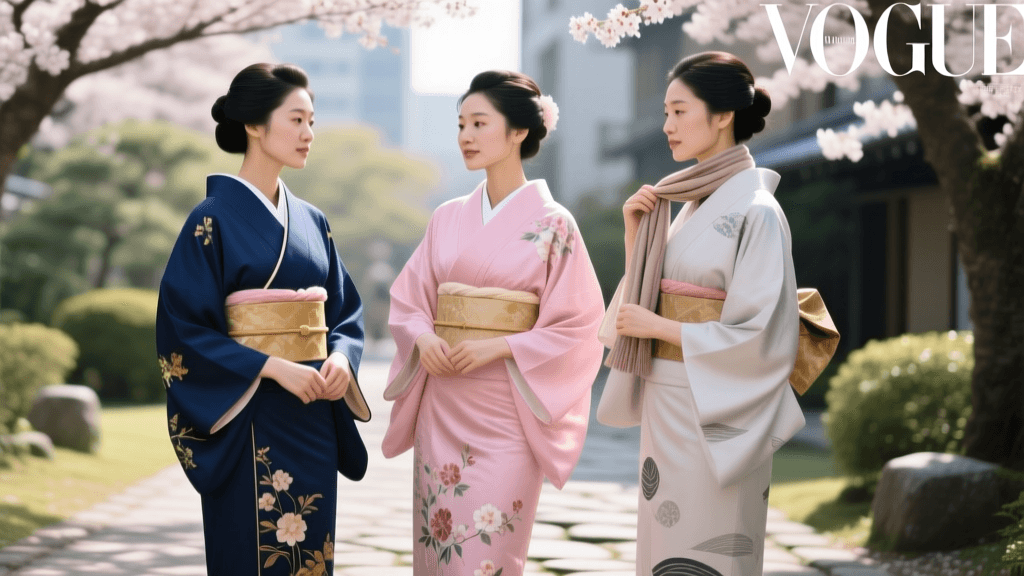
The intersection of centuries-old Japanese textile arts and modern digital media has given rise to a unique and vibrant niche: the kimono influencer. No longer confined to the streets of Kyoto or the pages of niche magazines, the art of kitsuke (kimono dressing) and traditional Japanese fashion has found a massive, global audience online. Content creators, vloggers, and digital archivists are now at the forefront of preserving and evolving these traditions, sharing everything from vintage sourcing hauls to intricate obi-tying tutorials.
Building a successful presence in this space requires more than just a beautiful garment. It demands a deep respect for cultural history, an understanding of textile photography, and the ability to foster genuine community engagement. Whether you are an aspiring vlogger, a vintage textile collector, or a cultural educator, mastering the digital landscape of Japanese traditional garments is essential for growth and impact.
Navigating Top Online Kimono Communities
Before you can build your own audience, you must understand where the existing communities live and how they operate. The online kimono community is highly knowledgeable, deeply passionate, and protective of cultural accuracy. Here is a breakdown of the primary hubs and how to engage with them ethically and effectively:
- Reddit (r/kimono and r/JapaneseTextiles): These forums are strictly moderated and highly educational. Users frequently post identification requests for family crests (kamon), weaving techniques, and era-specific dating. Actionable Advice: Never use these subreddits for direct self-promotion or spamming your YouTube links. Instead, answer questions, share high-resolution macro shots of textile weaves, and build authority before linking to your own long-form guides.
- Facebook Groups (e.g., Kimono Ladies, Vintage Kimono Market): These groups function as a hybrid of social support and marketplace. They are excellent for sourcing vintage pieces and getting real-time feedback on formal coordination (reiso). Actionable Advice: When posting a photoshoot, include a detailed breakdown of the garments worn, including the formality level (e.g., houmongi vs. komon) and the seasonal motifs depicted on the silk.
- Discord Servers: Niche Discord servers dedicated to Japanese fashion and historical costuming offer real-time chat, virtual sewing circles, and live kitsuke practice sessions. These are ideal for networking with other micro-influencers and collaborating on digital zines or virtual exhibitions.
Platform Comparison for Kimono Content
Different social media platforms serve different purposes when showcasing traditional Asian garments. Below is a strategic comparison to help you allocate your content creation efforts:
| Platform | Best Content Type | Ideal Posting Frequency | Audience Intent | Monetization Potential |
|---|---|---|---|---|
| High-res editorial photos, Reels of obi tying, carousel posts detailing seasonal motifs. | 3-4 times per week | Visual inspiration, fashion coordination, aesthetic appreciation. | High (Brand deals, affiliate links for kimono accessories, Patreon). | |
| YouTube | Long-form tutorials, vintage hauls, documentary-style artisan interviews, full dressing routines. | 1-2 times per week | In-depth learning, historical context, step-by-step guidance. | Medium-High (AdSense, sponsored proxy shopping services, merch). |
| TikTok | Quick transitions, ASMR silk rustling, myth-busting, "day in the life" vlogs. | Daily or 5x/week | Entertainment, quick tips, viral trends, discovering the subculture. | Medium (TikTok Creator Fund, driving traffic to external shops). |
| Text-heavy historical deep dives, macro photography of weaves, Q&A sessions. | 2-3 times per week | Research, authentication, technical troubleshooting. | Low (Best used for funneling highly targeted traffic to a blog or newsletter). |
Photography and Videography for Silk Textiles
Traditional Japanese garments feature complex dyeing and weaving techniques that are notoriously difficult to capture on camera. Flat, direct lighting will wash out the intricate details of yuzen (resist dyeing) and completely flatten the three-dimensional texture of shibori (tie-dyeing).
Lighting Techniques for Specific Textiles
- Shibori and Chirimen (Crepe Silk): Use raking light (light positioned at a sharp 45-degree angle to the fabric). This creates micro-shadows in the crinkled texture, emphasizing the tactile, sculptural quality of the cloth.
- Surihaku (Gold Leaf Application): Gold leaf reflects light unpredictably and can cause severe lens flare or blown-out highlights. Use a circular polarizing filter (CPL) on your lens and position a large, diffused softbox slightly above the subject to create a smooth, continuous gradient of light across the metallic surfaces.
- Nishijin-ori (Brocade Weaving): Shoot with a macro lens (such as a 90mm or 100mm f/2.8) to capture the interplay of the warp and weft threads. Stop down your aperture to f/8 or f/11 to ensure the entire textile pattern remains in sharp focus.
Color Accuracy and Post-Processing
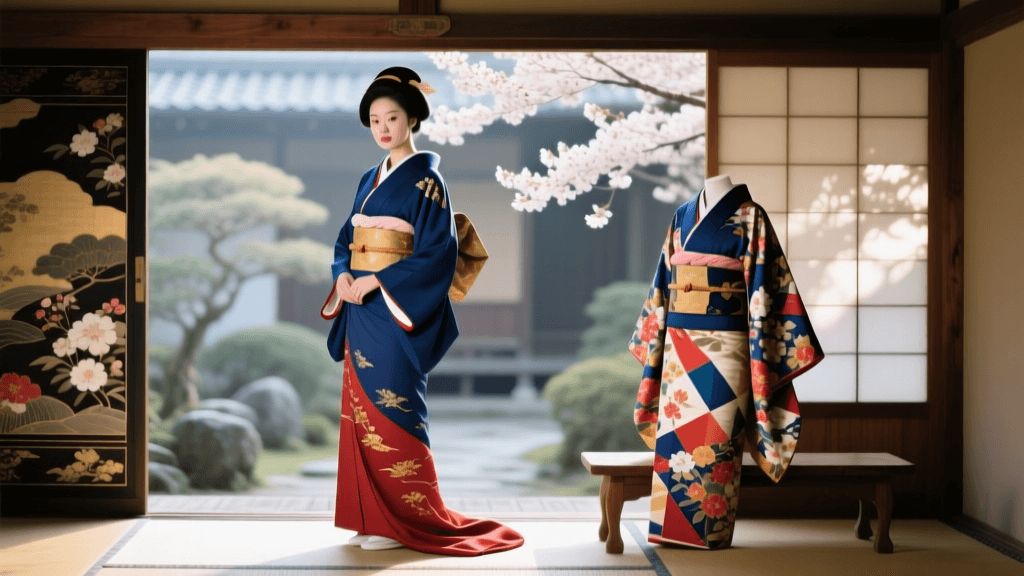
Silk absorbs and reflects color differently than cotton or synthetic fibers. To ensure your audience sees the true colors of a vintage furisode, always shoot with a ColorChecker Passport in the first frame of your session under your specific lighting setup. This allows you to create a custom camera profile in Lightroom or Capture One, ensuring that subtle shades like matcha green or sakura pink are represented accurately, which is vital for followers looking to buy or coordinate based on your content.
Sourcing Vintage and Sizing for Content Creation
A major pillar of kimono vlogging is the "vintage haul" or sourcing guide. To provide actionable value to your audience, you must understand the economics and logistics of acquiring these garments globally.
Where to Source
While local Japanese recycle shops (like Tansu-ya) offer incredible bargains—often ranging from 500 to 5,000 JPY ($3 to $35 USD) for everyday komon—international creators rely on proxy bidding services. Platforms like Buyee, ZenMarket, and FromJapan allow you to bid on Yahoo! Auctions Japan and Mercari Japan. When creating content around sourcing, break down the hidden costs for your audience: the domestic shipping fee, the proxy service fee, and the international EMS/DHL shipping rates, which can easily add $40 to $80 USD to a single kimono purchase.
Understanding Measurements for Kitsuke Content
Unlike Western clothing, kimono are not sized by standard S/M/L metrics. When reviewing or selling garments on your platform, always provide the following specific measurements:
- Yuki (Sleeve Length): Measured from the center back of the neck, across the shoulder, and down to the wrist. This is the most critical measurement for a proper fit. A standard modern yuki is around 64-68 cm, while antique pieces often run much shorter (60-62 cm).
- Mitake (Back Length): Measured from the base of the collar down the back to the hem. This determines how much fabric will need to be folded at the waist (ohashori) during dressing.
- Sode (Sleeve Depth): Crucial for determining formality and age. Unmarried women's formal wear (furisode) features deep sleeves (over 100 cm), while married women's formal wear (tomesode) features shallow sleeves (around 50 cm).
Ethical Representation and Cultural Depth
As a kimono influencer, you are acting as a cultural ambassador. The digital space is rife with misinformation regarding the formality, history, and proper wearing of these garments. It is your responsibility to elevate the discourse beyond mere aesthetic appreciation.
As highlighted by the Victoria and Albert Museum's extensive kimono collection, the garment has always been a dynamic canvas for artistic expression, reflecting shifting social hierarchies, trade routes, and technological advancements in weaving. When showcasing a piece, take the time to research its era. Is it a Taisho-era (1912-1926) piece characterized by bold, art-deco-inspired geometric patterns? Or is it a Showa-era (1926-1989) garment with more traditional, subdued motifs?
Understanding the historical context is crucial; the Metropolitan Museum of Art's Heilbrunn Timeline of Art History provides invaluable resources on the evolution of the kosode (the precursor to the modern kimono) and the socio-economic sumptuary laws that dictated who could wear certain dyes and patterns. Referencing such authoritative sources in your video descriptions or blog posts not only boosts your SEO but also establishes you as a trusted, educated voice in the community.
Furthermore, supporting authentic artisans is a core value in these communities. The Japanese Ministry of Economy, Trade and Industry (METI) designates specific traditional crafts, such as Kaga Yuzen or Oshima Tsumugi, protecting the rigorous standards of their creation. When you feature modern, newly crafted kimono, educate your audience on the METI designation and the immense labor—sometimes taking months or years—that goes into a single bolt of silk. By doing so, you help justify the cost of authentic, artisan-made garments to a global audience and ensure the survival of these heritage crafts for future generations.
Conclusion: Cultivating a Mindful Digital Presence
Thriving as a kimono influencer or vlogger requires a delicate balance of technical skill, aesthetic vision, and cultural reverence. By leveraging the right platforms, mastering the nuances of textile photography, providing transparent sourcing data, and grounding your content in historical research, you can build a highly engaged and respectful online community. In doing so, you become part of a vital digital lineage, ensuring that the breathtaking artistry of Asian traditional garments continues to inspire and educate the world.