The Gender-Neutral and Masculine Hanfu Style Guide
The Rise of Gender-Neutral and Masculine Hanfu
The Hanfu movement has experienced an explosive revival over the past decade, transforming from a niche historical hobby into a mainstream fashion phenomenon. However, early iterations of this revival were heavily skewed toward womenswear, focusing on ethereal, fairy-like silhouettes, pastel chiffons, and highly stylized photography. Today, the narrative is shifting. A growing demographic of menswear enthusiasts, non-binary individuals, and gender-nonconforming fashion lovers are reclaiming the structured, architectural, and deeply historical garments of traditional Chinese menswear. As noted by Vogue, the modern Hanfu movement is increasingly driven by a desire for cultural identity and sartorial elegance that transcends contemporary Western fast fashion.
Styling Hanfu from a masculine or gender-neutral perspective requires an understanding of historical tailoring, fabric weight, and structural layering. Unlike modern Western menswear, which relies on darts, padded shoulders, and rigid canvassing to create a V-shaped torso, traditional Chinese garments utilize flat-pattern cutting, dropped shoulders, and strategic layering to create a dignified, flowing, yet commanding silhouette. According to cultural reports from the South China Morning Post, young consumers are actively seeking out Ming and Tang dynasty menswear for its versatility and gender-fluid adaptability, proving that traditional robes can seamlessly integrate into a modern, gender-neutral wardrobe.
Core Silhouettes for a Masculine Aesthetic
When building a gender-neutral or masculine Hanfu wardrobe, it is essential to focus on garments that offer structure, broadness, and historical gravitas. The following three silhouettes form the foundation of traditional Chinese menswear and are highly adaptable for modern styling.
1. Yuanlingpao (Round-Collar Robe)
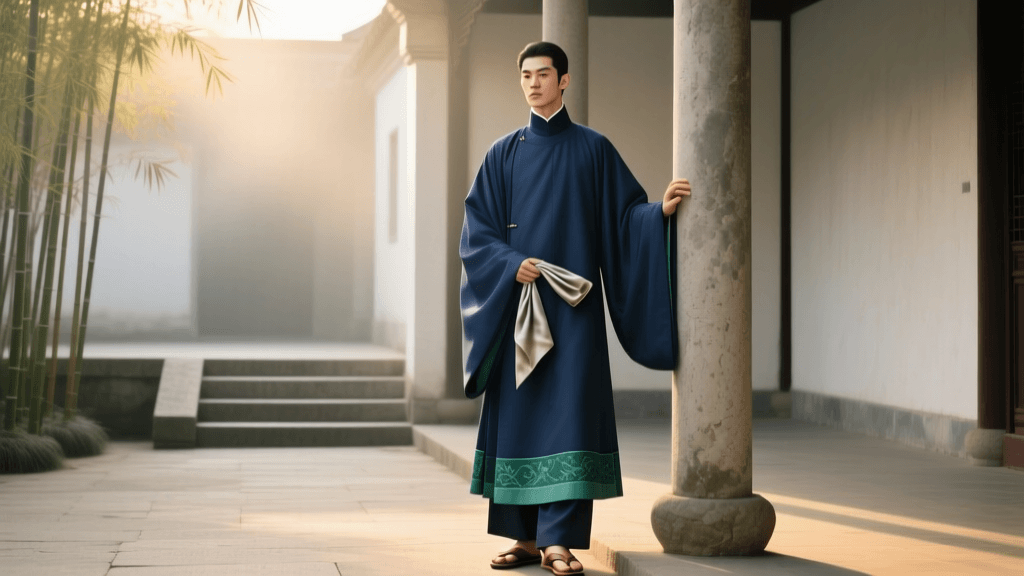
The Yuanlingpao is arguably the most versatile garment in the Hanfu wardrobe, spanning the Tang, Song, and Ming dynasties. Characterized by its circular neckline and side slits, this robe was worn by scholars, officials, and commoners alike. For a gender-neutral aesthetic, the Tang dynasty version offers wider, more dramatic sleeves and a relaxed fit, while the Ming dynasty iteration features a more structured collar and narrower sleeves, resembling a modern overcoat. It is typically secured with a leather or woven belt and can be layered over a turtleneck or a traditional cross-collar undergarment (Zhongyi).
2. Daopao (Taoist Robe) and Zhishen (Straight Robe)
Originating in the Ming dynasty, the Daopao and Zhishen are the epitome of scholarly elegance. These robes feature a cross-collar, wide sleeves, and distinctive side panels that fold inward to create a layered, voluminous look without adding bulk to the waist. The Daopao is particularly favored in the modern gender-neutral Hanfu community because its generous cut drapes beautifully on all body types, masking the natural waistline and creating a tall, pillar-like silhouette. The Sixth Tone highlights how Ming dynasty scholar robes have become a symbol of intellectual refinement and understated luxury among modern youth.
3. Feiyufu (Flying Fish Robe)
For those seeking a bold, martial aesthetic, the Feiyufu is unmatched. Historically an imperial guard uniform granted by the Ming emperor, this robe features a pleated skirt (mamianqun-style pleats integrated into the robe), a structured round or cross collar, and dramatic, sweeping sleeves. The Flying Fish motif—a mythical creature blending dragon, fish, and winged serpent elements—is often woven in metallic brocade. This garment is heavily structured and provides a commanding, broad-shouldered presence, making it a favorite for formal events, weddings, and high-fashion editorial shoots.
Sizing and Fit: Adapting Traditional Cuts
One of the most common pitfalls for newcomers to masculine Hanfu is applying Western sizing logic to traditional flat-pattern garments. Traditional Chinese robes do not have shoulder seams that sit on the edge of the deltoid; instead, the fabric is cut in a continuous piece from the front hem to the back hem, resulting in a naturally dropped shoulder. To achieve a deliberate, tailored look rather than a sloppy one, precise measurements are crucial.
| Garment Style | Key Measurement Focus | Recommended Fit Adjustment | Styling Vibe |
|---|---|---|---|
| Yuanlingpao (Round Collar) | Chest & Sleeve Length | Add 5-8cm to chest for layering | Versatile, everyday outerwear |
| Daopao (Taoist Robe) | Shoulder Drop & Hem Length | Hem should hit 3cm above ankle bone | Scholarly, relaxed, intellectual |
| Feiyufu (Flying Fish) | Waist & Skirt Volume | Tailored waist, dramatic skirt flare | Martial, formal, commanding |
Pro-Tip for Sleeve Length: Traditional menswear often utilizes sleeves that extend past the fingertips, sometimes covering the hands entirely (known as 'Hui Xiu' or returning sleeves). For a modern, practical gender-neutral look, opt for sleeves that terminate at the base of the thumb or wrist bone, allowing for ease of movement while retaining historical elegance.
Fabric and Color Palettes for Modern Menswear
The fabric dictates the drape, and the drape dictates the gender presentation of the garment. To avoid the overly delicate, ethereal look often associated with early Hanfu revivalism, masculine and gender-neutral styling relies on heavy, matte, and textured fabrics.
- Raw Silk and Tussah: Unlike the glossy charmeuse used in womenswear, raw silk has a nubby texture, a matte finish, and a heavier weight that holds architectural folds beautifully.
- Linen and Cotton Blends: Ideal for summer Daopao and Yuanlingpao. Linen provides a crisp, structured drape that softens elegantly with wear, offering a utilitarian yet refined aesthetic.
- Wool and Brocade: For winter styling, heavy wool blends and woven jacquard brocades add necessary bulk and warmth, mimicking the luxurious outer garments of Ming dynasty officials.
Color palettes in masculine Hanfu lean heavily into nature-inspired, muted tones. Indigo, charcoal, pine green, ochre, and deep burgundy are foundational. These colors not only reflect historical dyeing techniques (such as indigo vat dyeing and plant-based mordants) but also integrate seamlessly with modern footwear and accessories.
Accessorizing: Belts, Boots, and Headwear
Accessories are the bridge between historical costume and modern fashion. A well-chosen accessory can ground a traditional robe in contemporary reality, making it suitable for a gallery opening, a dinner date, or a street-style photoshoot.
Footwear
While traditional cloud shoes (Yunxie) are historically accurate, they can sometimes read as too costumey for everyday wear. For a masculine, gender-neutral edge, pair Hanfu with modern leather Chelsea boots, combat boots, or minimalist white sneakers. Black leather boots, in particular, complement the side slits of a Yuanlingpao, creating a striking contrast between the flowing silk and the rugged leather.
Belts and Waist Ornaments
The waist is the anchor of the Hanfu silhouette. For Ming dynasty robes, a traditional leather belt with metallic or jade plaques (Geda) adds instant authority. Alternatively, a simple, high-quality woven cotton sash or a modern minimalist leather belt can cinch a Daopao, providing definition without breaking the historical illusion. Adding a single jade pendant or a modern metallic keychain to the belt loop introduces a personalized, contemporary touch.
Headwear and Hair
Historically, adult men wore their hair bound and covered. Today, gender-neutral styling often incorporates the Wangjin (a traditional hairnet made of silk or horsehair) or a minimalist leather headband. For those with shorter hair, a simple, structured Tangjin (Tang-style hat) or a modern wool beret can bridge the gap between East and West, creating an avant-garde, intellectual silhouette.
Modern Layering Techniques
The true genius of traditional Chinese clothing lies in its modular layering system. To wear Hanfu in a modern, gender-neutral context, embrace the art of the under-layer.
- The Base Layer: Instead of a traditional white cotton Zhongyi (undergarment), try a fitted black or charcoal turtleneck. This provides warmth, creates a sleek modern neckline beneath a cross-collar robe, and anchors the outfit in contemporary winter fashion.
- The Mid-Layer: A sleeveless vest (Bijia) or a short, pleated skirt (Baidi) worn beneath a long, open Daopao adds visual depth and textural contrast, breaking up the vertical lines of the robe.
- The Outer Layer: For extreme weather, a structured, oversized wool overcoat worn over a Hanfu robe creates a stunning fusion of Western tailoring and Eastern drapery, a hallmark of the emerging 'New Chinese Style' (Xin Zhongshi) movement.
Where to Buy: Navigating the Market
Finding high-quality, masculine, or gender-neutral Hanfu requires knowing the right search terms, especially on platforms like Taobao or AliExpress. Avoid generic terms like 'costume' or 'cosplay.' Instead, use specific historical terminology:
- 男装汉服 (Mens Hanfu): Yields traditional, historically informed menswear.
- 无性别汉服 (Gender-neutral Hanfu): A growing category featuring relaxed cuts, muted colors, and versatile sizing.
- 明制道袍 (Ming Daopao): Essential for finding the structured, scholarly robes discussed above.
- 圆领袍 (Yuanlingpao): The keyword for round-collar robes.
Expect to invest between $80 to $250 USD for a high-quality, historically accurate robe made from natural fibers like linen or raw silk. Brands specializing in menswear, such as Shisanyu or specialized Ming-dynasty revivalist shops, offer superior tailoring, reinforced seams, and historically accurate weaving patterns that elevate the garment from a mere costume to a piece of wearable art.
Conclusion
Gender-neutral and masculine Hanfu styling is not about rigidly adhering to the past; it is about translating the dignity, structure, and philosophy of traditional Chinese garments into a modern context. By focusing on architectural silhouettes like the Daopao and Yuanlingpao, selecting heavy, matte fabrics, and integrating contemporary accessories, wearers can create a powerful, gender-fluid aesthetic that honors history while forging a bold new path in global fashion.