Ming Dynasty Mamianqun: From Imperial Court to Modern Wear
The Mamianqun: A Masterpiece of Chinese Court Fashion
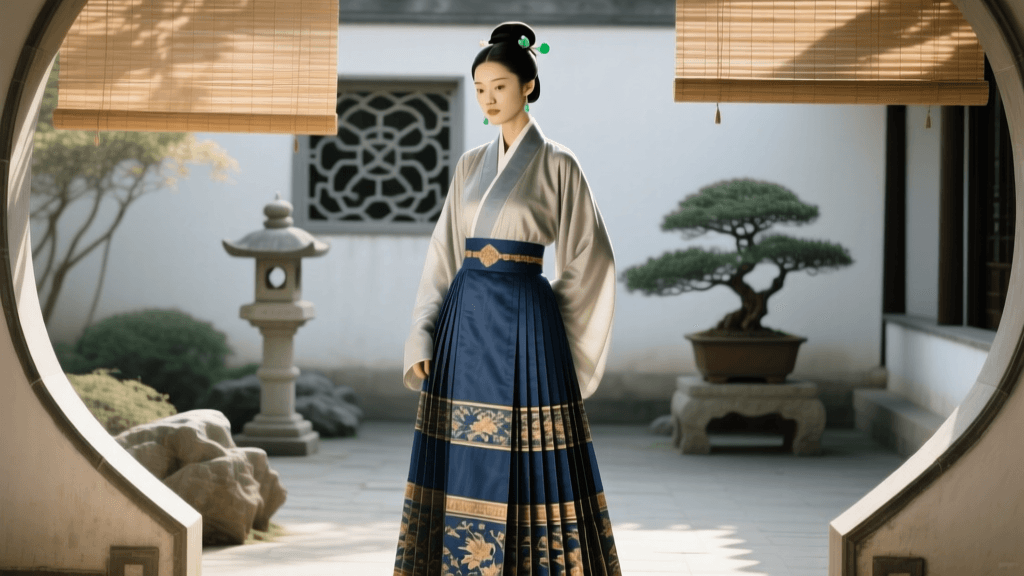
The Mamianqun, widely known in English as the "horse-face skirt," stands as one of the most iconic and enduring garments in the history of Chinese traditional clothing. While it has recently experienced a massive resurgence in global street fashion and modern Hanfu movements, its roots are deeply embedded in the strict sartorial codes and exquisite craftsmanship of the Ming Dynasty (1368–1644) imperial court. Understanding the Mamianqun requires looking past its modern viral status to appreciate its structural genius, its evolution through dynastic shifts, and its highly specific role in courtly life.
According to the Metropolitan Museum of Art's Heilbrunn Timeline of Art History, the Ming Dynasty was a period of immense cultural restoration and economic prosperity, where textile production—particularly silk weaving—reached unprecedented levels of sophistication. The Mamianqun became the quintessential lower garment for Han Chinese women during this era, favored by nobility and court ladies for its modesty, structural elegance, and ability to showcase luxurious brocade weaves.
Dynasty Evolution: From Song Origins to Ming Pinnacle
The structural lineage of the Mamianqun can be traced back to the Song Dynasty (960–1279), specifically to the baidiequn (hundred-pleat skirt) and the liangpianqun (two-piece skirt). However, it was during the Ming Dynasty that the garment was codified into the distinct "horse-face" structure we recognize today. The name "horse-face" does not refer to the animal, but rather to the architectural term mamian, which describes the flat, trapezoidal defensive walls of ancient Chinese city gates. The skirt's flat front and back panels perfectly mimic these architectural fortifications.
During the subsequent Qing Dynasty (1644–1912), the Manchu rulers imposed strict sartorial laws requiring Han men to adopt Manchu clothing and the queue hairstyle. However, an edict known as nan cong nu bu cong (men submit, women do not) allowed Han women to retain their traditional Ming-style clothing. As a result, the Mamianqun survived the dynastic transition, evolving in the Qing court to feature wider waistbands, heavier embroidery, and intricate pleat arrangements, eventually becoming the precursor to the modern Qing-era aoqun (jacket and skirt) ensemble.
Today, the garment has transcended historical reenactment. As noted in a comprehensive cultural analysis by the South China Morning Post, the Mamianqun has become a symbol of cultural pride, frequently paired with modern blouses, turtlenecks, and even tailored blazers, bridging the gap between imperial heritage and contemporary wardrobe staples.
Anatomy and Craftsmanship of the Horse-Face Skirt
The genius of the Mamianqun lies in its overlapping, wrap-around construction, which solves the dual problems of mobility and modesty without the need for zippers or buttons. A traditional skirt consists of:
- Guangmian (Flat Panels): The flat, unpleated sections at the front and back. In court fashion, these panels were heavily decorated with auspicious motifs like phoenixes, dragons, or floral scrolls using the zhuanghua (brocade) weaving technique.
- Zhe (Pleats): The side sections feature deep, knife-like pleats that remain closed when standing but fan out elegantly when walking or sitting.
- Yaotou (Waistband): A wide band, traditionally made of white or contrasting cotton/silk, which protects the delicate brocade from the friction and oils of the body while providing a secure anchor for the tying ribbons.
Comparison Chart: Ming Court vs. Modern Commercial Mamianqun
| Feature | Ming Dynasty Court Original | Modern Commercial Hanfu |
|---|---|---|
| Fabric | Heavy silk brocade, Zhuanghua weave | Polyester jacquard, chiffon, tencel, or woven silk |
| Pleat Count | Typically 4 to 6 large pleats per side | 6 to 12+ pleats per side for a fuller silhouette |
| Waistband | White cotton or plain silk, tied with fabric ribbons | Matching or contrasting fabric, often with hidden hooks or button closures alongside ties |
| Weight | Very heavy (1.5kg - 3kg), required posture training | Lightweight to medium (300g - 800g) for daily comfort |
| Cost (Adjusted) | Priceless heirloom, months of artisan labor | $35 to $300+ USD depending on brand and material |
Practical Guide: How to Buy, Measure, and Wear a Mamianqun
For those looking to incorporate this piece of Asian tradition into a modern wardrobe, purchasing a Mamianqun requires attention to specific measurements and fabric choices. The global Hanfu revival has made these skirts highly accessible, but proper sizing is crucial for maintaining the garment's structural integrity.
1. Sizing and Measurements
Unlike Western skirts that sit on the hips, the Mamianqun is designed to sit at the natural waist (the narrowest part of the torso, usually just above the navel). This high-waisted placement elongates the legs and secures the heavy fabric.
- Waist Measurement: Measure your natural waist and add 2 to 3 cm (approx. 1 inch) for comfort and to account for the overlap of the flat panels. If your waist is 70 cm, order a skirt with a 72-73 cm waist.
- Skirt Length: The hem should ideally graze the top of your shoe or ankle bone to prevent tripping while showcasing the pleats.
- Height 155–160 cm (5'1"–5'3"): Choose 95–100 cm length.
- Height 161–165 cm (5'4"–5'5"): Choose 100–105 cm length.
- Height 166–170 cm (5'6"–5'7"): Choose 105–110 cm length.
- Height 171+ cm (5'8"+): Look for custom lengths of 115 cm or wear platform shoes.
2. Fabric Selection and Budgeting
Your choice of fabric dictates the skirt's drape, seasonality, and price point.
- Entry-Level ($35 – $65 USD): Usually made from polyester jacquard. These are excellent for beginners. The synthetic fibers hold pleats exceptionally well and are machine washable (on gentle cycles), though they lack breathability in summer.
- Mid-Tier ($80 – $150 USD): Features high-quality woven brocades, wool-blends for winter, or premium tencel/chiffon for summer. Brands in this tier offer intricate, historically inspired motifs (like the famous "swallow and willow" or "phoenix" patterns) with metallic thread integration.
- High-End ($250 – $600+ USD): Authentic silk zhuanghua or custom-tailored pieces using traditional wooden looms. These are investment pieces meant for formal events, weddings, or cultural ceremonies.
3. Step-by-Step Tying Instructions
Wearing a Mamianqun correctly ensures the flat panels remain centered and the pleats do not gape.
- Step In: Step into the skirt and pull it up to your natural waist. Ensure the flat panel is centered on your front.
- Wrap the Back: Take the left side of the waistband and wrap it around your back to the right side of your waist. Tie it securely with the attached ribbon.
- Wrap the Front: Take the right side of the waistband, wrap it around your back to the left side, and tie it. The overlapping flat panels in the front and back will now create a secure, opaque seal.
- Adjust the Pleats: Run your hands down your hips to ensure the side pleats are lying flat and stacked neatly against each other.
Garment Care and Pleat Maintenance
The most common challenge for modern wearers is pleat retention. Traditional Ming skirts were heavy enough that gravity maintained the pleats, but modern lightweight fabrics require care.
- Washing: Never wring a Mamianqun. Hand wash in cold water with a mild detergent. If using a machine, place the skirt in a mesh laundry bag and use a spin cycle of no more than 400 RPM.
- Drying: Hang the skirt by the waistband in the shade. While damp, use your fingers to pinch and realign the pleats.
- Ironing: Use a steam iron on a low-to-medium setting (depending on fabric). Lay the skirt flat, align the pleats perfectly, and press down with steam. For long-term storage, hang the skirt using a multi-clip hanger, attaching the clips directly to the hem of each individual pleat to use gravity as a natural pressing tool.
Conclusion
The Mamianqun is far more than a fleeting fashion trend; it is a wearable archive of Chinese textile history. From the grand halls of the Ming imperial court to the bustling streets of modern metropolises, the horse-face skirt represents a seamless blend of architectural design, masterful weaving, and enduring cultural identity. By understanding its historical context and mastering the practicalities of modern fit and care, wearers can honor this magnificent Asian tradition while making it a functional, breathtaking component of their contemporary wardrobes.