The Four Great Chinese Embroideries: A Guide for Garment Collectors
The Art of the Needle: Understanding Chinese Silk Embroidery
For over two millennia, silk embroidery has been the defining decorative art of traditional Chinese clothing. Far from being mere embellishment, these intricate textiles served as visual markers of social status, regional identity, and philosophical beliefs. According to the Metropolitan Museum of Art's Heilbrunn Timeline of Art History, the mastery of sericulture and silk craftsmanship allowed Chinese artisans to elevate textile arts to a medium as revered as painting or calligraphy.
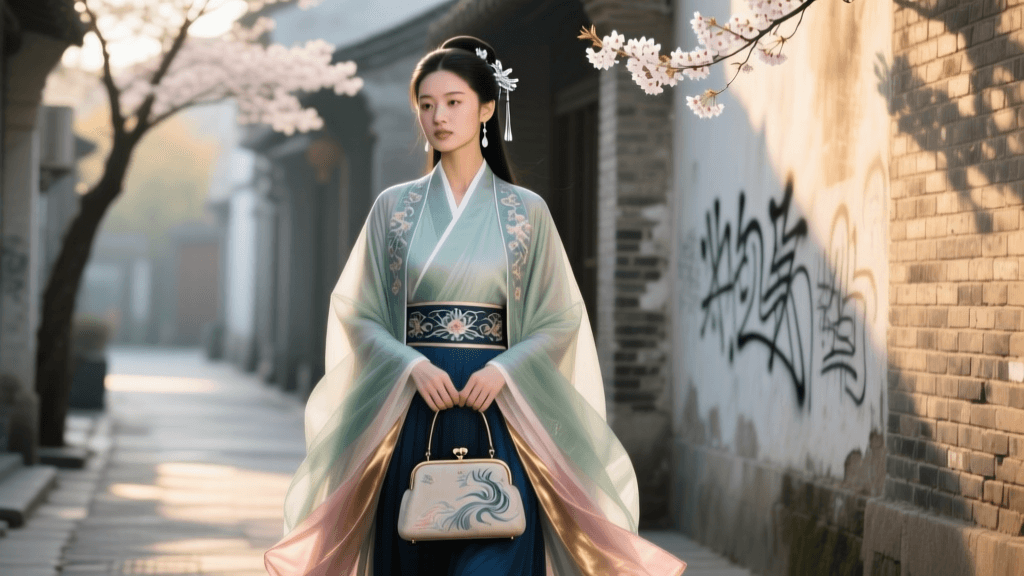
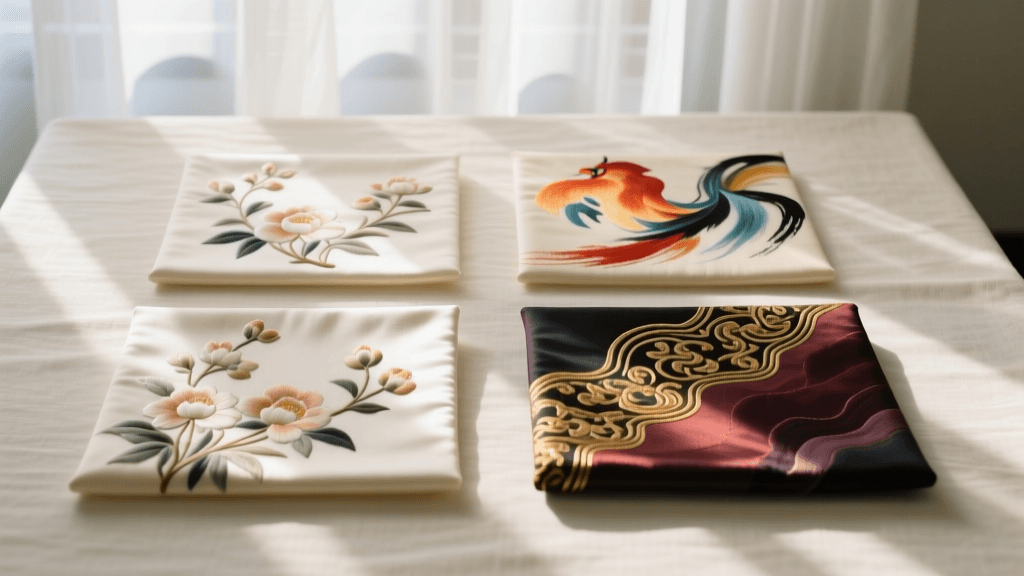
For modern collectors, historians, and enthusiasts of traditional garments—ranging from the elegant qipao to the flowing robes of Hanfu—understanding the regional nuances of Chinese embroidery is essential. The tradition is broadly categorized into the 'Four Great Embroideries' (四大名绣): Su, Xiang, Yue, and Shu. Each style boasts distinct stitching techniques, motif preferences, and applications in traditional fashion.
The Four Great Embroideries of China
1. Su Embroidery (Suzhou, Jiangsu)
Originating from the water towns of Suzhou, Su embroidery (苏绣) is celebrated for its unparalleled delicacy and refined elegance. It is the most prevalent style found on high-end qipaos and Ming-style Hanfu. The defining characteristic of Su embroidery is the artisan's ability to split a single silk thread into fractions—as fine as 1/16th, 1/32nd, or even 1/48th of the original thread. This allows for seamless color gradients and photorealistic details.
The pinnacle of this craft is 'double-sided embroidery' (双面绣), where the design is identical and perfectly finished on both sides of a translucent silk base, with no visible knots or loose ends. When examining a Su-embroidered Mamianqun (horse-face skirt), look for the 'Sanjiao' (scattered) stitch, which creates a painterly, watercolor-like effect on floral motifs like peonies and koi fish.
2. Xiang Embroidery (Hunan)
Xiang embroidery (湘绣) is bold, dramatic, and deeply rooted in the folk art of the Chu region. Unlike the delicate pastels of Su embroidery, Xiang pieces often feature stark contrasts, utilizing rich blacks, whites, and deep greys. It is most famous for its depictions of tigers and lions.
The signature technique is the 'Maozhen' (hairy stitch), which uses varying lengths of overlapping threads to mimic the texture of animal fur. While less common on everyday women's garments, Xiang embroidery is historically prominent on ceremonial jackets, theatrical costumes, and formal men's Changshan. The Victoria and Albert Museum notes that Xiang embroidery's integration of traditional Chinese ink-wash painting aesthetics makes it highly prized for decorative garment panels.
3. Yue Embroidery (Guangdong)
Yue embroidery (粤绣), encompassing both Guangzhou and Chaozhou styles, is vibrant, dense, and heavily textured. It is the undisputed king of Chinese bridal wear, specifically the Qun Kwa (裙褂), a two-piece jacket and skirt ensemble worn by brides in southern China and the diaspora.
Yue artisans specialize in 'Panjin' (gold and silver couching), where metallic threads are laid on the surface of the satin and stitched down with fine silk. The motifs are almost exclusively auspicious: dragons, phoenixes, bats, and pomegranates. The embroidery is so dense that the underlying fabric is often entirely obscured, giving the garment a stiff, armor-like quality that signifies wealth and protection.
4. Shu Embroidery (Sichuan)
Shu embroidery (蜀绣) hails from the Sichuan basin and is known for its practical durability and soft, satiny sheen. Historically used for everyday items, quilts, and the robes of the Shu Han dynasty, it features a distinct stitch called 'Yunzhen' (晕针), a shading stitch that creates smooth, layered transitions of color.
Common motifs include pandas, lotus flowers, and bamboo. Shu embroidery is frequently applied to Tang-style Hanfu and lightweight summer robes due to its relatively flat profile and comfortable drape against the skin.
Comparison Chart: The Four Styles
| Style | Origin | Signature Motif | Distinctive Technique | Ideal Garment Application |
|---|---|---|---|---|
| Su | Jiangsu | Koi, Peonies, Swallows | Double-sided, 1/48th thread split | Qipao, Ming-style Hanfu |
| Xiang | Hunan | Tigers, Landscapes | Maozhen (hairy stitch) | Ceremonial Jackets, Theatrical Wear |
| Yue | Guangdong | Dragons, Phoenixes | Panjin (gold/silver couching) | Qun Kwa (Bridal), Festival Wear |
| Shu | Sichuan | Pandas, Lotus, Fish | Yunzhen (shading stitch) | Tang-style Hanfu, Everyday Robes |
Practical Guide: Buying Authentic Embroidered Garments
Acquiring authentic, hand-embroidered traditional garments requires a discerning eye and an understanding of market pricing. The UNESCO Intangible Cultural Heritage listing for Chinese sericulture highlights the immense human labor required for these textiles, which is directly reflected in their cost.
Pricing, Timing, and Measurements
- Machine-Made Replicas ($50 - $250 USD): Produced in factories using multi-head embroidery machines. These garments use polyester or rayon threads on synthetic blends. They lack the luster of real silk and the backing will show uniform, locked stitches.
- Hand-Embroidered Su Qipao ($1,500 - $5,000+ USD): A custom-fitted, hand-embroidered qipao using 100% mulberry silk crepe and Su-style floral motifs typically takes 3 to 6 months to complete. Artisans charge based on the density of the embroidery; a fully embroidered bodice will push the price toward the higher end.
- Authentic Yue Qun Kwa ($3,000 - $15,000+ USD): A traditional bridal Qun Kwa featuring dense gold and silver couching is a massive undertaking. A 'Xiao Wu Fu' (moderate density) takes roughly 800 hours, while a 'Da Wu Fu' (maximum density, where no red silk base is visible) can take over 3,000 hours, spanning 12 to 18 months.
Identifying Hand vs. Machine Embroidery
To verify authenticity, always inspect the reverse side of the fabric. Machine embroidery utilizes a continuous bobbin thread, resulting in a uniform, grid-like backing with tiny, perfectly spaced lock stitches. Hand embroidery, conversely, will show slight variations in tension. The artisan must carry the thread across the back or tie off microscopic knots. Furthermore, genuine silk thread possesses a triangular prism-like structure that refracts light, giving it a luminous, pearlescent sheen that synthetic threads cannot replicate.
Care and Maintenance of Silk Embroidery
Silk is a protein fiber, making it highly susceptible to environmental damage, sweat acidity, and improper storage. Preserving an embroidered Hanfu or vintage qipao requires strict adherence to textile conservation standards.
Cleaning Protocols
Never wash hand-embroidered silk in water. The dyes used in traditional embroidery are often water-soluble, and the silk threads can bleed, ruining the gradient effects. Furthermore, water causes the silk fibers to swell and weaken. Always seek a professional dry cleaner who specializes in antique textiles or museum conservation. For minor surface dust, use a soft, natural-bristle brush and gently sweep in the direction of the stitches.
Storage and Environment
'The greatest enemies of silk are light, moisture, and the creases born of folding. A folded embroidered garment is a broken garment waiting to happen.' — Traditional Textile Conservation Maxim
- Rolling, Never Folding: Folding causes permanent stress fractures in the silk fibers and crushes the raised embroidery stitches. Roll the garment around an acid-free, unbuffered tissue paper tube (minimum 3-inch diameter).
- Climate Control: Store garments in a dark, climate-controlled environment. Maintain a relative humidity (RH) of 45% to 55% and a temperature between 65°F and 70°F (18°C - 21°C). High humidity invites mold, while low humidity makes the silk brittle.
- Pest Prevention: Avoid mothballs (naphthalene), which can chemically react with silk proteins and metallic threads, causing yellowing and tarnishing. Instead, use sealed cedar wood storage boxes and replace the cedar shavings annually.
Conclusion
Whether you are commissioning a bespoke Su-embroidered qipao for a formal event, investing in a Yue Qun Kwa as a family heirloom, or simply studying the textile history of the Han and ethnic minority groups, understanding the mechanics and regional variations of Chinese embroidery enriches the experience. These garments are not merely clothing; they are wearable archives of Asian tradition, capturing the patience, artistry, and cultural soul of their creators in every microscopic stitch.