Beyond the Kimono: Ainu Attus and Ryukyuan Bashofu Guide
Japan's Hidden Textile Heritage
Japan’s sartorial heritage is globally celebrated, yet the international narrative is overwhelmingly dominated by the mainland silk kimono. However, the Japanese archipelago is home to rich, distinct ethnic minorities whose textile traditions reflect their unique environments, spiritual beliefs, and historical isolation. The Ainu people of the northern territories (Hokkaido, Sakhalin, and the Kuril Islands) and the Ryukyuan people of the southern Okinawan archipelago developed extraordinary weaving techniques that stand in stark contrast to mainland sericulture. For collectors, historians, and textile enthusiasts, understanding these indigenous garments offers a profound glimpse into Japan’s diverse cultural tapestry. This guide explores the material science, acquisition strategies, and preservation techniques for two of Asia’s most remarkable minority textiles: Ainu attus and Ryukyuan bashofu.
Ainu Attus: The Elm Bark Cloth of the North
The Ainu, an indigenous hunter-gatherer society, historically relied on the natural resources of the subarctic forests. Their most iconic everyday garment, the attus, is a durable cloth woven from the inner bark of the Japanese elm (Ulmus davidiana var. japonica). Unlike the delicate silks of Kyoto, attus was designed for rugged utility, water resistance, and longevity in harsh northern winters.
Material and Craftsmanship
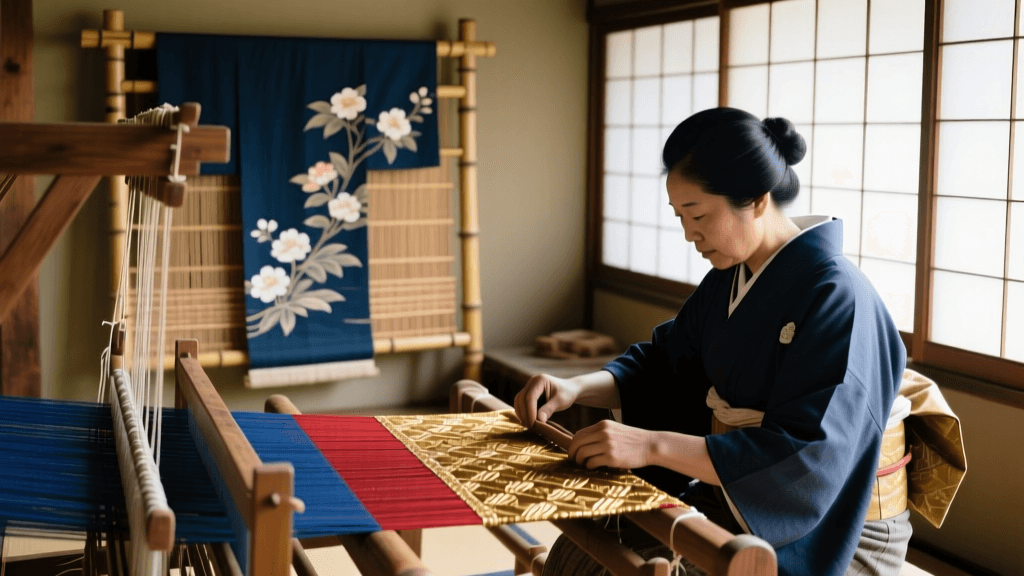
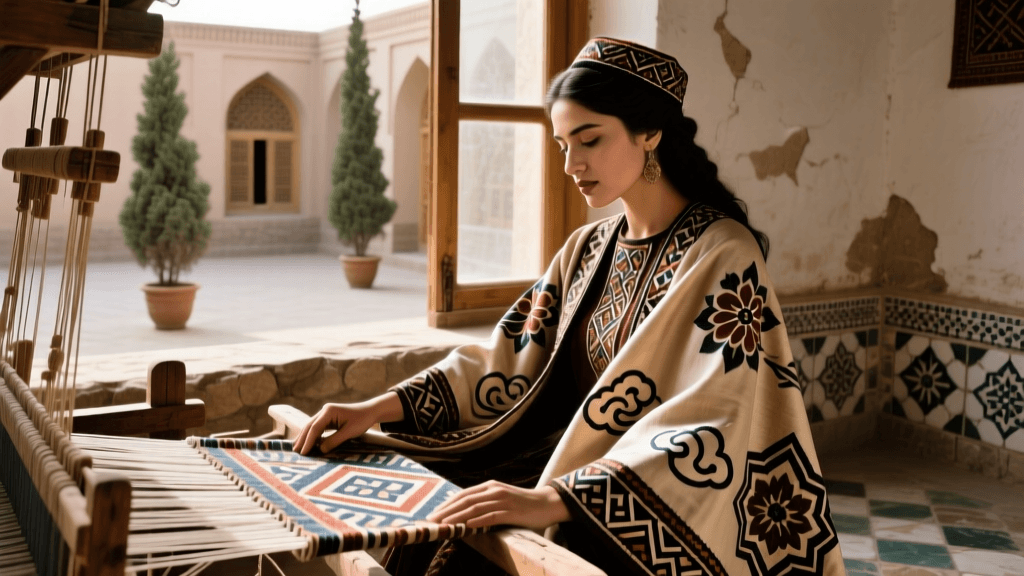
The creation of attus begins in early summer when the elm sap is flowing. Ainu women strip the outer bark, harvest the soft inner layers, and dry them. The fibers are then soaked, split by hand into fine threads using the fingernails, and woven on a backstrap loom called an emushi. The resulting fabric is incredibly tough, naturally water-repellent, and softens beautifully with age and wear.
Sourcing and Valuing Authentic Attus
Authentic vintage attus-amip (coats) are highly sought after by ethnographic collectors. When sourcing from antique dealers in Sapporo or specialized auctions in Tokyo, look for garments measuring approximately 100 to 120 cm in length with a sleeve span (yuki) of 55 to 65 cm. A plain, unembellished late-Meiji era attus work coat typically ranges from $200 to $400. However, pieces featuring intricate cotton appliqué and embroidery (upshor)—which served as spiritual protection against malevolent spirits—can command between $800 and $2,500. Always inspect the collar and hem for structural degradation, as elm bark can become brittle if stored in overly dry conditions.
Identifying Authentic Motifs
Ainu embroidery is never purely decorative; it is deeply apotropaic. When examining a garment, look for the moreu (curved, spiral motifs) and aiushi (thorn-like geometric patterns). These designs are traditionally placed at the collar, cuffs, and hem—openings where evil spirits were believed to enter the body. According to the Upopoy (National Ainu Museum and Park), the precision and symmetry of these motifs often indicate the spiritual maturity and skill of the maker.
Ryukyuan Bashofu: The Banana Fiber of the South
Moving to the subtropical south, the Ryukyuan Kingdom (modern-day Okinawa) developed bashofu, a gossamer-light textile woven from the fibers of the Japanese fiber banana (Musa basjoo). Historically, bashofu was the fabric of the Ryukyuan commoners, though the finest grades were paid as tribute to the Satsuma domain and the Chinese Ming and Qing dynasties.
The Painstaking Process of Bashofu
The creation of Kijoka no Bashofu, designated as an Important Intangible Cultural Property of Japan, is staggeringly labor-intensive. It takes approximately 200 banana trees to produce enough fiber for a single adult kimono. The stalks are boiled, scraped, split into microscopic threads, tied, and dyed using traditional Ryukyu indigo (Ryukyu-ai) before being woven into complex kasuri (ikat) patterns. The Ministry of Economy, Trade and Industry (METI) recognizes this meticulous process as one of Japan's most vital traditional crafts.
Sourcing and Pricing Bashofu
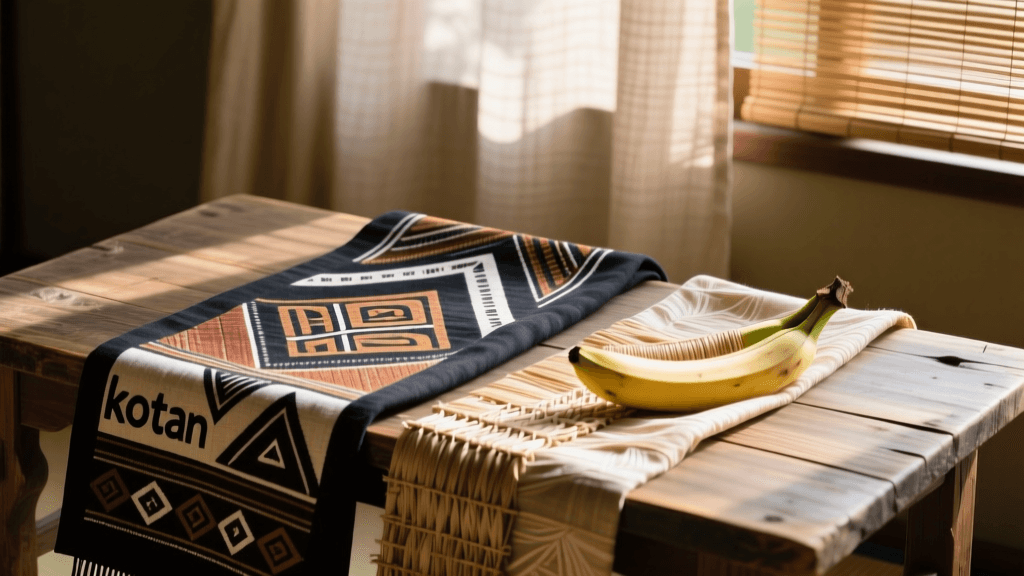
True bashofu is distinguished by its remarkable breathability, slight translucency, and the characteristic 'slub' (unevenness) of hand-spun banana thread. When purchasing, request a tan (a standard bolt of fabric measuring roughly 35 cm in width and 11 to 12 meters in length). Due to the scarcity of master weavers in the Kijoka region, newly commissioned bashofu kimono are exceptionally rare, starting at $4,000 and often exceeding $15,000. Vintage pre-WWII bashofu yardage or garments can be found in Naha’s antique markets or specialized Kyoto textile shops for $600 to $2,000 per bolt, depending on the complexity of the kasuri pattern and the depth of the indigo dye.
Ryukyuan Motifs and Dyes
While mainland textiles often feature painted or embroidered motifs, bashofu relies on kasuri (ikat) weaving, where threads are resist-dyed before weaving to create blurred, geometric patterns. Common motifs include local flora, fauna, and stylized interpretations of waves and clouds. The Okinawa Convention & Visitors Bureau frequently highlights these textiles as essential cultural artifacts that embody the island's subtropical environment and historical trade connections.
Comparative Analysis: Indigenous vs. Mainland Textiles
To understand the unique position of these minority garments, it is helpful to compare them directly with mainland Japanese silk.
| Feature | Ainu Attus | Ryukyuan Bashofu | Mainland Silk (Kinu) |
|---|---|---|---|
| Fiber Source | Japanese Elm Inner Bark | Japanese Fiber Banana | Silkworm Cocoons |
| Primary Region | Hokkaido, Sakhalin | Okinawa (Kijoka) | Kyoto, Kanazawa |
| Breathability | Moderate, Wind-resistant | Exceptional, Cooling | Low to Moderate |
| Average Vintage Cost | $300 - $1,500 | $600 - $2,000 (per bolt) | $150 - $800 |
| Primary Decoration | Cotton Appliqué (Upshor) | Kasuri (Ikat) Weaving | Yuzen Dyeing, Embroidery |
| Care Requirement | Strict Humidity Control | Cool Hand-Wash, No Wringing | Professional Dry Clean |
Practical Care and Preservation Guide
Preserving indigenous textiles requires an understanding of their specific organic origins. Unlike protein-based silk, attus and bashofu are cellulose-based plant fibers, which dictates entirely different conservation strategies.
Caring for Ainu Attus
- Humidity Control: Elm bark fiber is highly susceptible to fluctuations in humidity. Maintain a relative humidity (RH) of 45% to 55%. If the air is too dry, the fibers will snap; if too damp, mold will rapidly consume the organic bark.
- Storage: Store flat in acid-free tissue paper inside a cedar box (kiribako) to deter pests naturally. Avoid folding the garment along the same lines repeatedly to prevent permanent fiber breakage.
- Cleaning: Never dry-clean or machine-wash attus. Spot clean with a damp cloth and mild, pH-neutral soap. For heavy soiling, consult a textile conservator specializing in ethnographic artifacts.
Caring for Ryukyuan Bashofu
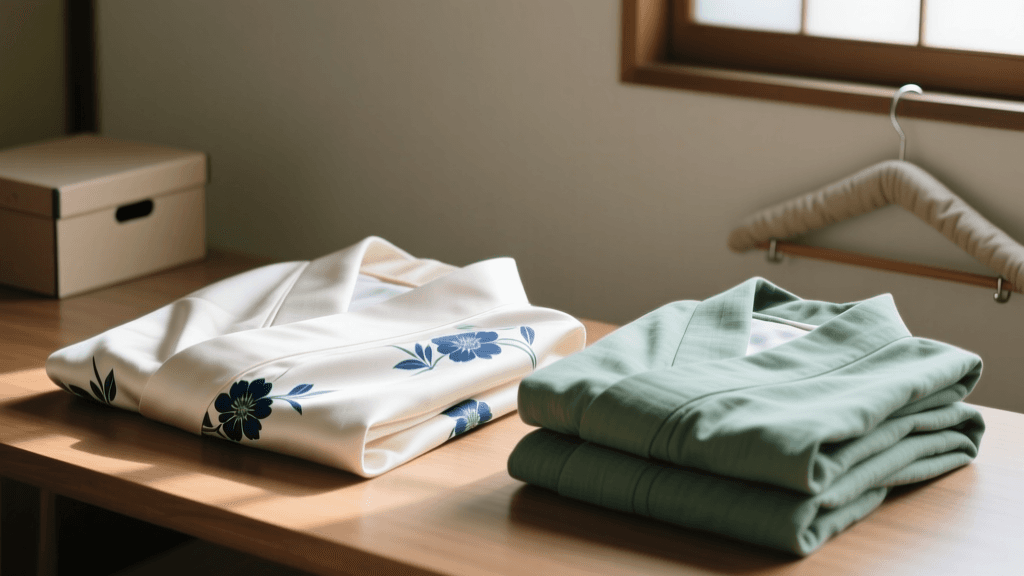
- Washing: Banana fiber is surprisingly robust when wet but vulnerable to alkaline substances. Hand-wash vintage bashofu in cool water (below 20°C) using a specialized silk or delicate wash.
- Drying: Do not wring the fabric, as this will distort the delicate kasuri patterns. Instead, roll the garment in a clean cotton towel to absorb excess moisture and dry flat in the shade.
- Light Exposure: Avoid direct sunlight, which will rapidly degrade the natural Ryukyu-ai indigo dye, causing the deep blues to fade into uneven grays.
Conclusion: Preserving a Diverse Heritage
The garments of Japan’s indigenous and ethnic minorities are far more than historical curiosities; they are masterclasses in sustainable material use and environmental adaptation. The Ainu attus demonstrates how the harsh subarctic forests were transformed into protective, spiritually significant armor, while the Ryukyuan bashofu showcases the ability to spin the humble banana plant into a textile of unparalleled subtropical elegance. For the modern collector, acquiring and preserving these pieces is an act of cultural stewardship. By looking beyond the mainstream silk kimono, we honor the full, diverse spectrum of Asian textile traditions and ensure that the ancestral knowledge of the Ainu and Ryukyuan people continues to be recognized and respected on the global stage.