Kyoto Kimono Artisans: Nishijin Weaving and Yuzen Dyeing
The Heartbeat of Japanese Textiles: Kyoto's Artisan Districts
When we admire the breathtaking beauty of a traditional Japanese kimono, our eyes are immediately drawn to the vibrant colors, the intricate motifs, and the luxurious drape of the silk. However, the true magic of these garments lies not just in their final appearance, but in the centuries-old artisan workshops that bring them to life. In the historic city of Kyoto, the creation of kimono textiles is a highly specialized craft, divided among master weavers, dyers, embroiderers, and tailors. For textile enthusiasts, fashion historians, and cultural travelers, visiting these traditional artisan workshops offers an unparalleled glimpse into the meticulous processes that define Japanese sartorial heritage.
Among the most revered of these crafts are Nishijin-ori (Nishijin weaving) and Kyo-Yuzen (Kyoto resist-dyeing). Recognized and protected by the Ministry of Economy, Trade and Industry (METI) as official Traditional Craft Products of Japan, these techniques represent the pinnacle of textile artistry. This guide delves into the history, techniques, and practicalities of experiencing these legendary kimono artisan workshops in Kyoto.
Nishijin-ori: The Intricate Art of Kimono Weaving
Nishijin-ori translates to 'the weaving of Nishijin,' named after the neighborhood in northwest Kyoto where the craft has been centered since the Onin War in the late 15th century. Unlike standard weaving, which often produces simple, repeating geometric patterns, Nishijin weaving is famous for its complex, pictorial designs woven directly into the fabric, most notably for the obi (the wide sash worn with a kimono).
The Weaving Process and Materials
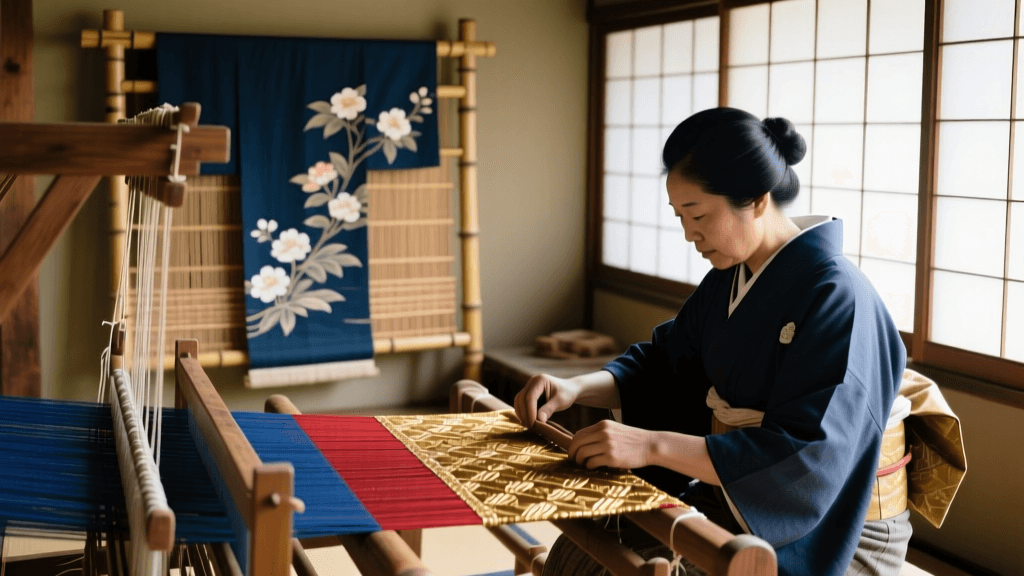
The creation of a single Nishijin obi is a monumental task that involves over twenty distinct steps, often handled by different specialized artisans. The process begins with the design and pattern drafting, followed by the meticulous dyeing of silk threads. Artisans frequently incorporate precious materials, including threads wrapped in genuine gold and silver leaf, or lacquered paper.
Historically, weavers used the sorabiki, a massive, hand-operated draw loom that required two people to operate: one to manage the pedals and shuttle, and another to sit atop the loom and manually pull the warp threads to create the pattern. Today, while computerized Jacquard looms are used for commercial efficiency, master artisans still preserve the sorabiki technique for bespoke, museum-quality pieces. The resulting fabric is incredibly dense, heavy, and durable, characterized by a reversible pattern and a stiff, sculptural quality that allows the obi to hold its intricate knots.
Visiting the Nishijin Textile Center
For travelers seeking an accessible introduction to this craft, the Nishijin Textile Center is an essential stop. As detailed by Japan Guide's Nishijin Textile Center profile, this multi-story facility serves as both a museum and a working exhibition space. Admission to the center is completely free. Visitors can observe artisans operating traditional hand looms and watch spectacular kimono fashion shows that take place hourly. The center also features a retail area where you can purchase small woven souvenirs, such as coin purses and bookmarks, starting from around 500 JPY, while authentic hand-woven obi can range from 300,000 JPY to over 1,000,000 JPY.
Kyo-Yuzen: Hand-Painted Silk Dyeing Mastery
While Nishijin-ori relies on the interlacing of pre-dyed threads, Kyo-Yuzen is a surface-design technique that transforms plain white silk into a canvas for breathtaking, painterly artwork. Originating in the late 17th century and attributed to the fan painter Miyazaki Yuzensai, this technique revolutionized kimono fashion by allowing for an unlimited palette of colors and highly detailed, free-form pictorial designs, such as cascading waterfalls, blooming cherry blossoms, and soaring cranes.
The Yuzen Dyeing Steps
The traditional Kyo-Yuzen process is a masterclass in chemical and artistic precision. It begins with a provisional sketch drawn on the silk using a blue dayflower extract that naturally washes away later. Next, the artisan applies itome-nori, a fine, waterproof resist paste made from rice flour, along the outlines of the sketch. This paste acts as a dam, preventing the dyes from bleeding into one another when the vibrant colors are hand-painted within the borders using delicate brushes.
Once the painting is complete, the fabric is covered in a protective layer of soybean milk and steamed to fix the dyes. Historically, the final step involved yuzen-nagashi, the practice of washing the fabric in the cold, flowing waters of the Kamo River to remove the rice paste. While modern environmental regulations have moved this washing process to specialized indoor water tanks, the visual result remains the same: a brilliantly colored, crisp design with distinctive white outlines where the resist paste once sat.
Booking a Yuzen Workshop Experience
Unlike weaving, which requires massive, expensive machinery, Yuzen dyeing can be experienced hands-on by visitors. One of the most renowned venues for this is the Marumasu-Nishimuraya Yuzen Workshop, located in a historic machiya (traditional wooden townhouse) in Kyoto. Here, guests can hand-paint their own silk items under the guidance of English-speaking instructors.
- Available Items: Silk handkerchiefs, fans, tote bags, and scarves.
- Cost: Prices range from 2,200 JPY for a small handkerchief to approximately 5,500 JPY for a large silk scarf.
- Duration: Sessions typically last between 60 and 90 minutes, depending on the complexity of your design and your painting speed.
- Booking: Reservations are strictly required and should be made at least two to three weeks in advance via their official website, especially during peak tourist seasons like the spring cherry blossom or autumn foliage periods.
Comparison: Nishijin Weaving vs. Kyo-Yuzen Dyeing
To better understand how these two foundational kimono crafts differ in technique, application, and visitor experience, refer to the comparison table below:
| Feature | Nishijin-ori (Weaving) | Kyo-Yuzen (Dyeing) |
|---|---|---|
| Primary Technique | Jacquard & Draw Loom Weaving | Rice-Paste Resist & Hand-Painting |
| Visual Characteristic | Textured, dense, often reversible patterns | Smooth, painterly, vibrant pictorial scenes |
| Primary Garment Use | Obi (sashes), formal ties, small accessories | Kimono bodies, haori jackets, furoshiki |
| Production Time (Single Piece) | Months to over a year for a bespoke obi | Several weeks to a few months |
| Visitor Experience Type | Observation, museum tours, loom demonstrations | Hands-on painting workshops, studio tours |
| Average Workshop/Souvenir Cost | 500 JPY - 3,000 JPY (small woven goods) | 2,200 JPY - 5,500 JPY (painted silk items) |
Practical Guide for Travelers and Textile Enthusiasts
Engaging with traditional Japanese artisans requires a blend of logistical planning and cultural sensitivity. Whether you are observing a master weaver or painting your own silk scarf, keeping the following actionable advice in mind will ensure a respectful and rewarding experience.
Etiquette and Booking Tips
1. Respect the Workspace: Artisan workshops are active production environments, not just tourist attractions. When observing weavers or dyers, maintain a quiet demeanor. Never use flash photography, as sudden bright lights can distract artisans working with sharp tools, hot wax, or delicate threads. Always ask for explicit permission before taking close-up photographs of proprietary patterns or unfinished works.
2. Overcoming Language Barriers: While major centers like the Nishijin Textile Center and Marumasu-Nishimuraya offer English support, smaller, family-run ateliers tucked away in Kyoto's Nishijin or Higashiyama districts may not. Download an offline translation app on your smartphone and prepare a few polite Japanese phrases, such as Sumimasen (Excuse me) and Arigatou gozaimasu (Thank you very much), to show respect for their craft.
3. Timing Your Visit: Artisans generally adhere to strict working hours, often starting early in the morning to maximize natural daylight, which is crucial for color matching in Yuzen dyeing. Plan your visits between 10:00 AM and 4:00 PM. Avoid visiting during Obon (mid-August) and the New Year holidays (January 1st-4th), as most traditional workshops close entirely for family observances.
4. Understanding the Value: When browsing workshop gift shops, you may experience sticker shock at the prices of authentic, handcrafted textiles. Remember that you are not purchasing mass-produced factory goods; you are investing in hundreds of hours of skilled labor, rare natural materials, and the preservation of intangible cultural heritage. If a full kimono or obi is outside your budget, look for zori (sandals) made from upcycled Nishijin fabric, or framed Yuzen-dyed postcards, which offer an affordable yet authentic connection to the craft.
Preserving the Legacy of Japanese Artisan Crafts
The artisans of Kyoto face significant challenges in the modern era, including an aging workforce, a decline in daily kimono wear, and the high cost of raw silk. However, a renewed global interest in sustainable fashion, slow textiles, and traditional craftsmanship has sparked a renaissance. By visiting these workshops, participating in hands-on experiences, and supporting authentic artisan businesses, international travelers play a direct role in ensuring that the rhythmic clack of the Nishijin loom and the delicate brushstrokes of the Yuzen dyer continue to thrive for generations to come.