The Sukajan Souvenir Jacket in Global Pop Culture and Streetwear
The Origins of the Sukajan: From Yokosuka to the World
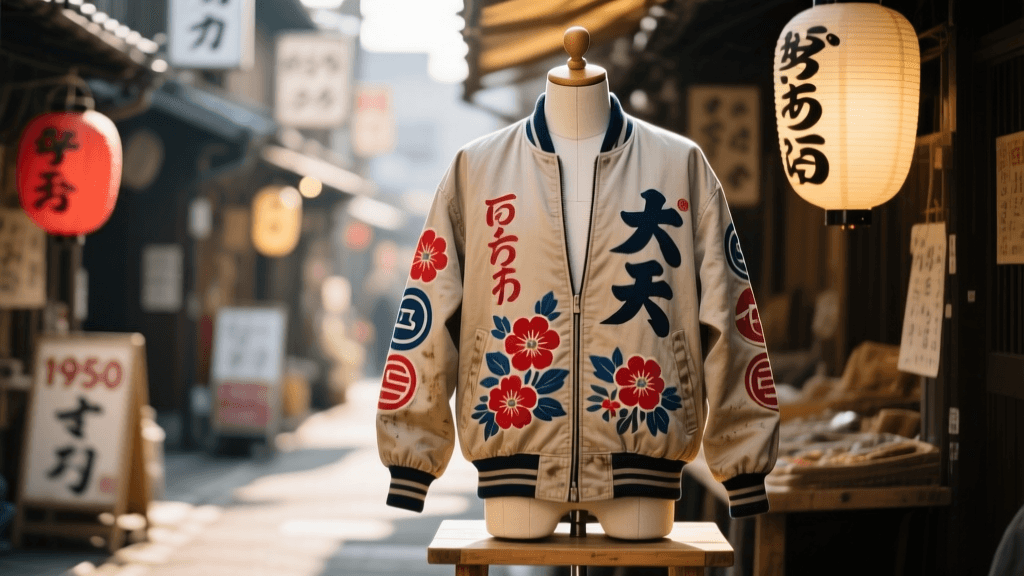
The Sukajan, commonly known in the West as the Japanese souvenir jacket, represents one of the most fascinating intersections of traditional Asian textile arts and Western military history. Born in the immediate aftermath of World War II, the jacket originated in the port city of Yokosuka, home to a major United States naval base. American servicemen, looking for unique mementos to bring back home, commissioned local Japanese tailors to create custom jackets. These tailors ingeniously merged the silhouette of the classic American varsity or baseball jacket with the luxurious, vibrant silk embroidery techniques traditionally used in high-end kimonos and obi sashes.
The term 'Sukajan' is a portmanteau of 'Yokosuka' and 'Jumper' (the Japanese-English term for a jacket). According to the historical archives maintained by Toyo Enterprise, the pioneering manufacturer behind the legendary 'Tailor Toyo' brand, these early jackets were often crafted from surplus parachute silk and rayon. Tailors utilized a specialized embroidery method that allowed the designs to shimmer brilliantly in the light, creating a garment that was entirely unique to the occupying forces and completely unknown in mainstream American fashion at the time.
The Art of Sukashi: Traditional Embroidery Meets Streetwear
To truly appreciate the Sukajan's place in Asian traditions, one must understand the embroidery technique that defines it. The intricate needlework is heavily inspired by sukashi and traditional Japanese textile arts. Unlike standard flat embroidery, Sukajan embroidery uses a satin stitch technique with highly twisted rayon or silk threads, giving the motifs a three-dimensional, raised texture that catches the light dynamically.
The Victoria and Albert Museum's extensive archives on Asian textiles and garments highlight how Japanese embroidery has historically been used to denote status, protection, and philosophical beliefs. The Sukajan adopted this deeply symbolic visual language, translating ancient mythological creatures and regional maps onto a distinctly Western canvas. This fusion created a wearable piece of cross-cultural art that preserved traditional Japanese craftsmanship during a period of immense Westernization and economic hardship in post-war Japan.
Decoding the Motifs: A Symbolic Guide
When collecting or styling a Sukajan, understanding the traditional motifs adds a layer of cultural appreciation. Here are the most common designs and their historical meanings:
- The Tiger: Symbolizes courage, strength, and protection against evil spirits. Often depicted leaping or snarling, it was a favorite among military personnel seeking a talisman for safe travels.
- The Dragon: Represents wisdom, imperial power, and control over water and weather. In Japanese tradition, the dragon is a benevolent force, contrasting with its often malevolent Western counterparts.
- The Eagle: A direct nod to American military insignia, symbolizing freedom, vision, and authority. It was frequently paired with Japanese cherry blossoms to represent the fleeting nature of life and military service.
- The Map of Japan: Highly specific to the Yokosuka region, these intricate maps often highlighted the buyer's specific base or travel route, serving as a literal cartographic souvenir.
The Sukajan in Global Pop Culture and Media
For decades, the Sukajan remained a niche collector's item and a staple of Japanese underground subcultures, particularly among the Yakuza and the rebellious bosozoku biker gangs of the 1970s and 80s. However, as detailed in the cultural overview on Wikipedia's Sukajan entry, the jacket experienced a massive resurgence in global pop culture during the 2010s.
Hollywood played a pivotal role in elevating the jacket from a vintage curiosity to a cinematic icon. While Ryan Gosling's famous scorpion jacket in the 2011 film Drive was technically a custom satin bomber, its aesthetic DNA was entirely rooted in the Sukajan tradition of bold, back-panel embroidery on a silk-blend canvas. Similarly, films like The Fast and the Furious: Tokyo Drift and countless hip-hop music videos began featuring the jacket as a shorthand for edgy, cosmopolitan streetwear.
By 2016, the Sukajan had officially breached the walls of high fashion. Luxury houses like Gucci, Louis Vuitton, and Saint Laurent released their own interpretations, often swapping traditional rayon for heavy silk brocades and pricing them upwards of $4,000. This high-fashion co-sign cemented the Sukajan's status as a permanent fixture in the global menswear and streetwear lexicon, bridging the gap between Tokyo vintage shops and Parisian runways.
Buying Guide: Vintage vs. Modern vs. High-Fashion
If you are looking to add a Sukajan to your wardrobe, the market offers three distinct tiers. Below is a comparison chart to help you navigate your purchase based on budget, material, and investment value.
| Era / Type | Primary Material | Average Cost (USD) | Investment Value | Best For |
|---|---|---|---|---|
| Vintage (1950s-1970s) | Silk / Early Rayon | $400 - $2,500+ | High (Appreciates over time) | Archival collectors, purists |
| Modern Reproduction (Tailor Toyo) | Acetate / Rayon Blend | $150 - $350 | Medium (Holds value well) | Everyday streetwear, durability |
| High-Fashion Interpretation | Heavy Silk / Brocade | $2,000 - $5,000+ | Low (Depreciates post-retail) | Luxury styling, runway enthusiasts |
Where to Hunt for Authentic Pieces
For vintage hunters, Tokyo remains the undisputed mecca. Shops like Chicago in Harajuku and Shimokitazawa, or New York Joe Exchange, frequently stock 1960s acetate and silk pieces. When buying online, platforms like Grailed offer curated vintage selections, while proxy services like Buyee allow international buyers to bid directly on Yahoo Auctions Japan, where rare, deadstock 1950s map jackets can occasionally be found for under $300 if you know the right Japanese search terms (search for 'スカジャン' or 'ヴィンテージ スカジャン').
Sizing, Fit, and Styling the Sukajan
One of the most common mistakes Western buyers make is misunderstanding vintage Japanese sizing. A vintage Sukajan marked as 'Large' will typically fit like a modern US 'Small' or 'Medium'. When shopping, always ignore the tag size and rely on exact garment measurements. For a modern, relaxed streetwear fit, look for a pit-to-pit (chest) measurement of 22 to 24 inches, and a shoulder-to-hem length of 25 to 27 inches. Because vintage rayon and silk lack stretch and are prone to seam tearing, sizing up is not just a stylistic choice; it is necessary for the garment's preservation.
Practical Styling Rules
The Sukajan is an inherently loud garment. Its shimmering embroidery and bold color-blocking demand attention. To integrate it into a modern wardrobe without looking like you are wearing a costume, follow the 'One Statement Piece' rule:
- Anchor with Neutrals: Pair a vibrant, multi-colored vintage Sukajan with a plain white heavyweight cotton t-shirt, raw selvedge denim, and minimalist canvas or leather sneakers. Let the jacket do 100% of the visual heavy lifting.
- Embrace the Reversible Nature: Most authentic Sukajans are fully reversible. The secondary side is usually a solid, muted color (like black, navy, or olive) with a small, subtle chest embroidery. This allows you to flip the jacket for a low-key, sophisticated look suitable for evening wear or smarter casual environments.
- Mind the Collar: The traditional ribbed knit collar can sometimes feel restrictive. Wearing an open-collared camp shirt or a simple crewneck underneath helps frame the face and prevents the jacket's busy neckline from clashing with your accessories.
Conclusion
The Sukajan is far more than a simple souvenir; it is a complex tapestry of post-war history, traditional Asian craftsmanship, and modern global pop culture. From the naval bases of Yokosuka to the silver screen and the world's most prestigious fashion runways, the souvenir jacket continues to evolve while remaining deeply rooted in the textile traditions of Japan. Whether you are hunting for a rare 1950s silk map jacket or investing in a modern Tailor Toyo reproduction, wearing a Sukajan means wearing a piece of living, cross-cultural history.