Men's & Gender-Neutral Hanfu: The Ultimate Styling Guide
The Renaissance of Men's and Gender-Neutral Hanfu
The global Hanfu movement has experienced an explosive resurgence over the last decade, evolving from a niche historical hobby into a vibrant, mainstream fashion subculture. While early iterations of the modern revival heavily favored women's ethereal, fairy-like aesthetics, the landscape has dramatically shifted. Today, men's and gender-neutral Hanfu styling represents one of the most dynamic and rapidly growing segments of the community. For non-binary, gender-fluid, and masculine-presenting individuals, traditional Chinese garments offer a profoundly liberating alternative to Western tailoring. Unlike modern menswear, which relies on structured shoulder pads, darts, and rigid inseams, traditional Hanfu is constructed using flat-pattern cutting. This architectural approach drapes naturally over the body, secured by sashes and belts rather than buttons and zippers, making it inherently adaptable to a wide spectrum of body types and gender expressions.
According to historical records and textile analyses preserved by institutions like the Metropolitan Museum of Art, the Ming Dynasty (1368–1644) established a highly codified yet remarkably elegant system of menswear that continues to serve as the foundation for modern masculine and androgynous Hanfu styling. Understanding these historical silhouettes is the first step toward curating a versatile, gender-inclusive wardrobe.
Key Hanfu Silhouettes for Masculine and Androgynous Styling
When building a gender-neutral or masculine Hanfu wardrobe, the focus shifts toward structured, flowing outer garments that create a commanding, grounded silhouette. The following styles are the cornerstones of this aesthetic:
1. Yuanlingpao (Round-Collar Robe)
Originating in the Tang Dynasty and popularized through the Song and Ming eras, the Yuanlingpao features a circular neckline and side slits. It is incredibly versatile and can be worn casually or formally. For a gender-neutral look, opt for a Yuanlingpao with a slightly wider collar and a straight, A-line drop that skims the hips without cinching.
2. Daopao (Taoist Robe)
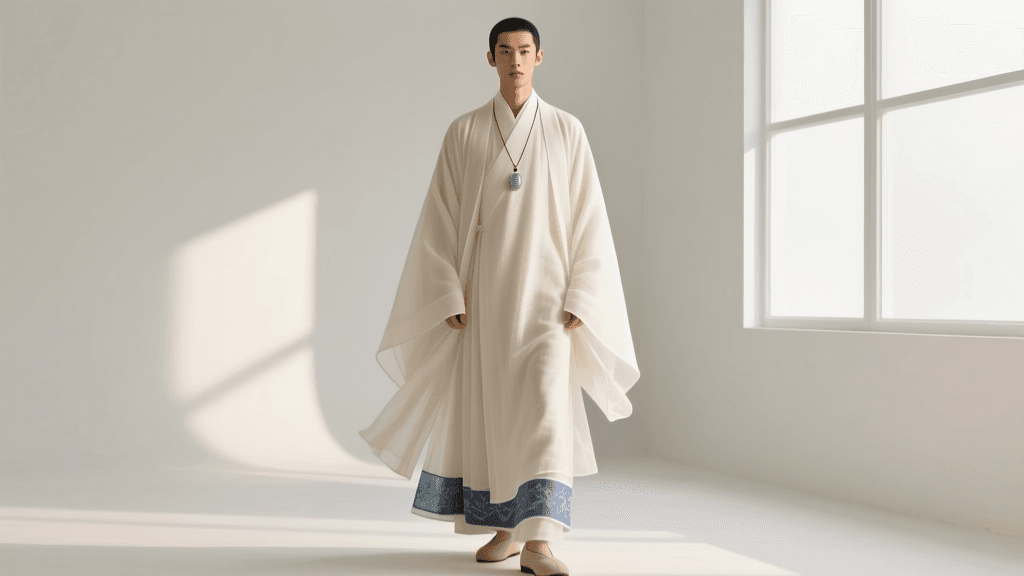
A staple of Ming Dynasty scholars and officials, the Daopao is characterized by its cross-collar, right lapel (Jiaoling Youren), and distinctive side panels that wrap around to the back. It exudes an intellectual, serene energy. The Daopao is highly favored in the gender-neutral community because its voluminous sleeves and sweeping hem create a dramatic, sweeping silhouette that obscures the natural waistline, promoting an androgynous, scholarly aesthetic.
3. Zhiduo (Straight Robe)
Similar to the Daopao but featuring side slits and a more structured, martial appearance, the Zhiduo was historically worn by military officials and scholars alike. Its crisp lines and slightly narrower sleeves make it an excellent choice for those who prefer a sharper, more tailored masculine look without sacrificing traditional drape.
4. Feiyufu (Flying Fish Garment)
Originally a ceremonial guard uniform bestowed by the Emperor, the Feiyufu is heavily embroidered with the mythical 'flying fish' motif (a dragon-like creature with fish fins). Today, it is a show-stopping piece for festivals, photoshoots, and weddings. Its bold, aggressive lines and heavy brocade fabrics provide a deeply powerful, gender-defying armor-like presence.
Comparison Chart: Popular Men's & Gender-Neutral Hanfu Styles
| Garment Type | Historical Era | Best For | Avg. Cost (USD) | Styling Vibe |
|---|---|---|---|---|
| Yuanlingpao | Tang / Song / Ming | Daily wear, casual outings | $50 - $120 | Relaxed, versatile, classic |
| Daopao | Ming Dynasty | Tea ceremonies, scholarly events | $100 - $250 | Intellectual, flowing, serene |
| Zhiduo | Ming Dynasty | Formal gatherings, travel | $90 - $200 | Structured, sharp, martial |
| Feiyufu | Ming Dynasty | Festivals, weddings, photography | $150 - $400+ | Bold, regal, commanding |
Layering and Proportions: The Art of the Silhouette
The secret to mastering Hanfu lies in layering. A single robe rarely tells the whole story; it is the interplay of inner garments, middle layers, and outer coats that creates depth and visual interest. For masculine and gender-neutral styling, proportions are key to avoiding a costume-like appearance and achieving a grounded, intentional look.
- The Inner Layer (Zhongyi): Always start with a white or off-white cotton cross-collar inner shirt. This protects the outer silk or brocade layers from sweat and provides a crisp, clean line of contrast at the collar and cuffs. For a modern, androgynous twist, some wearers substitute the traditional Zhongyi with a high-quality, tailored white turtleneck or mandarin-collar shirt during colder months.
- The Middle Layer (Yisan or Tieji): A pleated skirt (Yisan) or a structured vest (Tieji) worn over the inner shirt and beneath the outer robe adds volume to the lower half. The Yisan, historically worn by men, creates a bell-shaped foundation that gives the outer Daopao or Zhiduo its majestic, sweeping drape.
- The Outer Layer (Waitao): This is your statement piece. Ensure the shoulder seams of your outer robe sit slightly past your natural shoulder line. This 'dropped shoulder' effect is a hallmark of traditional Chinese tailoring and contributes significantly to the relaxed, gender-fluid silhouette.
- The Belt (Dai): Hanfu relies on ties and sashes. For a masculine look, opt for wide, unadorned leather belts, woven fabric sashes, or a simple jade-inlaid palace belt (Gongdai). Avoid overly delicate, heavily beaded sashes, which tend to read as more traditionally feminine.
Fabric, Color, and Motif Selection
While the Hanfu community celebrates all colors, certain palettes and textiles naturally lend themselves to a more grounded, gender-neutral aesthetic. As highlighted in the textile archives of the Metropolitan Museum of Art's China: Through the Looking Glass exhibition, historical Chinese menswear often utilized rich, deep tones and subtle, tonal weaving rather than overt, high-contrast embroidery.
Colors: Navy blue, charcoal, forest green, maroon, and deep ochre are foundational colors for a masculine wardrobe. Monochromatic styling—such as pairing a slate-grey inner layer with a charcoal outer robe—creates a sleek, modern, and highly sophisticated look that transcends traditional gender binaries.
Fabrics: Seasonality dictates your fabric choice. In summer, opt for breathable linen-cotton blends or lightweight raw silk (Xiangyunsha). For autumn and winter, heavy wool blends, thick brocades (Zhuanghua), and velvet-lined cotton provide both warmth and the structural weight necessary to make the heavy pleats of a Zhiduo or Daopao hang correctly.
Motifs: Instead of florals (peonies, lotuses), look for geometric patterns, cloud motifs (Xiangyun), bamboo, pine, cranes, or subtle dragon and Qilin scales woven directly into the fabric (Anhua). These 'hidden motifs' catch the light beautifully and offer a refined, understated elegance.
Practical Buying Guide: Sizing, Costs, and Trusted Brands
Purchasing Hanfu online, particularly from Chinese marketplaces like Taobao or specialized indie brands, requires a different approach to sizing than Western retail. Hanfu is measured flat, and understanding your metrics is crucial for a comfortable, gender-affirming fit.
How to Measure for Hanfu
- Shoulder Width (Jian Kuan): Measure from the edge of one shoulder bone to the other. For a traditional dropped-shoulder look, add 4-6 cm to your actual measurement when checking size charts.
- Chest Circumference (Xiong Wei): Measure around the fullest part of your chest. Because Hanfu wraps and overlaps, you must add at least 15-20 cm to your actual chest measurement to ensure the cross-collar closes comfortably without gaping.
- Garment Length (Yi Chang): Measure from the base of your neck (C7 vertebra) down to your desired hemline. For most men's and gender-neutral robes, the hem should fall just above the ankle bone to prevent tripping and to allow footwear to be visible.
Trusted Brands for Menswear and Androgynous Styles
While many mainstream brands focus on women's fairy-core aesthetics, several specialized ateliers excel in historical menswear and structured, unisex designs:
- Zhongzheng Hanfu: Widely considered the gold standard for historically accurate Ming Dynasty menswear. Their Daopao and Zhiduo are meticulously researched and tailored for broader shoulders.
- Tingyue Pavilion: Offers excellent mid-tier options with a focus on elegant, scholarly aesthetics. Their color palettes are often muted and highly suitable for gender-neutral styling.
- Huawei Hanfu: Known for incorporating high-quality wool and heavier fabrics, making them a top choice for winter robes and structured outer coats.
Accessorizing the Modern Hanfu Wardrobe
Accessories bridge the gap between historical costume and modern fashion. To complete a masculine or gender-neutral Hanfu ensemble, focus on functional, historically grounded accessories.
- Headwear (Guan / Jin): A traditional scholar's cap (Futou) or a simple wrapped cloth headband (Jin) instantly elevates the outfit. For a modern, streetwear-inspired Hanfu look, a high-quality leather newsboy cap or a minimalist wide-brimmed felt hat can create a stunning East-meets-West fusion.
- Footwear: Traditional cloud-toe boots (Xuezi) are essential for formal wear. However, for daily wear, sleek leather Chelsea boots, minimalist white sneakers, or woven leather sandals pair beautifully with the sweeping hems of a Yuanlingpao.
- Props and Accents: A folding fan (Zheshan) with calligraphy or landscape paintings, a simple jade pendant (Yupei) tied to the belt, or a leather-bound notebook can serve as both functional items and stylish accents that reinforce the scholarly, grounded aesthetic.
Conclusion: Embracing the Fluidity of Tradition
The beauty of Hanfu lies in its architectural fluidity. By stepping away from the rigid, body-constricting norms of modern Western fashion, men's and gender-neutral Hanfu styling offers a return to comfort, elegance, and self-expression. Whether you are donning a sweeping Ming Dynasty Daopao for a cultural festival or pairing a minimalist Song-style round-collar robe with modern trousers for a day in the city, traditional Chinese garments provide a limitless canvas for exploring identity, history, and personal style.
"Clothing is the most immediate expression of our identity. In reviving Hanfu, we are not just putting on old clothes; we are reclaiming a philosophy of harmony between the body, the fabric, and the natural world—a philosophy that belongs to everyone, regardless of gender."