The Ultimate Hanfu Travel & Social Media Photo Guide
The Rise of Hanfu Destination Tourism
The intersection of traditional Chinese clothing and modern travel has birthed a booming cultural phenomenon known as Hanfu tourism. Driven by the 'Guochao' (national trend) movement, millions of young travelers are exploring China's historical landmarks while dressed in meticulously recreated garments from various dynasties. According to historical archives and resources like the Metropolitan Museum of Art's Heilbrunn Timeline of Chinese History, Chinese textiles and garments have always been deeply tied to regional identity, dynastic shifts, and philosophical ideals. Today, these garments are not just museum pieces; they are living, breathing fashion statements that transform ancient cities into vibrant, open-air photoshoots.
For content creators, travel influencers, and cultural enthusiasts, planning a Hanfu-focused trip requires more than just booking a flight. It demands an understanding of regional architectural styles, dynastic accuracy, and the logistics of managing flowing silk and linen while navigating crowded tourist sites. This guide provides actionable advice for planning your Hanfu destination tourism experience and optimizing your content for platforms like Douyin, TikTok, and Instagram.
Top 3 Destinations for Hanfu Photography
Choosing the right destination is crucial for matching your garment to the local architecture and atmosphere. Here are the top three cities dominating the Hanfu tourism circuit.
1. Xi’an: Datang Everbright City (Tang Dynasty)
Xi’an, the ancient capital of Chang'an, is the undisputed king of Hanfu tourism. The crown jewel is Datang Everbright City, a massive pedestrian district modeled after the Tang Dynasty. The architecture features grand wooden brackets, sweeping eaves, and thousands of red lanterns that illuminate the night.
- Recommended Style: Tang Dynasty Qixiong Ruqun (chest-high skirts) and Yuanlingpao (round-collar robes). The bold colors, wide sleeves, and elaborate floral motifs of the Tang era perfectly match the opulent, bustling nightlife of the Everbright City.
- Best Time to Shoot: 'Blue hour' (just after sunset) when the sky is a deep indigo and the warm glow of the lanterns creates a cinematic contrast.
2. Luoyang: Luoyi Ancient City (Wei/Jin & Tang)
Luoyang offers a more ethereal, mystical vibe compared to Xi'an. Known for the Longmen Grottoes and the newly developed Luoyi Ancient City, Luoyang is a haven for those seeking a serene, scholarly, or martial arts-inspired aesthetic.
- Recommended Style: Wei and Jin dynasty wide-sleeved robes (characterized by their flowing, unstructured elegance) or late Tang dynasty styles. The muted, earthy tones and bamboo motifs work beautifully against the ancient stone carvings and misty mountain backdrops.
- Best Time to Shoot: Early morning (6:00 AM - 8:00 AM) to capture the morning mist and avoid the heavy crowds that gather by midday.
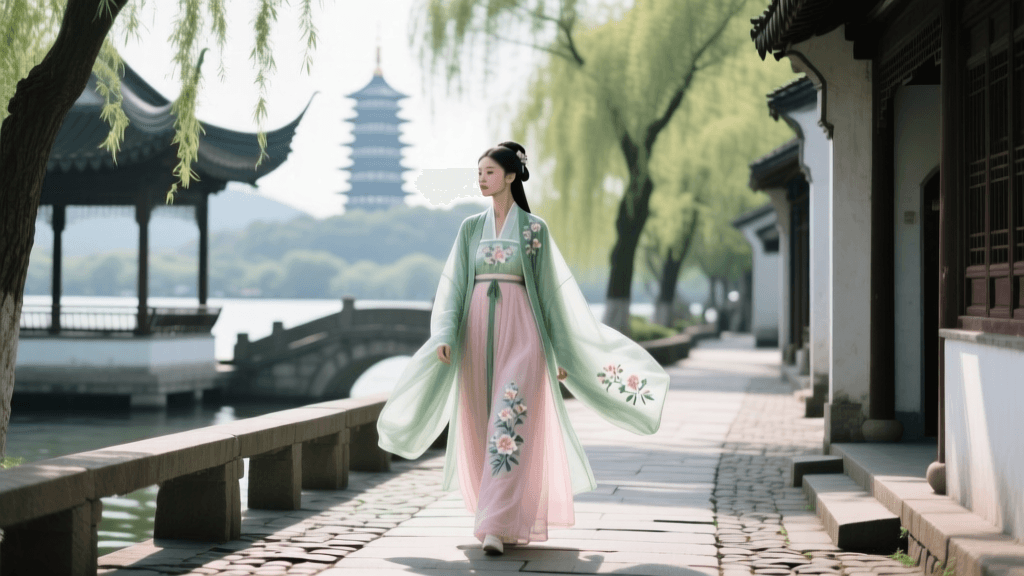
3. Hangzhou: West Lake & Lingyin Temple (Song Dynasty)
Hangzhou is synonymous with poetic romance, weeping willows, and tranquil waters. It is the ideal backdrop for the refined, minimalist aesthetics of the Song Dynasty.
- Recommended Style: Song Dynasty Beizi (long, open-front overcoats) paired with pleated skirts or Mamianqun (horse-face skirts). The slender silhouettes, pearl embellishments, and pastel hues of Song fashion harmonize perfectly with the lotus ponds and ancient stone bridges of West Lake.
- Best Time to Shoot: Overcast days or light drizzle. The soft, diffused lighting eliminates harsh shadows and enhances the romantic, melancholic mood associated with Hangzhou's literary history.
Renting vs. Packing: A Cost and Convenience Analysis
One of the most common dilemmas for Hanfu tourists is whether to pack their own garments or rent from a local studio. The Hanfu rental industry in cities like Xi'an and Luoyang is highly developed, offering full-service packages that include makeup, hair styling, and accessories. Below is a comparison to help you decide.
| Feature | Local Studio Rental (Full Package) | Bringing Your Own Hanfu |
|---|---|---|
| Cost (per day) | $30 - $80 USD (200 - 600 RMB) | $100 - $400+ USD (Upfront purchase) |
| Convenience | High. No packing, steaming, or carrying heavy bags. | Low. Requires steaming, careful packing, and changing in public restrooms. |
| Variety & Accuracy | Medium. Studios offer popular styles, but historical accuracy and fabric quality can vary. | High. You control the historical accuracy, fabric quality, and custom tailoring. |
| Makeup & Hair | Included. Professional stylists create dynasty-accurate updos and traditional makeup (e.g., Huadian forehead decals). | DIY. You must do your own complex hair styling or hire a freelance makeup artist separately. |
| Best For | Beginners, solo travelers, and those wanting a hassle-free, all-in-one experience. | Advanced enthusiasts, collectors, and multi-city travelers who already own high-end pieces. |
Pro Tip: If you choose to rent, book your studio appointment for 2:00 PM. This gives you ample time for the 90-minute makeup and hair process, allowing you to step out right as the golden hour lighting begins.
Social Media Strategy: Capturing Viral Content
Creating content that resonates on platforms like Douyin, TikTok, and Instagram requires a blend of cultural appreciation and modern video techniques. The Hanfu community online is vast, and standing out requires strategic execution.
1. Master the 'Sleeve Toss' and Fabric Physics
The most viral Hanfu videos often feature the dramatic manipulation of long sleeves (Shuixiu). To capture this, set your camera to a high frame rate (60fps or 120fps) and use a slow-motion effect in post-production. Have a friend toss the sleeves upward just out of frame, or use a portable fan to catch the wind. Slow motion emphasizes the weight and flow of the silk, creating a mesmerizing visual hook.
2. Utilize Seamless Transitions
A staple of Hanfu social media content is the 'transformation' transition. Start the video in modern, casual streetwear walking toward the camera. Cover the lens with a prop (like a folding fan or a paper umbrella), and cut to the next clip where you pull the prop away, now fully dressed in Hanfu in front of a grand palace gate. This format retains viewer retention and drives algorithmic engagement.
3. Props and Posing for Authenticity
Avoid modern posing habits like peace signs or hip-popping. Instead, study classical Chinese painting and opera poses. Use props to give your hands something to do and to add historical context:
- Tang Dynasty: Peony flowers, round silk fans, and bronze mirrors.
- Song Dynasty: Tea sets, bamboo scrolls, and oil-paper umbrellas.
- Ming Dynasty: Folding fans, jade pendants, and embroidered handkerchiefs.
Travel Wardrobe Essentials for the Hanfu Tourist
Wearing traditional garments while navigating modern tourist infrastructure presents unique challenges. Cobblestone streets, high temple stairs, and summer heat can quickly ruin a photoshoot if you are unprepared. Pack these essential items to ensure your trip is comfortable and your garments remain pristine.
- Portable Handheld Steamer: Hanfu fabrics, especially polyester blends and cotton-linens, wrinkle easily when packed in a suitcase. A compact travel steamer is non-negotiable for achieving that crisp, luxurious look before stepping out.
- Hidden Wedge Shoes or Shoe Lifts: Traditional skirts and robes are often cut to graze the floor. Wearing modern sneakers underneath can look jarring if they peek out, while flat traditional cloth shoes might cause you to step on your hems. Hidden wedge shoes (available at most Hanfu accessory shops) elevate you by 2-3 inches, keeping the hem clean and improving the drape of the fabric.
- Anti-Chafing Shorts: During the summer months in cities like Xi'an, temperatures can exceed 95°F (35°C). Wearing lightweight, breathable anti-chafing shorts beneath your skirts prevents discomfort during long days of walking.
- Double-Sided Fashion Tape and Safety Pins: Cross-collars (Jiaoling) can shift and gap open when you move your arms. Use double-sided tape along the inner collar to keep it securely in place, and carry matte black safety pins to secure heavy outer robes to your inner layers.
- Insulated Water Bottle with a Straw: Traditional lip makeup (often featuring bold reds and intricate gradients) is easily ruined by drinking from a standard cup. A straw allows you to stay hydrated in the heat without smudging your carefully applied makeup.
Conclusion
Hanfu destination tourism is more than just a photographic trend; it is a profound way to engage with Asian traditions, history, and craftsmanship. By carefully selecting your destination to match your dynastic style, leveraging local rental studios for convenience, and applying strategic social media techniques, you can create breathtaking content that honors the past while captivating modern audiences. Whether you are wandering the lantern-lit streets of Xi'an or sipping tea by the misty shores of Hangzhou, the right preparation ensures your journey is as seamless as the silk you wear.