Guizhou Miao Folk Dress: Silver and Embroidery Guide
The Wearable History of the Miao People
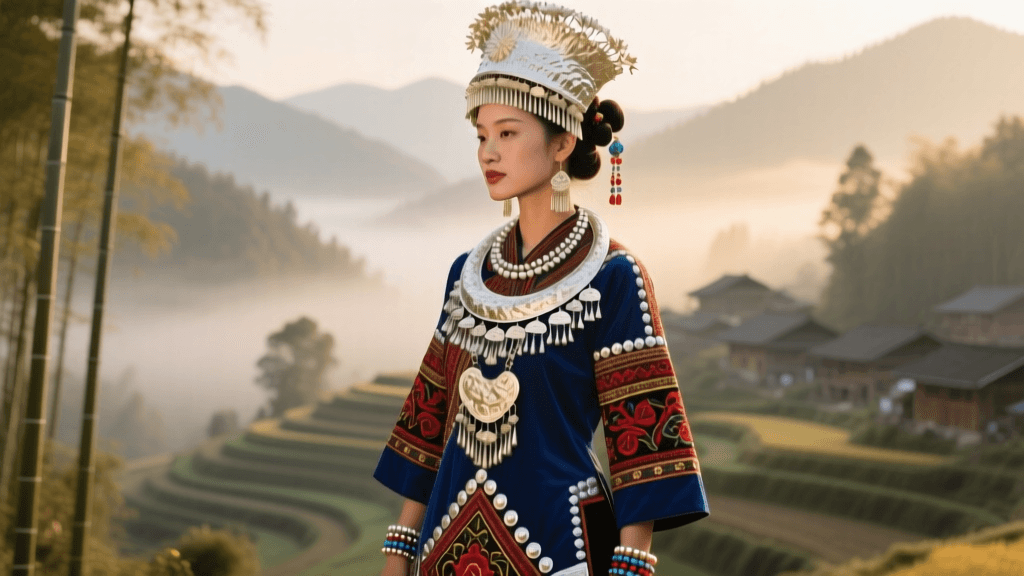
In the mountainous terrain of southwestern China's Guizhou province, the Miao (Hmong) people have cultivated one of the most visually striking and culturally profound textile traditions in Asia. Historically lacking a widely used written script, the Miao relied on their garments to record their history, mythology, and migratory patterns. Today, traditional Miao folk dress serves as a wearable archive, where every embroidered motif and hammered silver ornament tells a story of ancestral resilience. For textile collectors, cultural historians, and fashion enthusiasts, understanding the nuances of provincial Miao dress requires a deep dive into its regional variations, masterful craftsmanship, and the practical realities of acquiring these masterpieces.
Mastering Miao Embroidery (Miao Xiu)
Miao embroidery is renowned globally for its complexity, vibrant color palettes, and three-dimensional textures. According to the British Museum's ethnographic archives, Miao textiles are among the most highly sought-after indigenous garments in the world due to their intricate storytelling motifs, which often depict the Butterfly Mother (the mythological creator of humanity) and the buffalo dragon.
Key Embroidery Techniques
- Shuangzhou (Double-Sided Embroidery): A highly advanced technique where the pattern is identical on both sides of the fabric, hiding all knots and thread ends within the stitches.
- Bianxiu (Plaited Stitch): Threads are braided into tiny, flat cords before being couched onto the base fabric, creating a raised, ribbed texture that is highly durable.
- Zhouxiu (Wrinkled or Pleated Embroidery): The fabric is deliberately bunched and stitched to create a three-dimensional, quilted effect, often used to depict scales on dragons or petals on flowers.
Actionable Advice: Authenticating Handmade Embroidery
When shopping in markets like Kaili or Xijiang, distinguishing between authentic hand-embroidered pieces and mass-produced machine replicas is crucial. Examine the reverse side of the fabric. Genuine hand-stitched work will show near-identical patterns on both sides with microscopic variations in thread tension and slightly thicker, twisted silk or cotton threads. Machine-made versions will have a messy backing with loose bobbin threads, perfectly uniform stitch lengths, and often utilize synthetic rayon threads that possess an unnatural, plastic-like sheen.
The Weight of Tradition: Miao Silver Jewelry (Yinshi)
No Miao festival garment is complete without elaborate silver jewelry. Silversmithing is a revered, male-dominated craft passed down through generations. A full festival silver set—including the iconic horned headdress (niujiao), multiple layered necklaces, chest plates, and hairpins—can weigh between 1.5 to 3 kilograms. The silver represents family wealth, spiritual protection, and social status.
Practical Guide to Purchasing Miao Silver
If you intend to purchase authentic Miao silver jewelry, it is essential to understand the local pricing structure and purity standards. Artisans typically use 990 or 999 pure silver, which is softer and more malleable than sterling silver (925), allowing for the intricate filigree work characteristic of Guizhou silversmiths.
Cost Breakdown: Expect to pay the daily market rate for raw silver (fluctuating between 6 to 10 RMB per gram) plus a craftsmanship fee (gongfei). The craftsmanship fee ranges from 5 to 20 RMB per gram, depending on the complexity of the hollow-carving and wire-drawing techniques employed.
Always request a certificate of authenticity and a receipt detailing the exact weight in grams and the silver purity. Reputable silversmiths in Shidong town will happily weigh the piece on a digital scale in front of you before finalizing the transaction.
Regional Variations Across Guizhou Province
The Miao are not a monolith; their dress varies dramatically across different counties in Guizhou. The UNESCO Intangible Cultural Heritage lists and various cultural preservation initiatives highlight how geography dictates textile styles. Below is a comparison of three prominent regional styles.
| Region | Skirt Style | Dominant Motif | Silver Headdress Weight |
|---|---|---|---|
| Leishan | Short, heavily pleated mini-skirt (approx. 15 cm) | Buffalo dragons, birds, and geometric ancestral maps | 1.5 - 2.0 kg (Tall, wide horns) |
| Taijiang | Medium-length, wrap-around skirt with apron | Butterfly Mother, human figures, and river shrimp | 2.0 - 2.5 kg (Intricate floral crowns) |
| Huangping | Long, flowing indigo skirt with minimal pleats | Stars, clouds, and abstract cross-stitch geometry | 0.5 - 1.0 kg (Flat, comb-like tiaras) |
The Thousand-Pleat Skirt (Bai Zhe Qun)
One of the most astonishing feats of provincial folk engineering is the Miao 'hundred-pleat' or 'thousand-pleat' skirt. Creating a single skirt requires up to 15 to 20 meters of hand-woven, indigo-dyed cotton. The fabric is meticulously folded into hundreds of microscopic pleats, often using a bamboo comb and natural plant resins to set the creases. The artisan must spray the fabric with water and indigo dye, compress it tightly, and bind it with hemp thread to cure for several weeks. The result is a remarkably stiff, accordion-like skirt that flares out beautifully during the rhythmic stomping of traditional Lusheng (reed pipe) dances.
Practical Guide to Commissioning and Care
For collectors and enthusiasts looking to acquire a complete, bespoke Miao garment, patience and precise measurements are required.
Commissioning a Custom Garment
- Measurements: Provide your exact shoulder width, bust circumference, waist, and sleeve length in centimeters. Miao jackets are typically cut with a dropped shoulder and wide, straight sleeves to accommodate heavy silver armlets.
- Timing: A fully hand-embroidered festival jacket is not a quick purchase. Artisans in villages like Shidong or Xijiang typically require a lead time of 9 to 14 months to complete the spinning, dyeing, embroidery, and assembly.
- Costs: A high-quality, newly commissioned, fully embroidered jacket will cost between 8,000 and 25,000 RMB ($1,100 to $3,500 USD), reflecting the hundreds of hours of labor. Vintage pieces (dating from the 1950s-1970s) can fetch much higher prices at specialized auction houses, as noted in reports from China Daily's Heritage section regarding the booming market for antique ethnic textiles.
Garment Care and Preservation
Proper care is essential to preserve the natural dyes and delicate fibers of provincial folk dress.
- Cleaning: Never machine wash or aggressively scrub hand-dyed indigo garments. The indigo will bleed and the pleats will collapse. Spot clean with a damp cloth or seek a professional dry cleaner experienced with antique textiles.
- Silver Maintenance: Pure 999 silver oxidizes quickly when exposed to humidity and skin oils. After wearing, gently polish the silver with a soft, untreated microfiber cloth. Store the jewelry in an airtight container lined with anti-tarnish Pacific cloth, and include silica gel packets to absorb Guizhou's ambient moisture.
- Storage: Store embroidered jackets flat in acid-free tissue paper. Hanging heavy, embroidered garments for long periods will cause the base fabric to stretch and the heavy silk threads to pull and distort the weave.
Conclusion
The traditional folk dress of Guizhou's Miao people is far more than mere provincial attire; it is a masterclass in indigenous artistry, material science, and historical preservation. Whether you are navigating the bustling silver markets of Kaili, commissioning a master embroiderer in Shidong, or simply studying the structural brilliance of the thousand-pleat skirt, engaging with Miao textiles offers a profound connection to one of Asia's most enduring cultural legacies. By understanding the specific regional markers, authenticating techniques, and proper care protocols, collectors and enthusiasts can help ensure these wearable histories survive for generations to come.