Chinese Couture on the Global Runway: Tradition Meets High Fashion
The Dawn of Chinese Haute Couture on the World Stage
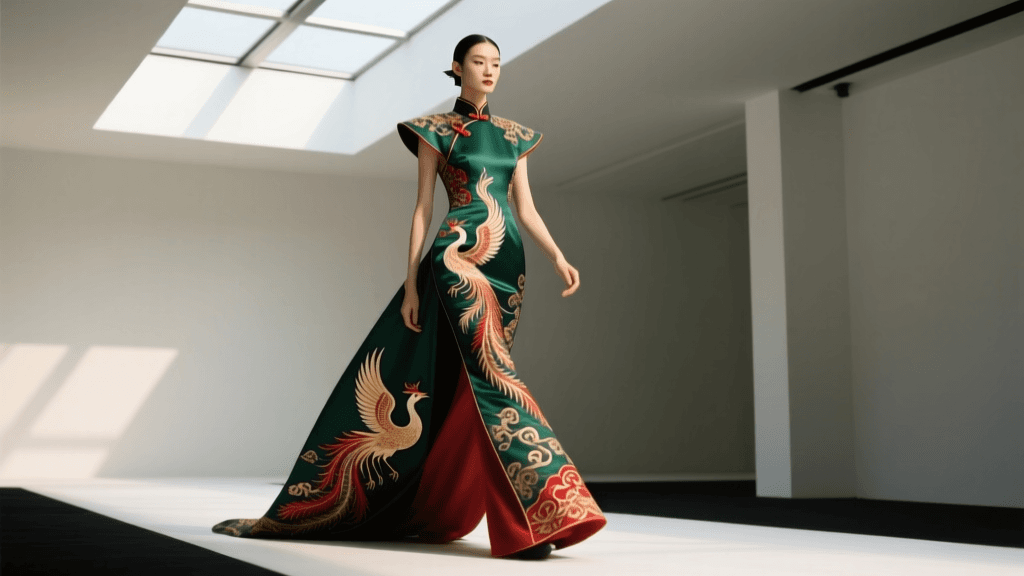
The intersection of ancient Chinese craftsmanship and Western haute couture silhouettes represents one of the most exciting evolutions in modern global fashion. For decades, the international runway was dominated by European heritage houses, with Asian influences often relegated to fleeting seasonal trends or superficial orientalism. However, the past decade has witnessed a profound paradigm shift. Chinese designers are no longer merely borrowing from their heritage; they are elevating centuries-old textile arts to the highest echelons of the Parisian couture calendar, redefining what it means to create luxury garments in the 21st century.
This global awakening was arguably catalyzed by a single, unforgettable pop-culture moment: Rihanna’s arrival at the 2015 Met Gala in a sprawling, fur-trimmed, egg-yolk yellow cape designed by Guo Pei. The garment, which took over two years and 50,000 hours to embroider, became the centerpiece of The Metropolitan Museum of Art’s 'China: Through the Looking Glass' exhibition. It signaled to the world that Chinese craftsmanship possessed the technical rigor, historical depth, and artistic vision to rival the historic ateliers of Paris. Shortly thereafter, Guo Pei became the first Chinese designer invited to join the Chambre Syndicale de la Haute Couture as a guest member, officially cementing Chinese couture on the world stage.
Traditional Techniques in Modern Couture
What separates true Chinese haute couture from standard ready-to-wear is the meticulous integration of Intangible Cultural Heritage techniques. Designers like Guo Pei, Uma Wang, and the Hermès-backed brand Shang Xia do not simply print traditional motifs onto modern fabrics; they resurrect ancient, labor-intensive methodologies and adapt them to contemporary structural tailoring.
Su Embroidery (Suzhou)
Originating from the Jiangsu province, Su embroidery is renowned for its delicate, almost photorealistic quality. In the context of haute couture, master artisans utilize a technique called 'splitting silk,' where a single thread of silk is divided into up to 48 microscopic filaments. This allows for imperceptible color gradations. The pinnacle of this craft is 'double-sided embroidery' (shuangmian xiu), where the front and back of a sheer silk organza panel display entirely different patterns or colors, with all knots and thread ends hidden within the stitches. A single couture bodice featuring double-sided Su embroidery can require upwards of 3,000 hours of continuous labor.
Xiangyunsha (Gambiered Canton Gauze)
Often referred to as 'soft gold,' Xiangyunsha is a highly prized silk dyeing technique originating from the Pearl River Delta in Guangdong. The process involves repeatedly soaking silk in the tannin-rich juice of the Dioscorea cirrhosa tuber, followed by a coating of iron-rich river mud. The chemical reaction between the tannins and the iron creates a unique, dual-toned fabric: one side is a glossy, deep black, while the reverse is a matte, rust-brown. Because the dyeing process relies heavily on specific humidity levels and intense sunlight, production is strictly limited to a few months of the year. Couture houses use Xiangyunsha to create structured, architectural outerwear that possesses a leather-like durability with the breathability of silk.
Cloisonné and Palace Metalwork
Chinese couture frequently extends beyond textiles into the realm of hardware and embellishment. Designers incorporate cloisonné (jingtailan)—an ancient technique for decorating metalwork objects with colored enamel held in place by copper wire—into garment closures, corset boning caps, and structural bodices. This transforms functional garment components into wearable, museum-quality jewelry.
Comparing Traditional Chinese Couture Techniques
| Technique | Origin Region | Primary Couture Application | Estimated Lead Time |
|---|---|---|---|
| Su Embroidery | Suzhou, Jiangsu | Intricate bodice panels, sheer cape overlays, train detailing | 1,500 – 5,000+ hours |
| Xiangyunsha Dyeing | Guangdong (Pearl River Delta) | Architectural jackets, structured skirts, tailored outerwear | 6 – 12 months (seasonal limits) |
| Cloisonné Enamel | Beijing (Imperial Workshops) | Custom buttons, corset hardware, structural embellishments | 300 – 800 hours per set |
| Kesi (Cut Silk) Tapestry | Suzhou / Hebei | Seamless pattern integration, heavy ceremonial coats | 1 – 2 years per garment |
Investing in Chinese Couture: A Collector’s Guide
For collectors, fashion archivists, and brides seeking a truly unique garment, investing in Chinese fusion couture or high-end bespoke Hanfu is a rewarding endeavor. However, navigating the bespoke process requires an understanding of traditional tailoring metrics, which differ significantly from Western dressmaking. While Western couture focuses heavily on the bust, waist, and hip circumference, traditional Chinese tailoring—particularly for garments like the qipao or modernized Ming-dynasty jackets—prioritizes the drape of the shoulder, the nape of the neck, and the structural flow of the armhole.
When commissioning a piece from a high-end atelier in Shanghai, Beijing, or Suzhou, expect prices to reflect the intense manual labor. A made-to-measure Xiangyunsha jacket with hand-rolled hems and subtle Su embroidery accents typically starts around $3,500 to $6,000 USD. Full haute couture gowns, featuring extensive double-sided embroidery and custom metalwork, easily range from $40,000 to well over $150,000 USD, with lead times stretching from 12 to 24 months.
How to Commission a Bespoke Fusion Gown
- Provide Comprehensive Metrics: Beyond standard bust/waist/hips, you must supply your 'cross-back' width, 'hollow-to-hem' measurement, 'armhole depth', and 'nape-to-waist' length. Traditional collars (like the Mandarin or stand collar) require exact neck circumference and neck-height measurements to avoid discomfort.
- Select the Base Textile First: Choose your foundation fabric based on the garment's intended structure. Heavy silk brocade (zhijin) is ideal for A-line Mamian skirts, while lightweight silk crepe de chine is necessary for draped, flowing Hanfu-inspired robes.
- Approve the Embroidery Floss: Request physical samples of the silk floss. High-end ateliers will custom-dye the silk threads to match your skin tone or the exact Pantone shade of your base fabric, ensuring the embroidery looks painted rather than stitched.
- Schedule Multiple Fittings: A true couture garment requires a minimum of three fittings: the 'toile' (muslin mock-up) fitting, the half-finished garment fitting (where embroidery is applied but seams are open), and the final finishing fitting.
- Plan for Heritage Preservation: Request that the atelier provide a custom, acid-free archival storage box and a padded hanger shaped specifically to the garment's shoulder slope to prevent textile distortion over time.
Styling Couture-Inspired Pieces for the Modern Wardrobe
You do not need to attend a Met Gala to wear Chinese couture-inspired pieces. The modern approach to Asian traditional fashion is rooted in juxtaposition—pairing heritage textiles with contemporary, minimalist tailoring to avoid a costumey aesthetic. Here are three actionable styling formulas for integrating high-end traditional pieces into a modern luxury wardrobe:
1. The Xiangyunsha Bomber over a Silk Slip Dress
Take a modern, relaxed-fit bomber jacket crafted from glossy black Xiangyunsha silk and layer it over a simple, bias-cut champagne silk slip dress. The structured, slightly stiff nature of the gambiered silk provides a striking contrast to the fluid drape of the slip dress. Finish with minimalist leather ankle boots to ground the look in contemporary urban chic.
2. The Su-Embroidered Blouse with Wide-Leg Wool Trousers
A sheer silk organza blouse featuring subtle, tone-on-tone Su embroidery (such as white magnolia branches on ivory silk) is a masterpiece of texture. Tuck this delicate piece into high-waisted, wide-leg wool trousers in charcoal or deep navy. The heavy, matte wool grounds the ethereal embroidery, making it appropriate for high-end corporate environments or gallery openings.
3. The Modern Mamian Skirt with a Cashmere Turtleneck
The Mamian (horse-face) skirt, characterized by its flat front and back panels with intricate side pleats, has seen a massive resurgence. Choose a mid-length Mamian skirt woven from metallic silk brocade featuring subdued, tonal geometric patterns rather than loud dragons or phoenixes. Pair it with a fitted, fine-gauge cashmere turtleneck and sleek leather loafers. This honors the traditional pleating structure while maintaining a sharp, modern silhouette.
'True couture is not merely about the silhouette; it is about the memory held within the threads. When we weave ancient techniques into modern forms, we are not just making clothes; we are translating a civilization's poetry into a language the whole world can read.'
The Future of Asian Heritage on the Runway
As global audiences become more educated about the provenance and craftsmanship behind traditional Asian textiles, the demand for authentic, ethically produced Chinese couture continues to rise. Exhibitions like the Fine Arts Museums of San Francisco’s 'Guo Pei: Couture Unfolded' have played a crucial role in educating Western audiences on the sheer scale and historical reverence embedded in these garments. For the modern consumer, investing in these pieces is no longer just about acquiring luxury fashion; it is about becoming a custodian of living history, ensuring that the master artisans of Suzhou, Guangdong, and Beijing continue to thrive on the world’s most prestigious stages.