DIY Hanfu Guide: Sewing a Ming Dynasty Mamian Qun and Ao
Introduction to Ming Dynasty Aoqun
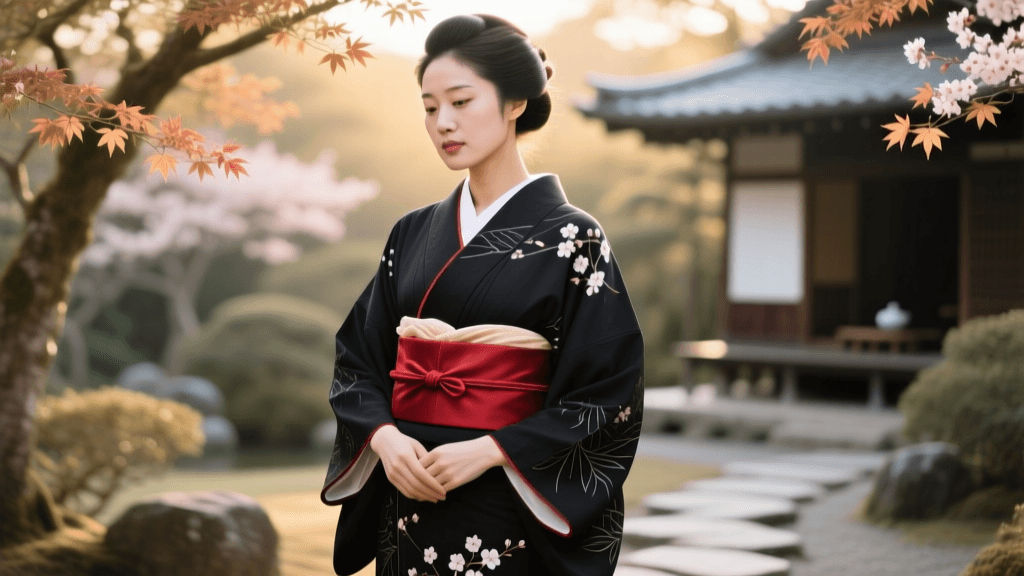
The Ming Dynasty (1368–1644) represents a golden era for Chinese textile arts and garment construction. For modern Hanfu enthusiasts and DIY sewists, the Ming Dynasty Aoqun (a lined or unlined jacket paired with a skirt) is an ideal starting point. The silhouette is elegant, the fit is forgiving, and the structural elements—particularly the iconic Mamian Qun (horse-face skirt)—offer a deeply rewarding sewing experience. According to the Metropolitan Museum of Art's Heilbrunn Timeline, the Ming era saw unprecedented advancements in silk weaving, jacquard patterns, and garment standardization, making it a rich period for historical recreation.
This comprehensive guide will walk you through the philosophy of traditional Chinese flat cutting, fabric selection, precise measurements, and the step-by-step construction of a cross-collar Ao and a pleated Mamian Qun.
The Philosophy of Traditional Chinese Flat Cutting
Unlike Western tailoring, which relies on darts, curved seams, and complex armholes to mold fabric to the three-dimensional contours of the body, traditional Hanfu is rooted in two-dimensional flat cutting. Garments are constructed from geometric shapes—primarily rectangles and triangles. The beauty of the garment is not revealed on a flat table, but rather when it is worn, as the fabric drapes, folds, and moves with the wearer. This approach minimizes fabric waste and allows for a highly modular, adjustable fit. For a DIY sewist, this means you will not need to draft complex curved bodice blocks; instead, you will work with straight lines, grainlines, and precise folding techniques.
Fabric Selection for Ming Dynasty Aoqun
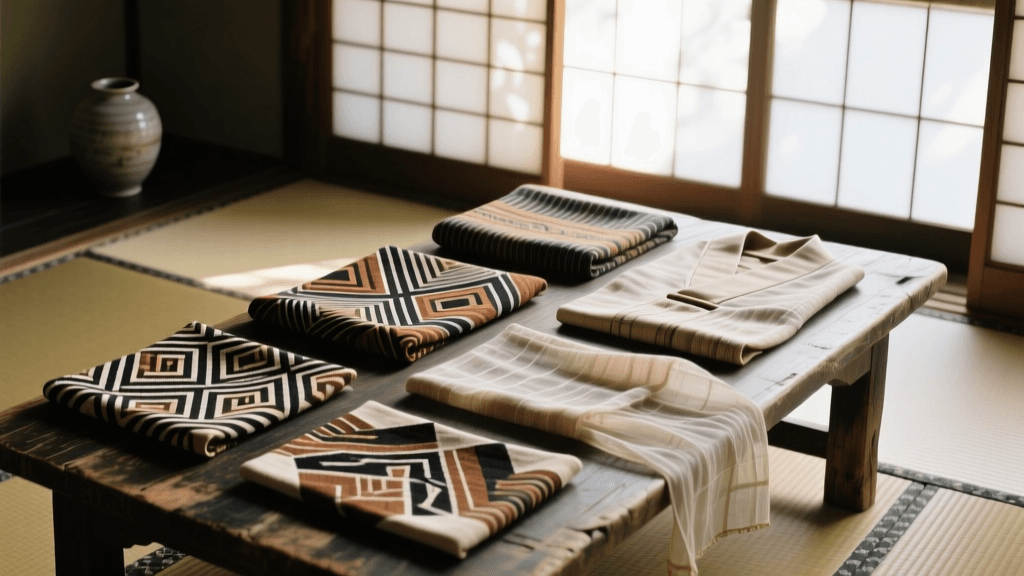
Choosing the right fabric is the most critical step in Hanfu construction. The Ao (jacket) requires a fabric with enough body to hold the cross-collar structure, while the Mamian Qun (skirt) requires weight and drape to ensure the pleats hang sharply and swing beautifully in motion. As noted in Britannica's comprehensive history of silk, traditional Chinese garments relied heavily on the varied weights and weaves of silk to achieve different structural effects. Today, we can replicate these effects using a mix of natural and synthetic fibers.
Fabric Comparison Chart for Hanfu DIY
| Fabric Type | Best Used For | Drape & Structure | Est. Cost (per yard) | Care Instructions |
|---|---|---|---|---|
| Cotton-Linen Blend | Everyday Ao (Jacket) | Medium structure, breathable, slight stiffness | $8 - $15 | Machine wash cold, hang dry |
| Raw Silk / Dupioni | Formal Ao (Jacket) | High structure, crisp, holds collars well | $25 - $45 | Dry clean only |
| Polyester Brocade | Mamian Qun (Skirt) | Heavy drape, holds sharp pleats, ornate | $12 - $25 | Machine wash gentle, iron on low |
| Wool-Blend Crepe | Winter Mamian Qun | Excellent weight, matte finish, warm | $18 - $30 | Dry clean or hand wash cold |
| Chiffon / Organza | Summer Skirts / Overlays | Sheer, lightweight, requires lining | $5 - $12 | Hand wash, low iron |
Pro-Tip: Always pre-wash and iron your fabrics before cutting. Natural fibers like cotton and linen can shrink up to 10%, which will ruin the precise measurements required for the skirt's pleats.
Essential Measurements and Pattern Drafting
Because Hanfu relies on flat geometry, your measurements dictate the width and length of your rectangles. Gather a soft measuring tape and record the following:
- Bust/Chest: Measure around the fullest part. (Add 4-6 inches for ease and overlap).
- Waist: Measure where the skirt waistband will sit (usually the natural waist or slightly above the navel).
- Skirt Length: Measure from the waist down to the ankle bone. Subtract 1.5 inches for the waistband.
- Arm Span: Measure from wrist to wrist with arms outstretched. This determines the width of the traditional flat sleeves.
- Sleeve Length: Measure from the center back neck to the desired wrist point.
Drafting the Ao (Cross-Collar Jacket)
The Ao is drafted as a single large piece for the front and back (folded at the shoulder) with a center-back seam.
- Body Width: Take your Bust measurement, add 6 inches for ease, and divide by 2. This is the width of your front/back panels.
- Sleeves: Traditional Ming sleeves are often wide. Cut two rectangles for the sleeves. The width should be 18-22 inches, and the length is calculated by taking half your Arm Span and subtracting half your body width.
- The Collar: The Jiaoling Youren (cross-collar, right side over left) is non-negotiable in Hanfu. Cut two bias strips, 3 inches wide and 30 inches long, for the inner and outer collar bindings.
Calculating the Mamian Qun (Horse-Face Skirt) Pleats
The Mamian Qun consists of two identical, overlapping rectangular panels. The math for the pleats is where many beginners struggle, but it is entirely logical once broken down.
- Panel Width: Take your desired hem circumference (e.g., 120 inches for a full swing). Divide by 2 to get 60 inches per panel. Add 10 inches for the inner overlap. Total panel width = 70 inches.
- The Mamian (Flat Front): Decide on the width of the flat, unpleated front section (usually 8 to 10 inches). Mark this in the exact center of your panel's top edge.
- Pleat Zone: Subtract the Mamian width from the total panel width (70 - 10 = 60 inches). This 60-inch zone will be folded into knife pleats or box pleats that face inward toward the center flat panel.
- Pleat Depth: If you want 1-inch visible pleats, you will need 3 inches of fabric per pleat (1 inch visible, 2 inches folded under). Divide your pleat zone (60 inches) by 3 to get 20 pleats per panel.
Step-by-Step Construction Guide
1. Constructing the Ao Jacket
Begin by sewing the center-back seam of the main body piece, leaving the top 20 inches open if you prefer a back slit (common in Ming jackets). Attach the sleeve rectangles to the shoulder edges using a straight stitch. Sew the side seams and the underarm sleeve seams in one continuous line. Finish all raw edges with a serger or traditional bias binding. Finally, attach the collar strips. The inner collar sits flush against the neck, while the outer collar folds over it. Ensure the left side of the collar wraps over the right side, securing it with hidden snaps or ties.
2. Pleating and Assembling the Mamian Qun
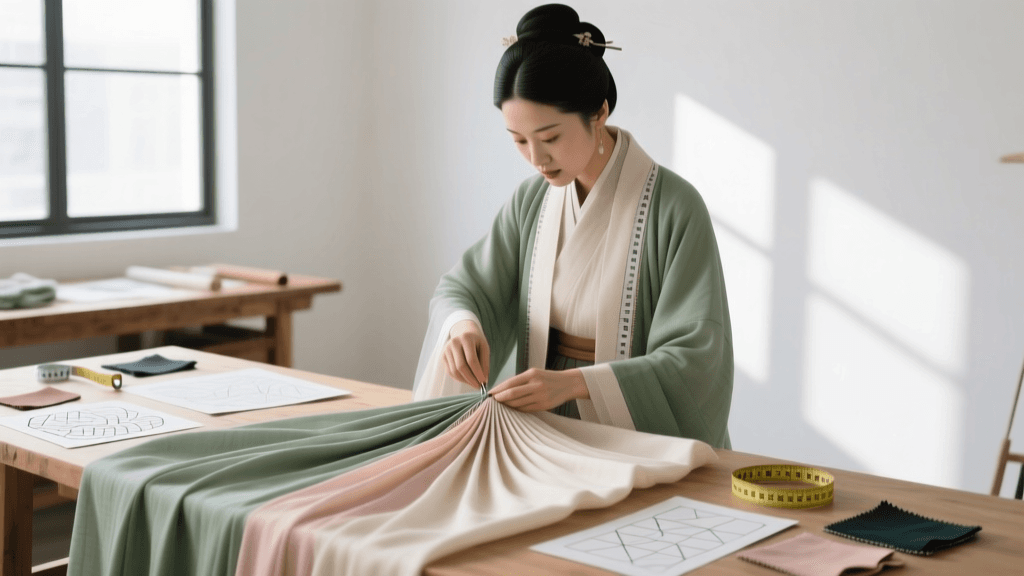
Hem the bottom and side edges of both skirt panels before pleating. Using a fabric pen, mark your pleat lines along the top edge according to your calculations. Fold the fabric precisely, pinning every single pleat. Baste the pleats by hand or machine 1/2 inch from the top edge to hold them in place. Press the pleats heavily with a steam iron and use a clapper to set the folds.
Cut a waistband rectangle: (Waist measurement + 4 inches for overlap and seam allowance) by 6 inches wide. Fold the waistband in half, sandwich the top edge of the pleated panels inside, and sew securely. Add a metal hook-and-eye closure or traditional fabric ties to the waistband ends.
Sourcing Materials and Budgeting
Building a Ming Dynasty Aoqun from scratch is remarkably cost-effective compared to buying from specialized Hanfu retailers, where a high-quality set can cost between $120 and $300. By sourcing your own materials, you can complete the project for roughly $50 to $90.
- Fabric: 3 yards of cotton-linen for the Ao ($30) and 4 yards of polyester brocade for the skirt ($40).
- Notions: Interfacing for the collar, matching polyester thread, and hook-and-eye closures ($10).
- Tools: A good quality quilting ruler, fabric weights, and a tailor's clapper are essential for achieving the razor-sharp pleats required for the Mamian Qun.
For authentic jacquard brocades, many DIY sewists source directly from online marketplaces like Taobao or specialized AliExpress fabric stores, searching for 'Hanfu fabric' or 'Ming Dynasty brocade.' However, local fabric districts or online retailers like Fabric.com and Mood Fabrics offer excellent alternatives in heavy crepes and upholstery brocades that mimic historical textiles beautifully.
Conclusion
Sewing your own Ming Dynasty Hanfu is more than just a crafting project; it is an exercise in historical appreciation and geometric problem-solving. By understanding the flat-cutting philosophy and mastering the mathematics of the Mamian Qun pleats, you create a garment that is not only historically resonant but perfectly tailored to your unique measurements. Take your time with the fabric selection, press your pleats with patience, and enjoy the profound satisfaction of wearing a piece of living history that you brought to life with your own hands.