DIY Hanfu Sewing Guide: Patterns, Fabrics, and Measurements
The Renaissance of the Wardrobe: Why Sew Your Own Hanfu?
The global Hanfu movement has transcended mere fashion, evolving into a profound cultural renaissance that connects millions with traditional Chinese heritage. While purchasing ready-to-wear Hanfu from established brands is convenient, the true essence of this clothing tradition lies in its intimate relationship with the wearer's body and the artisan's hands. Sewing your own Hanfu is not just a DIY project; it is an immersive journey into centuries of textile history, geometric pattern drafting, and mindful craftsmanship. Whether you are aiming for the ethereal, lightweight layers of the Song Dynasty or the structured, majestic silhouettes of the Ming Dynasty, creating your own garments allows for unparalleled customization in fit, fabric, and historical accuracy.
This comprehensive guide will walk you through the essential stages of DIY Hanfu construction, from understanding historical silhouettes and selecting the perfect textiles to mastering traditional flat-cutting techniques and calculating complex pleats.
Choosing Your Dynasty: Song vs. Ming Silhouettes
Before you purchase a single yard of fabric or draft a pattern, you must decide which historical era inspires your project. Hanfu is not a monolith; it encompasses thousands of years of evolving aesthetics, climate adaptations, and social customs. For modern DIY sewists, the Song and Ming dynasties offer the most accessible and wearable entry points.
Song Dynasty Elegance (960–1279 AD)
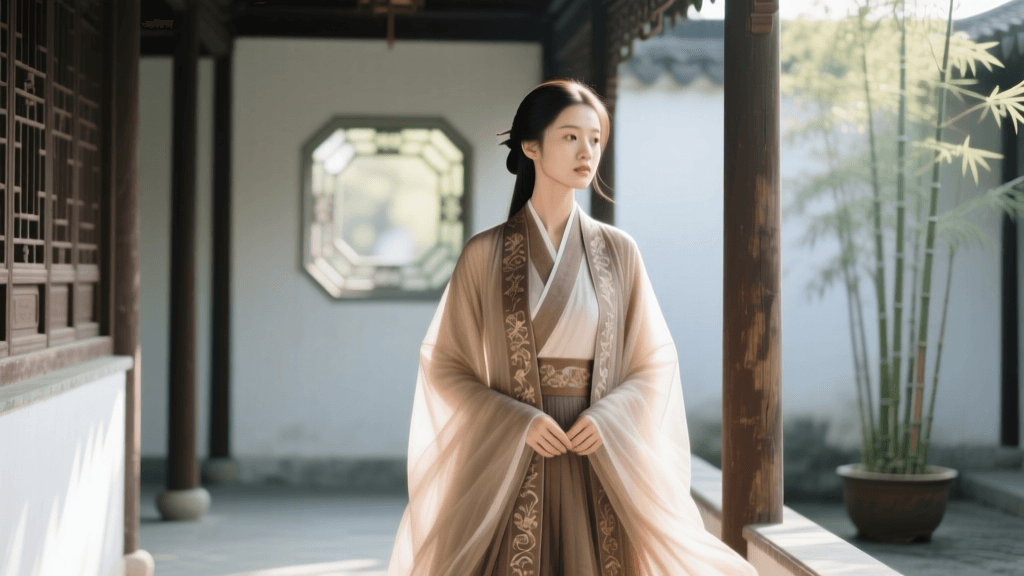
The Song Dynasty aesthetic is characterized by minimalism, slender silhouettes, and understated elegance. The quintessential garment of this era is the Beizi (a long, open-front jacket) worn over a narrow-sleeved top and a pleated skirt. Song Dynasty clothing relies heavily on the drape of the fabric rather than complex tailoring. If you are a beginner to intermediate sewist looking to work with lightweight silks and simple, straight seams, a Song Dynasty Beizi and skirt ensemble is the perfect starting point.
Ming Dynasty Grandeur (1368–1644 AD)
In stark contrast, the Ming Dynasty favored volume, structure, and intricate layering. The defining silhouette is the Aoqun, consisting of a lined or unlined cross-collared jacket (Ao) paired with the iconic Mamianqun (horse-face skirt). Ming garments often feature wider sleeves, prominent white collar protectors (Huling), and heavy, crisp fabrics that hold dramatic pleats. Sewing Ming-style Hanfu requires a stronger grasp of fabric manipulation, lining techniques, and precise pleat mathematics.
The Fabric Matrix: Selecting Materials for Authenticity and Drape
The soul of any Hanfu garment is its fabric. Historically, the choice of material was dictated by season, social status, and regional availability. As noted by the UNESCO Intangible Cultural Heritage registry, Chinese sericulture and silk craftsmanship have evolved over millennia, creating a diverse lexicon of weaves that behave entirely differently on the body. Understanding fabric weight—measured in momme (mm) for silk or GSM for plant fibers—is critical for achieving the correct historical drape.
| Fabric Type | Historical Era / Best Use | Drape & Texture | Weight Recommendation | Est. Cost per Yard |
|---|---|---|---|---|
| Silk Charmeuse | Ming / Song (Outerwear) | Fluid, Glossy, Heavy Drape | 19 - 22 Momme | $30 - $55 |
| Silk Crepe de Chine | Song (Tops / Inner Layers) | Matte, Textured, Soft | 16 - 18 Momme | $25 - $40 |
| Silk Organza | Tang / Song (Sheer Overlays) | Crisp, Sheer, Structured | 8 - 10 Momme | $20 - $35 |
| Ramie / Linen Blend | Summer / Commoner Wear | Crisp, Breathable, Matte | 150 - 200 GSM | $15 - $25 |
| Cotton Sateen | Modern DIY / Practice | Structured, Soft, Opaque | 200 - 250 GSM | $10 - $20 |
Pro-Tip for Silk: Always pre-wash your silk using a gentle, pH-neutral detergent in cool water before cutting. Silk can shrink up to 5% upon its first wash, which will ruin the precise measurements of your cross-collar and sleeves if not accounted for beforehand.
Understanding 'Pingmian Caizhi': The Art of Flat Pattern Cutting
Western tailoring relies on complex curves, darts, and set-in sleeves to mold flat fabric to the three-dimensional contours of the human body. Traditional Chinese tailoring, known as Pingmian Caizhi (flat pattern cutting), operates on an entirely different philosophy. According to textile historians at The Metropolitan Museum of Art, traditional Chinese garments were designed to preserve the integrity of the woven cloth, minimizing waste and avoiding curved cuts that sever the continuous warp and weft threads.
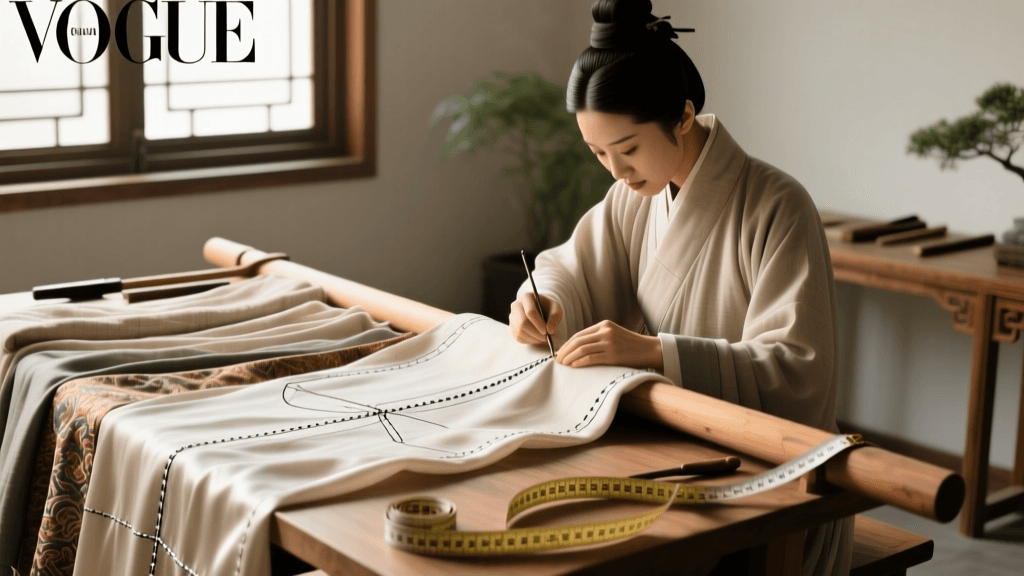
In flat cutting, the garment is constructed from basic geometric shapes—primarily rectangles and right triangles. The sleeves are cut in a single continuous T-shape with the body, resulting in a dropped shoulder and a generous underarm gusset or curve. There are no shoulder seams and no darts. The three-dimensional fit is achieved entirely through the wrapping of the cross-collar (Jiaoling Youren), the tying of sashes, and the natural drape of the fabric over the body. When drafting or purchasing PDF patterns, ensure they are based on this traditional T-shaped layout rather than Westernized, darted bodices.
Essential Measurements for Traditional Fit
Because Hanfu does not hug the body tightly, standard Western measurements (like exact bust or hip circumference) are secondary to horizontal spans and vertical lengths. To draft a historically accurate pattern, you will need the following measurements:
- Shoulder Span (Jiankuan): Measured from the outer edge of one shoulder bone to the other. This determines the width of the main body panel.
- Arm Span (Bichang): Measured from the base of the neck, over the outstretched arm, to the desired sleeve length (often extending past the fingertips for Ming dynasty formal wear, or stopping at the wrist for Song dynasty daily wear).
- Back Neck to Hem (Yichang): Measured from the prominent vertebra at the base of the neck down to the desired jacket or skirt length.
- Cross-Collar Depth: The diagonal distance from the side of the neck to the underarm tie-point. This ensures the collar lies flat against the chest without gaping.
Sewing Techniques: Seams, Pleats, and Collars
Constructing Hanfu requires a shift in sewing methodology. Because the garments are often unlined or feature wide, flowing sleeves, the internal finishing is just as important as the external appearance.
Mastering the Cross-Collar (Jiaoling Youren)
The defining feature of Hanfu is the cross-collar, which always wraps left over right (a rule with deep historical and philosophical significance). To achieve a crisp, non-gaping collar, you must use bias-cut fabric strips. Cut your collar binding on a 45-degree angle to the grainline, approximately 2.5 inches wide. Fold and press the strip, then sew it to the inside of the neckline first. Clip the curves at the center back neck, wrap the binding to the outside, and edge-stitch carefully. The left front panel must extend far enough across the body to tie securely at the right underarm and waist.
The Mathematics of the Mamianqun (Horse-Face Skirt)
The Ming Dynasty Mamianqun is a marvel of geometric pleating, featuring flat, unpleated panels at the front and back (the 'horse faces') with dense knife pleats on the sides. Drafting this skirt requires precise math:
- Calculate the Pleat Allowance: Take your waist measurement and multiply it by 3 (for standard pleats) or 4 (for dense, luxurious pleats). Add 2 inches for seam allowances and overlap.
- Determine Pleat Depth: A standard historical pleat depth is between 1.5 and 2 inches. Divide your total calculated width by the desired number of pleats to ensure they distribute evenly.
- Setting the Pleats: Use a pleating board or meticulously measure and pin each knife pleat. Baste the top edge securely before attaching the cotton waistband. The waistband should be cut on the straight grain for stability and tied with long, flowing sashes.
Finishing Touches and Historical Details
To elevate your DIY Hanfu from a simple costume to a respectful recreation, focus on the finishing details. Replace modern plastic buttons with hand-knotted frog closures or fabric ties. For Ming-style jackets, add a removable white collar protector (Huling) to the inside of the neckline, which historically protected the expensive silk from skin oils and sweat. Finish all internal raw edges with French seams or hand-bound edges using silk organza bias tape, as Britannica's historical textile archives note that the longevity and internal beauty of silk garments were highly prized by their original wearers.
'The beauty of traditional Chinese dress lies not in how it restricts the body, but in how it creates a dynamic, flowing architecture that moves with the wearer's every breath and gesture.'
Final Thoughts on Your Hanfu Journey
Sewing your own Hanfu is a deeply rewarding endeavor that bridges the gap between ancient artisanship and modern self-expression. By respecting the geometry of flat pattern cutting, investing in high-quality natural fibers, and mastering the intricate mathematics of traditional pleating, you do more than create a garment. You become an active participant in the preservation and continuation of a magnificent cultural legacy. Take your time, practice your bias binding on scrap silk, and embrace the meditative rhythm of the needle as you bring centuries of history into your own wardrobe.