Mythology-Inspired Hanfu: How to Style Chinese Deities
The Intersection of Myth and Modern Hanfu
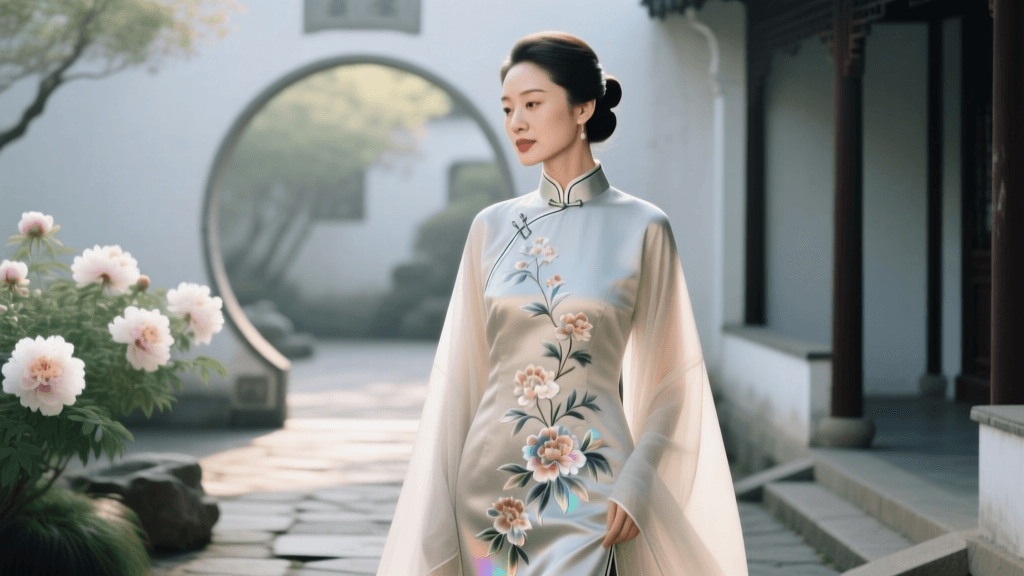
The modern Hanfu revival movement has transcended mere historical reconstruction, venturing deeply into the realm of the divine. For centuries, Chinese mythology and folklore have provided a rich tapestry of visual inspiration, detailing the celestial wardrobes of gods, goddesses, and mythical beasts. Today, enthusiasts and cosplayers are translating these ancient, ethereal descriptions into tangible, wearable garments. Styling mythology-inspired Hanfu requires a delicate balance between historical accuracy and fantastical interpretation, drawing upon traditional textile techniques while embracing the flowing, gravity-defying aesthetics of the 'Xianxia' (immortal hero) genre.
Unlike strict historical reenactment, which relies on archaeological evidence and tomb murals, mythological styling draws from classical literature, temple statues, and oral traditions. Texts such as the Classic of Mountains and Seas (Shanhaijing) provide vivid, albeit surreal, descriptions of deities and spirits, often blending human and animal features or describing garments made of clouds, starlight, and dragon scales. Translating these poetic concepts into real-world silk and linen is a unique challenge that requires a deep understanding of traditional Chinese garment structures, fabric behavior, and color symbolism.
Translating Ancient Texts into Wearable Art
To successfully embody a Chinese deity, one must understand the specific iconography associated with their legend. The garments must not only look beautiful but also communicate the deity's domain, whether it be the moon, the earth, or the oceans. Below, we explore three major mythological figures and how to construct their wardrobes using authentic Hanfu silhouettes.
Chang'e: The Moon Goddess and Ethereal Elegance
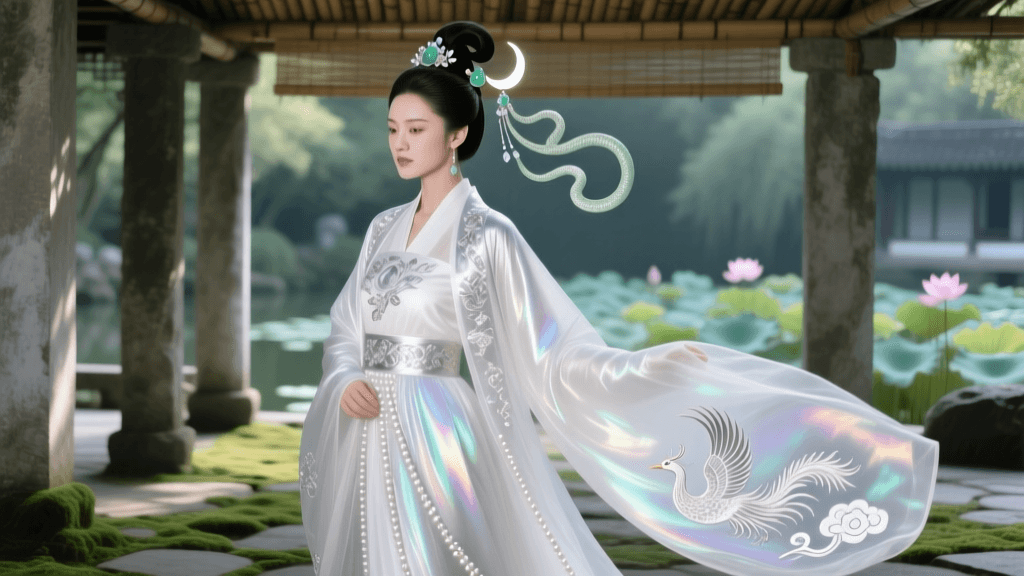
Chang'e, the goddess of the moon, is perhaps the most iconic figure in Chinese celestial mythology. According to legend, she floated to the moon after consuming an elixir of immortality. Her visual identity is defined by weightlessness, isolation, and lunar brilliance. As noted in cultural histories of the Moon Goddess Chang'e, her depictions often feature flowing ribbons and garments that seem to catch an eternal, gentle breeze.
Garment Structure: The ideal base for Chang'e is the Qixiong Ruqun (chest-high skirt) paired with a Daxiushan (large-sleeve robe). The chest-high skirt elongates the silhouette, creating a pillar-like elegance, while the massive sleeves of the robe mimic the wings of a celestial crane or the drifting clouds of the night sky.
Fabric and Color: Opt for 12 to 16 momme mulberry silk chiffon or organza. These fabrics are semi-translucent and catch the light beautifully, mimicking moonbeams. The color palette should be strictly cool-toned: lunar white, ice blue, pale silver, and soft lavender. Avoid harsh, solid whites; instead, look for fabrics with a subtle pearlescent sheen or silver-thread embroidery featuring osmanthus flowers or jade rabbits.
The Pibo (Silk Ribbon): No Chang'e ensemble is complete without a Pibo. For a mythological look, choose a Pibo that is at least 3 meters long and made of sheer silk organza. Drape it over both arms, allowing the ends to trail on the floor behind you to create the illusion of floating.
Nuwa: The Creator Goddess and Earthly Power
Nuwa is the ancient mother goddess credited with creating mankind from yellow clay and repairing the pillar of heaven. Her aesthetic is grounded, powerful, and deeply connected to the earth and the serpent. Unlike the fragile elegance of Chang'e, Nuwa's styling should convey maternal authority and primordial strength.
Garment Structure: A Mamianqun (horse-face skirt) paired with a structured Ao (lined jacket) or a Yuese (long vest). The Mamianqun provides a wide, stable base that allows for intricate woven patterns on its flat front and back panels, perfect for displaying mythological motifs.
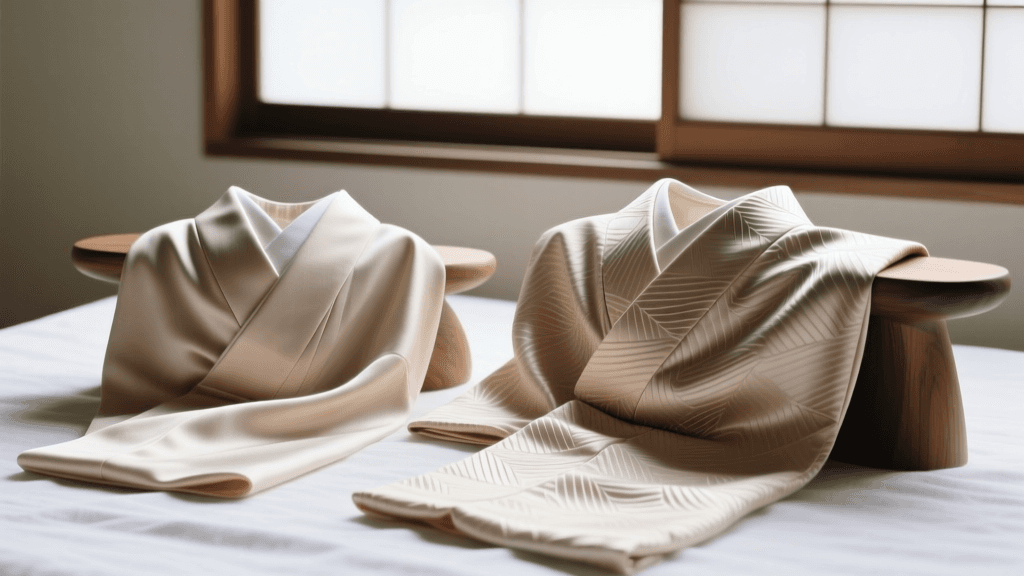
Fabric and Color: Earth tones are mandatory. Terracotta, deep ochre, jade green, and bronze represent the clay from which she forged humanity and the stones she used to patch the sky. Look for heavy silk brocades or jacquard weaves. The skirt panels should feature woven motifs of intertwining serpents, swirling clouds, or the five-colored stones of her legendary repair work.
The Dragon Kings: Sovereigns of the Seas
The Dragon Kings (Longwang) rule the four seas and control the rain. Their attire is heavily influenced by imperial court dress, reflecting their status as celestial bureaucrats appointed by the Jade Emperor.
Garment Structure: The Yuanlingpao (round-collar robe) is the most appropriate choice, specifically the Lanshan style with a pleated lower hem. To elevate it to divine status, the robe must feature a Buzi (mandarin square) embroidered with a four-clawed or five-clawed dragon, alongside the Shuitui (deep water) wave patterns at the hem.
Fabric and Color: Heavy silk satin or velvet. Colors should represent their specific sea: Ao Guang of the East Sea wears azure or deep blue; Ao Qin of the South Sea wears crimson or red; Ao Run of the North Sea wears black or dark purple; and Ao Shun of the West Sea wears white or silver.
Comprehensive Fabric and Color Guide
Selecting the right textile is crucial for achieving the 'immortal' drape required for mythological Hanfu. The following table outlines the optimal choices for various deity archetypes.
| Deity Archetype | Primary Garment | Recommended Fabric | Color Palette | Estimated Cost (USD) |
|---|---|---|---|---|
| Celestial / Moon | Qixiong Ruqun, Daxiushan | 16mm Silk Chiffon, Organza | Lunar White, Ice Blue, Silver | $120 - $250 |
| Earth / Creator | Mamianqun, Ao Jacket | Silk Brocade, Heavy Jacquard | Terracotta, Jade, Ochre | $150 - $300 |
| Ocean / Dragon | Yuanlingpao, Lanshan | Silk Satin, Velvet | Azure, Crimson, Black | $200 - $400 |
| Flora / Nature | Beizi, Songku Trousers | Raw Silk, Linen Blends | Sage Green, Peach, Blossom | $80 - $180 |
Practical Tailoring: Measurements and Proportions
Achieving the mythological 'Xianxia' silhouette requires deviating slightly from everyday historical proportions. Deities are depicted with exaggerated, flowing lines that defy normal human anatomy. Here is how to adjust your measurements for a custom-made or tailored mythological ensemble:
- Sleeve Length (Daxiushan): Standard historical sleeves end at the fingertips or cover the hands. For a deity, measure from the nape of your neck, over your shoulder, down to your fingertips, and add an extra 20 to 30 centimeters. This ensures the fabric pools elegantly on the ground when your arms are lowered, creating a cascading waterfall effect.
- Skirt Fullness (Qixiong Ruqun): A standard chest-high skirt uses a 1.5x to 2x waist multiplier for gathering. For a divine look, request a 3x to 4x multiplier. This requires significantly more fabric (often 4 to 6 meters of chiffon) but allows the skirt to billow dramatically when spinning or caught in the wind.
- Collar Height (Ao Jacket): For Nuwa or warrior goddesses, a high-standing collar (Liling) adds an air of strict authority. Ensure the collar is measured precisely to your neck circumference plus 1.5 cm for comfort, and stiffened with a thin layer of cotton interfacing so it does not collapse during wear.
Sourcing Authentic Pieces and Accessories
The foundation of any high-quality Hanfu is the silk itself. The intricate history of sericulture and silk craftsmanship in China is a UNESCO-recognized intangible cultural heritage, and supporting authentic silk artisans is key to the hobby. When sourcing garments, look for specialized Hanfu brands on platforms like Taobao or dedicated international retailers that explicitly state the momme weight and origin of their silk. Brands such as Shisanyu, Zhongzheng, and Minghuatang offer high-end brocades and embroideries suitable for divine styling.
Accessorizing the Divine: Garments are only half the battle. Mythological styling relies heavily on hair accessories and props.
- Hairpins (Zan and Chai): Avoid cheap plastic. Invest in carved jade, polished bone, or brass hairpins. For Chang'e, look for crescent moon motifs adorned with freshwater pearl drops. For Nuwa, serpent-shaped hairpins carved from green aventurine are ideal.
- Buyao (Step-Shake Ornaments): These hairpins feature dangling elements that tremble with the wearer's movements. A deity's Buyao should be long and elaborate, featuring chains of pearls or jade beads that create a soft, melodic clinking sound, reminiscent of celestial chimes.
- Props: Carry a silk fan painted with celestial maps, a bamboo flute, or a lotus lantern. These props give your hands something to do and enhance the storytelling aspect of your styling.
'The immortals do not merely wear clothes; they drape themselves in the essence of the heavens and the earth. To wear Hanfu is to borrow a fraction of their eternity.' — Modern Hanfu Community Proverb
Conclusion
Styling mythology-inspired Hanfu is a profound exercise in cultural storytelling. It requires the enthusiast to act as both a historian and an artist, bridging the gap between ancient textual descriptions and modern textile realities. By carefully selecting the appropriate silhouettes, investing in high-quality silks, and paying meticulous attention to exaggerated, ethereal proportions, you can successfully embody the gods and goddesses of Chinese legend. Whether you are attending a Hanfu convention, participating in a traditional festival, or simply engaging in creative photography, dressing the divine allows you to keep the magic of Chinese mythology alive in the modern world.