Recreating Iconic Hanfu Outfits of Chinese Empresses

The Sartorial Legacy of China's Female Rulers
In the rich tapestry of Asian traditions, few elements are as visually striking and culturally significant as the historical garments of China's imperial courts. For female rulers and empresses, clothing was never merely decorative; it was a profound tool of statecraft, a visual manifestation of political power, and a reflection of cosmic order. According to Encyclopedia Britannica's overview of Chinese dress, sumptuary laws strictly dictated the colors, fabrics, and motifs permissible for different ranks, making the empress's wardrobe the absolute pinnacle of textile artistry and social hierarchy.
Today, the global Hanfu revival movement has sparked a deep interest in recreating these iconic looks. However, translating imperial court dress into a wearable, historically grounded modern wardrobe requires an understanding of structural layering, precise measurements, and authentic fabric choices. In this guide, we will deconstruct the iconic outfits of two of China's most influential women—Wu Zetian of the Tang Dynasty and Empress Ma of the Ming Dynasty—and provide actionable advice on how to source, style, and wear their legendary garments today.
Wu Zetian: The Tang Dynasty Silhouette of Power
Wu Zetian, the only female emperor in Chinese history to rule in her own right, presided over the Tang Dynasty (618–907 CE), an era renowned for its cosmopolitanism, wealth, and bold fashion. As detailed in historical records of the Tang Dynasty, the capital of Chang'an was a global hub where Silk Road influences merged with indigenous Han aesthetics. The iconic silhouette of Wu Zetian's court was defined by the Qixiong Ruqun (chest-high skirt ensemble), characterized by its voluminous drape, high waistline, and vibrant, contrasting colors.
Deconstructing the Tang Empress Look
The core of the Tang imperial wardrobe consists of three main elements:
- Qixiong Ruqun: A high-waisted skirt tied above the bust, elongating the lower body and creating a statuesque, flowing silhouette.
- Banbi: A short-sleeved or half-sleeved jacket worn over the long-sleeved inner shirt, adding structural contrast and layering.
- Pibo: A long, lightweight silk shawl draped elegantly over the arms and shoulders, introducing dynamic movement to the outfit.
Practical Advice for the Tang Silhouette
To accurately recreate Wu Zetian's iconic look, fabric weight and skirt circumference are critical. Avoid stiff cottons or heavy linens, which will destroy the signature Tang drape. Instead, opt for 19mm or 22mm mulberry silk charmeuse, silk chiffon, or high-quality jacquard weaves. The skirt must have a minimum circumference of 3 to 4 meters (approx. 118 to 157 inches) to allow for proper wrapping and the luxurious pooling effect seen in Tang dynasty scroll paintings.
Styling Tip: Securing a chest-high skirt can be challenging for modern wearers. Use a 4cm to 6cm wide silk ribbon for the waistband. Tie it using a double-loop tension knot just above the bust line, and secure the inner layer with modern, hidden silicone grip strips to prevent the heavy silk from slipping during movement.
Empress Ma of Ming: The Aoqun and Phoenix Crown
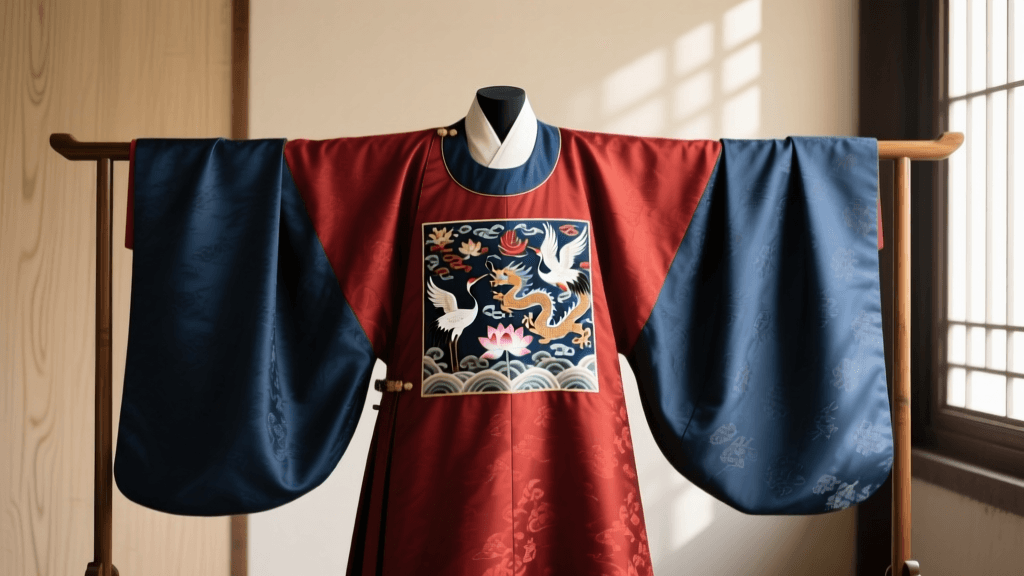
In stark contrast to the flowing, liberated silhouettes of the Tang, the Ming Dynasty (1368–1644 CE) marked a return to structured, Han-centric modesty and Confucian order. Empress Ma, the beloved wife of the Hongwu Emperor, was celebrated for her frugality, intellect, and adherence to traditional virtues. Her formal court dress, however, was a marvel of architectural tailoring and textile engineering, centered around the Aoqun (jacket and skirt) ensemble and the magnificent Fengguan (phoenix crown).
Deconstructing the Ming Empress Look
The Ming imperial aesthetic is defined by structure, intricate pleating, and heavy, opulent brocades:
- Ao (Jacket): A structured, lined jacket featuring either a standing collar (Liling) or a round collar (Yuanling), fastened with ornate metal or jade buttons.
- Mamianqun (Horse-Face Skirt): A wrap skirt featuring two flat, overlapping panels (the 'horse faces') at the front and back, with deep, heat-set knife pleats on the sides.
- Xiapei and Fengguan: An embroidered cloud shoulder or scarf, paired with the elaborate phoenix crown adorned with gold filigree and kingfisher feathers.
Practical Advice for the Ming Silhouette
The defining textile of the Ming court was Nanjing Yunjin, a luxurious brocade woven with gold and silver threads. As recognized by UNESCO's Intangible Cultural Heritage registry on Nanjing Yunjin brocade, this fabric is incredibly dense and holds its shape perfectly, making it ideal for the structured Ming Ao. For modern recreations, look for heavy silk brocades or high-density polyester jacquards that mimic the stiffness of Yunjin.
Measurement Guide: A historically accurate Mamianqun requires precise pleating. Look for skirts with 4 to 6 'knife pleats' (shun zhe) on each side. The flat front and back panels should measure exactly 30cm to 35cm across, allowing the intricate woven motifs to remain completely unbroken by folds. The waistband should be a sturdy 6cm to 8cm wide, tied securely at the natural waist with long, trailing sashes.
Practical Guide: Recreating the Empress Wardrobe Today
Transitioning from historical research to building a tangible wardrobe requires careful budgeting and sourcing. Below is a comparative breakdown to help you plan your Hanfu investment.
| Feature | Tang Dynasty (Wu Zetian Style) | Ming Dynasty (Empress Ma Style) |
|---|---|---|
| Key Garment | Qixiong Ruqun & Pibo | Ao (Lined Jacket) & Mamianqun |
| Primary Fabric | Mulberry Silk Chiffon, Charmeuse | Heavy Brocade, Yunjin-style Jacquard |
| Estimated Cost (USD) | $80 - $200 (Authentic Silk) | $150 - $450 (Brocade & Embroidery) |
| Styling Time | 15 - 20 minutes (Draping focus) | 25 - 35 minutes (Layering & Pleat alignment) |
| Recommended Brands | Shisanyu, Chong Hui Han Tang | Ming Huawu, Zhong Ling, Han Shang Hua |
Sourcing and Timing Your Purchase
Authentic Hanfu brands operate primarily on a pre-order model due to the complexity of traditional weaving and embroidery. If you are planning to wear an empress-level ensemble for a major event, such as the Spring Festival, Mid-Autumn Festival, or a traditional wedding, you must place your order 45 to 60 days in advance.
When shopping on platforms like Taobao or international Hanfu boutiques, always check the 'skirt length' (qun chang) specifications. For a regal, floor-grazing empress look, the skirt should ideally be between 100cm and 110cm, depending on your height, ensuring the hem just brushes the floor when worn with traditional cloud-head shoes.
Accessorizing the Imperial Look
An empress's outfit is incomplete without its accompanying accessories. The Tang dynasty favored elaborate, comb-like hairpins (Shubi) and floral motifs, while the Ming dynasty leaned towards intricate gold and pearl hairpins (Zan) and jade pendants (Yupe) that hung from the waist to regulate the wearer's gait, ensuring a slow, dignified walk.
For makeup, the Tang court popularized the Huadian (floral forehead applique) and bold, sweeping eyebrows. Modern enthusiasts can recreate this using cosmetic-grade gold leaf and fine-tipped liquid eyeliners. The Ming aesthetic favored a more subdued, elegant complexion with a focus on deep red lip tints and subtle pearl powder highlighting.
'To wear Hanfu is not merely to put on old clothes; it is to drape oneself in the philosophy, artistry, and unbroken lineage of our ancestors.' — Modern Hanfu Movement Proverb
Conclusion
Recreating the iconic outfits of Wu Zetian and Empress Ma offers a profound, tactile connection to Asian traditions. Whether you are drawn to the ethereal, sweeping silks of the Tang Dynasty or the structured, majestic brocades of the Ming, understanding the historical context, precise measurements, and structural layering of these garments elevates your practice from simple costuming to true cultural appreciation. By investing in quality fabrics and respecting the architectural tailoring of the past, you can bring the sartorial legacy of China's most powerful empresses into the modern world with grace and authenticity.