Cinematic Kimonos: Recreating Iconic Pop Culture Looks
The Intersection of Traditional Garments and Global Media
For decades, global pop culture has been captivated by the striking silhouettes and intricate textiles of traditional Japanese garments. From the high-stakes action sequences in Hollywood cinema to the meticulously animated wardrobes in Japanese anime, the kimono, haori, and hakama have transcended their cultural origins to become iconic symbols of global fashion. According to the Victoria and Albert Museum's Kimono: Kyoto to Catwalk exhibition, the garment is not merely a static historical artifact but a dynamic piece of sartorial art that has continuously influenced global designers, filmmakers, and subcultures.
However, as fans, cosplayers, and collectors seek to recreate these iconic pop culture looks, a significant gap often emerges between mass-produced screen replicas and authentic traditional garments. Recreating a cinematic look with genuine vintage or modern-traditional Japanese clothing requires an understanding of textile types, precise measurements, and seasonal rules. This guide provides actionable advice for sourcing, sizing, and styling authentic Japanese garments to recreate your favorite pop culture silhouettes with cultural respect and sartorial accuracy.
Deconstructing Three Iconic Pop Culture Silhouettes
1. The Shonen Anime Haori
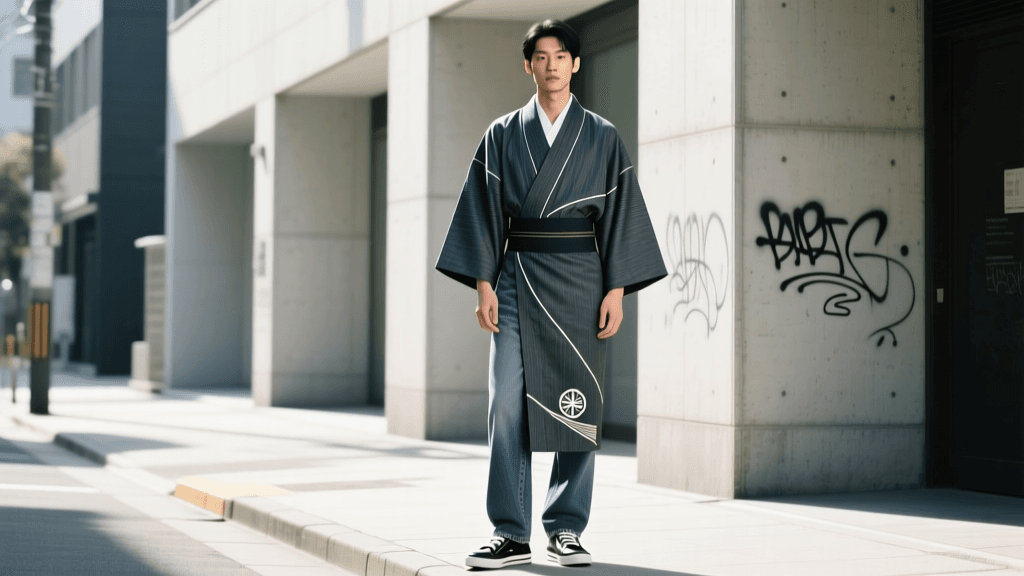
Perhaps the most recognizable garment in modern global anime fandom is the haori—a traditional hip- or thigh-length kimono-style jacket. Popularized by characters in massive global franchises like Demon Slayer and Inuyasha, the haori is prized for its dramatic, flowing sleeves and bold, geometric, or elemental patterns. To recreate this look authentically, collectors should avoid polyester cosplay replicas and instead source vintage silk haori from the mid-20th century.
Actionable Sourcing: Search specialized online dealers or auction sites for vintage 'Tanzaku' (rectangular motif) or 'Kasuri' (ikat-woven) haori. Expect to pay between $45 and $120 for a vintage silk piece in good condition. Ensure the sleeve drop (sode-take) is at least 49 cm to achieve the dramatic, flowing effect seen in animation, as modern casual haori often feature shorter, restrictive sleeves.
2. The Action-Heroine Hakama
The hakama—a pleated, divided skirt worn over a kimono—is a staple in martial arts cinema and samurai anime. Films like Kill Bill and anime like Rurouni Kenshin showcase the hakama as a garment of mobility and martial prowess. In reality, the 'andon bakama' (undivided, lantern-style hakama) and the 'umanori' (divided, horse-riding hakama) offer incredible range of motion and a striking, structured silhouette.
Actionable Styling: To achieve the cinematic samurai look, pair a solid-color, crested (mon-tsuki) hikizuri or standard kimono with a stiff, dark-colored umanori hakama. The hakama should be tied at the natural waist, with the front himo (ties) crossed in the back and brought to the front to tie in a flat, horizontal knot. Sourcing a vintage silk or high-quality modern polyester hakama will cost between $80 and $200. Avoid flimsy costume cottons, which lack the structural pleating required to maintain the iconic wide-legged stance.
3. The Avant-Garde Runway Obi
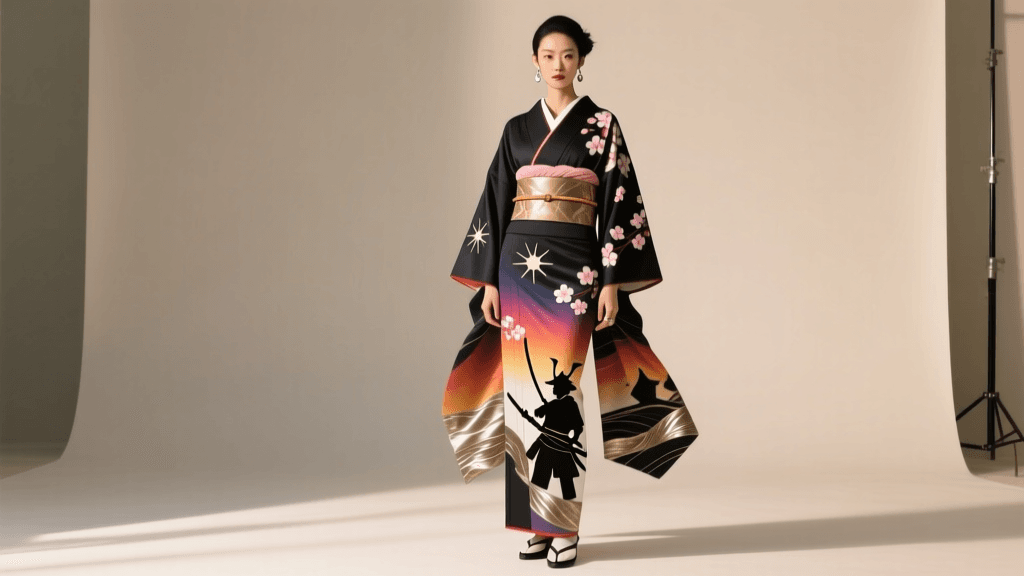
High fashion has frequently borrowed from the kimono, most notably through the avant-garde use of the obi (the wide sash). Designers like John Galliano and Alexander McQueen have utilized the obi to create exaggerated, architectural silhouettes on global runways. As The Guardian's coverage of the V&A exhibition noted, the kimono's structural components have long served as a canvas for radical fashion experimentation.
Actionable Upcycling: You can recreate high-fashion editorial looks by sourcing vintage 'fukuro obi' (formal, double-woven sashes) featuring heavy gold leaf (kinsai) or elaborate brocade. While authentic fukuro obi can cost $300 to $800, they can be styled over modern Western garments—such as a tailored trench coat or a minimalist slip dress—as a dramatic, avant-garde belt or shoulder wrap. Use a hidden velvet sash underneath to support the heavy silk and brocade, securing it with an obijime (decorative cord) for a pop of contrasting color.
Authentic Vintage vs. Cosplay Replicas: A Sourcing Comparison
When building a wardrobe inspired by global media, understanding the trade-offs between authentic garments and screen-accurate replicas is crucial for both budget and aesthetic goals.
| Feature | Authentic Vintage Silk Garments | Modern Cosplay / Screen Replicas |
|---|---|---|
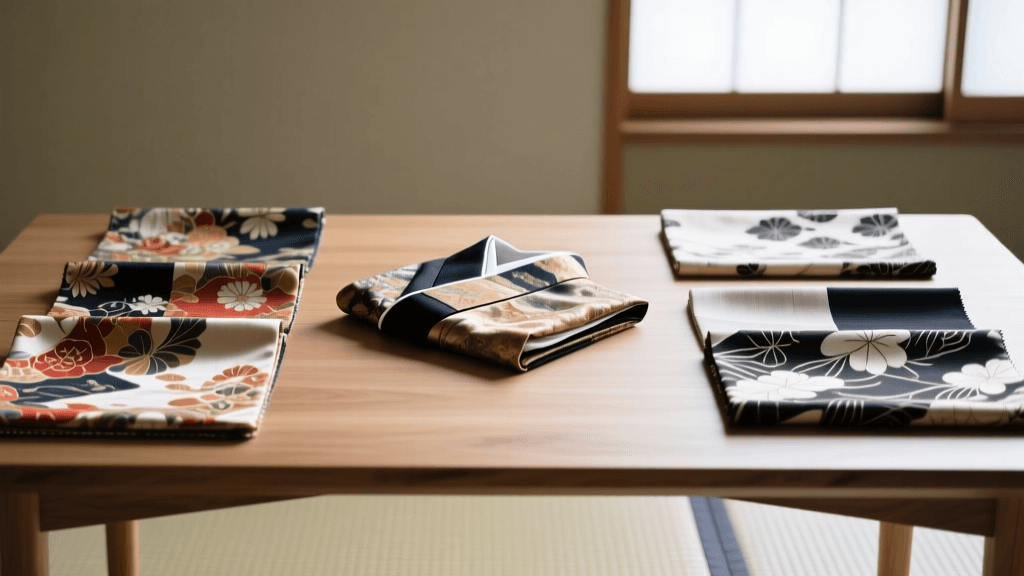
| Material | 100% Silk, crepe (chirimen), or linen. Features Yuzen dyeing or gold leaf. | Polyester, cotton blends, or cheap satin. Printed patterns. |
| Cost Range | $45 - $250 (Haori/Hakama); $150 - $800+ (Formal Kimono/Obi) | $50 - $120 for full sets. |
| Sizing | Requires specific measurements (Yuki, Mitake). Often needs custom tucking (Ohashori). | Standard Western sizing (S, M, L, XL) with elastic waistbands or velcro. |
| Drape & Movement | Heavy, fluid, and structured. Moves naturally with the body's kinetics. | Stiff, lightweight, and prone to tangling or looking artificial on camera. |
| Best Use Case | High-end cosplay, fashion editorials, cultural events, and collecting. | Convention wear, active stunt choreography, and budget-friendly costumes. |
Practical Sizing, Seasonality, and Styling Rules
To wear traditional Japanese garments correctly, you must navigate a strict system of measurements and seasonal rules that pop culture replicas often ignore.
Mastering the Measurements
- Yuki (Center-Back to Wrist): Unlike Western clothing measured by shoulder width, kimono sleeves are measured from the center back of the neck, across the shoulder, and down to the wrist. A standard women's yuki is around 64 cm, while dramatic cinematic looks often require 68 cm or more.
- Mitake (Back Length): This is the length of the kimono from the base of the neck to the hem. Authentic kimono are worn longer than the wearer's height and folded at the waist to create the 'ohashori' (waist tuck). If your mitake is too short, you cannot create this essential tuck, ruining the traditional silhouette.
Navigating Seasonality
In traditional Japanese dress, the weight and lining of the garment must match the calendar month, a detail that adds immense authenticity to any photoshoot or event.
- Awase (Lined): Worn from October through May. These feature an inner lining and are ideal for winter cinematic shoots.
- Hitoe (Unlined): Strictly reserved for June and September. These are lighter and feature a single layer of silk.
- Usumono (Sheer): Worn only in the peak heat of July and August. Made from translucent ro or sha silk, these are perfect for ethereal, summer-themed fantasy looks.
Cultural Appreciation in Fandom
As global media continues to draw inspiration from Asian traditions, fans must approach these garments with cultural mindfulness. The most fundamental rule of wearing a kimono or yukata is the wrapping direction: always wrap the left side over the right side. As noted by The Metropolitan Museum of Art's Heilbrunn Timeline, the right-over-left wrapping is strictly reserved for dressing the deceased for burial. Getting this detail wrong is not just a stylistic error; it is a profound cultural faux pas.
True appreciation of the kimono in global pop culture means looking past the surface-level aesthetic and engaging with the textile arts, the seasonal poetry woven into the fabric, and the centuries of sartorial rules that give the garment its profound cultural weight.
By choosing to source authentic vintage pieces, understanding the mechanics of the ohashori tuck, and respecting the seasonal and structural rules of the garments, fans and collectors can elevate their pop culture tributes. Whether you are stepping into the shoes of a shonen anime hero or channeling the avant-garde energy of a Parisian runway, the authentic kimono offers a depth, history, and visual impact that no mass-produced replica can ever truly capture.