Mastering Kimono Fabrics: Nishijin Brocade & Yuzen Silk Guide
Introduction to Kimono Textile Arts
The Japanese kimono is far more than a simple garment; it is a wearable canvas that reflects centuries of refined artistry, regional specialization, and meticulous craftsmanship. At the heart of this tradition lies the mastery of textiles. Unlike Western fashion, which relies heavily on complex tailoring and cutting to achieve a silhouette, the kimono derives its beauty, drape, and formality almost entirely from its fabric. For collectors, enthusiasts, and cultural historians, understanding the distinction between woven and dyed textiles is the first step toward mastering kimono appreciation.
In the world of high-end Japanese garments, two techniques stand above the rest: Nishijin-ori (Nishijin brocade weaving) and Kyo-Yuzen (resist dyeing). According to the Victoria and Albert Museum, the evolution of these techniques during the Edo period (1603–1867) transformed the kimono into a sophisticated indicator of social status, wealth, and aesthetic sensibility. This guide explores the craftsmanship, fabric types, and practical considerations for acquiring and caring for these masterpieces.
The Architecture of Silk: The Tan-Mono Bolt
Before diving into specific techniques, one must understand the foundational format of kimono fabric: the tan-mono. Unlike Western textiles that are cut from wide rolls, kimono silk is woven in a narrow, standardized bolt. A standard tan-mono measures approximately 36 to 38 centimeters in width and 11.5 to 12 meters in length.
This specific dimension dictates the entire construction of the kimono. The garment is cut in straight lines along the warp and weft, resulting in minimal fabric waste. The narrow width means that the weaver must plan the placement of motifs, crests (mon), and hem patterns with mathematical precision before the silk is even dyed or woven. When purchasing vintage or new kimono fabrics, always verify that the bolt is complete if you intend to have it tailored, as missing length will compromise the sleeve depth (sode-take) or the body panels (migoro).
Nishijin-ori: The Pinnacle of Woven Brocade
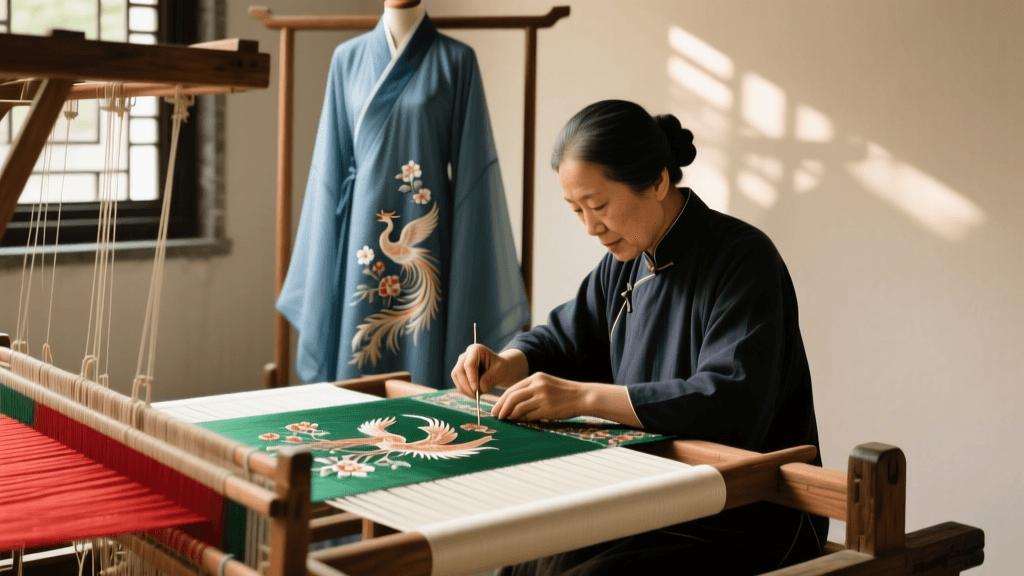
Originating in the Nishijin district of Kyoto, Nishijin-ori is a yarn-dyed weaving technique renowned for its opulent, multi-layered brocades. The Nishijin Textile Industrial Association notes that this craft involves over 20 distinct, highly specialized steps, from silk thread preparation to the operation of complex Jacquard looms. In Nishijin weaving, the threads are dyed before they are woven, meaning the pattern is structurally integrated into the fabric itself.
Craftsmanship and Characteristics
Nishijin textiles are characterized by their dense weave, structural rigidity, and the frequent incorporation of metallic threads (gold and silver leaf wrapped around silk cores). Because the weaving process is incredibly labor-intensive, Nishijin-ori is most commonly used for obi (the sash tied around the kimono) rather than the kimono itself. A single fukuro obi (a formal, double-layered sash) can take a master weaver several weeks to complete on a traditional handloom.
- Best Use: Formal obi, ceremonial sashes, and high-end interior textiles.
- Texture: Thick, structured, and heavily textured with raised brocade motifs.
- Cost: Authentic handwoven Nishijin fukuro obi typically range from $2,500 to $15,000+, depending on the use of pure gold leaf and thread count.
Kyo-Yuzen: The Masterpiece of Resist Dyeing
While Nishijin represents the zenith of weaving, Kyo-Yuzen represents the pinnacle of dyeing. Developed in the late 17th century by Miyazaki Yuzensai, this technique allows for the creation of intricate, painterly, and multi-colored designs on delicate silk. Yuzen utilizes a rice-paste resist (itome-nori) to outline designs, preventing dyes from bleeding into one another.
The Yuzen Process
The creation of a Yuzen kimono is a collaborative effort involving multiple artisans. The process includes sketching the design on the silk with spiderwort juice (which washes out easily), applying the rice-paste resist, hand-painting the interior motifs with specialized brushes, dyeing the background, and finally steaming the fabric to set the colors. The result is a lightweight, fluid silk that drapes beautifully and features vibrant, pictorial scenes of nature, seasons, and classical literature.
- Best Use: Furisode (unmarried women's formal kimono), tomesode (married women's formal kimono), and high-end haori.
- Texture: Smooth, fluid, and lightweight, allowing for elegant draping.
- Timing: Commissioning a custom, hand-painted Kyo-Yuzen kimono takes between 3 to 6 months.
- Cost: A high-quality, hand-painted Yuzen furisode starts around $3,000 and can exceed $10,000 for master-level artisan work.
Essential Silk Weaves for Kimono
Beyond the decorative techniques of Yuzen and Nishijin, the underlying weave of the silk heavily influences the garment's formality and seasonality. When evaluating kimono fabrics, look for these four foundational weaves:
- Chirimen (Crepe): Created by over-twisting the weft threads, Chirimen has a distinct pebbled, crinkled texture. It is the most popular base fabric for Yuzen dyeing because the texture hides minor wrinkles and gives the dye a rich, matte depth.
- Rinzu (Damask): A figured satin weave that produces a glossy, subtle pattern in the base fabric. Rinzu is highly formal and often used for wedding kimono (uchikake) and ceremonial wear.
- Habutae: A plain, smooth, and lightweight silk weave. It is frequently used for kimono linings, undergarments (nagajuban), and men's formal wear.
- Tsumugi (Pongee): Woven from pre-dyed, slubbed silk threads (often spun from silk waste or wild silk). Tsumugi has a rustic, nubby texture. Despite its high cost and labor-intensive creation, it is considered informal or everyday wear due to its historical origins as a peasant textile.
Comparison Table: Woven vs. Dyed Kimono Textiles
| Feature | Nishijin-ori (Woven) | Kyo-Yuzen (Dyed) |
|---|---|---|
| Primary Technique | Yarn-dyed Jacquard weaving | Rice-paste resist dyeing |
| Visual Aesthetic | Geometric, structural, metallic accents | Pictorial, fluid, painterly scenes |
| Common Applications | Obi (sashes), ceremonial sashes | Furisode, Tomesode, Homongi |
| Drape and Weight | Heavy, stiff, highly structured | Lightweight, fluid, elegant drape |
| Average Cost Range | $2,500 – $15,000+ (for Obi) | $3,000 – $10,000+ (for Kimono) |
Practical Buying Guide: Authenticity and Certification
When investing in high-end Japanese textiles, verifying authenticity is crucial. The mass market is flooded with machine-printed synthetic imitations. To ensure you are purchasing genuine craftsmanship, look for the Traditional Craft Mark issued by Japan's Ministry of Economy, Trade and Industry (METI). As highlighted by the Japan Traditional Crafts Aoyama Square, this certification guarantees that the item was handmade using traditional techniques and locally sourced materials by certified artisans.
Additionally, examine the selvedge (the mimi or finished edge of the fabric). Authentic hand-woven Nishijin and hand-dyed Yuzen will often feature small stamps, seals, or the signature of the master artisan or weaving house stamped directly onto the silk edge. Machine-made prints will lack these irregularities and will show perfectly uniform, pixel-like dot patterns under a magnifying glass.
Garment Care: The Arai-Hari Tradition
Silk kimono require specialized care. Water can cause the silk to shrink or the dyes to bleed. For deep cleaning, the traditional Japanese method is arai-hari. This involves completely unstitching the kimono back into its original tan-mono bolt form, washing the flat silk panels in specialized solutions, stretching them on bamboo frames to dry and realign the fibers, and then re-sewing the garment.
Actionable Care Advice:
- Cost: Arai-hari services typically cost between $150 and $300.
- Timing: The process takes 3 to 4 weeks.
- Frequency: Only perform a full arai-hari every 5 to 10 years, or if the garment has suffered water damage or severe soiling.
- Routine Care: After wearing, hang the kimono on a wide, specialized kimono hanger in a well-ventilated, shaded room for 24 hours to allow moisture to evaporate before folding it back into its acid-free storage paper (tatou-shi).
Conclusion
Mastering the nuances of kimono fabrics transforms the way you view Japanese traditional garments. Whether you are drawn to the structural opulence of a Nishijin brocade obi or the fluid, poetic landscapes of a Kyo-Yuzen furisode, understanding the tan-mono architecture, the specific silk weaves, and the rigorous certification processes ensures that you are not just buying a piece of clothing, but preserving a vital piece of Asian cultural heritage.