Silk Road Sartorial Exchange: Tang Hufu and Uyghur Atlas
The Silk Road: A Highway of Sartorial Exchange
When we envision the ancient Silk Road, we often picture caravans laden with raw silk, spices, and jade. However, the most enduring legacy of this vast trade network is not merely the exchange of commodities, but the profound cross-cultural pollination of aesthetics, textiles, and garment structures. Spanning from the Han Chinese heartland to the Tarim Basin and beyond, the Silk Road served as a dynamic sartorial highway. According to the UNESCO World Heritage Centre, the Chang'an-Tianshan Corridor was a vital artery where diverse ethnic groups, including the Han, Sogdians, Turks, and Uyghurs, interacted, resulting in a revolutionary fusion of traditional clothing.
For modern collectors, historians, and enthusiasts of Asian traditions, understanding this cross-cultural exchange is essential. It transforms how we view traditional Chinese clothing—not as a static, monolithic entity, but as a vibrant tapestry woven from nomadic practicality and cosmopolitan luxury. This article explores the nomadic influence on Tang Dynasty Hanfu, specifically the adoption of Hufu, and the enduring legacy of Uyghur Atlas silk, providing actionable guidance for sourcing and styling these historical garments today.
Tang Dynasty Hufu: The Nomadic Influence on Han Couture
During the Tang Dynasty (618–907 CE), the capital city of Chang'an was one of the most cosmopolitan centers in the world. The influx of Sogdian merchants and Turkic nomads introduced a radical new fashion to the Han Chinese elite: Hufu, or 'foreign/nomadic clothing.' Unlike the flowing, wide-sleeved, and heavily layered traditional Hanfu of the preceding dynasties, Hufu was designed for equestrian mobility and harsh climates.
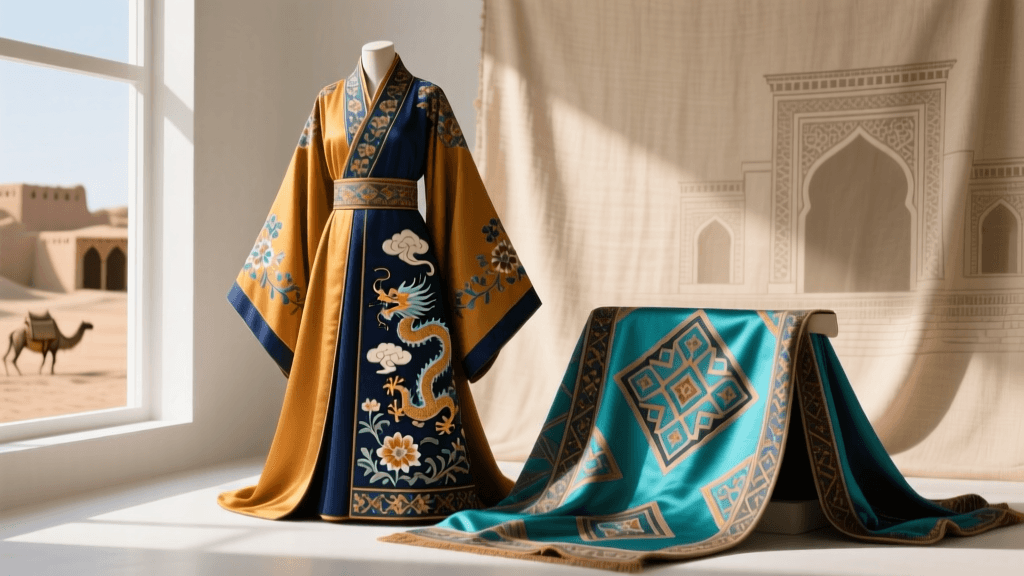
The quintessential Hufu garment was the fanlingpao (lapel robe). Featuring a turned-down collar, narrow sleeves, and a hem that fell to the ankles or knees, it was traditionally paired with cuixue (leather riding boots) and a dieji (leather belt with metal plaques). Fascinatingly, historical records and tomb murals reveal that Tang Dynasty women enthusiastically adopted Hufu, engaging in cross-dressing to play polo and ride horses. This was a radical departure from strict Confucian gender norms, highlighting the liberal, outward-looking ethos of the High Tang era.
The Metropolitan Museum of Art's Heilbrunn Timeline notes that the Silk Road facilitated not just the movement of textiles, but of weaving techniques and motifs. The Sogdian 'pearl roundel' motif—often enclosing confronting animals like antelopes or boars—became wildly popular in Tang silk brocades. Today, historical reenactors and Hanfu enthusiasts seek out these specific Sogdian-inspired brocades to recreate authentic High Tang Hufu ensembles, bridging the gap between Han craftsmanship and Central Asian design.
Uyghur Atlas Silk: The Vibrant Legacy of the Tarim Basin
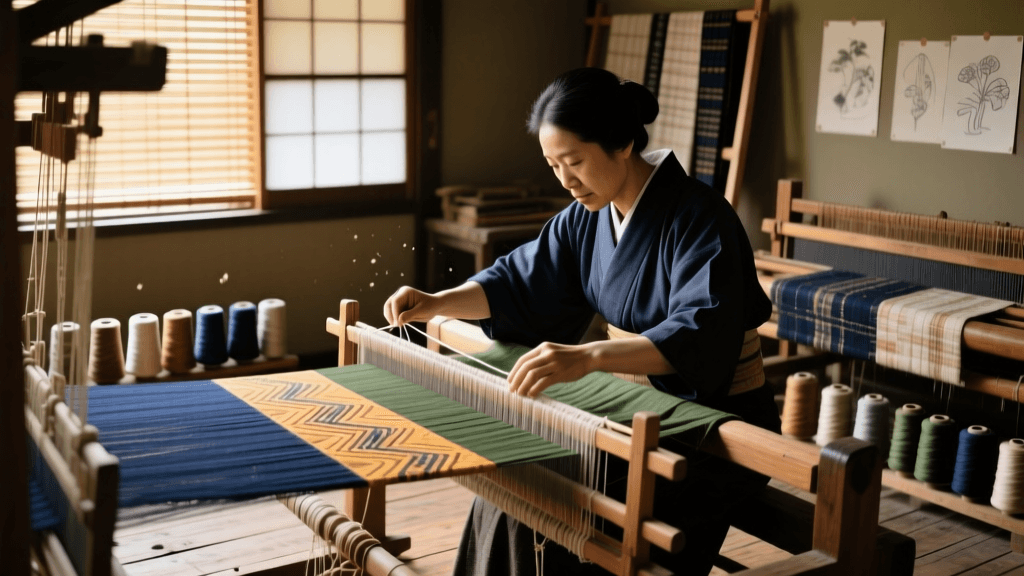
Traveling westward along the Silk Road into the Xinjiang region, we encounter the Uyghur people and their magnificent textile tradition: Atlas silk. Atlas is a type of warp-ikat, a complex resist-dyeing technique where the warp threads are tightly bound and dyed before weaving. The result is a fabric characterized by its vibrant, slightly blurred geometric and botanical motifs, resembling the flowing branches of a tree or the ripples of water.
The origins of Atlas silk are deeply intertwined with Silk Road trade. While the ikat technique has roots in Central Asia and the Indian subcontinent, Uyghur artisans in the oasis cities of Hotan, Kashgar, and Yarkand perfected it using locally sourced natural dyes. The traditional color palette is derived from the desert landscape: walnut husks yield rich browns, pomegranate rinds produce brilliant yellows, indigo provides deep blues, and madder root creates striking reds.
As documented by the International Dunhuang Project, textile fragments found along the Silk Road reveal a continuous exchange of dyeing technologies between the Tarim Basin and the Chinese interior. Today, authentic hand-woven Atlas silk remains a cornerstone of Uyghur traditional dress, particularly for women's quyak (dresses) and ceremonial coats. For collectors, distinguishing between hand-woven heritage Atlas and mass-produced, machine-printed imitations is a critical skill.
Authentication Tip: Genuine hand-woven Atlas silk will feature slight irregularities in the ikat patterning due to the manual tying of the warp threads. The fabric width is traditionally narrow (around 40-50 cm) because it is woven on traditional wooden pit looms, and the selvedge edges will often show the distinct, tightly bound resist-dye marks.
Sourcing and Styling: A Practical Guide for Collectors
Whether you are commissioning a bespoke Tang Dynasty fanlingpao or sourcing vintage Uyghur Atlas silk for a modern wardrobe integration, understanding the market, costs, and logistics is vital. The revival of traditional garments has created a robust market, but it requires careful navigation to ensure authenticity and quality.
Cost and Sourcing Breakdown
The table below provides a structured guide for sourcing cross-cultural Silk Road garments and textiles in today's market.
| Item / Textile | Primary Origin | Estimated Cost | Lead Time | Best Use Case |
|---|---|---|---|---|
| Hand-woven Hotan Atlas Silk | Hotan, Xinjiang | 200 - 400 RMB / meter | 2 - 4 weeks | Authentic ethnic garments, upholstery |
| Bespoke Tang Fanlingpao (Hufu) | Xi'an / Online Hanfu Studios | 800 - 1,500 RMB | 4 - 6 weeks | Historical reenactment, formal wear |
| Vintage Sogdian-motif Brocade | Antique Markets (e.g., Panjiayuan) | 2,000 - 5,000+ RMB | Immediate | Collectors, framing, museum display |
| Machine-printed Atlas Imitation | Guangzhou / Yiwu Wholesale | 20 - 40 RMB / meter | Immediate | Theatrical costumes, casual linings |
Measurement and Fit Guide for Historical Reproductions
If you are commissioning a Tang-style fanlingpao or a traditional Uyghur coat, standard modern sizing will not yield an accurate historical silhouette. Provide your tailor with the following specific adjustments:
- Chest and Ease: Hufu was designed to be worn over inner layers (like the banbi or half-sleeve vest). Add 10-12 cm of ease to your actual chest measurement to allow for comfortable movement and layering.
- Shoulder Drop: Traditional Asian garments rarely feature the sharp, tailored shoulder seams of Western suits. Instruct your tailor to drop the shoulder seam by 2-3 cm, creating a softer, more historically accurate drape that accommodates the narrow sleeves.
- Sleeve Length and Cuffs: Unlike the sweeping 'water sleeves' of later Hanfu, Hufu sleeves are narrow. The length should end precisely at the wrist bone to prevent interference when riding or working, and the cuffs should be fastened with small fabric ties or hidden snaps.
- Hemline: For a true nomadic equestrian silhouette, the hem of the fanlingpao should fall just above the ankle bone, ensuring it does not drag when paired with cuixue riding boots.
Preserving the Cross-Cultural Thread
The sartorial legacy of the Silk Road is a testament to the fact that fashion has never existed in a vacuum. The Tang Dynasty's embrace of nomadic Hufu and the Uyghur mastery of Atlas silk represent moments in history where borders were porous, and cultural exchange was celebrated through the very fabrics people wore on their backs.
For the modern enthusiast, investing in these garments is an act of cultural preservation. By sourcing authentic hand-woven Atlas silk from artisans in Hotan or commissioning historically accurate Tang Hufu from dedicated studios, you help sustain the livelihoods of traditional weavers and tailors. The next time you drape a piece of vibrant ikat across your shoulders or fasten the lapel of a round-collar robe, remember that you are wearing a map of the ancient world—a beautiful, woven record of the greatest trade route in human history.