Modern Qipao Styling: Evolution, Fit, and Trend Guide
The Evolution of the Qipao: From Qing Dynasty to Modern Runways
The qipao, also widely known in Cantonese as the cheongsam, is arguably the most recognized garment in Chinese fashion history. Originally emerging from the loose-fitting, floor-length robes worn by Manchu women during the Qing Dynasty (1644–1912), the garment underwent a radical transformation in the 1920s and 1930s. As noted by the Victoria and Albert Museum, the influx of Western tailoring techniques in cosmopolitan Shanghai led to the birth of the modern, form-fitting silhouette. The 'Zansong' era introduced darts, set-in sleeves, and high side slits, transforming the qipao from a symbol of ethnic identity into a global emblem of modern Chinese femininity. Today, the garment is experiencing a massive renaissance through the 'Xin Zhongshi' (New Chinese Style) movement, blending heritage craftsmanship with contemporary streetwear and minimalist aesthetics.
Deconstructing the Anatomy of a Cheongsam
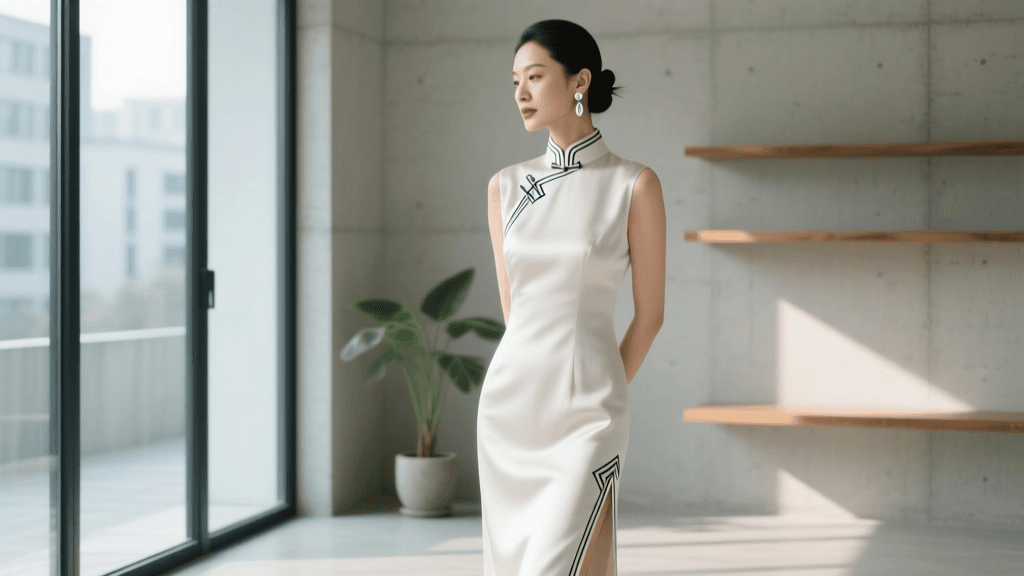
Understanding the anatomy of a cheongsam is crucial for both styling and purchasing. The defining features include the Mandarin collar (Yuanbao or Shanghai style), the asymmetric diagonal opening (Dajin), and the intricate frog fasteners known as Pankou. While traditional Pankou are hand-knotted from silk cords, modern interpretations often utilize metal clasps, pearl buttons, or minimalist hidden zippers for everyday practicality. The side slits, or Kaicha, were originally designed to allow ease of movement and horseback riding, but in modern tailoring, they serve to elongate the leg line and provide a dynamic silhouette when walking.
The Modern Qipao Fit Guide: Measurements and Tailoring
Achieving the perfect qipao fit requires precise measurements. Unlike Western dresses that may rely on stretch fabrics, a traditional woven silk or brocade qipao requires exact tailoring. When taking measurements, always wear the undergarments you intend to pair with the dress, as this drastically affects the bust and waist profile. According to historical textile archives at The Metropolitan Museum of Art, the drape and structure of Chinese garments rely heavily on the precise alignment of the fabric grain and the wearer's natural posture.
| Measurement Point | How to Measure | Tailor's Ease Allowance |
|---|---|---|
| Bust | Measure around the fullest part, keeping the tape level. | +2 to 3 cm for breathing room. |
| Waist | Measure at the natural narrowest point, usually above the navel. | +1 to 2 cm; avoid over-tightening. |
| Hips | Measure around the fullest part of the lower hips. | +2 to 4 cm to prevent fabric pulling at the slits. |
| Hollow to Hem | Measure from the base of the neck (hollow) down to the desired hemline. | Depends on heel height; measure while wearing intended shoes. |
| Shoulder Width | Measure from the edge of one shoulder bone to the other across the back. | Exact measurement; no ease added. |
Everyday Styling: How to Wear the Cheongsam Today
The modern qipao is no longer reserved exclusively for weddings or Lunar New Year celebrations. The key to integrating the cheongsam into a contemporary wardrobe lies in contrast and layering. For a casual daytime look, pair a short-hemmed, cotton-linen qipao with chunky leather boots or minimalist white sneakers. This juxtaposition of traditional elegance and utilitarian streetwear is a hallmark of the Xin Zhongshi trend. In cooler months, layer a sleeveless or cap-sleeve qipao over a fitted, ribbed turtleneck sweater. This not only provides warmth but also creates a sophisticated, textural contrast. For outerwear, a tailored wool trench coat or an oversized leather biker jacket draped over the shoulders adds an edge that prevents the outfit from looking like a costume. Accessorize minimally; let the Pankou and collar serve as the neckline jewelry, opting instead for subtle drop earrings or a structured modern handbag.
Fabric Selection for Different Climates and Occasions
Fabric selection dictates the drape, seasonality, and formality of the garment.
| Fabric Type | Best For | Pros | Cons |
|---|---|---|---|
| Mulberry Silk | Spring/Summer, Formal Events | Breathable, luxurious drape, hypoallergenic. | Wrinkles easily, requires dry cleaning. |
| Silk Brocade (Zhuanghua) | Winter, Weddings, Galas | Structured, rich textures, holds shape well. | Heavy, stiff, can be warm indoors. |
| Cotton-Linen Blend | Everyday Casual, Travel | Durable, easy to care for, matte finish. | Lacks the traditional sheen, wrinkles. |
| Xiangyunsha (Gambiered Silk) | Luxury Everyday, Heritage Collectors | Water-resistant, cool to touch, unique crackled patina. | Very expensive, limited color palette (dark browns/blacks). |
As highlighted by cultural guides at China Highlights, the choice of textile often reflects regional climates and specific cultural occasions, with southern regions favoring lighter silks and northern traditions leaning toward heavier brocades.
Color Symbolism and Modern Palettes
Historically, color in Chinese dress carried profound symbolic weight. Red was reserved for brides and auspicious celebrations, symbolizing luck and prosperity, while black and white were often associated with mourning or older generations. However, the modern qipao has entirely dismantled these rigid rules. Today, pastel hues, monochromatic earth tones, and even stark, avant-garde black are celebrated in everyday fashion. The 'Xin Zhongshi' movement heavily favors muted, nature-inspired palettes—such as celadon green, bamboo yellow, and lotus pink—reflecting a return to Song Dynasty minimalist aesthetics. When selecting a color, consider your skin undertone and the setting. Jewel-toned brocades like emerald and sapphire are striking for evening galas, while matte, neutral linens are perfect for gallery openings or creative workplaces.
Inclusive and Gender-Neutral Qipao Styling
While the cheongsam is historically celebrated as a symbol of femininity, the contemporary fashion landscape is increasingly embracing gender-neutral and inclusive interpretations. Modern designers are deconstructing the traditional silhouette to create boxier, oversized qipao jackets and tunics that flatter all body types and gender expressions. For those seeking a less form-fitting silhouette, the 'A-line' or 'shift' qipao offers a relaxed fit that maintains the iconic Mandarin collar and Pankou fasteners without clinging to the waist and hips. Pairing a mid-length, relaxed-fit qipao tunic with wide-leg trousers or tailored suit pants creates a powerful, androgynous look that honors the garment's architectural roots while pushing it firmly into the future of global fashion.
Sourcing, Costs, and Garment Care
When sourcing a modern qipao, buyers generally choose between off-the-rack, made-to-measure, and bespoke couture. Off-the-rack options from contemporary Asian fashion brands typically range from $80 to $250, utilizing standardized sizing and modern stretch-blend fabrics. Made-to-measure services, widely available in Shanghai, Hong Kong, and via specialized online ateliers, cost between $300 and $800. This route is highly recommended for woven silks, as it allows for personalized adjustments to the collar height and slit placement. Bespoke couture, featuring hand-rolled hems and custom-knotted Pankou, starts at $1,500 and can exceed $5,000. Proper care is essential to preserve the garment's lifespan. Silk and brocade qipaos must be dry-cleaned and stored flat or rolled in acid-free tissue paper to prevent permanent creasing along the bias. Cotton and linen blends can be gently hand-washed in cold water with a pH-neutral detergent and hung to dry in the shade to prevent UV fading.