Japanese Bridal Kimono Guide: Shiromuku and Irochakake
The Renaissance of the Japanese Bridal Kimono
In recent years, there has been a profound renaissance in traditional Japanese wedding attire. While Western-style white wedding dresses remain popular for the reception, an increasing number of brides are choosing to honor their heritage by wearing traditional wafuku for their Shinto ceremony and formal photography. According to the Japan National Tourism Organization (JNTO), destination weddings and culturally rooted ceremonies in Japan frequently feature a multi-outfit wardrobe change, known as oshoku-naoshi, allowing the bride to transition from the solemn purity of white to the vibrant celebration of color. Understanding the nuances of these garments is essential for any bride planning a traditional Japanese wedding.
Shiromuku: The Symbol of Purity and Devotion
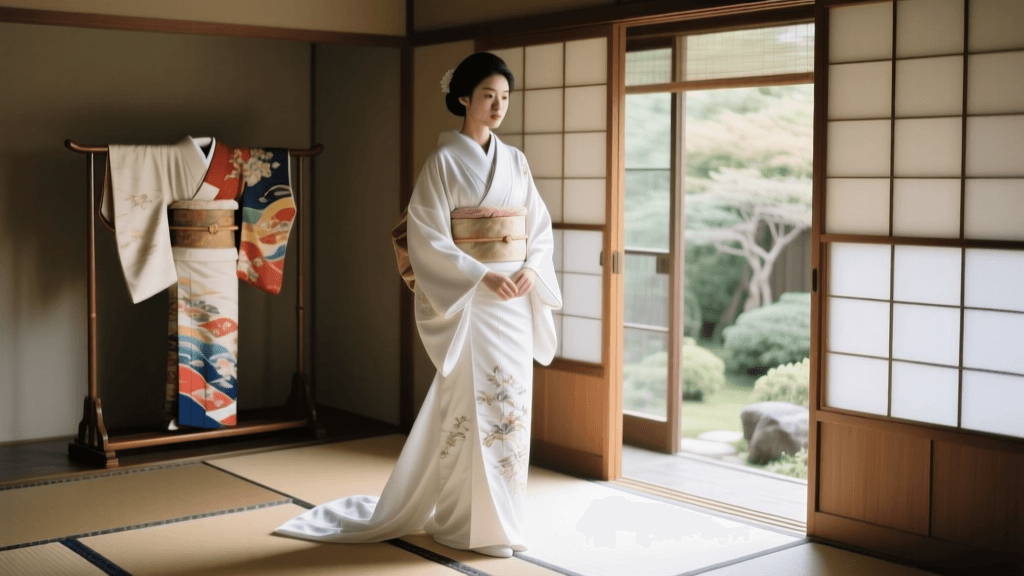
The shiromuku is the most formal and traditional wedding kimono, worn exclusively during the Shinto wedding ceremony. Translating to "pure white," this ensemble consists of a white kimono, a white uchikake (outer robe), a white obi (sash), and white undergarments. The color white in Shinto tradition represents purity, innocence, and a willingness to be "dyed" in the colors of the groom's family. It also symbolizes the bride's departure from her childhood home, akin to a symbolic death and rebirth into her new life.
The fabric of a high-quality shiromuku is typically woven silk, often featuring subtle, tone-on-tone brocade patterns (mon-ori) that catch the light. These hidden motifs frequently include cranes (tsuru), pine trees, and plum blossoms, which are visible only upon close inspection, embodying the Japanese aesthetic of understated elegance.
The Wataboshi and Tsunokakushi
The shiromuku is paired with specific headpieces. The wataboshi is a large, white silk hood worn over the head, functioning similarly to a Western wedding veil by shielding the bride's face from outsiders and symbolizing modesty. Alternatively, some brides opt for the tsunokakushi, a smaller white silk band that wraps around the forehead. Literally translating to "horn-hiding," it is a symbolic gesture representing the bride's promise to hide any "horns" of jealousy or selfishness as she enters her new family.
Irochakake: Vibrant Elegance for the Reception
Following the solemn Shinto ceremony, the bride traditionally changes into an irochakake (colored outer robe) for the wedding reception. This garment is a celebration of joy, prosperity, and the bride's new status. Unlike the shiromuku, the irochakake is a canvas for masterful artistry, featuring brilliant colors such as crimson, gold, emerald, and royal purple.
Auspicious Motifs and Weaving Techniques
The creation of an irochakake involves centuries-old textile techniques. As highlighted by the Victoria and Albert Museum, Japanese silk weaving and dyeing are considered paramount cultural arts. Brides often choose garments featuring Nishijin-ori (heavy silk brocade from Kyoto) or Kyo-yuzen (intricate resist-dyeing). The motifs are deeply symbolic:
- Shouchikubai (Pine, Bamboo, and Plum): Representing longevity, resilience, and perseverance.
- Tsuru (Cranes): Believed to live for a thousand years, they symbolize a long, happy marriage.
- Botan (Peonies): Known as the "king of flowers," representing wealth, honor, and good fortune.
Uchikake vs. Hiki-Furisode: Understanding the Silhouettes
When shopping for a reception kimono, brides will encounter two primary silhouettes: the uchikake and the hiki-furisode. Both feature the dramatically long, trailing sleeves characteristic of unmarried women's formal wear, measuring approximately 114 cm (45 inches) in length. However, their construction and how they are worn differ significantly.
The uchikake is an unbelted outer robe worn open over a base kimono and obi. Its hem is heavily padded with cotton wadding, known as fukikomi, which allows the garment to trail elegantly along the floor and creates a beautiful, bell-like shape when the bride walks. The hiki-furisode, on the other hand, is a single, fully constructed kimono that is tied with an obi. It features a trailing hem that is pulled up and secured with decorative cords (obi-age and obi-jime) to create a voluminous, draped bustle effect at the back, known as ohashori.
Practical Guide: Costs, Rentals, and Purchasing
Acquiring a bridal kimono is a significant investment. Because authentic silk garments are incredibly expensive and require specialized storage and maintenance, the vast majority of modern brides choose to rent their ensembles from specialized wedding salons or kimono rental shops in Japan. Below is a comparative breakdown of estimated costs for renting versus purchasing heirloom-quality garments.
| Item / Service | Rental Cost (JPY / USD) | Purchase Cost (JPY / USD) |
|---|---|---|
| Shiromuku (Full Set) | 150,000 - 300,000 JPY ($1,000 - $2,000) | 800,000 - 1,500,000+ JPY ($5,300 - $10,000+) |
| Irochakake (Full Set) | 200,000 - 450,000 JPY ($1,300 - $3,000) | 1,000,000 - 3,000,000+ JPY ($6,600 - $20,000+) |
| Hiki-Furisode | 150,000 - 250,000 JPY ($1,000 - $1,600) | 500,000 - 1,200,000 JPY ($3,300 - $8,000) |
| Dressing & Hair (Kitting) | 30,000 - 60,000 JPY ($200 - $400) | N/A (Service fee applies regardless) |
| Accessories (Zori, Kanzashi) | Usually Included in Rental | 50,000 - 150,000 JPY ($330 - $1,000) |
Note: Currency conversions are approximate and subject to exchange rate fluctuations. Rental packages in Japan often include the base kimono, uchikake, obi, undergarments, zori (sandals), and basic hair accessories.
The Dressing Process: Undergarments and Measurements
Dressing in a bridal kimono, known as kitsuke, is a rigorous process that takes between 45 to 90 minutes. The Smithsonian National Museum of Asian Art notes that the structural complexity of kimono layering is an art form in itself, requiring precise tension and padding to achieve the ideal cylindrical silhouette, which deliberately minimizes the body's natural curves.
The bride will first don a hadajuban (thin cotton undershirt) and susoyoke (half-slip). Next, a nagajuban (under-kimono) is added. To achieve the flawless, tubular shape required for formal wear, the dresser will use multiple datejime (wide elastic sashes) and koshihimo (thin tying cords), along with strategic cotton padding around the waist and hips. The final ensemble, including the heavily padded uchikake and elaborate maru-obi (which can measure up to 30 cm wide and 4.5 meters long), can weigh between 15 to 20 kilograms (33 to 44 lbs). Brides are advised to wear comfortable, flat slippers to the venue and only change into their formal zori sandals right before walking down the aisle.
Wedding Planning Timeline for Brides
To ensure a stress-free experience, brides should follow a structured timeline when planning their kimono wardrobe:
- 6 to 8 Months Prior: Research and book a reputable kimono salon. High-end salons in Kyoto and Tokyo book up quickly during the peak autumn and spring wedding seasons.
- 4 to 5 Months Prior: Attend the first fitting (shitate). This is when you select the specific shiromuku and irochakake. The salon will take precise measurements to adjust the sleeve lengths and hem allowances.
- 3 Months Prior: Select your accessories. Choose the kazari-kanzashi (hair ornaments), sensu (folding fan), and hakoseko (decorative mirror case) that complement your chosen color palette.
- 1 Month Prior: Finalize the dressing schedule. Confirm the arrival time of the kitsuke-shi (professional dresser) and hair stylist at your hotel or shrine preparation room.
- The Day Before: Hydrate well and avoid heavy meals. The tight binding of the obi and undergarments can restrict breathing and digestion, so a light, easily digestible diet is recommended.
Conclusion
Choosing to wear a shiromuku and irochakake is a profound way to connect with Japanese heritage, embracing centuries of textile artistry and cultural symbolism. While the physical weight of the garments and the financial investment are considerable, the breathtaking visual impact and the deep emotional resonance of participating in this ancient sartorial tradition make it an unforgettable cornerstone of a Japanese wedding.