Suzhou Silk Embroidery: Crafting Hanfu and Qipao Masterpieces
The Legacy of Su Xiu (Suzhou Embroidery)
Originating in the Yangtze River Delta over two millennia ago, Suzhou embroidery, or Su Xiu, represents the pinnacle of Chinese textile arts. Renowned for its delicate patterns, elegant color palettes, and astonishingly lifelike imagery, Su Xiu is one of the four major regional styles of Chinese silk embroidery. The broader context of this meticulous craft is globally recognized, with the traditional sericulture and silk craftsmanship of China inscribed on the UNESCO Intangible Cultural Heritage list. For enthusiasts of Asian traditions, understanding Su Xiu is essential to appreciating the luxury and cultural depth embedded in traditional garments like the Hanfu and the Qipao.
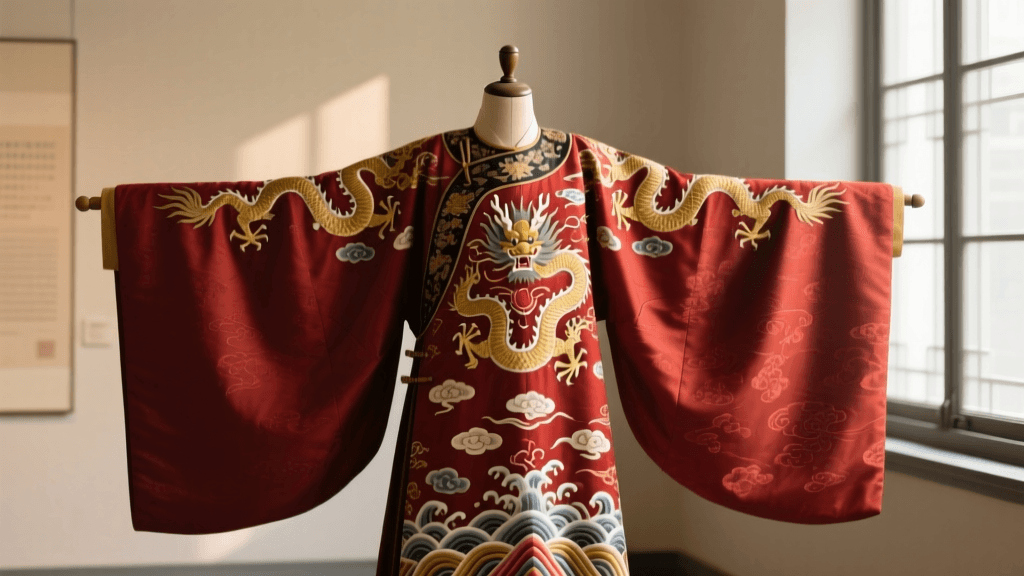
During the Ming (1368–1644) and Qing (1644–1912) dynasties, Suzhou became the epicenter of imperial textile production. Artisans developed specialized techniques to render everything from the subtle gradients of a peony petal to the individual strands of a cat's fur. Today, as the Hanfu revival movement gains momentum and the Qipao remains a staple of formal Asian fashion, Su Xiu continues to be the most sought-after embellishment for high-end, bespoke traditional clothing.
Core Techniques: The Art of Thread Splitting
The defining characteristic of Su Xiu is Pi Xian (thread splitting). A standard strand of mulberry silk thread is composed of multiple micro-filaments. Master embroiderers can split a single thread into 2, 4, 8, 16, 32, 64, or even 128 microscopic strands. This technique allows for unprecedented shading and texture.
- 1/2 to 1/4 strands: Used for bold outlines, structural elements, and heavy floral motifs on outer garments.
- 1/8 to 1/16 strands: The standard for most garment embroidery, providing a smooth, satin-like finish for petals and leaves.
- 1/32 to 1/64 strands: Reserved for hyper-realistic details, such as the translucent fins of koi fish, the subtle highlights in a bird's eye, or the delicate veins of a lotus leaf.
To execute these stitches, artisans use specialized Suzhou needles, which are exceptionally fine (often less than 0.5mm in diameter) and feature a microscopic eye to prevent the delicate silk filaments from fraying during the stitching process. The silk fabric is stretched tightly over a wooden frame, ensuring the warp and weft threads remain at a perfect 45-degree alignment to prevent puckering.
Comparison of Primary Su Xiu Stitching Techniques
| Stitch Name | Chinese Term | Visual Effect | Best Application in Garments |
|---|---|---|---|
| Flat Stitch | Ping Xiu | Smooth, even, and highly reflective; creates solid blocks of color. | Large floral motifs on Qipao bodices and Hanfu skirt panels. |
| Seed Stitch | Da Zi Xiu | Textured, knotted appearance resembling tiny seeds or pearls. | Stamens of flowers, dragon scales, and decorative borders. |
| Random Stitch | Luan Xiu | Overlapping, multidirectional lines that create realistic shading. | Animal fur, feathers, and complex landscape elements. |
| Gold Couching | Pan Jin | Gold or silver metallic threads laid flat and secured with tiny silk stitches. | Imperial dragons, phoenixes, and formal Mamianqun hems. |
Application in Traditional Garments: Hanfu vs. Qipao
The application of Su Xiu varies drastically depending on the historical and structural context of the garment being embellished.
Hanfu: The Ming Dynasty Mamianqun and Aoqun
In the modern Hanfu movement, the Ming Dynasty Mamianqun (horse-face skirt) and Aoqun (jacket and skirt ensemble) are prime canvases for Su Xiu. Traditional Ming aesthetics favor structured, symmetrical, and highly symbolic motifs. Embroidery is typically concentrated on the qunmen (the flat front and back panels of the skirt) and the lan (the decorative borders at the hem and knees).
Common motifs include the Bai Zi Tu (Hundred Children playing, symbolizing fertility and family prosperity) or the Fu Shou motif (bats and peaches, representing fortune and longevity). When commissioning a bespoke embroidered Mamianqun, artisans often use a combination of flat silk stitches for the floral backgrounds and gold couching (Pan Jin) for the structural borders to catch the light during movement.
Qipao (Cheongsam): The Shanghai Silhouette
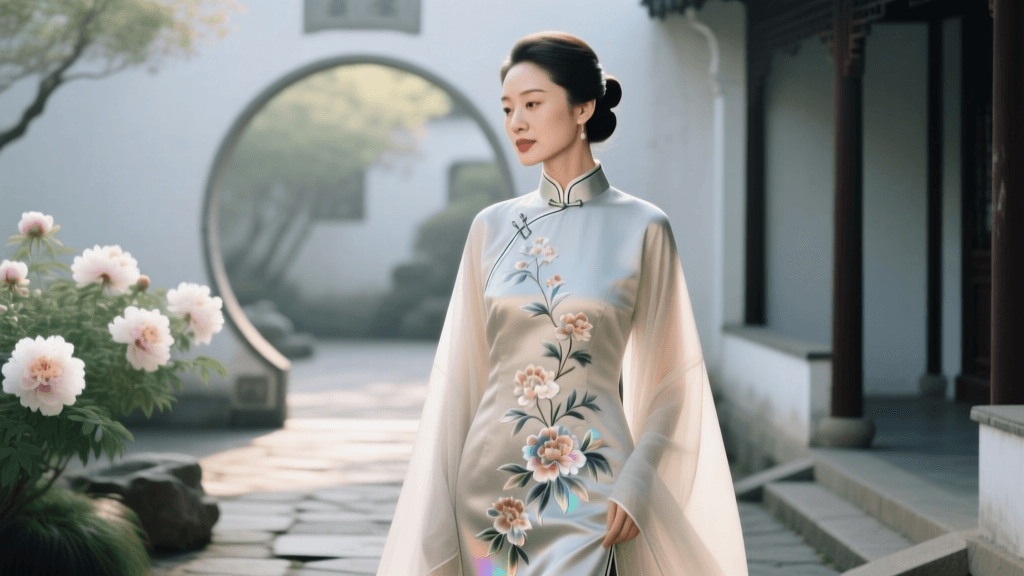
The Qipao, particularly the tailored 1930s Shanghai style, utilizes Su Xiu to enhance the garment's fluid, body-skimming silhouette. Unlike the symmetrical, panel-based embroidery of Hanfu, Qipao embroidery is often asymmetrical, flowing organically from the collarbone, across the chest, and cascading down toward the hemline or side slits.
Because the Qipao is cut from a single piece of fabric with darts for shaping, the embroidery must be planned before the garment is cut and sewn. Artisans will embroider the flat silk textile first, ensuring that when the darts are sewn, the floral vines or bamboo stalks align perfectly with the wearer's natural curves. Popular motifs include plum blossoms (resilience), orchids (elegance), and bamboo (integrity).
Commissioning Custom Su Xiu: Costs, Timing, and Sourcing
For collectors and enthusiasts looking to invest in authentic, handmade Su Xiu garments, understanding the market realities is crucial. True hand-embroidery is a labor-intensive art form, and pricing reflects the thousands of hours required.
- Machine-Embroidered Garments: Mass-produced Hanfu and Qipao featuring computerized embroidery typically range from $50 to $150 USD. The threads are usually synthetic polyester, lacking the luminous sheen of mulberry silk.
- Hand-Embroidered Borders (Hanfu): Adding hand-embroidered Su Xiu borders to a silk Mamianqun hem takes approximately 80 to 120 hours of labor. Expect to pay between $300 and $600 USD for the embroidery work alone, excluding the base garment.
- Fully Bespoke Embroidered Qipao: A fully hand-embroidered, custom-tailored silk Qipao featuring high-density Su Xiu (using 1/16 and 1/32 thread splits) requires 3 to 6 months of production time. Prices generally start at $1,500 USD and can exceed $4,000 USD for master-level artisanship.
When sourcing, look for ateliers based in Suzhou (specifically the Zhenhu Embroidery Town) or reputable heritage brands in Shanghai and Beijing that provide certificates of authenticity detailing the artisan's name and the specific stitch counts used.
Buyer’s Guide: Authenticating Handmade vs. Machine Embroidery
Distinguishing between authentic Su Xiu and modern machine embroidery is a vital skill for textile collectors. The Victoria and Albert Museum notes that historical Chinese embroidery possesses a specific structural integrity that machines cannot replicate. Here is an actionable checklist for authentication:
- Examine the Reverse Side: Hand-embroidered Su Xiu is often nearly as neat on the back as it is on the front, especially in double-sided embroidery (Shuang Mian Xiu). Machine embroidery will show a chaotic web of bobbin threads and jump-stitch connections.
- Check the Thread Sheen: Mulberry silk has a prismatic, pearlescent sheen that changes depending on the angle of light. Synthetic machine threads often have a flat, plastic-like glare or an overly uniform, artificial shine.
- Look for Gradient Transitions: In handmade Su Xiu, color gradients are achieved by alternating micro-strands of different hues (e.g., blending 1/16 strands of pale pink and deep magenta). Machines typically rely on solid blocks of color or dense, overlapping cross-hatching that feels stiff to the touch.
- Assess the Fabric Drape: Hand-embroidery follows the natural drape of the silk. Machine embroidery is often stitched so densely with heavy synthetic backing that the fabric becomes rigid and cardboard-like.
Preservation and Care for Silk Textiles
Silk is a protein fiber, making it highly susceptible to environmental damage, UV degradation, and pest infestation. Proper care is essential to preserve the integrity of Su Xiu garments for future generations. As highlighted by cultural preservationists featured in Smithsonian Magazine, the longevity of these textiles relies on strict environmental controls.
- Cleaning: Never machine wash or aggressively hand-wash embroidered silk. Water can cause the silk threads to bleed or shrink at different rates than the base fabric, ruining the embroidery. Always seek a dry cleaner who specializes in historical or luxury Asian textiles.
- Storage: Never hang heavy embroidered garments like a fully stitched Mamianqun on standard hangers, as the weight of the embroidery will warp the silk warp threads over time. Store them flat in archival-quality, acid-free boxes.
- Padding: Stuff the folds of the garment with acid-free, unbleached tissue paper to prevent hard creases, which can eventually cause the silk fibers to snap.
- Environment: Maintain a stable environment with a relative humidity of 45% to 55% and a temperature around 65°F (18°C). Avoid chemical mothballs, which can yellow silk and degrade metallic gold threads; instead, use natural camphor wood blocks or dried lavender sachets placed near (but not directly touching) the textiles.
By understanding the profound technical skill behind Suzhou embroidery and adhering to strict preservation methods, collectors and wearers can ensure that these magnificent examples of Asian textile traditions continue to thrive in the modern era.