Yukata vs Jinbei: 2026 Guide to Japanese Summer Casual Wear
The Ultimate Summer Wardrobe Dilemma: Yukata or Jinbei?
As the intense heatwaves of summer 2026 sweep across the Japanese archipelago, the cultural calendar remains as vibrant as ever. From the booming echoes of fireworks displays (hanabi taikai) to the rhythmic chants of neighborhood Bon Odori dances, summer in Japan is a season of profound cultural expression. For both locals and international travelers, participating in these events requires navigating a unique sartorial landscape. The two undisputed champions of Japanese summer casual wear are the yukata and the jinbei. While both are deeply rooted in Japanese history and designed to combat the sweltering humidity, they serve distinctly different purposes, offer varying levels of mobility, and carry unique stylistic rules. In this comprehensive 2026 comparison guide, we will break down the anatomy, history, and modern applications of both garments to help you choose the perfect attire for your summer adventures.
Understanding the Yukata: Elegance Meets Tradition
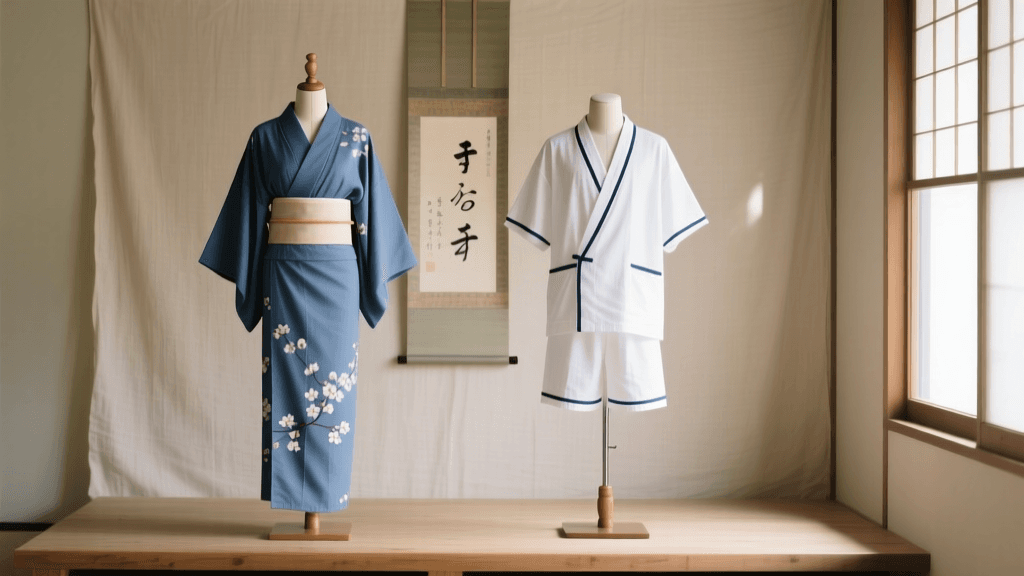
The yukata is an unlined, lightweight cotton kimono that traces its origins back to the Heian period (794–1185). Originally worn by court nobles as a bathing robe (the word literally translates to "bathing cloth"), it eventually evolved during the Edo period into the ubiquitous streetwear we recognize today. According to the Metropolitan Museum of Art's historical overview of Japanese dress, the simplification of the kimono into the yukata allowed commoners to enjoy silk-like aesthetics using breathable, affordable cotton. Today, the yukata is the standard uniform for summer festivals, fireworks viewing, and traditional ryokan stays.
Anatomy of a Modern Yukata
A complete yukata ensemble requires several components beyond the main robe. In 2026, while traditional wrapping techniques are still prized, the market has seen a surge in modernized, user-friendly adaptations. The core components include:
- The Yukata Robe: Made from a single bolt of fabric, featuring wide sleeves and a wrap-front design secured on the left over the right.
- Koshihimo: Thin cotton ties used to secure the robe at the waist before the decorative sash is applied.
- Obi: The decorative sash. While traditionalists still tie complex knots, 2026 trends heavily favor pre-tied, clip-on obis that save time and ensure a perfect silhouette.
- Geta or Zori: Traditional wooden sandals (geta) or woven sandals (zori) worn with split-toe socks (tabi), though bare feet with geta remain the standard for casual yukata wear.
Understanding the Jinbei: The Pinnacle of Casual Comfort
If the yukata is the elegant socialite of summer wear, the jinbei is its relaxed, pragmatic cousin. The jinbei originated in the Edo period as loungewear for samurai and their attendants. The name is derived from "jin" (people) and "bei" (soldier/guard), as it was initially worn by night watchmen and guards who required maximum mobility and ventilation. Over the centuries, it transitioned into everyday civilian loungewear and, more recently, a highly fashionable alternative to the yukata for local, low-key festivals.
Anatomy and 2026 Innovations
The jinbei is a two-piece garment consisting of a short-sleeved, wrap-style top and a pair of shorts or cropped pants. The top is secured with a simple tie, and the bottoms feature a drawstring waist. The defining feature of a high-quality jinbei is the side slits at the hips and the loose weave of the fabric, which creates a natural cross-breeze. In 2026, the jinbei has experienced a massive renaissance. Major retailers like Uniqlo and specialized Kyoto boutiques have introduced tech-infused cooling yarns, blending traditional seersucker cotton with modern moisture-wicking polymers. Furthermore, women's jinbei have exploded in popularity, featuring longer, tailored shorts, floral prints, and matching hair accessories.
Head-to-Head Comparison: Yukata vs. Jinbei
To help you make an informed decision for your 2026 summer itinerary, we have compiled a direct comparison of these two iconic garments.
| Feature | Yukata | Jinbei |
|---|---|---|
| Formality Level | Semi-casual to Smart-casual | Strictly Casual / Loungewear |
| Ease of Dressing | Moderate (Requires obi tying or pre-tied clips) | Very Easy (Tie top, pull on shorts) |
| Mobility & Comfort | Restricted stride due to narrow hemline | Unrestricted, ideal for walking and dancing |
| Breathability | High (Open front, but layered at the waist) | Extremely High (Side slits, loose two-piece fit) |
| Average 2026 Cost | $60 - $150 USD (Full set with accessories) | $30 - $80 USD (Complete two-piece set) |
| Footwear Required | Geta or Zori (Sandals) | Any casual sandal or sneaker |
Occasion Matching: When to Wear What in 2026
Choosing between a yukata and a jinbei largely depends on the specific event you are attending and the impression you wish to convey. The Japan Guide's comprehensive directory of Matsuri highlights the vast diversity of summer events, each with its own unspoken dress code.
Major Fireworks Festivals (Hanabi Taikai)
For massive, highly photographed events like the Sumidagawa Fireworks Festival in Tokyo or the Nagaoka Festival in Niigata, the yukata is the undisputed winner. These events are deeply romantic and highly visual. The flowing sleeves and vibrant, floor-length patterns of a yukata photograph beautifully against the night sky. Wearing a jinbei to a major hanabi taikai might make you feel underdressed, as these events are considered prime opportunities for fashion and socializing.
Local Bon Odori and Neighborhood Matsuri
Bon Odori are traditional folk dances held in local neighborhoods to honor the spirits of ancestors. These events involve active participation, often dancing in a circle around a central yagura (wooden scaffold) for hours. Here, the jinbei shines. The unrestricted movement of the shorts and the superior ventilation of the top make it the most practical choice. While many locals will still wear yukata, you will see a massive demographic of children, young men, and increasingly, young women opting for stylish jinbei sets to stay cool while dancing.
Ryokan Stays and Onsen Towns
When staying at a traditional Japanese inn (ryokan), you will almost always be provided with a house yukata. It is perfectly acceptable to wear this provided yukata around the inn, to the communal baths, and even out to dinner if the ryokan is located in an onsen town like Kinosaki or Kusatsu. However, if you are simply lounging in your private room, reading, or drinking tea on the veranda, changing into a personal jinbei offers a level of relaxed comfort that a belted yukata cannot match.
2026 Styling and Accessory Guide
Neither garment is truly complete without the right accessories. In 2026, the accessory market has adapted to modern needs while respecting traditional aesthetics.
Yukata Accessories
- Kinchaku: A traditional drawstring pouch. In 2026, many kinchaku feature internal pockets for smartphones and RFID-blocking linings to protect digital transit cards.
- Uchiwa or Sensu: A rigid round fan (uchiwa) or folding fan (sensu) is mandatory for surviving the humid evenings. Tucking a beautifully painted sensu into the back of your obi is a classic stylistic flourish.
- Obidome: A decorative clasp worn on the obijime (a thin cord tied over the obi). Modern obidome often feature resin flowers, glass beads, or even subtle LED accents for nighttime festivals.
Jinbei Accessories
- Footwear: Unlike the yukata, the jinbei does not demand traditional geta. Modern leather slide sandals, minimalist sports sandals (like Teva or Suicoke), or even clean canvas sneakers are widely accepted and highly practical.
- Crossbody Bags: Because jinbei lack the obi structure needed to tuck in a fan or secure a pouch, a small, water-resistant crossbody bag or a minimalist fanny pack worn across the chest is the preferred 2026 styling choice.
Where to Buy and What to Look For
If you are shopping for your summer wardrobe in 2026, the options range from budget-friendly fast fashion to artisanal heritage brands. According to the Japan National Tourism Organization (JNTO) summer highlights, participating in local culture is a top priority for visitors, and the retail sector has responded with highly accessible options.
For yukata, brands like Kimono Yamato and Y. & Co. offer excellent entry-level sets that include the robe, obi, and geta for around $80 to $120 USD. Look for "shijira-ori" or "seersucker" weaves, which feature a textured surface that prevents the fabric from clinging to sweaty skin. For vintage enthusiasts, online marketplaces like Ichiroya offer stunning, authenticated mid-century cotton yukata that boast unique, hand-dyed indigo patterns impossible to find in modern mass production.
For jinbei, Uniqlo's summer pop-up collections remain the gold standard for affordable, high-quality tech-cotton blends, usually priced between $25 and $40 USD. For a more luxurious, artisanal approach, seek out boutiques in Kyoto's Nishijin district or Tokyo's Asakusa neighborhood, where you can find jinbei crafted from premium Ojiya-chijimi linen-cotton blends, offering unparalleled breathability and a sophisticated, matte texture.
Conclusion: Embracing the Summer Heat
The choice between a yukata and a jinbei is not merely a matter of fabric; it is a decision about how you wish to experience the Japanese summer. The yukata offers a transformative, elegant experience, connecting you directly to the romanticized imagery of Edo-period festivals and providing unparalleled photographic memories. The jinbei, conversely, offers a deeply authentic, lived-in experience, prioritizing comfort, mobility, and a connection to the everyday rhythms of local neighborhoods. By understanding the distinct strengths of both garments, you can curate a 2026 summer wardrobe that ensures you remain stylish, culturally respectful, and remarkably cool, no matter how high the mercury rises.