Yukata vs Jinbei: Guide to Casual Japanese Summer Garments
Embracing the Japanese Summer: Beyond the Formal Kimono
When the humid heat of the Japanese summer sets in, the heavy silks and intricate layers of the formal kimono are respectfully packed away. In their place, everyday and casual traditional wear takes over the streets, festivals, and onsen towns. For both locals and travelers, understanding the nuances of Japanese summer garments is essential for navigating the season with comfort and cultural respect. While the kimono is often viewed as a formal, restrictive garment reserved for weddings and tea ceremonies, Japan possesses a rich tradition of casual wear designed specifically for breathability, ease of movement, and everyday utility. According to the Japan Guide's overview of traditional dress, the evolution of these garments reflects a practical adaptation to Japan's distinct four seasons, prioritizing lightweight cottons and ingenious ventilation techniques.
The Yukata: From Bathhouse to Festival Street
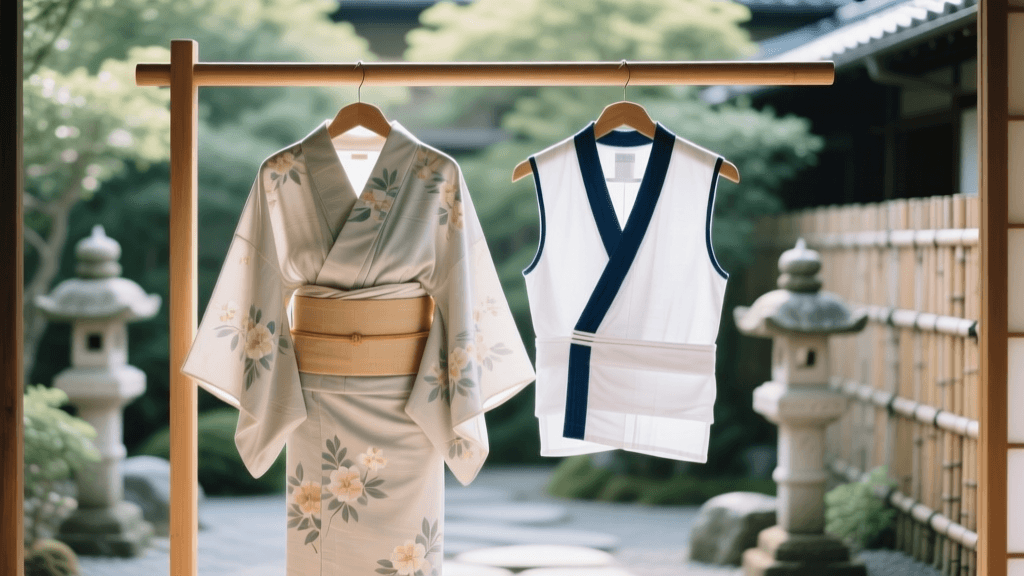
The yukata is arguably the most recognizable piece of casual Japanese clothing. Originally known as the yu-katabira (bathrobe), it was a simple linen garment worn by the nobility in the Heian period to dry off after bathing and to protect their skin from the heat of steam baths. By the Edo period, as public bathhouses (sento) became widespread and cotton cultivation expanded, the yukata transformed into the everyday casual wear of the common people.
Today, the yukata is the undisputed uniform of summer festivals (matsuri) and fireworks displays (hanabi). Unlike the formal kimono, a yukata is unlined and made almost exclusively from lightweight cotton or breathable synthetic blends. When attending summer matsuri, the Japan National Tourism Organization (JNTO) notes that wearing a yukata enhances the immersive cultural experience, allowing visitors to blend seamlessly into the vibrant parade atmospheres. For everyday wear in modern Japan, you will frequently see young people wearing yukata in tourist hubs like Kyoto's Higashiyama district or Tokyo's Asakusa, often paired with modern accessories like leather sandals or crossbody bags.
The Jinbei: The Ultimate Everyday Loungewear
If the yukata is for public festivals, the jinbei is for private relaxation and hyper-local streetwear. A jinbei consists of two pieces: a short-sleeved, wrap-style top and matching shorts. The top is secured with a simple tie belt, while the shorts feature an elastic or drawstring waist. Crucially, the side seams of the jinbei top and shorts are left partially open or feature slits, creating a natural ventilation system that allows air to circulate against the skin.
Historically, the jinbei was worn by samurai as an undergarment or by commoners as indoor workwear. Today, it is the quintessential Japanese loungewear. It is entirely acceptable to wear a jinbei while running quick errands at the local convenience store, walking the dog, or lounging on the engawa (veranda) of a ryokan. For regional variations and textile heritage, the Kyoto City Tourism Association highlights how traditional dyeing techniques, such as indigo shibori, are frequently applied to modern jinbei sets, elevating them from basic pajamas to artisanal casual wear.
The Samue: Monastic Roots to Modern Casual Wear
Though slightly heavier than the jinbei, the samue deserves mention in the casual wear pantheon. Originally the work clothes (samu) of Zen Buddhist monks, the samue consists of a long-sleeved wrap top and long, loose-fitting trousers tied at the ankles. Made from durable cotton or hemp, it is highly practical. In contemporary Japan, the samue has crossed over into mainstream casual wear, favored by artisans, potters, calligraphers, and even as premium resort wear in high-end onsen (hot spring) towns. It provides excellent sun and mosquito protection while remaining far cooler than Western denim or slacks.
Comparison Chart: Casual Japanese Summer Wear
| Garment | Pieces | Best For | Average Cost (JPY) | Formality Level |
|---|---|---|---|---|
| Yukata | 1 (Wrap robe) | Festivals, fireworks, tourist sightseeing | ¥3,000 - ¥15,000 | Semi-Casual / Public |
| Jinbei | 2 (Top & Shorts) | Lounging, local errands, onsen towns | ¥2,000 - ¥6,000 | Very Casual / Private |
| Samue | 2 (Top & Pants) | Artisan work, meditation, resort wear | ¥5,000 - ¥20,000 | Smart-Casual / Utility |
Actionable Buying Guide: Measurements and Costs
Buying traditional Japanese clothing requires understanding a different set of measurements. Western sizing (S, M, L) is often used for jinbei and samue, but yukata are sized based on specific bodily dimensions.
- Mitake (Total Length): For women, the mitake should ideally equal your exact height. This extra length is necessary to create the ohashori (the folded tuck at the waist). For men, the yukata is worn without an ohashori, so the mitake should be roughly 80% of your height, ending at the ankle.
- Yuki (Arm Span): Measured from the center back of the neck, over the shoulder, and down to the wrist bone. A standard women's yukata usually has a yuki of 64-68cm, while men's range from 70-80cm.
- Hip and Shoulder Width: Because these garments are wrap-style, they are highly forgiving. However, if your hips exceed 100cm (39 inches), you must look for 'wide' or 'queen' size yukata to ensure the front panels overlap sufficiently. A gap at the front is considered improper.
Cost Breakdown: A basic, mass-produced yukata set (including the robe and a simple belt) from brands like Uniqlo or Wataro will cost between ¥3,000 and ¥5,000. Artisanal yukata featuring traditional shijira-ori (a breathable, bumpy cotton weave from Tokushima) or Arimatsu shibori (intricate tie-dye) will range from ¥10,000 to ¥30,000. Jinbei are much cheaper, with high-quality cotton sets available for around ¥3,500.
Step-by-Step: Styling Your Yukata for the Streets
Wearing a yukata correctly requires a few essential undergarments and accessories. Do not attempt to wear a yukata directly over modern underwear, as the lines will show and the cotton will cling to your skin.
- The Base Layer: Wear a hadajuban (a thin, sleeveless cotton undershirt) and a susuyoke (a half-slip for women) or suteteko (lightweight long johns for men). These absorb sweat and protect the yukata from body oils.
- Wrapping: Always wrap the left panel over the right panel. This is the most critical rule in Japanese dress; wrapping right over left is strictly reserved for dressing the deceased for funerals.
- Securing the Waist: Use a koshi himo (a thin cotton tie belt) to secure the garment at your natural waist (for men) or just under the bust (for women). Create the ohashori fold (for women) by pulling the excess fabric down over the tie.
- The Obi (Sash): For casual summer wear, women should use a hanhaba obi (half-width sash). Pro-Tip: Beginners should invest in a Corin belt (approx. ¥1,500). This is a modern, elasticized belt with metal clips and a pre-tied bow that slips on like a necklace and clips at the waist, completely eliminating the struggle of tying complex obi knots.
- Footwear: Pair your outfit with geta (wooden sandals). Bare feet are the standard for yukata and jinbei; split-toe tabi socks are generally reserved for formal kimono, though some modern fashionistas break this rule for stylistic effect.
Cultural Etiquette and Contemporary Relevance
While the yukata and jinbei are casual, they are not devoid of etiquette. When sitting in a yukata, keep your knees together and smooth the skirt over your lap to maintain a neat silhouette. If you are wearing a jinbei in a ryokan, it is perfectly acceptable to wear it to the communal dining hall, but it should not be worn into the actual hot spring baths or formal tea rooms.
In contemporary fashion, the boundaries of these garments are expanding. It is increasingly common to see a lightweight, mesh haori (jacket) worn over a simple t-shirt and jeans, or a yukata top paired with wide-leg linen trousers. By understanding the roots, measurements, and styling of these everyday garments, you can comfortably integrate Japanese textile traditions into your own summer wardrobe, whether you are navigating the bustling streets of Tokyo or relaxing on a quiet countryside veranda.