Experience Kyo-Yuzen Dyeing: Kyoto Artisan Workshop Guide
The Legacy of Kyo-Yuzen: Kyoto’s Crown Jewel of Textile Art
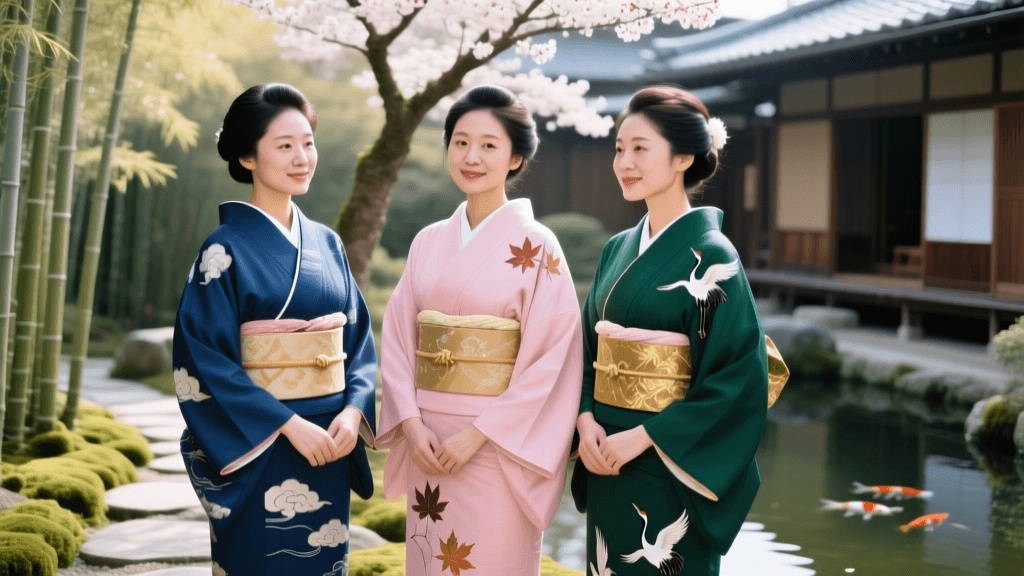
When discussing the pinnacle of Japanese traditional garments, the kimono stands as an undisputed masterpiece of cultural expression. Yet, the true magic of the kimono often lies not in its cut, but in its canvas. Among the myriad of textile techniques developed in Japan, Kyo-Yuzen dyeing is widely considered the most prestigious and artistically complex. Originating in Kyoto during the late 17th century, this resist-dyeing technique was pioneered by Miyazaki Yuzensai, a fan painter whose innovative methods allowed for free-form, pictorial designs on silk.
During the Edo period, strict sumptuary laws prohibited commoners from wearing ostentatious woven brocades or elaborate embroidery. Yuzensai’s technique bypassed these restrictions by painting directly onto the fabric, creating the illusion of luxurious woven patterns through vibrant dyes and meticulous hand-painting. Today, Kyo-Yuzen remains a hallmark of Kyoto’s artisan heritage, distinguished from its regional counterpart, Kaga-Yuzen (from Kanazawa), by its use of gold leaf, embroidery accents, and a vastly broader, more vibrant color palette.
For textile enthusiasts and cultural travelers, participating in a Kyo-Yuzen artisan workshop in Kyoto offers an unparalleled opportunity to understand the immense labor and skill required to produce a single garment. According to the Victoria and Albert Museum, Yuzen dyeing represents a perfect synthesis of Japanese painting and textile craftsmanship, requiring a mastery of chemistry, brushwork, and spatial design.
The Intricate Step-by-Step Kyo-Yuzen Process
To truly appreciate the value of a hand-dyed kimono—which can easily cost upwards of 500,000 JPY ($3,500 USD) and take several months to complete—one must understand the grueling, multi-step process. Traditional Kyo-Yuzen involves over 20 distinct sub-processes, often handled by different specialized artisans. In a workshop setting, you will typically engage with the following core stages:
- Karikae (Design Transfer): The artisan sketches a design using aobana (spiderwort) juice. This unique blue pigment is water-soluble and completely vanishes when the silk is later washed, leaving no trace of the underdrawing.
- Itome-nori (Resist Paste Application): Using a specialized conical tool called a tsutsu, the artisan applies a thick, glue-like resist paste made from rice bran along the outlines of the design. This paste acts as a dam, preventing adjacent colors from bleeding into one another.
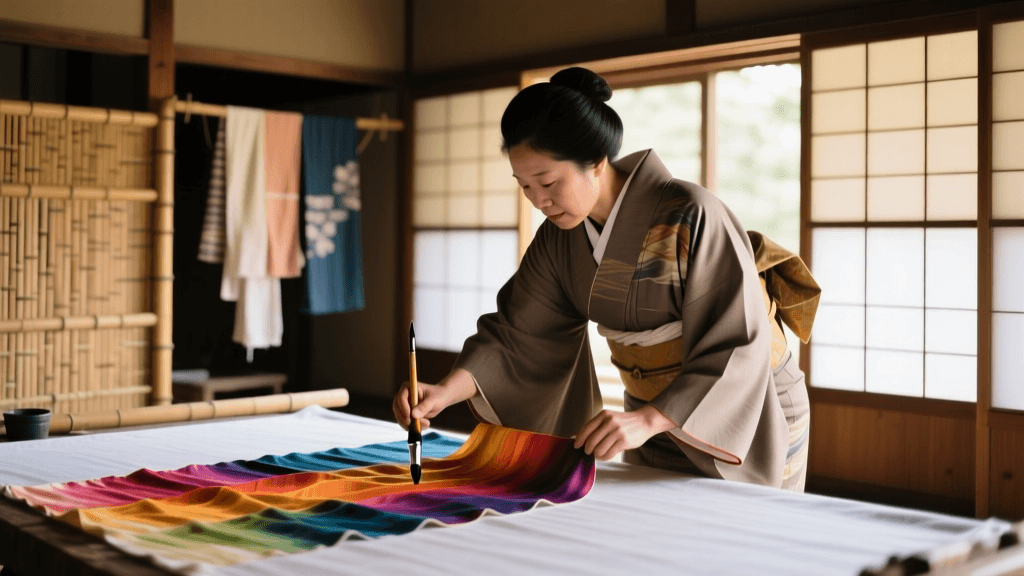
- Irosashi (Color Application): Once the paste dries, artisans use fine brushes to paint dyes within the resisted lines. Traditional Kyo-Yuzen utilizes both natural and synthetic dyes, applied with meticulous gradations (bokashi) to create depth and shadow.
- Jizome (Background Dyeing): After the detailed motifs are painted and steamed, the entire background of the fabric is dyed, often using a wide brush or by dipping the fabric into large vats.
- Mushikoshi (Steaming): The silk is placed in a specialized steam box for 30 to 45 minutes. The intense heat (around 100°C) opens the silk fibers, allowing the dye molecules to bond permanently with the protein structure of the fabric.
- Mizumoto (Washing): Historically, bolts of silk were washed in the cold, pure waters of Kyoto’s Kamo River to remove the rice paste and excess dye—a practice known as yuzen-nagashi. Today, due to environmental regulations, this is mostly done in specialized indoor water tanks using synthetic washing agents.
Experiencing the Craft: A Practical Guide to Kyoto Workshops
While mastering Kyo-Yuzen takes a lifetime of apprenticeship, several heritage studios in Kyoto offer condensed workshops for visitors. These sessions are designed to teach the fundamental principles of irosashi (coloring) and occasionally itome-nori (resist application) on smaller items like handkerchiefs, fans, or silk stoles.
Booking and Timing
Most workshops require advance reservations, often 2 to 4 weeks prior, especially during peak tourist seasons (cherry blossom season in April and autumn foliage in November). Sessions typically run between 90 minutes and 3 hours. Because the steaming, washing, and finishing processes require specialized equipment and several days of drying time, you will not take your finished item home on the same day. Studios will ship your completed piece to your hotel or home address within 2 to 4 weeks.
Cost Expectations
Workshop fees generally include all materials, instruction, and domestic shipping. Expect to pay between 2,500 JPY for a basic silk handkerchief (fukusa) and 15,000 JPY for a large silk stole or wall hanging. Multi-day intensive courses focusing on full kimono panels can exceed 50,000 JPY.
Comparison of Top Kyo-Yuzen Artisan Workshops in Kyoto
Choosing the right workshop depends on your schedule, budget, and desired level of immersion. Below is a structured comparison of three highly regarded venues where visitors can experience traditional textile dyeing.
| Workshop / Venue | Location (Ward) | Item Options | Approx. Cost (JPY) | Duration | Best For |
|---|---|---|---|---|---|
| Marumasu-Nishimuraya | Nakagyo | Handkerchief, Tote, Stole | 2,500 - 12,000 | 90 - 120 mins | Beginners & Quick Tours |
| Some no Kura | Shimogyo | Scarf, Wall Art, Yukata | 8,000 - 35,000 | 2 - 4 hours | Deep Dive & Enthusiasts |
| Fureaikan Museum | Higashiyama | Observation + Small Crafts | 500 - 3,000 | 60 - 90 mins | Budget & Cultural Overview |
The Kyoto Museum of Traditional Crafts (Fureaikan) is an excellent starting point. While it is primarily a museum showcasing all 74 of Kyoto's designated traditional crafts, it frequently hosts weekend artisan demonstrations and small-scale dyeing experiences that provide vital context before you commit to a full studio workshop.
Workshop Etiquette and Preparation Tips
Visiting a traditional artisan studio is a privilege, as these are often working environments where master craftsmen are fulfilling high-value commissions. Observing proper etiquette ensures a respectful and rewarding experience.
- Dress Appropriately: Wear dark, comfortable clothing that you do not mind getting stained. While studios provide aprons, dye splatters can be unpredictable. Avoid wearing expensive jewelry or loose, flowing sleeves that might drag across wet silk.
- Punctuality is Paramount: Artisan schedules are tightly coordinated around steaming and drying times. Arriving 10 minutes early is standard practice in Japan; arriving late disrupts the entire studio's workflow.
- Photography Rules: Always ask for permission before taking photos. While photographing your own work is usually encouraged, taking pictures of the master artisans' proprietary designs, specialized tools, or other clients' work is strictly prohibited.
- Language and Communication: While some major studios offer English-speaking guides or translated instruction manuals, many smaller workshops operate primarily in Japanese. Learning basic phrases like Yoroshiku onegaishimasu (Please treat me well / I look forward to working with you) and Arigatou gozaimashita (Thank you very much) goes a long way in showing respect for the sensei (master).
Preserving the Craft: The Future of Traditional Artisan Dyeing
Despite its beauty, the Kyo-Yuzen industry faces severe challenges. The aging population of master dyers, the high cost of raw silk, and the declining everyday use of kimono have led to a shortage of successors. According to the Japan National Tourism Organization, supporting traditional crafts through experiential tourism is one of the most effective ways to inject vital capital and global awareness into these aging artisan communities.
By participating in a Kyo-Yuzen workshop, you are not merely creating a souvenir; you are directly funding the preservation of a centuries-old artistic lineage. The fees pay for the maintenance of specialized equipment, the sourcing of high-grade silk from domestic sericulture, and the hourly wages of the assistants who prepare the materials. Furthermore, many modern studios are now adapting traditional Yuzen techniques to contemporary fashion items, such as silk face masks, laptop sleeves, and modern interior textiles, ensuring the craft remains economically viable in the 21st century.
Whether you are a dedicated student of Asian traditions, a fashion historian, or a curious traveler, stepping into the dye-scented air of a Kyoto Yuzen studio provides a profound connection to the hands that have clothed Japan in art for over three hundred years.