Chinese Couture on Global Runways: Embroidery & Silhouettes
The Rise of Chinese Aesthetics in Haute Couture
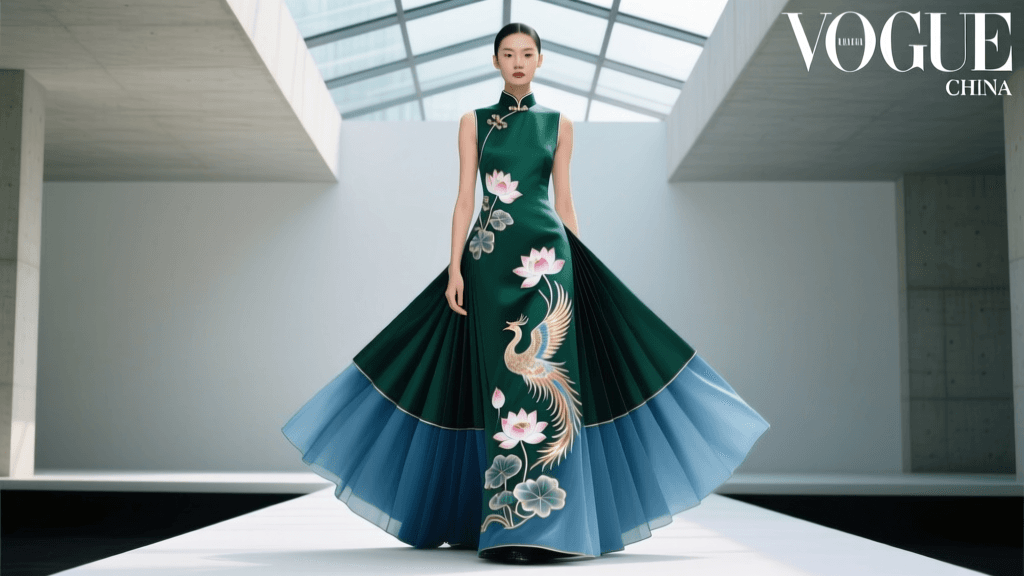
The global fashion landscape has long looked to the East for inspiration, but the modern integration of Chinese traditional garments into international couture represents a profound shift from mere pastiche to deep structural and technical reverence. High fashion runways in Paris, Milan, and New York are increasingly showcasing authentic Chinese craftsmanship, moving beyond superficial motifs to embrace the complex geometry and painstaking textile arts of historical Chinese dress. This evolution marks a departure from the Orientalism of the 20th century, favoring instead a collaborative and historically accurate appreciation of Asian traditions.
A pivotal moment in this transition was highlighted by The Metropolitan Museum of Art's 'China: Through the Looking Glass' exhibition, which drew record-breaking crowds and underscored the immense influence of Chinese aesthetics on Western fashion design. Today, designers are not just borrowing silhouettes; they are partnering with master artisans in Suzhou and Hangzhou to integrate heritage techniques directly into contemporary haute couture and ready-to-wear collections.
Su Xiu: The Thread That Binds East and West
At the heart of Chinese couture's global ascent is Su Xiu, or Suzhou embroidery. Originating over 2,000 years ago in the Jiangsu province, this technique is renowned for its delicate, intricate patterns and astonishing stitch density. In the context of international runway fashion, Su Xiu is no longer confined to traditional ceremonial robes; it is being applied to modern corsetry, structured gowns, and avant-garde outerwear.
The hallmark of high-end Su Xiu is the artisan's ability to split a single silk thread into multiple, gossamer-thin strands—sometimes up to 1/64th of the original thickness. This allows for a level of shading and realism that rivals oil painting, a technique known as 'Shuangmian Xiu' or double-sided embroidery, where the design is perfectly identical and seamless on both sides of the fabric. According to a detailed feature by the UNESCO Courier on the art of Suzhou embroidery, mastering this craft takes decades, and the resulting textiles are considered masterpieces of intangible cultural heritage.
On the runway, designers like Guo Pei have championed Su Xiu, blending it with metallic thread couching and beadwork to create garments that require thousands of labor hours. A single couture gown featuring authentic, master-level Su Xiu can take a team of artisans up to 18 months to complete, commanding prices that rival the most exclusive Parisian fashion houses. The integration of this embroidery into Western silhouettes—such as a structured peplum jacket or a sweeping tulle ballgown—creates a striking juxtaposition of Eastern heritage and Western tailoring.
The Mamianqun: From Ming Dynasty to Milan
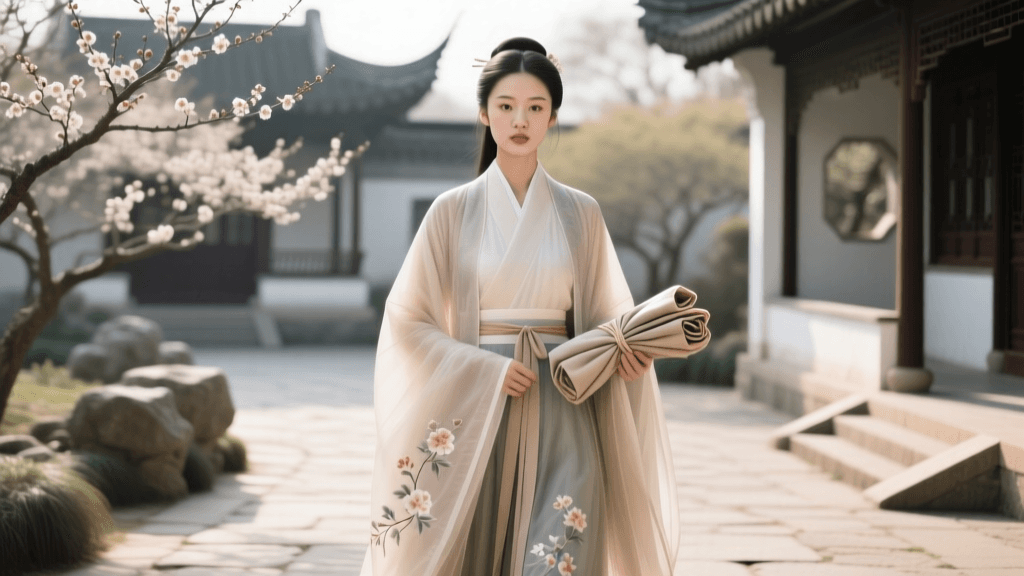
While embroidery provides the surface narrative, the structural foundation of Chinese couture's runway influence is increasingly defined by the Mamianqun, or 'horse-face skirt.' Originating in the Song and Ming dynasties, the Mamianqun is a wrap skirt characterized by two overlapping flat panels (the 'horse faces') at the front and back, with deeply pleated sides. This unique geometry allows for modesty and ease of movement while maintaining a striking, architectural silhouette.
The Mamianqun has seen a massive resurgence, fueled by the broader Hanfu movement, which has pushed traditional garments into the global zeitgeist. As noted in BBC Culture's exploration of the Hanfu movement, younger generations are reclaiming these silhouettes, demanding historical accuracy while styling them for modern life. This grassroots energy has caught the attention of international luxury brands, leading to both controversial appropriations and celebrated, respectful collaborations on the runway.
In high fashion, the Mamianqun's pleating technique offers a masterclass in textile manipulation. Unlike Western knife or box pleats, the Mamianqun relies on a complex system of hidden darts and overlapping waistbands that distribute the fabric's weight evenly. Runway adaptations often play with the scale of the pleats, utilizing stiff silk organza or metallic jacquard to exaggerate the volume, creating a dramatic, bell-shaped structure that commands attention on the catwalk.
Comparison Chart: Traditional vs. Runway Adaptations
Understanding the translation of the Mamianqun from historical artifact to runway spectacle requires a look at how materials and construction methods have evolved.
| Feature | Traditional Ming Dynasty | Modern Runway Adaptation |
|---|---|---|
| Primary Fabric | Heavy silk brocade, woven with gold/silver threads | Silk organza, tulle, metallic jacquard, vegan leather |
| Pleat Structure | Hand-pressed, heat-set using traditional steam methods | Laser-cut precision, fused interfacing for permanent volume |
| Fastening | Cotton ties and hidden inner buttons | Concealed zippers, corset lacing, magnetic closures |
| Weight & Drape | Heavy, grounding, swings with momentum | Lightweight, airy, designed for dramatic wind-catching |
| Embellishment | Woven directly into the fabric (Zhuanghua) | Appliqué, 3D printing, hand-beaded Su Xiu overlays |
Actionable Guide: Sourcing and Styling Couture-Inspired Pieces
For fashion collectors, bridal clients, or enthusiasts looking to invest in authentic Chinese couture elements, navigating the market requires specific technical knowledge. Here is a practical guide to sourcing and styling these garments.
1. Evaluating Silk Quality and Embroidery Density
When purchasing Su Xiu garments or fabrics, pay close attention to the silk weight, measured in 'momme' (mm). Standard commercial silk is 12-16mm, but true couture pieces utilize 22mm to 30mm heavy silk crepe de chine or brocade. For the embroidery itself, examine the stitch density. High-end artisan work will feature 40 to 60 stitches per square inch, with no visible knots on the reverse side. Expect to pay upwards of $5,000 for a bespoke jacket featuring master-level double-sided embroidery, while entry-level handmade pieces from reputable Suzhou studios start around $800.
2. Tailoring the Mamianqun
The magic of the horse-face skirt lies in its precise measurements. A poorly fitted Mamianqun will gape at the flat front panels. When ordering bespoke, the waist-to-floor measurement is critical. For a standard height of 165cm (5'5'), a skirt length of 100cm to 105cm ensures the hem grazes the shoe without dragging. The overlapping panels must be calculated based on your exact hip circumference; the flat front panel should ideally cover one-third of your frontal width to maintain the architectural illusion during movement.
3. Styling for Modern Events
To style a traditional Mamianqun for a contemporary black-tie event or gallery opening, contrast its historical volume with modern minimalism. Pair a heavy, metallic-threaded Ming-style skirt with a structured, backless silk blouse or a tailored Western tuxedo blazer. This juxtaposition honors the garment's heritage while firmly placing it in a modern, cosmopolitan context. Avoid over-accessorizing; let the intricate woven patterns (Zhuanghua) or the Su Xiu embroidery serve as the focal point of the ensemble.
The Future of Sino-Western Fashion Fusion
The presence of Chinese traditional garments on international runways is no longer a fleeting trend; it is a permanent expansion of the global fashion vocabulary. As international fashion houses invest in preserving intangible cultural heritage and collaborate directly with Chinese artisan guilds, the line between Eastern tradition and Western couture will continue to blur in beautiful, respectful ways. For the modern wardrobe, embracing these elements offers not just a sartorial choice, but a wearable connection to centuries of unparalleled textile artistry.