Anime Cosplay Hakama: A Guide to Traditional Japanese Styling
The Intersection of Anime and Traditional Japanese Garments
Anime and manga have served as a massive global gateway to Japanese culture, introducing millions to the aesthetics, history, and intricacies of traditional garments. Iconic series like Demon Slayer (Kimetsu no Yaiba), Rurouni Kenshin, Gintama, and the Fate franchise feature protagonists clad in striking hakama and kimono ensembles. For cosplayers, transitioning from a 2D character design to a 3D reality requires more than just buying a mass-produced costume off an auction site. It demands an understanding of traditional Japanese tailoring, fabric behavior, and proper wearing techniques.
According to the cultural resources provided by the Japan Guide, understanding the roots and proper wearing methods of these garments elevates a cosplay from a simple costume to a respectful, screen-accurate homage. This guide will walk you through the practical, actionable steps of selecting, styling, and maintaining traditional hakama and kimono for the rigorous environment of anime conventions, ensuring you look authentic while staying comfortable.
Choosing the Right Hakama: Umanori vs. Andon
The hakama is a traditional Japanese lower garment worn over a kimono. Historically worn by samurai, nobles, and martial artists, it is defined by its wide, flowing silhouette and structured pleats. However, not all hakama are constructed the same way. When planning an anime cosplay, identifying the correct style is crucial for both accuracy and mobility.
Umanori (Horse-Riding Hakama)
The umanori hakama features divided legs, functioning much like extremely wide trousers. This style is the standard for action-oriented anime characters. If you are cosplaying Tanjiro Kamado from Demon Slayer or Himura Kenshin from Rurouni Kenshin, you need an umanori hakama. The divided legs allow for deep stances, running, and martial arts choreography without the fabric binding at the knees or tearing at the seams. When purchasing, ensure the inseam is reinforced, as convention floors and outdoor photoshoots can be abrasive.
Andon (Lantern Hakama)
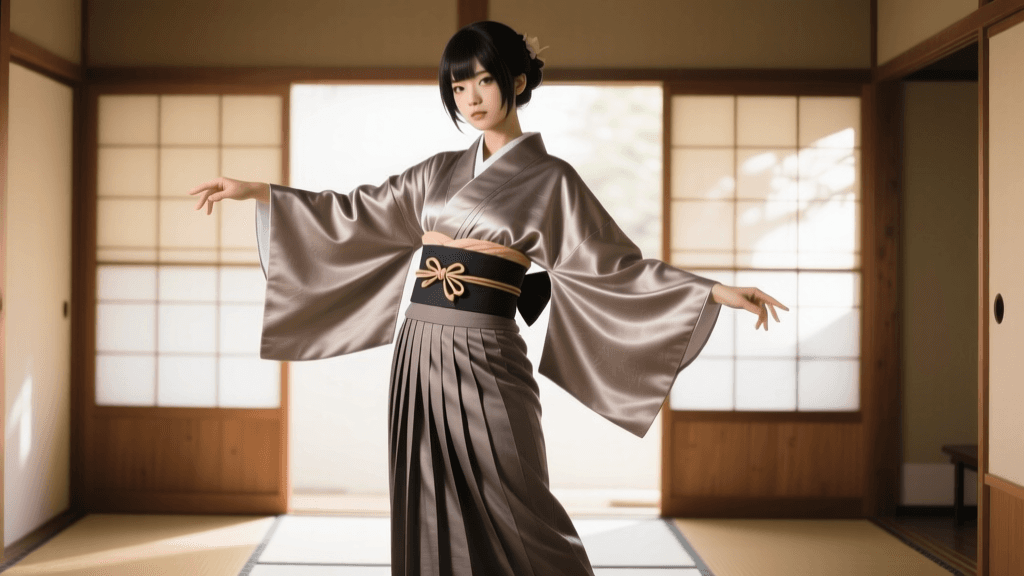
The andon hakama is undivided, constructed more like a pleated maxi skirt. This style is traditionally worn by women or by men in specific non-combat, formal, or academic settings. In anime, characters like Saber from Fate/stay night or various shrine maidens and scholars often wear styles that mimic the andon silhouette. While beautiful and elegant, the andon hakama restricts wide stances and running. If your character requires acrobatics, avoid the andon style, even if the character art makes the legs look fused together.
Fabric Selection: Silk vs. Poly-Tetron for Conventions
One of the most common mistakes amateur cosplayers make is prioritizing screen-accurate materials over convention practicality. Traditional hakama are crafted from silk, which offers an unparalleled drape and a luxurious sheen. However, silk is highly susceptible to water stains, sweat damage, and snagging—hazards that are guaranteed at a crowded anime convention.
For cosplay and modern martial arts (like Kendo and Aikido), the industry standard is Tetron, a specialized blend of polyester and rayon. Tetron is engineered to hold stiff, razor-sharp pleats while resisting wrinkles and moisture. Below is a detailed comparison to help you choose the right fabric for your build.
| Feature | Traditional Silk Hakama | Poly-Tetron Cosplay Hakama |
|---|---|---|
| Cost | $150 - $350+ | $45 - $90 |
| Weight & Drape | Heavy, drapes luxuriously, flows beautifully in wind | Lightweight, holds stiff and structured pleats |
| Washability | Dry Clean Only (High maintenance) | Machine Washable (Cold water, hang dry) |
| Sweat Resistance | Low (Water stains permanently ruin the silk) | High (Moisture wicks and dries without staining) |
| Convention Suitability | Low (High risk of damage from crowds and weather) | High (Durable, wrinkle-resistant, travel-friendly) |
Mastering the Pleats (Hida): Ironing and Storage
The defining feature of the hakama is its hida (pleats). A standard formal hakama has exactly seven pleats: five in the front (mae-hida) and two in the back (ushiro-hida). Maintaining these pleats is the difference between a samurai and someone wearing a crumpled skirt.
Ironing Techniques for Poly-Tetron
Never iron a hakama freehand. You will inevitably iron a pleat in the wrong direction, creating a messy, zig-zag pattern that is incredibly difficult to fix. Follow this actionable routine:
- Prep: Lay the hakama flat on an ironing board. Align the side seams perfectly.
- Clip: Use metal binder clips to secure the top and bottom edges of each individual pleat to the ironing board cover. This locks the fold in place.
- Protect: Place a damp pressing cloth (a clean cotton towel or muslin) over the fabric. Poly-tetron can melt or develop a shiny burn mark if exposed to direct, dry heat.
- Press: Use an iron on a medium-low synthetic setting. Press down firmly and lift; do not slide the iron back and forth, as this will stretch the fabric and distort the pleat lines.
Proper Storage
When traveling to a convention, never ball up your hakama. Traditional practitioners use a hakama-ita (a specialized folding board) to store the garment flat. For cosplayers, you can mimic this by folding the hakama along its natural pleat lines, rolling it loosely around a pool noodle or a cardboard tube, and placing it in a garment bag. This prevents deep creases from forming in the hotel suitcase.
Step-by-Step: Tying the Koshihimo for All-Day Wear
The hakama is secured using four ties (himo): two long ties in the front and two shorter ties in the back. Tying them correctly is vital. If tied too loosely, the heavy garment will slide down your hips throughout the day, causing you to constantly hike it up. If tied too tightly, you will restrict your diaphragm and risk fainting on the convention floor.
The historical evolution and intricate construction of Japanese clothing ties and garments are well-documented in textile archives, such as those maintained by the Victoria and Albert Museum's Asian collections, which highlight the engineering brilliance of traditional Japanese dress without the use of buttons or zippers.
- Positioning: Put on your kimono and secure it with a waist tie. Hold the hakama up to your body. The top edge (the koshiita or rigid back board) should rest exactly at your belly button, while the hem should graze the top of your ankle bone.
- Front Ties: Wrap the two long front ties around your waist to the back. Cross them over each other at the small of your back, then bring them back around to the front.
- The Knot: Tie a secure square knot at the front, just below the belly button. Ensure the tension is firm but allows you to take a deep breath.
- Back Ties: Thread the two shorter back ties through the loop created by the front ties. Pull them tight to secure the rigid back board against your spine.
- Finishing: Tie the back ties in a neat bow or knot at the front, tucking any excess fabric neatly under the main knot to keep the silhouette clean and screen-accurate.
Footwear and Accessories: Tabi, Zori, and Waraji
A hakama cosplay is incomplete without the correct footwear. Traditional Japanese footwear requires specific split-toe socks known as tabi. For cosplays involving samurai, ronin, or demon slayers, you will likely need zori (straw or foam sandals) or waraji (woven straw rope sandals).
Sizing Advice: Unlike Western shoes, traditional zori and waraji should be slightly smaller than your actual foot. The heel should hang off the back edge by about 0.5 to 1 centimeter. If the sandal is too long, the back edge will catch on the hem of your hakama, causing you to trip and potentially tearing the fabric. Furthermore, break in your tabi and sandals at home for at least three hours a day for a week before the convention. The stiff fabric between the toes (the hanao) will cause severe blisters if worn for eight hours straight without prior conditioning.
Cultural Respect and Final Thoughts
While anime and manga are modern pop-culture phenomena, the garments they depict are steeped in centuries of Japanese history, social hierarchy, and artisanal craftsmanship. The Japan National Tourism Organization frequently highlights the ongoing revival and deep cultural significance of traditional wear in modern Japan, noting that these garments are symbols of heritage rather than mere costumes.
As a cosplayer, taking the time to learn how to properly fold, tie, and respect the hakama demonstrates a profound appreciation for the culture that inspired your favorite media. By investing in the right poly-tetron fabrics, mastering the seven pleats, and tying your himo with precision, you ensure that your anime cosplay is not only visually stunning and convention-ready but also a respectful tribute to the art of traditional Japanese garment styling.