Shichi-Go-San Kimono Guide: Sizing, Costs and Traditions
Introduction to Shichi-Go-San
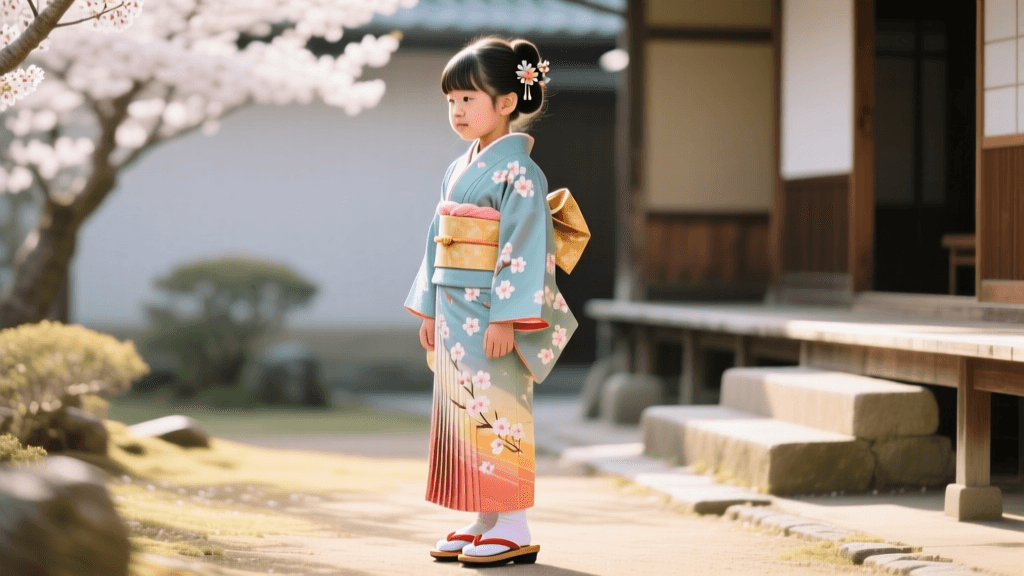
In the rich tapestry of Japanese cultural heritage, few coming-of-age traditions are as visually stunning and deeply meaningful as Shichi-Go-San (Seven-Five-Three). Celebrated annually, this milestone festival honors the growth and well-being of children at the ages of three, five, and seven. For families, it is a profound rite of passage, marked by visits to Shinto shrines and the wearing of exquisite, traditional children's kimono. As a foundational aspect of Japanese garment culture, the Shichi-Go-San kimono represents a bridge between historical aristocracy and modern familial devotion. Understanding the nuances of these garments, from precise sizing to the intricate layering systems, is essential for anyone studying or participating in this vibrant Asian tradition.
Historical Origins and the Meaning of the Ages
The roots of Shichi-Go-San trace back to the Heian period (794–1185), though it was during the Edo period (1603–1867) that it became widespread among the merchant and samurai classes. The specific ages are not arbitrary; they correspond to critical developmental milestones in a child's life, historically tied to the high infant mortality rates of the era. According to the Ministry of Foreign Affairs of Japan, children under the age of seven were traditionally considered the 'children of the gods,' and surviving past these ages was cause for immense celebration.
- Age Three (Kamioki): Both boys and girls celebrate the 'leaving of the hair' ceremony, where infants' shaved heads are allowed to grow out for the first time.
- Age Five (Hakamagi): Boys celebrate wearing their first hakama (pleated trousers), symbolizing their entry into the public sphere and male societal roles.
- Age Seven (Obitoki): Girls celebrate replacing the simple cords used to tie their kimono with a proper, adult-style obi sash, marking their transition into young womanhood.
The Garments: Dressing for the Milestone
The garments worn during Shichi-Go-San are meticulously chosen to reflect the child's age, gender, and the formality of the shrine visit. Unlike everyday wear, these ensembles are heavily layered and feature auspicious motifs such as cranes, pine trees, and peonies, which symbolize longevity and prosperity.
Three-Year-Old Girls
At age three, girls typically wear a bright, long-sleeved kimono paired with a hifu—a padded, sleeveless silk vest worn over the obi. The hifu was originally popularized by Edo-period geisha but became standard for young children because it is softer and more comfortable than a tightly tied obi. The ensemble is often completed with a kake-obis (a narrow, decorative obi) and a large, decorative bow at the back.
Five-Year-Old Boys
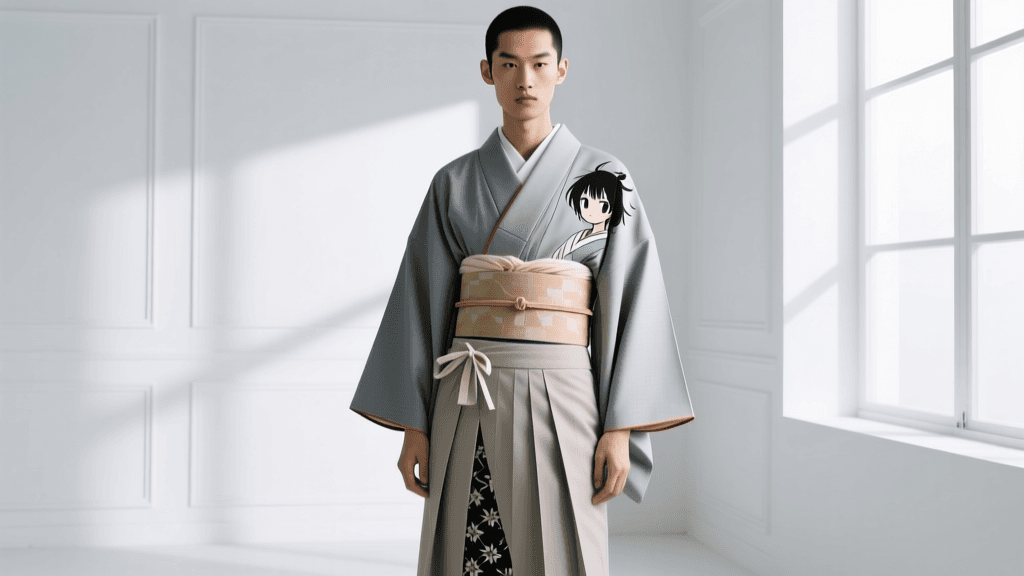
Five-year-old boys don their first formal hakama and haori (jacket). The hakama is usually a stiff, striped silk in dark colors like navy, charcoal, or olive, while the haori features the family crest (kamon) on the back and sleeves. Beneath the hakama, the boy wears a kimono, often in a lighter color or featuring bold, boyish motifs like eagles or samurai helmets.
Seven-Year-Old Girls
Seven-year-old girls wear a garment that closely resembles an adult women's kimono, specifically the furisode style with long, swinging sleeves. The most significant difference is the shigoki, a bright red silk sash tied at the waist over the obi. The shigoki serves both a practical purpose (gathering up the excess length of the kimono skirt) and a symbolic one, acting as a talisman against evil spirits.
Sizing and Measurements for Children's Kimono
Fitting a kimono is vastly different from Western clothing. Kimono are not tailored to exact body contours; instead, they are wrapped and folded to fit the wearer. For children, the primary measurements are the yuki (the length from the center back of the neck, over the shoulder, to the wrist) and the mitake (the length from the shoulder to the ankle). Because children grow rapidly, kimono are constructed with deep tucks (tsuma) that can be let out as the child grows.
Standard Measurement Chart
| Age | Average Height (cm) | Yuki Length (cm) | Mitake Length (cm) | Standard Kimono Size |
|---|---|---|---|---|
| 3 Years | 90 - 100 | 38 - 41 | 55 - 60 | San-sai (Size 3) |
| 5 Years | 105 - 115 | 43 - 46 | 65 - 70 | Go-sai (Size 5) |
| 7 Years | 115 - 125 | 48 - 51 | 75 - 80 | Nana-sai (Size 7) |
Note: When measuring a child for a rental or custom kimono, always measure from the prominent vertebra at the base of the neck (the C7 vertebra) to ensure the yuki is accurate. The sleeves should ideally end at the wrist bone, though for young children, slightly longer sleeves are acceptable for aesthetic draping.
Buying vs. Renting: Costs and Practical Advice
Acquiring a Shichi-Go-San kimono is a significant financial decision. High-quality silk garments are heirloom investments, but modern synthetic alternatives and rental services have made the tradition accessible to a broader demographic. According to data from the Japan National Tourism Organization, traditional cultural experiences, including kimono rentals, are highly structured and cater extensively to both locals and international visitors.
Cost Comparison Table
| Item / Package | Purchase Cost (JPY) | Rental Cost (JPY) | Practical Notes |
|---|---|---|---|
| 3-Year-Old Girl Set | ¥30,000 - ¥150,000 | ¥8,000 - ¥15,000 | Rental usually includes hifu, zori, and basic dressing. |
| 5-Year-Old Boy Set | ¥40,000 - ¥200,000 | ¥10,000 - ¥18,000 | Silk hakama purchases are costly; polyester rentals are durable for active boys. |
| 7-Year-Old Girl Set | ¥80,000 - ¥350,000+ | ¥15,000 - ¥25,000 | 7yo sets require complex obi tying; professional dressing is highly recommended. |
| Professional Dressing | N/A | ¥3,000 - ¥5,000 | Often bundled with rental; essential for 7yo girls and 5yo boys. |
| Hair & Makeup (Girls) | N/A | ¥3,000 - ¥6,000 | Traditional Nihongami styling takes 45-60 minutes. |
Actionable Advice: If you plan to rent, book your appointment between May and July. November is the peak season, and popular kimono studios near major shrines like Meiji Jingu in Tokyo or Yasaka Shrine in Kyoto book out months in advance. If purchasing, consider a high-quality polyester (shosen) kimono. Modern washable silks and polyesters mimic the luster of traditional yuzen dyed silk but can withstand the inevitable spills and stains that come with dressing a young child.
Essential Accessories for the Ceremony
The kimono is only the foundation of the Shichi-Go-San ensemble. The accessories carry deep symbolic weight and complete the visual harmony of the outfit.
- Hakoseko: A small, decorative, mirror-like pouch tucked into the front collar of a 7-year-old girl's kimono. Historically used to hold a small mirror or tissue, it now serves as a purely ornamental good-luck charm.
- Sensu (Fan): Both boys and girls carry a small, folding paper fan. For boys, it is tucked into the hakama; for girls, it is held or tucked into the obi. It symbolizes a bright, expanding future.
- Zori and Tabi: Traditional straw or vinyl sandals (zori) worn with split-toe white cotton socks (tabi). For 3-year-olds, the zori often feature a soft, velvet-like strap to prevent blistering.
- Kanzashi: Elaborate hair ornaments worn by girls. For Shichi-Go-San, these are often adorned with tortoiseshell, silk flowers, or dangling ornaments (birakan) that chime softly when the child moves.
Timing, Booking, and Shrine Etiquette
The official date for Shichi-Go-San is November 15th. However, because this date rarely falls on a weekend, most families visit shrines on the weekends throughout October and November. When visiting a shrine, proper etiquette must be observed. Families first purify themselves at the temizuya (water pavilion), bow at the torii gate, and proceed to the main hall.
For the formal blessing (kitō), families make an offering called hatsuhoryō, typically ranging from ¥5,000 to ¥10,000. In return, the shrine priest performs a purification ritual and presents the child with chitose-ame (thousand-year candy). This long, thin, red-and-white candy is packaged in a bag featuring cranes and turtles, symbolizing a wish for the child's long and healthy life.
Conclusion
The Shichi-Go-San festival is a breathtaking display of Japan's sartorial heritage. From the meticulously measured yuki of a 5-year-old's hakama to the vibrant shigoki of a 7-year-old's furisode, these garments are more than mere clothing; they are woven prayers for a child's future. Whether you are a cultural enthusiast, a textile collector, or a parent preparing for this milestone, understanding the deep traditions and practicalities of children's kimono ensures that this beautiful coming-of-age rite continues to thrive in the modern era.