Su, Shu, and Yue: The Ultimate Chinese Embroidery Guide
The Legacy of Chinese Silk and Needlework
The art of Chinese embroidery and textile dyeing represents a profound intersection of nature, mathematics, and cultural storytelling. Recognized globally for its unparalleled craftsmanship, Chinese sericulture and silk craftsmanship have even been inscribed on the UNESCO Intangible Cultural Heritage list. For modern enthusiasts of Hanfu and traditional Asian garments, understanding the nuances of regional embroidery schools and botanical dyeing techniques is essential for building an authentic, high-quality wardrobe. Rather than viewing these textiles merely as decorative, collectors and practitioners must appreciate the hundreds of hours of labor, specific regional climates, and ancestral formulas that bring these garments to life.
Su Embroidery (Suzhou): The Pinnacle of Delicacy
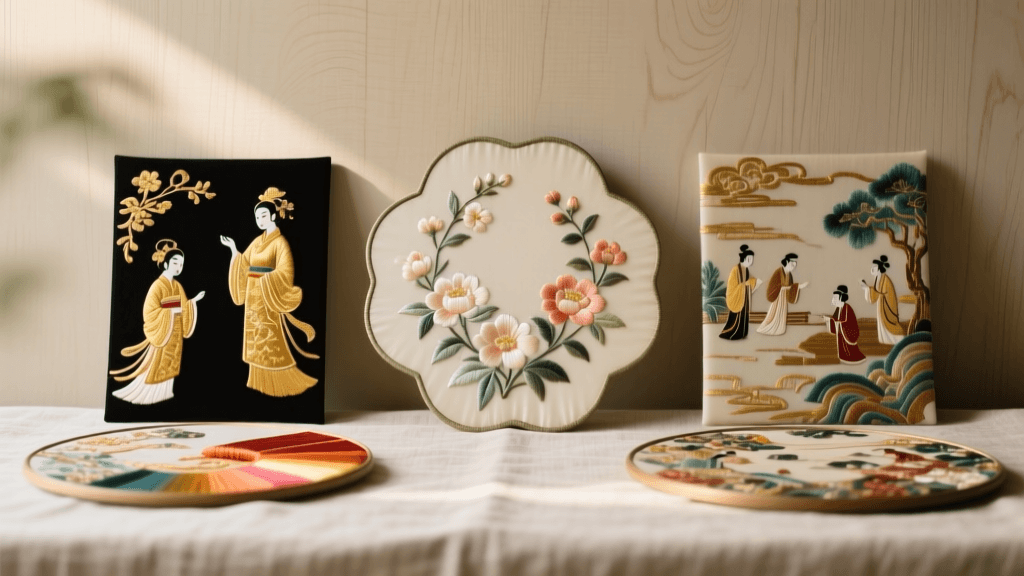
Originating from the water towns of Jiangsu Province, Su embroidery (Su Xiu) is celebrated for its delicate patterns, elegant colors, and meticulous needlework. The hallmark of authentic Su embroidery is the artisan's ability to split a single strand of silk thread into multiple microscopic filaments—sometimes up to 48 strands—to achieve gradients so subtle they mimic traditional ink wash paintings. According to the Metropolitan Museum of Art's Heilbrunn Timeline of Art History, the Jiangnan region's damp climate and abundant mulberry trees created the perfect environment for cultivating the ultra-fine silk required for this art form.
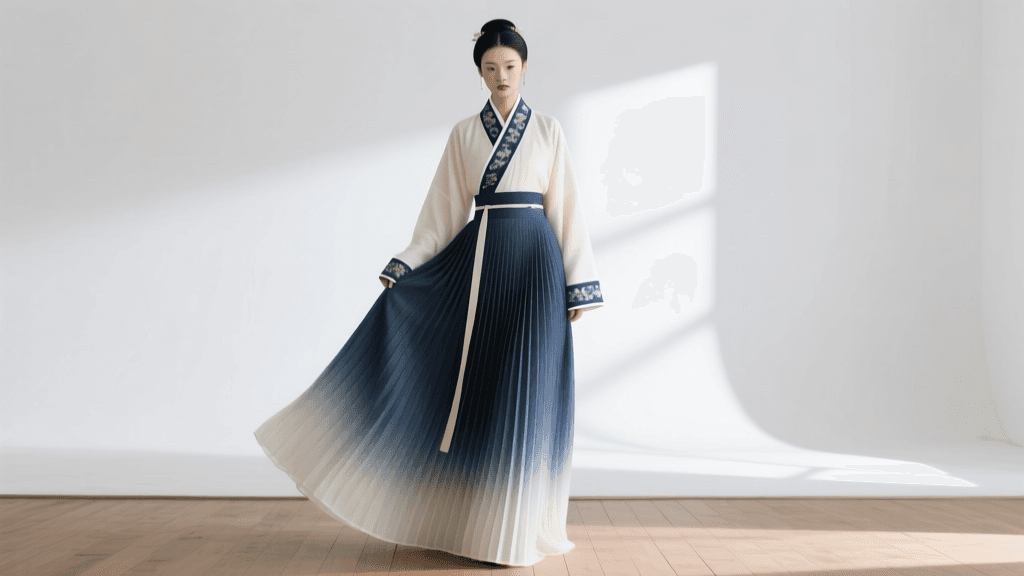
The most prized technique within this school is double-sided embroidery (shuangmian xiu), where the artisan hides all knots and thread ends so that the motif—often a koi fish, peony, or swallow—appears identical and flawless on both sides of a translucent silk screen. When incorporating Su embroidery into a modern wardrobe, it is best utilized on delicate Ming-style Aoqun (jacket and skirt ensembles) or as standalone silk shawls measuring 70x70 inches. Due to the intense labor, a genuine hand-embroidered Su silk shawl typically starts at $300, while master-level double-sided framed pieces can easily exceed $5,000.
Shu Embroidery (Sichuan): Boldness Woven in Satin
Shu embroidery (Shu Xiu) hails from Chengdu in Sichuan Province and offers a striking contrast to the pastel subtlety of Suzhou. Shu artisans favor soft, thick satin fabrics and utilize a unique 'yin-yang' stitching technique that creates a textured, almost three-dimensional surface. The color palette is heavily influenced by the region's vibrant natural dye sources, relying on deep carmine reds, rich indigo blues, and vibrant greens. Shu embroidery is famous for its depictions of giant pandas, lotus flowers, and roaring tigers, utilizing a specialized halo-stitch to capture the soft, dense fur of animals.
For practical wardrobe integration, Shu embroidery is highly durable and often used for structured Hanfu jackets, winter cloaks (doupeng), and decorative drawstring pouches. Because the stitches are tighter and the backing fabric is heavier, Shu pieces are more resistant to wear and tear than their Su counterparts. A high-quality, hand-stitched Shu brocade pouch (measuring roughly 6x8 inches) generally costs between $40 and $80, making it an accessible entry point for collectors wanting authentic regional needlework.
Yue Embroidery (Cantonese): Metallic Splendor and Structure
Yue embroidery (Yue Xiu), encompassing both Guangzhou and Chaozhou styles from Guangdong Province, is the most theatrical and structurally complex of the major schools. Yue artisans specialize in 'panjin' (gold and silver thread couching), where metallic threads are laid flat on the surface of the fabric and stitched down with fine silk. To create dramatic, raised textures, artisans use cotton padding beneath the embroidery, giving dragons, phoenixes, and bats a striking 3D effect that catches the light dynamically.
This technique is the undisputed standard for traditional Cantonese wedding dresses, known as 'qun kwa'. A bespoke, hand-embroidered qun kwa featuring dense gold dragon and phoenix motifs can weigh over 10 pounds and take a team of artisans up to two years to complete, with market prices ranging from $15,000 to over $50,000. For everyday traditional styling, smaller Yue-embroidered collars, cuff accents, and horse-face skirt (mamianqun) panels offer a touch of metallic grandeur without the overwhelming weight of full bridal wear.
Traditional Dyeing: Xiangyunsha and Botanical Vats
Embroidery is only half of the textile equation; the foundation of any traditional garment lies in its dye. The most exclusive and highly sought-after traditional dyeing technique today is Xiangyunsha (gambiered gauze). Originating in the Pearl River Delta, this process transforms raw silk into a dark, lustrous, and water-resistant fabric that rustles like paper when worn. The creation of Xiangyunsha requires a grueling 14-step process spanning over 30 days. Artisans repeatedly soak the silk in the astringent juice of the Dioscorea cirrhosa tuber, sun-bake it on grassy fields, and finally coat it in the iron-rich mud of local riverbeds. The chemical reaction between the tannins in the tuber juice and the iron in the mud creates the fabric's signature deep black-brown hue.
Because the process relies entirely on intense sunlight and specific mineral compositions, Xiangyunsha can only be produced between March and November. Authentic Xiangyunsha fabric costs between $80 and $150 per yard. When purchasing, look for the subtle, uneven crackling patterns on the surface—a hallmark of the natural mud-dyeing process that machine-printed fakes cannot replicate.
Comparative Analysis: The Three Great Schools
| Embroidery School | Origin Region | Defining Technique | Common Motifs | Best Garment Application |
|---|---|---|---|---|
| Su (Suzhou) | Jiangsu Province | Thread splitting, double-sided stitching | Koi, peonies, swallows | Delicate Ming-style Aoqun, silk shawls |
| Shu (Sichuan) | Sichuan Province | Satin stitch, soft silk backing | Giant pandas, lotus, tigers | Structured Hanfu jackets, winter cloaks |
| Yue (Cantonese) | Guangdong Province | Metallic couching, 3D cotton padding | Dragons, phoenixes, bats | Qun Kwa wedding dresses, mamianqun panels |
Actionable Guide: Building and Caring for Your Collection
When sourcing traditional Chinese textiles, distinguishing between hand-embroidered masterpieces and machine-made replicas is crucial. Hand embroidery will show slight, organic irregularities on the reverse side of the fabric, and the thread will have a natural, multi-directional sheen. Machine embroidery often uses synthetic rayon threads that shine uniformly and leave a rigid, grid-like pattern of interlocking stitches on the back.
Proper care is non-negotiable for preserving these investment pieces. Never machine-wash embroidered silk or Xiangyunsha. For spot cleaning, use a damp microfiber cloth with a pH-neutral silk detergent, dabbing gently without rubbing the metallic or split-silk threads. When storing your garments, avoid hanging heavy embroidered pieces like qun kwa or densely stitched mamianqun, as the weight of the embroidery will warp the silk warp-and-weft over time. Instead, fold the garments loosely and store them flat in breathable, acid-free cotton garment bags. Avoid cedar wood closets, as the acidic oils in cedar can alter the protein structure of silk and degrade natural botanical dyes like indigo and madder root.
By understanding the distinct characteristics of Su, Shu, and Yue embroidery, alongside the alchemical magic of traditional dyeing, collectors and practitioners can curate a wardrobe that honors the profound legacy of Asian textile arts. Whether you are investing in a delicate Su shawl or a dramatic Cantonese skirt panel, each piece serves as a wearable archive of history, geography, and unparalleled human skill.