Guizhou Miao Traditional Dress: Silver & Embroidery Guide
The Living Archive: Introduction to Miao Provincial Dress
Nestled in the misty, karst mountain ranges of southwestern China's Guizhou Province, the Miao (Hmong) people have cultivated one of the most visually stunning and technically complex sartorial traditions in Asia. Because the Miao lacked a widely used written language for much of their history, their garments became a living archive. Every stitch, motif, and silver ornament encodes centuries of ancestral migration, mythological beliefs, and clan identity. Today, Miao traditional dress is not merely a relic of the past; it is a vibrant, evolving expression of cultural pride, heavily centered around regional folk customs and provincial festivals.
For textile collectors, cultural travelers, and fashion historians, understanding Miao dress requires looking beyond the surface. It demands an appreciation of the grueling labor behind indigo fermentation, the mathematics of micro-pleating, and the metallurgy of village silversmiths. This guide provides a deep dive into the anatomy of Miao regional dress, complete with practical advice on sourcing, attending festivals, and understanding the true costs of authentic craftsmanship.
The Anatomy of a Miao Festival Outfit
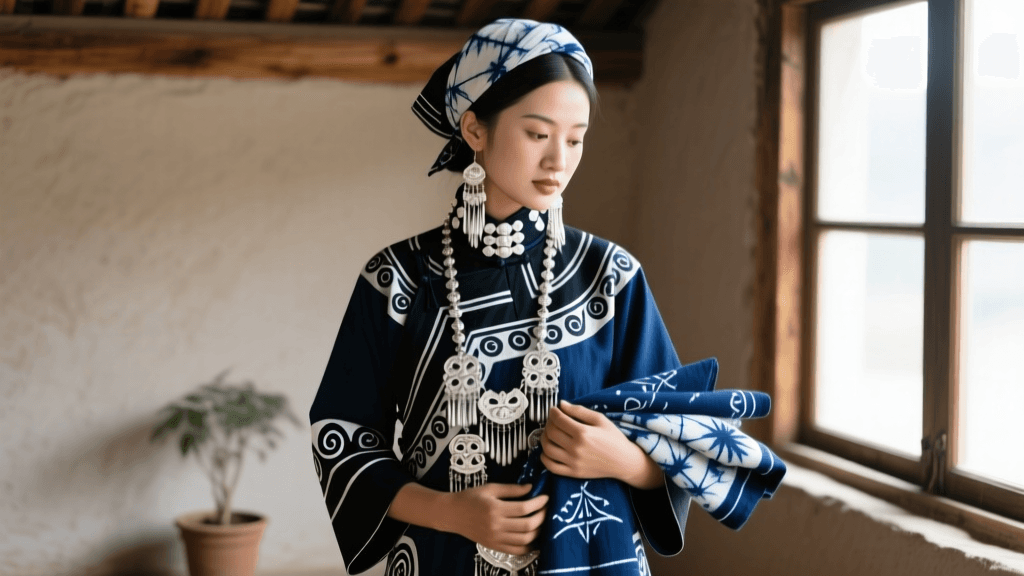
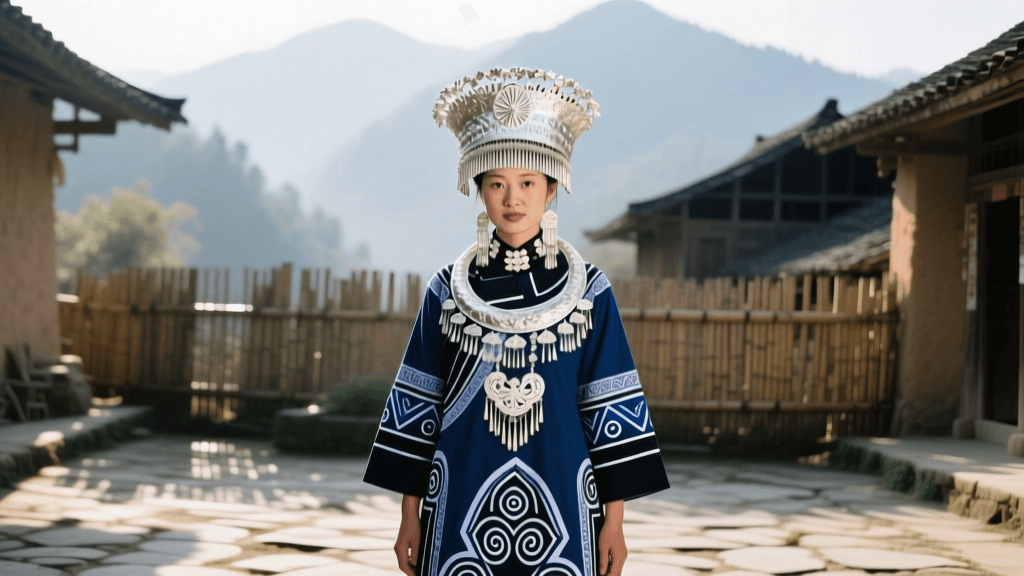
A full Miao festival ensemble is a masterpiece of mixed media, combining heavy metallurgy with delicate textile arts. The outfit is generally divided into two primary categories of adornment: silverwork and embroidered textiles.
Silver Ornaments: Weight, Craftsmanship, and Cost
In Miao culture, silver represents light, purity, and spiritual protection against malevolent mountain spirits. A woman's full festival silver regalia can weigh between 5 to 10 kilograms (11 to 22 lbs). The most iconic piece is the yin jiao (silver horn headdress), which mimics the horns of the water buffalo—an animal deeply revered for its role in terraced rice farming.
- Techniques: Village silversmiths (a traditionally male-dominated craft) use repoussé, filigree, and chasing. They hammer silver into sheets as thin as 0.2mm and draw wires down to 0.5mm for intricate braiding.
- Key Pieces: The yin xiang quan (multi-tiered neck ring), silver hairpins, and bodice plaques adorned with bells that chime rhythmically during the Lusheng (bamboo pipe) dances.
- Cost Breakdown: Authentic Miao silver is typically 999 pure silver. As of recent market rates, raw silver costs around 6-8 RMB per gram, but artisan labor adds 15-30 RMB per gram. A 6 kg festival set can cost between 120,000 and 200,000 RMB ($16,500 - $27,500 USD).
Textiles: Indigo, Batik, and the Mythological Stitch
The foundation of Miao clothing is hand-woven cotton, dyed in deep, shimmering vats of indigo. The dyeing process is a biochemical marvel: indigo root is fermented with wood ash, rice wine, and sometimes pig's blood to achieve a dark, metallic-sheen finish known as liang bu (shiny cloth).
Upon this canvas, Miao women apply two primary decorative techniques:
- Batik (lazhan): Using a specialized brass pen called a ladao, artisans draw intricate geometric and floral patterns with melted beeswax. The cloth is submerged in indigo, and the wax is later boiled off to reveal crisp white patterns against the blue.
- Embroidery (ci xiu): Miao embroidery features over a dozen distinct stitches. The zhou xiu (seed or wrinkled stitch) creates a 3D, braided texture, while ping xiu (flat stitch) is used for sweeping mythological scenes. Common motifs include the 'Butterfly Mother' (the mythical progenitor of the Miao people), dragons, and aquatic birds.
"The Miao wear their history on their sleeves. Every stitch is a map of their ancestral migration across the Yellow and Yangtze rivers, and every silver horn represents the reverence for the water buffalo that plowed their mountain terraces." — Provincial Folklore Archivist.
Regional Variations: A Comparison Chart
Guizhou's rugged terrain historically isolated villages, leading to hyper-localized dress codes. Institutions like the British Museum have extensively documented these micro-regional variations in their Asian textile archives. Below is a comparison of four major regional styles:
| Region / Branch | Skirt Style & Measurements | Headdress & Silver | Key Motif & Technique | Best Festival to Visit |
|---|---|---|---|---|
| Xijiang (Leishan) Long Skirt Miao | Maxi-length pleated skirt (up to 80cm), requiring 20m of fabric. | Massive silver horn headdress; heavy tiered neck rings. | Butterfly Mother; heavy use of flat-stitch silk embroidery. | Miao New Year (Nov/Dec) |
| Danzhai Short Skirt Miao | Micro-pleated mini skirt (15-20cm long), worn over embroidered leggings. | Silver floral combs and smaller, intricate hairpins. | Rooster and dragon motifs; renowned for geometric beeswax batik. | Lusheng Festival (Oct/Nov) |
| Taijiang Black Miao | Mid-calf skirt with wide, heavily embroidered apron panels. | Silver crowns resembling phoenixes rather than buffalo horns. | Dragons and water buffalo; famous for 'braid stitch' embroidery. | Sisters' Meal Festival (April) |
| Rongjiang White Miao | Trousers instead of skirts; heavily embroidered cross-stitch leggings. | Minimal silver; focus on elaborate, brightly colored turbans. | Abstract geometric cross-stitch; bright pinks and greens. | Grain in Ear Festival (June) |
Practical Guide: Attending Festivals and Sourcing Authentic Pieces
For those looking to experience Miao culture firsthand or acquire authentic provincial garments, timing, location, and an educated eye are essential. Travel and cultural organizations such as China Highlights note that festival dates follow the lunar calendar, meaning they shift annually on the Gregorian calendar.
Timing Your Visit: The Festival Calendar
- The Sisters' Meal Festival (Mid-April): Held primarily in Taijiang and surrounding counties, this is essentially a Miao Valentine's Day. Women don their heaviest silver and most vibrant embroidered jackets to dance in the village squares. It is the best time to see the Taijiang phoenix crowns and intricate apron panels.
- The Lusheng Festival (Post-Harvest, Oct-Nov): Celebrated in Danzhai and Kaili, this festival focuses on music and courtship. The short-skirt Miao women perform rapid, rhythmic dances, allowing observers to study the structural engineering of the micro-pleated skirts, which are set using ox-hide glue and egg whites to maintain their stiffness.
Sourcing and Commissioning: Costs and Measurements
Buying authentic Miao textiles and silver requires navigating a market flooded with machine-made tourist souvenirs. Here is how to source genuine provincial folk dress:
- Identifying Hand-Embroidery: Turn the garment inside out. Machine embroidery uses a continuous bobbin thread, leaving a flat, uniform back. Hand-embroidery, particularly the zhou xiu (seed stitch), will show individual knotting, slight irregularities, and a textured, raised reverse side.
- Commissioning a Jacket: If you wish to commission a bespoke embroidered jacket from a village artisan in Xijiang or Taijiang, expect to provide your exact shoulder, bust, and sleeve measurements in centimeters. A fully hand-embroidered festival jacket takes 6 to 14 months to complete. Prices range from 8,000 RMB for a simple daily-wear jacket to over 35,000 RMB ($4,800 USD) for a masterwork festival piece using silk threads and silver-foil backing.
- Purchasing Silver: Always buy from established village cooperatives or verified silversmiths in Kaili. Ask for the chun yin (pure silver) hallmark. Authentic Miao silver is soft; if a hairpin bends easily and lacks the sharp, rigid snap of sterling silver or aluminum, it is likely genuine 999 silver.
Care and Preservation of Provincial Textiles
Indigo-dyed cotton and antique silk threads require specialized care. Never wash authentic liang bu (shiny indigo cloth) in a machine or with alkaline detergents, as this strips the metallic sheen and the protective ox-hide glaze. Instead, spot clean with cold water and a pH-neutral soap. Store silver ornaments wrapped in anti-tarnish cloth, separated from the textiles, as the sulfur in some natural dyes can accelerate silver oxidation.
Preserving the Heritage
The rapid urbanization of China's rural provinces has threatened the transmission of these highly specialized skills. Younger generations are increasingly moving to coastal cities for work, leaving fewer apprentices to tend the indigo vats or hammer the silver horns. However, there is a resilient revival movement underway. The push to safeguard these techniques aligns with UNESCO's Intangible Cultural Heritage initiatives, which have recognized the vital importance of Miao epic poetry and textile crafts.
Social enterprises and fashion cooperatives in Guizhou are now partnering with international designers to integrate Miao embroidery into contemporary haute couture, providing a sustainable income for village women. By understanding the profound history, regional variations, and true material costs of Miao traditional dress, collectors and travelers can support these communities ethically, ensuring that the Miao continue to wear their magnificent, living history for generations to come.