The Ultimate Hanfu Travel Guide for Destination Photoshoots
The Intersection of Heritage and Modern Travel
The intersection of traditional Chinese clothing and modern travel has given rise to a spectacular cultural phenomenon. Across China, ancient city walls, serene temple gardens, and bustling historical streets are increasingly filled with travelers adorned in Hanfu, the traditional dress of the Han Chinese. This is not merely a fleeting trend; it is a profound expression of cultural identity and aesthetic appreciation. For the modern traveler and digital content creator, embarking on a Hanfu tourism journey offers a unique opportunity to step back in time while creating breathtaking visual content for platforms like Xiaohongshu (Little Red Book) and Douyin.
The ongoing revival of traditional clothing, frequently covered by the South China Morning Post's Culture Desk, highlights how younger generations are reclaiming their sartorial heritage. This movement, known as 'Guochao' or national trend, has transformed historical sites into immersive, living museums where visitors do not just observe history—they wear it, live it, and share it with the world. Whether you are a seasoned Hanfu enthusiast or a curious traveler looking to elevate your vacation photography, understanding the nuances of destination styling, rental logistics, and social media trends is essential for a flawless experience.
Top Destinations for Hanfu Photoshoots
Choosing the right destination is critical, as different cities boast distinct architectural styles that pair best with specific historical eras of Hanfu. Below is a comprehensive comparison of China's premier Hanfu tourism hubs.
| Destination | Recommended Era & Style | Best Landmarks for Photography | Avg. Rental & Makeup Cost (RMB) |
|---|---|---|---|
| Xi'an | Tang Dynasty (Qixiong Ruqun, large sleeves, bold makeup) | Datang Everbright City, Ancient City Wall, Huaqing Palace | 150 - 350 |
| Hangzhou | Song Dynasty (Beizi, pleated skirts, minimalist elegance) | West Lake, Lingyin Temple, Xixi National Wetland Park | 120 - 280 |
| Luoyang | Wei/Jin or Tang (Flowing silhouettes, ethereal Xianxia vibes) | Longmen Grottoes, Luoyang Museum, Lijing Gate | 100 - 250 |
| Beijing | Ming Dynasty (Mamianqun, Aoqun, structured and regal) | The Forbidden City, Temple of Heaven, Jingshan Park | 180 - 400 |
Xi'an: The Tang Dynasty Dream
Xi'an, the ancient capital of Chang'an, is the undisputed mecca for Tang Dynasty aesthetics. The city's Datang Everbright City is specifically designed to mimic the prosperous Tang era, complete with towering pagodas, lantern-lit streets, and nightly performances. Here, the Qixiong Ruqun (chest-high skirt) is the most popular choice, characterized by its vibrant colors, wide sleeves, and flowing silk ribbons. The warm, golden lighting of the city at night provides a cinematic backdrop that requires minimal editing for social media.
Hangzhou: Song Dynasty Elegance
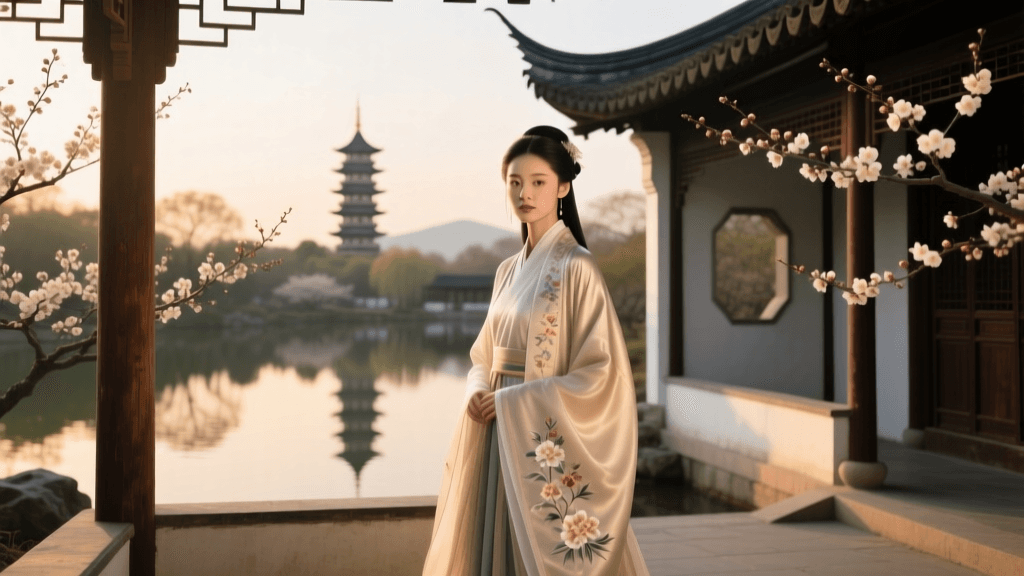
For a more subdued, intellectual, and refined aesthetic, Hangzhou offers the perfect setting for Song Dynasty Hanfu. The Beizi (a long, open-front overcoat) paired with delicate pleated skirts reflects the understated elegance favored by the Song elite. The misty shores of West Lake and the bamboo-lined paths of Lingyin Temple provide a natural, ethereal lighting that aligns perfectly with the traditional Chinese landscape painting aesthetic highly prized on Xiaohongshu.
Renting vs. Buying: Logistics for the Traveler
While dedicated enthusiasts often travel with their own meticulously curated wardrobes, renting is the most practical and popular option for destination tourists. The Hanfu rental industry in cities like Xi'an and Luoyang is highly developed, offering all-inclusive packages that eliminate the stress of packing voluminous garments and complex hairpieces.
- The Rental Package: A standard package typically includes the Hanfu set (inner garment, skirt, outer robe), a basic hairstyle, traditional makeup, and a selection of accessories like hairpins and hand fans.
- Premium Add-ons: For an additional 100 to 300 RMB, you can upgrade to premium silk garments, intricate historical hairpieces (such as the elaborate Tang dynasty comb crowns), and professional photography services.
- Time Management: Allocate at least two to three hours for the dressing and makeup process. Historical makeup, particularly the application of huadian (forehead decals) and traditional eyebrow shaping, requires precision and time.
- Hygiene and Fit: Reputable shops sanitize garments between uses, but it is advisable to wear your own comfortable undergarments and bring disposable undershirts for hygiene. Most rental shops offer adjustable garments, but travelers with non-standard sizing should inquire about custom fittings in advance.
Institutions like The Palace Museum in Beijing have also played a pivotal role in popularizing historically accurate aesthetics, inspiring rental shops to move away from cheap, anachronistic costumes and toward high-quality, research-backed reproductions.
Social Media Styling: Mastering Xiaohongshu and Douyin
Capturing the perfect Hanfu photo is only half the battle; understanding the algorithms and aesthetic preferences of Chinese social media platforms is crucial for content creators. The 'Xiaohongshu aesthetic' heavily favors soft, diffused lighting, cinematic color grading, and a sense of narrative storytelling.
Trending Aesthetics and Poses
Currently, the Wuxia (martial arts) and Xianxia (immortal heroes) aesthetics are dominating Douyin. To achieve this, creators utilize dynamic poses—mid-air leaps, swirling skirts, and intense, dramatic gazes. Slow-motion video clips capturing the flow of wide sleeves against the wind are highly favored by the algorithm. Conversely, the 'Ming Dynasty scholarly' trend on Xiaohongshu focuses on static, elegant poses, often featuring the subject reading a bamboo scroll, sipping tea, or adjusting a jade hairpin, emphasizing tranquility and refinement.
Essential Props for Viral Content
Props are not just accessories; they are vital tools for solving the common problem of 'what to do with my hands' during a photoshoot.
- Oil-Paper Umbrellas: Essential for Hangzhou and rainy day shoots, adding a touch of melancholic romance.
- Folding Fans and Silk Ribbons: Perfect for creating motion blur and emphasizing the fluidity of the garment.
- Lanterns: Indispensable for night shoots in Xi'an or Luoyang, providing both a historical prop and a practical source of warm, flattering fill light for the face.
- Zanhua (Floral Headdresses):strong> A specific regional trend originating from Xunpu village in Fujian, now seen nationwide, where fresh or silk flowers are densely packed into the hair, creating a striking visual contrast against traditional robes.
Practical Travel Tips for the Hanfu Tourist
Wearing traditional clothing while navigating modern tourist infrastructure presents unique challenges. The Mamianqun (horse-face skirt), while stunning, consists of multiple overlapping pleats that can easily drag on the ground or catch on cobblestones. When ascending the steep steps of the Ancient City Wall or mountain temples, it is crucial to practice the 'skirt lift'—gracefully gathering the front pleats with one hand to prevent tripping or soiling the fabric.
Footwear is another critical consideration. Traditional cloud-shoes or embroidered flats offer zero arch support, which can lead to severe foot fatigue after a full day of exploring. The most practical hack utilized by seasoned Hanfu travelers is to wear modern, cushioned sneakers in neutral colors that match the hem of the skirt, or to insert thick, gel orthotic insoles into traditional embroidered shoes. Furthermore, historical garments are heavily layered. If traveling during the summer months, opt for lightweight, breathable linen blends (often available in Song dynasty styles) and carry a portable, rechargeable hand fan to combat the heat. For winter travel in Beijing, Ming Dynasty styles naturally accommodate modern thermal underlayers due to their structured, voluminous cuts.
Ultimately, traveling in Hanfu is an exercise in cultural immersion. As noted in extensive cultural reports by the China Daily Culture Section, this sartorial revival bridges the gap between ancient craftsmanship and modern identity. By carefully selecting your destination, respecting the historical context of your garments, and leveraging modern social media techniques, you can create a travel experience that is as visually stunning as it is culturally enriching.