The Heian Fashion Legacy: Murasaki Shikibu’s Junihitoe
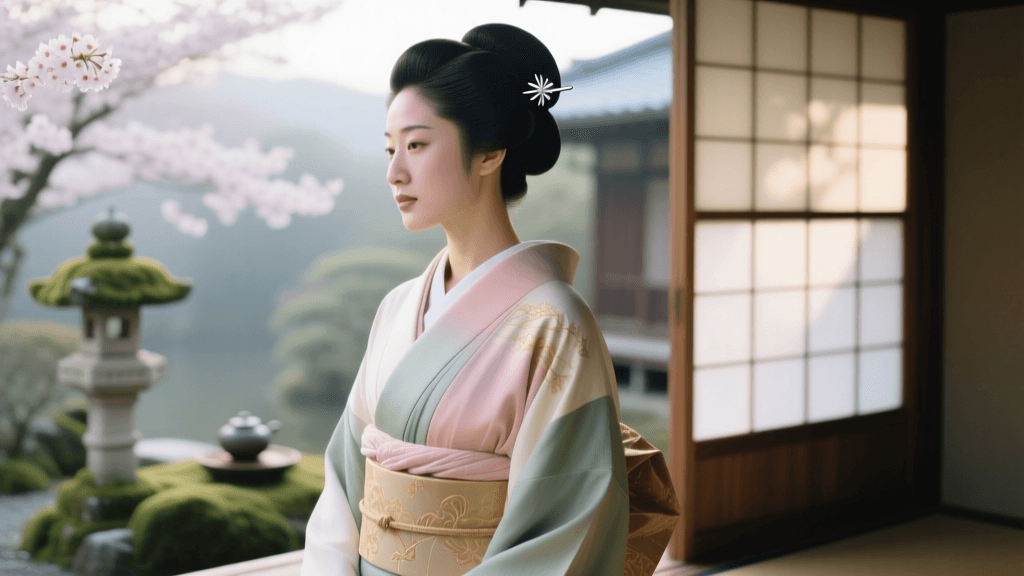
When discussing the pantheon of historical Japanese fashion icons, few figures cast as long and elegant a shadow as Murasaki Shikibu and Sei Shonagon. As the premier literary voices of the Heian period (794–1185), these court ladies did more than write the masterpieces The Tale of Genji and The Pillow Book; they documented, defined, and drove the most sophisticated sartorial culture in early Japanese history. The Heian era marked a deliberate shift away from Chinese-influenced clothing toward an indigenous aesthetic known as kokufu bunka. According to the Metropolitan Museum of Art's Heilbrunn Timeline of Art History, this period birthed a uniquely Japanese sensibility centered on miyabi (courtly elegance) and an acute awareness of the passing seasons, which was expressed most vividly through the legendary junihitoe, or twelve-layer robe.
The Architecture of the Twelve-Layer Robe
Despite its name, the junihitoe rarely consisted of exactly twelve layers. The term is a poetic exaggeration meant to convey a sense of abundant, luxurious volume. The actual number of layers fluctuated based on the season, the wearer's court rank, and the specific formality of the event. However, the foundational architecture of the garment remained remarkably consistent, designed to create a sweeping, monumental silhouette that concealed the human form beneath cascading waves of silk.
A formal Heian court ensemble typically included the following foundational and outer layers:
- Kosode and Nagabakama: The base layer consisted of a simple, short-sleeved kosode (the ancestor of the modern kimono) and nagabakama, which were extraordinarily long, flowing trousers that extended well past the feet, forcing the wearer to glide rather than walk.
- Hitoe: An unlined silk robe worn over the base layers, serving as a protective barrier between the body's oils and the expensive outer silks.
- Itsutsuginu: Translating to 'five-layer robe,' this was the core of the color-layering system. It consisted of five separate uchigi (lined robes) of decreasing size, worn one over the other.
- Uwagi: The outermost robe, typically made of heavily figured silk brocade or twill, showcasing the wearer's highest quality textiles.
- Karaginu and Mo: For the most formal court appearances, a short, stiff-sleeved jacket (karaginu) was added, along with a long, flowing train (mo) that trailed behind the wearer like a peacock's tail.
The sheer volume of these garments was staggering. A fully assembled formal junihitoe could weigh between 15 to 20 kilograms (33 to 44 pounds) and required the assistance of multiple attendants to don. The physical restriction imposed by the garment was a feature, not a bug; it enforced the slow, deliberate, and highly choreographed movements expected of Heian nobility.
Kasane no Irome: The Language of Layered Colors
The true genius of Heian fashion lay not in the cut of the fabric, but in the edges. Because the robes were worn in graduated layers, the hems, cuffs, and collars peeked out in precise, overlapping increments. This created a visual effect known as kasane no irome (layered color combinations). Court ladies spent hours curating these color pairings to reflect the exact micro-season, the weather, and even their romantic availability or mood.
A poorly matched color combination could lead to social ruin and biting gossip, as Sei Shonagon frequently noted in her critiques of lesser courtiers. Below is a guide to some of the most historically significant kasane no irome combinations that defined the Heian aesthetic:
| Season | Theme (Kasane Name) | Top Layer (Uwagi) | Bottom Layer (Shitagasane) |
|---|---|---|---|
| Early Spring | Yanagi (Willow) | Light Green | White or Pale Yellow |
| Mid Spring | Sakura (Cherry Blossom) | Pale Pink | White or Deep Crimson |
| Autumn | Momiji (Maple Leaves) | Deep Crimson | Golden Yellow or Orange |
| Winter | Shiro (Pure Snow) | Stark White | Ice Blue or Silver |
'She had put on a cherry-blossom dress, with a willow-green cloak over it, and the colors were so beautifully blended that one could not take one's eyes off her.' — Murasaki Shikibu, The Tale of Genji
Experiencing the Junihitoe in Modern Kyoto: A Practical Guide
For modern textile enthusiasts and historical fashion lovers, experiencing the weight and beauty of the junihitoe is no longer restricted to the imperial court. Kyoto offers several avenues to view, study, and even wear these magnificent garments.
Where to View Historical Textiles
The premier institution for studying historical Japanese dress is the Costume Museum (Izutsu) in Kyoto, which features life-sized dioramas of Heian court life and meticulously recreated junihitoe based on surviving textual descriptions. Additionally, the Kyoto National Museum frequently rotates its textile and costume galleries, offering rare glimpses into surviving Kamakura and Muromachi-era garments that evolved directly from Heian prototypes. When viewing these fragile silks, note the use of natural dyes like safflower (benibana) for reds and indigo for blues, which fade beautifully over centuries.
Renting and Wearing the Twelve-Layer Robe
Several specialty kimono rental studios near the Heian Shrine and in the Higashiyama district offer junihitoe dressing experiences. Because the garment requires specialized knowledge to layer correctly, you must book a private dressing session.
- Cost: Expect to pay between ¥15,000 and ¥35,000 ($100 - $230 USD) for a full Heian court dress rental, including hair styling and professional photography.
- Timing: The dressing process takes a minimum of 90 minutes. You must book at least 2 to 3 months in advance, especially for peak seasons like April (cherry blossom) and November (autumn foliage).
- Measurements: Unlike modern kimono which are tailored to the individual, rental junihitoe are generally one-size-fits-all, relying on the voluminous layering and extensive padding to adjust to the wearer's frame. However, inform the studio of your height and shoe size, as the nagabakama and mo train require specific floor clearances to avoid tripping.
The Legacy in Modern Bridal Fashion and Kitsuke
While the full junihitoe vanished from daily life with the rise of the samurai class in the late 12th century, its DNA survives in modern Japanese formal wear. The most direct descendant is the uchigi, a layered robe worn by brides during traditional Shinto wedding ceremonies. Modern brides often pair a white shiromuku with a heavily embroidered uchikake (outer robe) that mimics the stiff, trailing silhouette of the Heian karaginu and mo.
For modern kimono wearers practicing kitsuke (the art of dressing), the Heian legacy is accessible through the kasane-eri (layered collar). By slipping a second, contrasting collar inside the main collar of a standard kimono, wearers can replicate the kasane no irome effect at the neckline. A high-quality silk kasane-eri costs between ¥3,000 and ¥8,000 and is an essential, actionable tool for elevating a standard winter kimono ensemble into a historically resonant outfit.
Preservation and Care for Heavy Silks
Owning or collecting historical-style layered garments requires strict adherence to traditional preservation methods. The heavy silk brocades and delicate linings are highly susceptible to humidity, mold, and creasing.
- Tatoushi (Storage Paper): Never store layered silks in plastic. Wrap each robe individually in tatoushi, a specialized acid-free, breathable Japanese paper that absorbs excess moisture and prevents dye transfer between layers.
- Kiriboshi (Autumn Airing): Following the tradition of kiriboshi, air out your silk garments on a dry, breezy day in late autumn. Avoid direct sunlight, which will instantly degrade natural safflower reds and purples. Shade-dry them on a bamboo rack for exactly 2 to 3 hours.
- Humidity Control: Maintain your storage environment at a strict 45% to 55% relative humidity. Use silica gel packets specifically designed for textiles (such as those produced by the Japanese brand Nappi) inside your paulownia wood (kiri) storage chests, which naturally expand and contract to regulate moisture.
Murasaki Shikibu and her contemporaries understood that clothing was not merely functional; it was a canvas for poetry, a marker of intellect, and a bridge between humanity and the natural world. By understanding the architecture, color theory, and preservation of the junihitoe, modern enthusiasts can keep the breathtaking legacy of Heian court fashion alive.