Hanfu Destination Guide: Viral Travel Photography Tips
The Rise of Hanfu Destination Tourism
The intersection of traditional Chinese clothing and modern travel has birthed a multi-billion dollar cultural phenomenon known as the 'Guochao' (national trend) movement. For travelers and content creators, Hanfu is no longer just a historical reenactment; it is a dynamic medium for storytelling, destination tourism, and viral social media content. Platforms like Douyin, Xiaohongshu, and Instagram are flooded with breathtaking imagery of creators wandering through ancient pavilions, illuminated night markets, and sacred grottoes adorned in flowing silk.
Planning a Hanfu-centric travel itinerary requires more than just booking a flight. It demands an understanding of regional aesthetics, historical garment accuracy, fabric behavior in outdoor environments, and strategic photography techniques. Whether you are a travel influencer looking to capture cinematic slow-motion reels or a cultural enthusiast seeking an immersive historical experience, this guide provides actionable insights into mastering Hanfu destination tourism.
Top Destinations for Hanfu Photography
China’s vast historical landscape offers distinct regional backdrops that pair perfectly with specific dynastic styles of Hanfu. Choosing the right destination is the first step in curating a cohesive visual narrative for your social media channels.
Xi'an: The Tang Dynasty Dream
As the ancient capital of Chang'an, Xi'an is the undisputed epicenter of Tang Dynasty (618–907 AD) Hanfu tourism. The Tang Dynasty is widely considered a golden age of Chinese arts, cosmopolitanism, and bold fashion. Here, the Qixiong Ruqun (chest-high pleated skirt) and Yuanlingpao (round-collar robes) dominate the streets. The premier location for content creation is the Datang Everbright City. At night, the area transforms into a neon-lit wonderland of traditional architecture, making it ideal for 'cyber-Tang' or cinematic night photography. Rental shops surrounding the scenic area offer full packages—including garments, hair styling, and Huadian (forehead motif) makeup—ranging from 198 RMB to 598 RMB ($28 to $85 USD).
Luoyang: Ancient Capitals and Sacred Grottoes
Luoyang offers a slightly more solemn, majestic backdrop compared to Xi'an. It is famous for the Mingtang and Jiuzhou Pool scenic areas, which replicate the imperial architecture of Wu Zetian’s reign. However, the crown jewel for Hanfu photographers is the Longmen Grottoes. According to the UNESCO World Heritage Centre, the Longmen Grottoes represent an outstanding manifestation of human artistic creativity, featuring tens of thousands of Buddhist statues carved into limestone cliffs. Shooting here requires a respectful, ethereal aesthetic. Creators often opt for Wei-Jin period Jiaoling Youren (cross-collared robes) in muted, earthy tones to complement the ancient stone carvings. Expect to pay around 150–300 RMB for rentals in the nearby Luoyi Ancient City district.
Hangzhou: Jiangnan Elegance
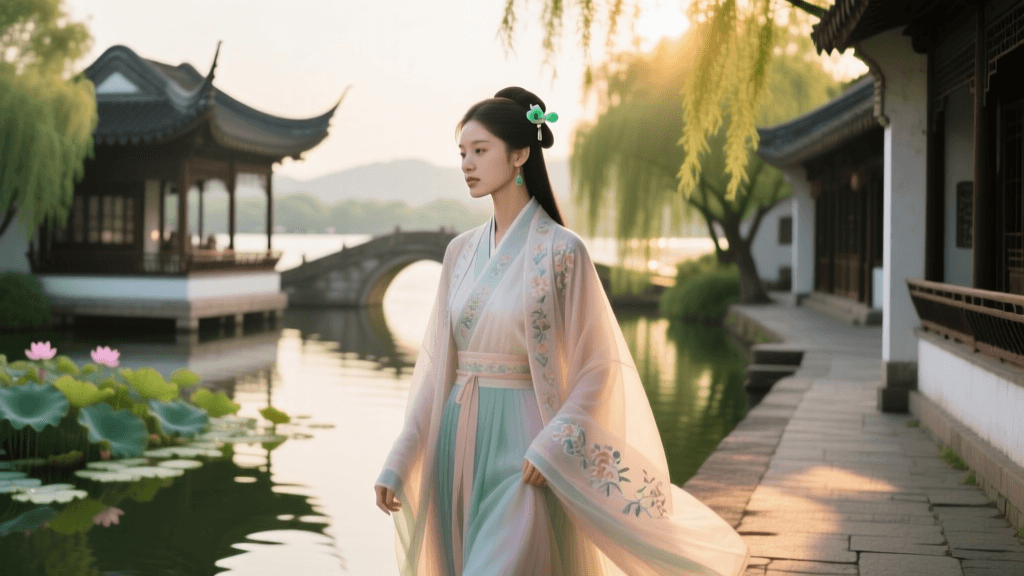
For creators focusing on the refined, scholarly, and melancholic aesthetics of the Song Dynasty (960–1279 AD), Hangzhou is the ultimate destination. The misty shores of West Lake and the bamboo forests of Lingyin Temple provide a serene canvas. The preferred garments here are Beizi (long, open-front overcoats) and Songku (narrow-legged trousers), which emphasize slender silhouettes and subtle, monochromatic elegance. Pastel color palettes, jade accessories, and oil-paper umbrellas are essential props for capturing the 'Jiangnan' (south of the Yangtze) water-town vibe.
Destination Comparison Chart
To help you plan your content calendar and budget, here is a structured comparison of the top three Hanfu tourism hubs.
| Destination | Signature Hanfu Style | Avg. Rental + Makeup Cost | Best Time to Shoot | Social Media Vibe |
|---|---|---|---|---|
| Xi'an | Tang Dynasty (Qixiong Ruqun) | 250 - 600 RMB | Blue Hour / Night | Vibrant, opulent, cinematic |
| Luoyang | Wei-Jin / Early Tang | 150 - 400 RMB | Early Morning / Golden Hour | Majestic, ethereal, historical |
| Hangzhou | Song Dynasty (Beizi) | 200 - 500 RMB | Overcast / Misty Mornings | Scholarly, serene, elegant |
Practical Guide: Styling for the Camera and the Elements
Creating viral content requires garments that not only look historically grounded but also perform well in front of the lens and withstand the rigors of travel.
Fabric Selection and Wind Dynamics
The way a garment moves is critical for slow-motion videography, a staple of Douyin and Instagram Reels. As noted by National Geographic, the historical mastery of silk production allowed for the creation of lightweight, flowing garments that caught the wind beautifully. Today, travelers should look for rental shops or pack their own garments made from 30D or 50D chiffon for the outer skirts and shawls (Pibo). These synthetic silks catch the wind effortlessly, creating dramatic, sweeping arcs when you spin. Conversely, if you are shooting in structured, architectural environments like the Forbidden City or Xi'an's city walls, opt for jacquard brocades or heavy cotton-linen blends that hold their shape and convey a sense of imperial weight.
Measurements and Mobility
A common mistake for first-time Hanfu tourists is selecting a skirt that is too long, leading to tripping hazards on ancient stone stairs and muddy hems in bamboo forests. For a wearer who is 165 cm (5'5") tall, a skirt length of 100 cm to 105 cm is ideal. It should graze the top of the foot, allowing for natural walking while maintaining the illusion of floor-length elegance in photographs. When wearing chest-high skirts, ensure the rental shop provides traditional fabric ties rather than modern elastic bands, as the visible modern hardware will ruin the historical immersion of close-up portrait shots.
Accessorizing for Close-Ups
Social media algorithms favor high-retention content, which often includes extreme close-ups of intricate details. Invest time in your hair accessories. Velvet flowers (Ronghua), jade hairpins, and pearl-encrusted forehead motifs draw the viewer's eye to the face. For Tang Dynasty styling, request the makeup artist to apply a pronounced 'Jiuhong' (wine-red) gradient blush and golden foil accents on the temples, which catch the light beautifully during sunset shoots.
Social Media Strategy: Going Viral on Douyin and Instagram
Capturing the image is only half the battle; optimizing it for social media algorithms is what transforms a beautiful travel photo into a viral sensation.
Camera Settings and Movement
For video content, always shoot in 4K at 60 frames per second (fps). This allows you to slow the footage down by 50% in post-production, creating that dreamy, fluid motion that is synonymous with top-tier Hanfu content. When directing your subject or yourself, avoid static posing. Utilize continuous movement: slowly turning to let the skirt flare, looking back over the shoulder while walking away, or gently tossing a round silk fan into the air. Use a gimbal or a lens with optical image stabilization to keep the background smooth while the fabric moves dynamically.
Lighting and Color Grading
Lighting dictates the emotional resonance of your post. For Xi'an's night markets, embrace the 'teal and orange' cinematic color grade. The warm glow of traditional red lanterns contrasting against the cool, dark blue of the evening sky creates a visually striking thumbnail. For Hangzhou and Luoyang, lean into soft, low-contrast grading with desaturated greens and warm, creamy skin tones to evoke the feeling of a classical Chinese watercolor painting. Overcast days, often dreaded by travel photographers, are actually perfect for Hanfu photography in southern China, as the soft, diffused light eliminates harsh shadows and makes the pastel dyes of Song Dynasty garments pop.
Audio and Hashtag Optimization
On platforms like Douyin and TikTok, audio is just as important as the visual. Sync your slow-motion spins to the crescendo of traditional Chinese instrumental tracks featuring the Guzheng or Erhu, or use trending 'Gufeng' (ancient style) pop ballads. When posting, utilize a mix of broad and niche hashtags. Combine massive tags like #Hanfu and #TravelChina with hyper-specific community tags such as #TangDynastyFashion, #LuoyangTravel, and #HanfuPhotography to ensure your content reaches both general travel enthusiasts and the dedicated traditional garment community.
Conclusion
Hanfu destination tourism is a deeply rewarding way to experience China’s rich cultural tapestry. By carefully selecting your destination, understanding the historical and physical properties of your garments, and employing strategic social media techniques, you can create content that not only goes viral but also pays respectful homage to centuries of Asian textile and sartorial traditions. Pack your lenses, respect the heritage, and let the ancient streets become your studio.