Yukata vs Jinbei 2026: The Ultimate Summer Casual Wear Guide
Introduction to Japanese Summer Wear in 2026
Summer in Japan is a season of vibrant contrasts: the sweltering, humid heat of the rainy season giving way to the explosive colors of hanabi (fireworks) and the rhythmic chants of matsuri (festivals). As we navigate the summer of 2026, the quest for the perfect balance between cultural reverence and thermal comfort has never been more relevant. For both locals and international travelers attending events like the Gion Matsuri or the Sumidagawa Fireworks Festival, choosing the right traditional garment is essential. The two undisputed champions of Japanese summer casual wear are the yukata and the jinbei. While both share roots in Japan's rich textile history, they serve distinctly different purposes in the modern wardrobe. This comprehensive guide breaks down the nuances of yukata versus jinbei, exploring 2026 fabric innovations, styling etiquette, and where to invest in your summer wardrobe.
The Yukata: Elegance Meets Breathability
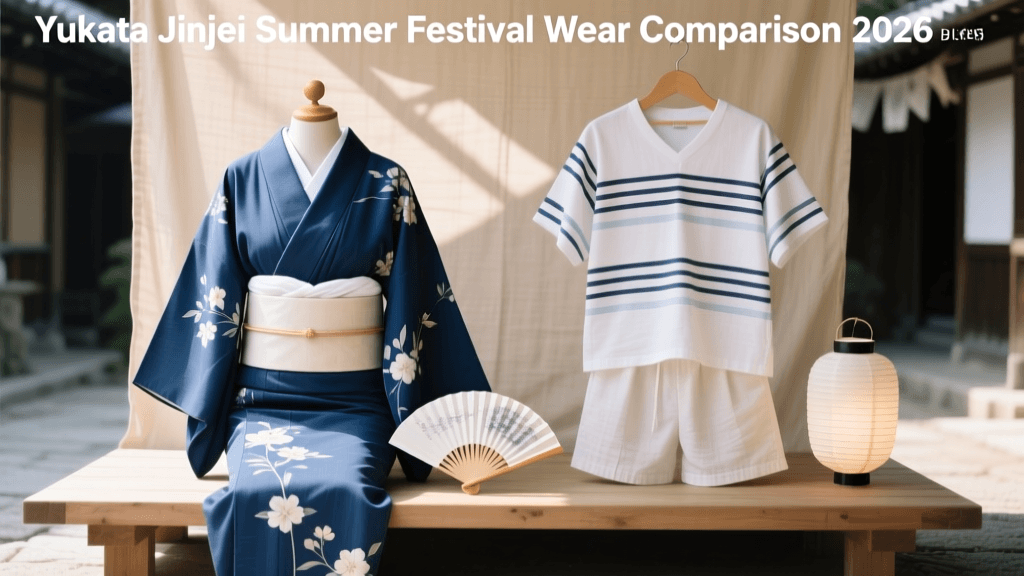
The yukata is a T-shaped, one-piece robe that translates literally to 'bathing cloth' (yu meaning bath, and katabira meaning undergarment). Originally worn by the aristocracy during the Heian period (794–1185) to and from steam baths, it eventually trickled down to the masses during the Edo period as public bathhouses became commonplace. Today, the yukata has evolved far beyond its utilitarian origins to become the quintessential smart-casual garment for summer outings.
Constructed from lightweight, unlined cotton or linen blends, the yukata is designed to wick moisture and allow for maximum airflow. In 2026, the market has seen a massive resurgence in artisanal dyeing techniques, particularly Chikusen chugata, a stencil-dyeing method that produces vibrant, colorfast patterns that do not fade even after repeated washing. For those seeking an elevated look, premium yukata made from ro or sha (sheer, gauze-like silk or synthetic weaves) offer a translucent, cooling effect that is highly prized during the peak of August. According to Japan Guide's comprehensive overview of traditional clothing, the yukata remains the most accessible entry point into traditional Japanese dress for foreigners and locals alike, bridging the gap between everyday wear and formal kimono.
The Jinbei: Ultimate Casual Comfort
If the yukata is the elegant socialite of summer wear, the jinbei is its relaxed, easygoing sibling. The jinbei is a two-piece garment consisting of a short-sleeved, wrap-style top and matching shorts. Historically, it was worn by samurai and merchants as indoor loungewear or sleepwear during the sweltering Edo summers. The name derives from the jinbaori, a sleeveless surcoat worn by samurai over their armor, though the modern jinbei is decidedly more peaceful in its application.
In 2026, the jinbei has experienced a radical renaissance, breaking free from the confines of the living room. While traditionally dominated by men's and children's markets, contemporary fashion houses and traditional textile makers have introduced stunning, gender-neutral, and women-specific jinbei lines. These modern iterations feature culotte-style wide-leg shorts, intricate floral prints, and sophisticated indigo dyeing that make them acceptable for casual neighborhood festivals, beach trips, and summer lounging. The defining feature of the jinbei is its ease of wear; lacking the complex obi (sash) tying required for a yukata, the jinbei relies on simple drawstrings and inner ties, making it a foolproof option for those intimidated by traditional garment wrapping.
2026 Head-to-Head Comparison Chart
To help you decide which garment suits your summer itinerary, we have compiled a detailed comparison based on 2026 market trends, pricing, and cultural norms.
| Feature | Yukata | Jinbei |
|---|---|---|
| Garment Structure | One-piece T-shaped robe | Two-piece (wrap top and shorts) |
| Formality Level | Smart casual / Festival appropriate | Strictly casual / Loungewear |
| Average 2026 Price | ¥5,000 - ¥35,000+ | ¥3,000 - ¥15,000 |
| Fastening Method | Obi (sash) and koshi-himo (ties) | Drawstrings and simple inner ties |
| Footwear Pairing | Geta or Zori (often with tabi socks) | Sandals, sneakers, or barefoot |
| Best Occasions | Hanabi, Bon Odori, dates, shrine visits | Local neighborhood matsuri, lounging, beach |
| Mobility & Comfort | Restricted stride, requires mindful movement | Unrestricted, ideal for active movement |
Fabric Innovations and Sustainability Trends
The summer of 2026 has brought record-breaking heatwaves across the Asian continent, prompting traditional garment makers to innovate. The concept of 'tech-wafu' (tech-traditional) has taken the market by storm. Major textile manufacturers like Shikisen have introduced cooling yarns woven with xylitol and ceramic nanoparticles, which actively reflect infrared rays and lower the surface temperature of the fabric by up to 3°C. These high-tech yukata and jinbei are indistinguishable from traditional cotton to the naked eye but offer athletic-wear-level climate control.
Conversely, there is a massive counter-movement toward hyper-traditional, sustainable textiles. Natural aizome (indigo dyeing) from Tokushima Prefecture is experiencing a boom. In 2026, AI-monitored fermentation vats are being used alongside master dyers to ensure perfect color consistency without the use of harsh chemical mordants. Indigo is not only prized for its deep, beautiful hues but also for its natural insect-repellent and antibacterial properties, making it a highly functional choice for humid summer evenings. The historical significance of these garments is deeply respected, as highlighted by the Victoria and Albert Museum's historical archives on the kimono, which trace the evolution of these summer textiles from elite luxury to everyday necessity.
Styling, Footwear, and Accessories
Styling a yukata requires an understanding of proportion and layering. The standard footwear choice is the geta (wooden clogs) or zori (flat sandals). In 2026, modern geta with rubberized, ergonomic soles and adjustable velvet straps have become incredibly popular, saving festival-goers from the blisters traditionally associated with wooden footwear. Accessories play a crucial role: a kago (woven bamboo or rattan basket) serves as the perfect summer handbag, while delicate tsumami kanzashi (fabric hairpins) add a touch of seasonal elegance to an updo.
Jinbei styling is decidedly more relaxed. While traditionalists might pair a men's jinbei with simple leather setta sandals, the 2026 street-style trend heavily features pairing women's and gender-neutral jinbei with minimalist leather slides or even clean, retro sneakers. Because the jinbei lacks the wide, canvas-like surface of a yukata's obi, accessories are kept minimal—perhaps a simple braided leather bracelet or a lightweight linen crossbody bag to hold essentials like a portable fan and smartphone.
Cultural Etiquette: When to Wear Which
Understanding the boundary between yukata and jinbei is crucial to navigating Japanese social etiquette. The yukata is considered appropriate public attire. You can wear a yukata to a nice casual restaurant, a fireworks festival, or while sightseeing in historic districts like Kyoto's Higashiyama. It is also the standard garment provided to guests at ryokan (traditional inns) and onsen (hot spring resorts), where it is perfectly acceptable to wear it to breakfast or while strolling the resort town.
The jinbei, however, occupies a stricter 'casual' tier. Wearing a jinbei to a high-end restaurant or a formal shrine ceremony would be considered a faux pas. It is best reserved for casual street food stalls (yatai), local neighborhood Bon Odori dances where mobility is key, or private gatherings. As noted in the Japan National Tourism Organization's guide to summer matsuri, local festivals often see a mix of both, with attendees choosing their attire based on whether they are participating in the energetic dances or simply observing and dining.
Where to Shop in 2026
For those looking to purchase authentic summer wear in 2026, the options are more diverse than ever. Fast-fashion giants like UNIQLO and GU offer entry-level, machine-washable yukata and jinbei sets starting around ¥3,990 to ¥4,990, perfect for first-time buyers or those on a budget. For mid-range quality, department stores like Isetan and Takashimaya unveil their 'Yukata and Summer Kimono' pop-up floors every May, featuring curated collections from brands like Kimono Yamato and Wacoal.
For the ultimate textile experience, a pilgrimage to Tokyo's Nippori Fabric Town or Kyoto's Nishijin district is highly recommended. Here, you can purchase bolt fabrics (tanmono) and have a custom yukata tailored to your exact measurements, or commission a bespoke jinbei using vintage, deadstock indigo textiles. Online, specialty boutiques have expanded their global shipping, offering detailed video tutorials on how to tie the perfect bunko (bow) knot for your yukata obi, ensuring that international enthusiasts can participate in the tradition with accuracy and respect.
Conclusion
Whether you choose the sweeping elegance of the yukata or the breezy, unrestricted comfort of the jinbei, both garments offer a beautiful, tactile connection to Japanese culture. The summer of 2026 proves that traditional Asian garments are not static museum pieces; they are living, breathing textiles that adapt to modern climates, evolving gender norms, and contemporary fashion sensibilities. By understanding the distinct roles, fabrics, and etiquette associated with each, you can confidently step into the vibrant energy of a Japanese summer, dressed perfectly for the occasion.