Xiangyunsha Silk: China's Intangible Heritage Fabric Guide
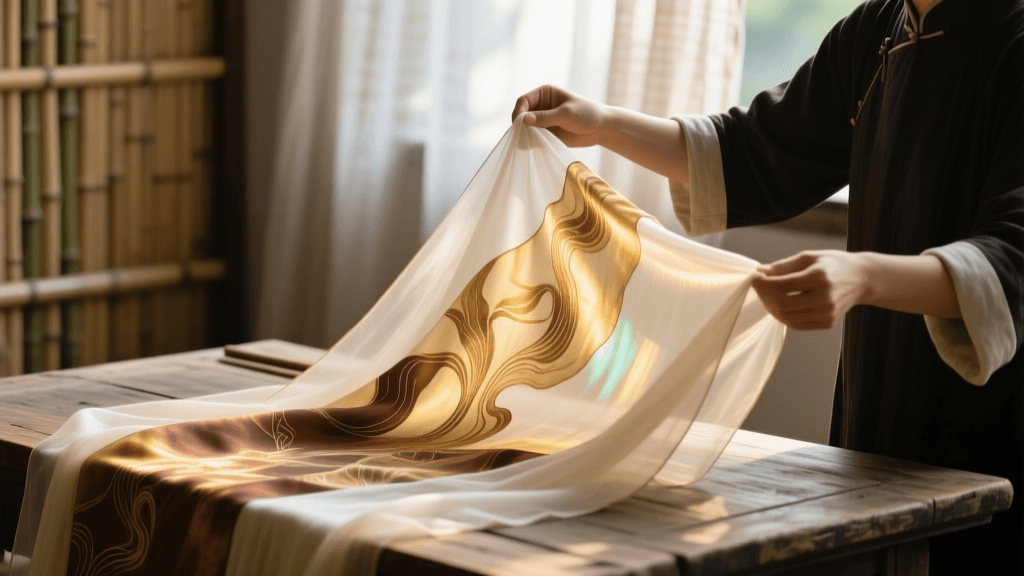
The Resurgence of Gambiered Canton Gauze
In the world of traditional Chinese textiles, few fabrics command as much reverence, mystery, and luxury as Xiangyunsha (香云纱), often translated as "fragrant cloud silk" or gambiered Canton gauze. Originating from the Lingnan region—specifically the Shunde district of Guangdong province—this extraordinary textile is a masterpiece of Chinese traditional crafts. Recognized by the Ministry of Culture and Tourism of the PRC as a National Intangible Cultural Heritage, Xiangyunsha represents the pinnacle of artisanal silk dyeing and weaving.
For Hanfu enthusiasts, historical reenactors, and collectors of Asian traditional garments, understanding Xiangyunsha is essential. It is not merely a fabric; it is a living record of ecological harmony, requiring specific soil, water, flora, and intense sunlight to create its signature metallic sheen and rustling drape. This comprehensive guide will walk you through the artisan process, how to identify authentic pieces, market pricing, and the proper care required to preserve these heirloom garments.
The Alchemy of Shulang and River Mud
The creation of authentic Xiangyunsha is a grueling, 13-step process that can only be performed between March and November when the sun is at its most intense in southern China. The craft relies on a remarkable chemical reaction between natural tannins and iron.
The Dyeing Process
Artisans begin with high-grade, undyed mulberry silk. The silk is repeatedly soaked in the juice of the Dioscorea cirrhosa (known locally as shulang or gambier yam), a plant rich in natural tannins. After each soak, the silk is laid out on the grass to dry under the blazing sun. This cycle of dyeing and sun-drying is repeated up to 30 times, gradually turning the silk a deep, warm terracotta or reddish-brown.
The Mud Coating (Guo Wu)
The defining step of Xiangyunsha is the application of river mud. Artisans harvest iron-rich, unpolluted mud from the bottom of the Pearl River Delta's waterways. In the early hours of the morning, before the sun rises, this mud is evenly smeared over one side of the tannin-dyed silk. The iron in the mud reacts instantly with the tannins in the silk to form iron tannate. This reaction creates the fabric's iconic dual-tone appearance: a glossy, dark, almost black metallic side, and a matte, warm brown reverse side. After a brief resting period, the mud is washed off in the river, leaving behind the permanent, water-resistant finish.
Identifying Authentic Xiangyunsha: A Buyer's Guide
As the global demand for premium Hanfu has surged, so too has the market for chemical imitations. Mass-produced factories often use synthetic dyes and chemical coatings to mimic the look of Xiangyunsha, but these lack the breathability, skin-nourishing properties, and structural integrity of the heritage craft. As defined by UNESCO's framework for Intangible Cultural Heritage, the true value lies in the generational knowledge and skills passed down through artisan communities, which cannot be replicated in a chemical vat.
Visual and Tactile Cues
- The Ice-Crack Pattern: Authentic Xiangyunsha features a subtle, irregular "crackling" or ice-crack pattern on the dark, glossy side. This occurs naturally as the iron-tannin coating shifts and settles on the silk fibers during the drying process. Chemical imitations often have a perfectly uniform, plastic-like sheen.
- The Auditory Test: The name "Xiangyun" (fragrant cloud) is closely tied to the sound the fabric makes. When you walk in a genuine Xiangyunsha skirt or robe, it produces a distinct, crisp rustling sound, often described as "singing silk." Imitations made with synthetic softeners remain silent.
- Color Fastness and Odor: Genuine shulang dye has a faint, earthy, herbal scent reminiscent of traditional Chinese medicine and dried grass. Fakes may smell of petrochemicals or heavy artificial perfumes.
Comparison Chart: Authentic vs. Imitation Xiangyunsha
| Feature | Authentic Heritage Xiangyunsha | Chemical Imitation / Faux Gauze |
|---|---|---|
| Production Method | Hand-dyed with shulang yam and river mud | Machine-dyed with synthetic iron/tannin chemicals |
| Surface Texture | Irregular "ice-crack" patterns on the dark side | Uniform, plastic-like, or perfectly smooth coating |
| Reverse Side Color | Warm terracotta, matte finish, shows weave | Often dyed black or dark brown uniformly |
| Breathability | Highly breathable, naturally UV resistant | Poor breathability, traps heat and moisture |
| Scent | Faint, earthy herbal aroma | Chemical, acidic, or heavily perfumed |
Pricing, Measurements, and Hanfu Applications
Investing in Xiangyunsha is an investment in wearable art. Because the process is heavily dependent on weather and manual labor, production yields are low, making the fabric inherently expensive.
Cost Breakdown
- Raw Fabric by the Meter: Authentic Xiangyunsha typically ranges from $60 to $150 USD per meter (approx. 400 to 1,000 RMB). The price variance depends on the base silk used. A standard 19-momme crepe de chine base is on the lower end, while heavy 30-momme jacquard or specialized gauze weaves command premium prices.
- Finished Hanfu Garments: A bespoke, high-quality Ming dynasty-style Aoqun (lined jacket and pleated skirt) or a Song dynasty Beizi (long open-front jacket) made from authentic Xiangyunsha will generally cost between $400 and $1,200 USD, factoring in the fabric, intricate tailoring, and hand-embroidery.
Measurements and Yardage
Traditional Xiangyunsha is woven on specialized looms that produce a standard width of 114 cm (approx. 45 inches). Some modern mills produce wider 140 cm (55 inches) bolts, but purists often prefer the traditional width for historical accuracy. When ordering custom Hanfu, expect to purchase between 4 to 6 meters of fabric for a standard two-piece set, and up to 8 meters for garments with extensive pleating, such as the Mamianqun (horse-face skirt).
Care, Conservation, and Storage
Xiangyunsha is renowned for its durability; historically, it was favored by fishermen and laborers in the Lingnan region because the mud-coating made it water-resistant, quick-drying, and impervious to salt and mildew. However, as a luxury silk garment, it requires mindful maintenance to preserve its structural integrity and luster.
The preservation of such delicate protein fibers requires care, echoing the guidelines established by the Metropolitan Museum of Art's Textile Conservation department, which emphasizes gentle handling, pH-neutral environments, and protection from prolonged, harsh light exposure for historic textiles.
Actionable Washing Instructions
- Water Temperature: Use cold or lukewarm water, strictly below 30°C (86°F). Hot water will degrade the silk fibers and cause the iron-tannin coating to soften and peel.
- Detergent: Use a specialized, pH-neutral silk wash or a mild baby shampoo. Never use alkaline detergents, bleach, or enzymatic stain removers, as they will dissolve the natural shulang dyes.
- Technique: Hand wash gently by submerging the garment for no more than 3 minutes. Do not scrub, twist, or wring the fabric. Rinse thoroughly with cold water.
- Drying: Gently press out excess water using a clean, dry cotton towel. Hang the garment on a padded hanger in a shaded, well-ventilated area. Never dry Xiangyunsha in direct sunlight or use a mechanical tumble dryer, as UV radiation and heat will cause the dark coating to become brittle and crack excessively.
Storage Protocols
When storing Xiangyunsha Hanfu for the off-season, avoid wire hangers which can cause permanent shoulder dimples. For heavily pleated skirts like the Mamianqun, it is best to fold them along their original pleat lines, wrap them in unbleached, acid-free cotton muslin, and store them flat in a cool, dry cedar chest. Avoid plastic garment bags, which trap moisture and can lead to localized mildew.
Supporting the Artisans of Shunde
The survival of Xiangyunsha relies entirely on the master artisans of Shunde, many of whom are in their sixties and seventies. The physical toll of hauling heavy silk bolts across muddy fields under the scorching sun has deterred younger generations from taking up the craft. By choosing to purchase authenticated, heritage-certified Xiangyunsha, collectors and Hanfu wearers directly fund the preservation of this intangible cultural heritage. When buying, always look for the official "National Intangible Cultural Heritage" certification tags and purchase from established, transparent vendors who can trace their fabric back to the specific artisan workshops in the Pearl River Delta.
"To wear Xiangyunsha is to wear the sun, the river, and the earth of the Lingnan region. It is a fabric that breathes with you and ages with you, growing softer and more beautiful with every passing year." — Master Liang, Shunde Xiangyunsha Artisan.
Whether you are commissioning your first historical Hanfu piece or adding to a curated collection of Asian traditional garments, Xiangyunsha offers an unparalleled connection to China's rich textile history. By understanding its origins, recognizing its authentic traits, and caring for it properly, you become an active participant in the ongoing story of this magnificent intangible heritage craft.