The Hanfu Revival: A Beginner's Guide to Authentic Styles
The Hanfu Yundong: More Than Just a Trend
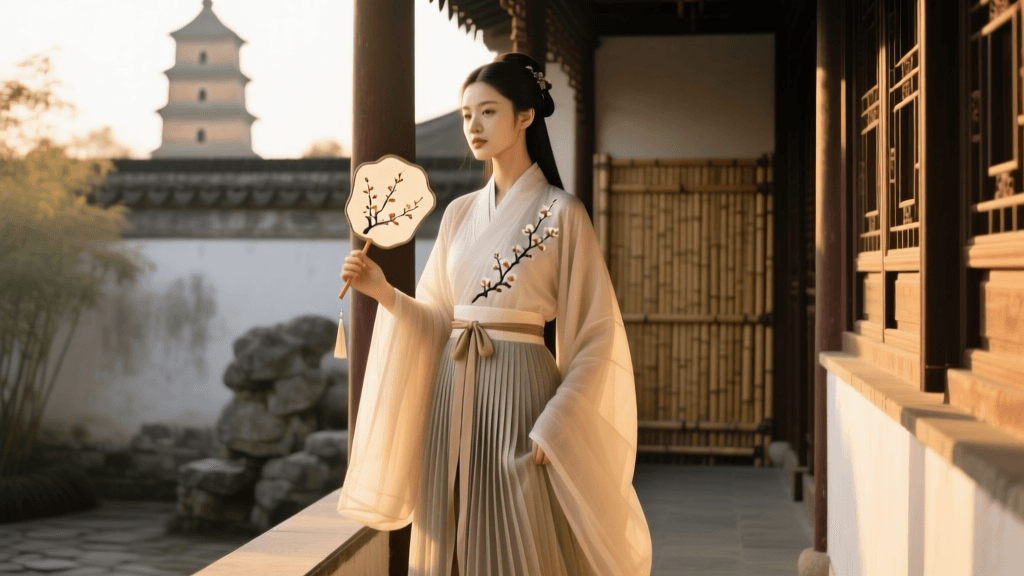
The Hanfu Yundong (Hanfu Movement) is one of the most fascinating cultural phenomena of the 21st century. What began in the early 2000s as a niche internet forum discussion among Chinese university students has blossomed into a multi-billion-dollar industry and a mainstream cultural revival. Unlike wearing historical costumes for a themed party, the modern Hanfu movement is about reclaiming cultural identity, integrating traditional Han Chinese clothing into everyday modern life, and honoring centuries of textile craftsmanship.
For international enthusiasts and beginners, navigating the world of Hanfu can be overwhelming. The market is flooded with inaccurate 'ancient drama' costumes, fantasy 'Xianxia' wear, and Qing-dynasty Manchu clothing that is frequently mislabeled. This guide provides actionable, practical advice to help you identify authentic Hanfu, take proper measurements, budget for your first set, and style it for the modern world.
The Golden Rule: Jiaoling Youren and Flat Cutting
Before purchasing your first garment, you must understand the structural and philosophical hallmarks of authentic Hanfu. The most critical rule is Jiaoling Youren (交领右衽), which translates to 'crossed collar, right lapel.' The left side of the collar must always cross over the right side, covering the right lapel. In traditional Han culture, reversing this (right over left) was strictly reserved for dressing the deceased or certain non-Han ethnic groups. Wearing it backward is considered a severe cultural faux pas.
Secondly, authentic Hanfu relies on traditional flat pattern cutting. Unlike Western clothing, which uses darts and curved seams to contour the body, Hanfu is cut from straight pieces of woven fabric. The garment only takes its final, elegant shape when it is wrapped, tied, and layered on the body. If a garment features Western-style zippers, shoulder pads, or bust darts, it is a modern costume, not traditional Hanfu.
Core Hanfu Styles for the Modern Wardrobe
The Hanfu movement categorizes clothing by historical dynasty, as each era featured distinct silhouettes, weaving techniques, and aesthetic philosophies. Below is a comparison chart of the most popular and accessible styles for beginners.
| Style Name | Historical Era | Key Features | Best Use Case | Avg. Cost (USD) |
|---|---|---|---|---|
| Ruqun (襦裙) | Tang / Song | High-waisted skirt paired with a short, tucked-in top. | Summer wear, casual outings, photography. | $30 - $60 |
| Beizi (褙子) | Song | Open-front coat with side slits, worn over an inner top and skirt. | Elegant layering, office-appropriate, spring/autumn. | $40 - $80 |
| Mamianqun (马面裙) | Ming | Horse-face skirt with flat front/back panels and deep side pleats. | Daily wear, formal events, easily mixed with modern tops. | $50 - $120 |
| Yuanlingpao (圆领袍) | Tang / Ming | Round-collared robe with side slits, fastened with buttons or ties. | Formal wear, unisex, winter layering. | $70 - $150 |
Practical Sizing: How to Measure for Hanfu
Because Hanfu is flat-cut and relies on wrapping and tying, it is generally more forgiving than Western tailored clothing. However, accurate measurements are vital for sleeve length and skirt hemlines. When buying from Chinese retailers like Taobao, you will need to provide your metrics in centimeters.
- Shenggao (Height): Crucial for skirt length. A Mamianqun should ideally hit at the ankle bone, not drag on the floor.
- Xiongwei (Bust/Chest Circumference): Measure around the fullest part of your chest. For crossed-collar tops (Jiaoling), add 10-15 cm to your actual measurement to ensure the garment wraps comfortably without pulling open.
- Yaowei (Waist Circumference): Measure your natural waist. For high-waisted Tang dynasty Ruqun, measure just below the bust.
- Tongxiu (Sleeve Length): This is unique to traditional Chinese clothing. Measure from the center back of your neck, across your shoulder, down your arm, and past your wrist to your desired sleeve length. Wide-sleeve Ming dynasty garments often require a Tongxiu of 160cm or more.
Navigating the Market: Brands, Budgets, and Pre-Orders
The epicenter of the Hanfu trade is Taobao and Tmall. While international proxy sites exist, buying directly via an agent (like Superbuy or CSSBuy) yields the best prices. When searching, use the term '汉服' (Hanfu) combined with dynasty names like '明制' (Ming-style) or '宋制' (Song-style) to filter out cheap costumes.
Recommended Brands by Budget:
- Entry-Level ($20 - $50): Brands like Lanshangu or Hanyun Hualian offer affordable, historically grounded basics perfect for daily wear and beginners.
- Mid-Tier ($60 - $150): Shisanyu (十三余) and Zhongling (钟灵记) are industry giants known for intricate embroidery, collaborative IP designs, and reliable quality.
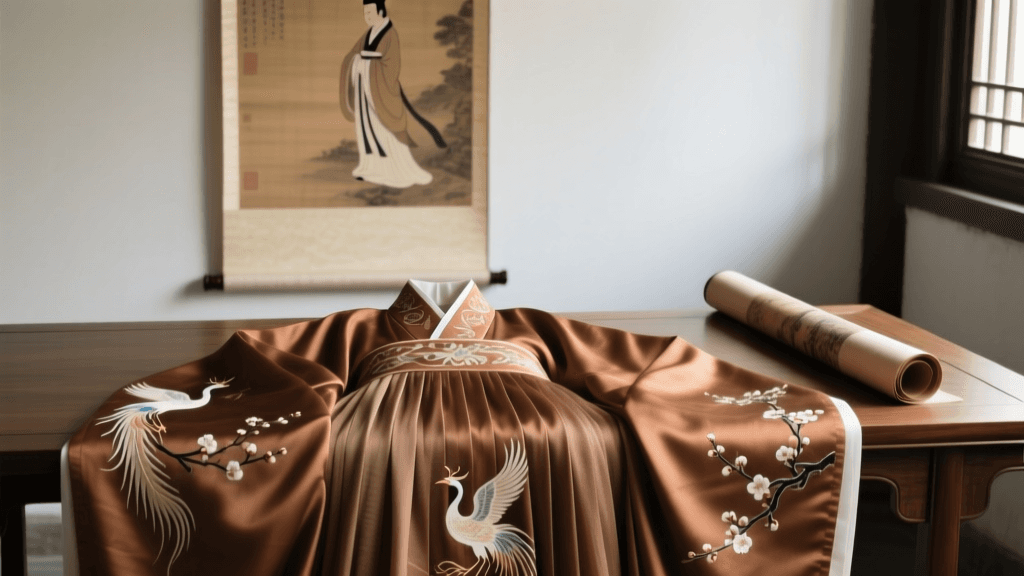
- High-End / Artisan ($250+): Minghuatang (明华堂) is the gold standard for Ming dynasty clothing. They use authentic silk weaving techniques, real gold leaf threads, and meticulous historical research. Garments are treated as luxury investments.
The Reality of 'Yushou' (Pre-Orders): The Hanfu market operates heavily on a pre-order model. Brands will release design mockups and take orders to fund production. If you see the tag '预售' (Yushou), be prepared to wait 30 to 45 days before the item ships. Always check the estimated shipping date before purchasing through a proxy agent.
Styling Hanfu for Everyday Life
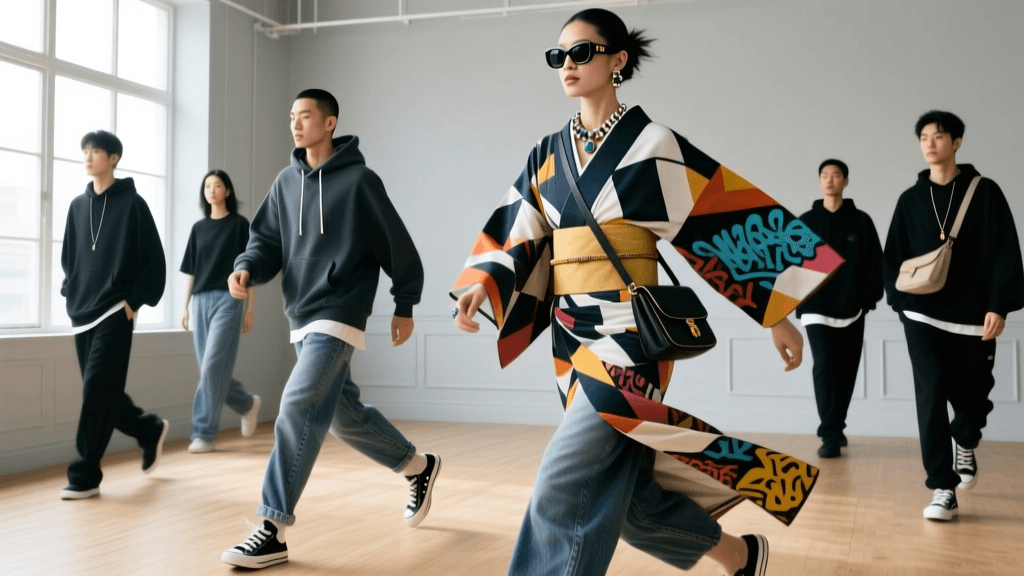
A core tenet of the Hanfu movement is that these garments are meant to be lived in, not just displayed. The most versatile piece for a modern wardrobe is the Ming dynasty Mamianqun. Its structured, pleated silhouette pairs beautifully with modern garments. Try styling a woven Mamianqun with a crisp white button-down shirt, a modern turtleneck, or a tailored blazer. This fusion approach, often called 'Hanfu daily wear' (汉元素 or 汉服日常), allows you to participate in the movement while adhering to modern dress codes.
Undergarments and Footwear: Authentic Hanfu fabrics, especially in summer Ruqun, can be sheer. It is standard practice to wear modern cotton slip skirts, safety shorts, or tube tops underneath. For footwear, traditional cloud-head shoes (Yuntouxie) or embroidered boots are ideal for photoshoots, but clean, minimalist modern loafers or ankle boots work perfectly for daily street wear.
Authoritative Sources and Further Reading
To deepen your understanding of the historical context and the sociological impact of the Hanfu Yundong, we recommend exploring the following authoritative resources:
- Sixth Tone: Chinas Young People Are Reclaiming Their History With Hanfu - An in-depth journalistic look at the sociological drivers behind the youth-led Hanfu movement and its evolution from internet forums to city streets.
- South China Morning Post: Hanfu Traditional Chinese Clothing Trend Explained - A comprehensive style guide detailing the differences between historical authenticity and modern commercial adaptations.
- China Heritage Journal: The Hanfu Movement - An academic perspective on the cultural nationalism, historical research, and identity politics intertwined with the revival of Han traditional dress.
By understanding the history, mastering the measurements, and embracing the daily styling of these garments, you transition from a mere observer to an active participant in one of Asia's most vibrant living traditions.